

Search Engine Optimization (SEO) is a constantly evolving field, and staying ahead of the curve is crucial for anyone looking to boost their website’s visibility on Google.
While there are well-known SEO techniques, there are also lesser-known hints and tips that can make a significant difference in your website’s search engine rankings.
In this blog post, we’ll delve into 10 Google SEO hints and tips that you might not be aware of but should definitely be using to enhance your online presence.
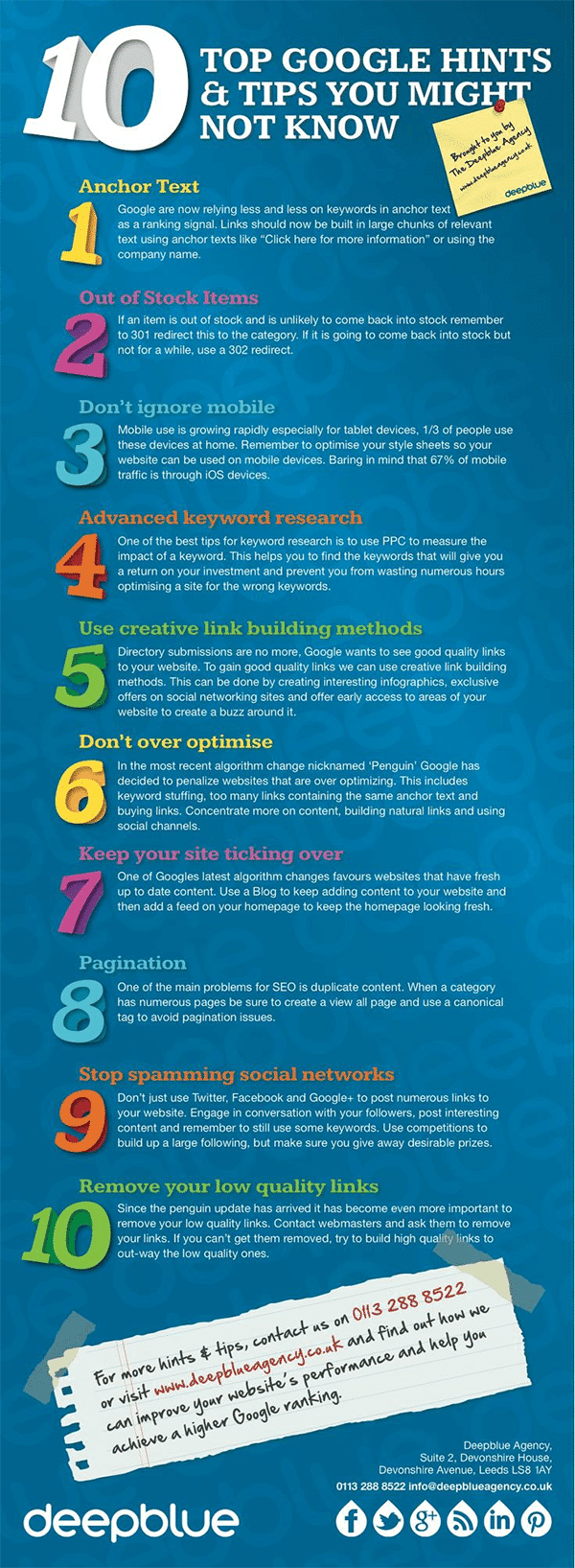
Infographic by The Deepblue Agency.
1. Optimize for Google’s Mobile-First Indexing
Google has shifted its focus to mobile-first indexing, which means it primarily uses the mobile version of a website for ranking and indexing. To ensure your site performs well on mobile devices, make sure it’s responsive and loads quickly. Google’s PageSpeed Insights can help you identify and fix performance issues. Additionally, ensure that your content, including images and videos, is mobile-friendly, and use a responsive design to provide a seamless user experience across all devices.
2. Leverage Google My Business for Local SEO
If you have a physical location or serve customers in specific geographic areas, optimizing your Google My Business (GMB) listing is crucial. Ensure your business information, such as name, address, phone number, and business hours, is accurate and up-to-date. Encourage customers to leave reviews on your GMB page, and respond promptly to reviews, both positive and negative. Regularly posting updates, offers, and photos on your GMB listing can also help improve your local SEO rankings.
3. Prioritize User Experience and Core Web Vitals
Google considers user experience as a ranking factor. Core Web Vitals, which include metrics like page loading speed, interactivity, and visual stability, are now critical for SEO. Use tools like Google’s PageSpeed Insights and Lighthouse to assess and improve your website’s performance. Optimize images and videos, minimize server response times, and prioritize lazy loading to enhance user experience and boost your rankings.
4. Utilize Structured Data Markup
Structured data markup, also known as schema markup, can provide search engines with additional information about your website’s content. This can lead to rich snippets in search results, increasing your click-through rates. You can use Google’s Structured Data Markup Helper to add structured data to your site, specifying details like product information, reviews, events, and more. Implementing schema markup can make your website more attractive in search results and improve its visibility.
5. Secure Your Website with HTTPS
Security is a top priority for Google, and they give preference to secure websites. Ensure your website is served over HTTPS by obtaining an SSL certificate. This not only helps with SEO but also builds trust with your visitors. Many hosting providers offer free SSL certificates, making it accessible to website owners of all budgets. Additionally, Google Chrome may label non-secure sites as such, potentially discouraging visitors from accessing your content.
6. Create High-Quality, In-Depth Content
Google values high-quality, informative content. Instead of churning out short, shallow articles, focus on creating in-depth, comprehensive content that addresses users’ questions and needs. Conduct thorough research, include relevant keywords, and organize your content logically. Long-form articles tend to perform well in search results, so aim for content that’s both valuable and extensive. Don’t forget to update and refresh your content regularly to keep it current and relevant.
7. Optimize for Featured Snippets
Featured snippets are the highlighted answers that appear at the top of some search results pages. Optimizing your content for featured snippets can help you capture prime real estate on Google’s search results. To target featured snippets, identify common questions in your niche and create concise, informative answers in your content. Use bullet points, lists, and clear headings to make it easier for Google to extract the information. Tools like SEMrush and Ahrefs can help you identify opportunities for featured snippet optimization.
8. Build High-Quality Backlinks
Backlinks remain a critical factor in SEO, but it’s not just about quantity; quality matters too. Focus on acquiring high-quality, relevant backlinks from authoritative websites in your industry. Guest posting, outreach campaigns, and creating shareable content are effective ways to earn backlinks naturally. Avoid black-hat tactics like buying links, as Google can penalize your site for such practices. A strong backlink profile can significantly boost your website’s authority and search engine rankings.
9. Monitor and Improve User Engagement Metrics
User engagement signals, such as click-through rate (CTR), bounce rate, and dwell time, are essential for SEO. Google uses these metrics to gauge the quality of your content and the user experience you provide. Aim to increase your CTR by writing compelling meta titles and descriptions, and ensure your content matches user intent. Lower bounce rates by improving your content’s relevance and clarity, and encourage users to spend more time on your site with engaging multimedia content.
10. Regularly Audit and Maintain Your Website
Finally, ongoing website maintenance is crucial for SEO success. Regularly audit your site for broken links, outdated content, and technical issues. Fixing these issues not only improves user experience but also signals to Google that your site is well-maintained and reliable. Stay up to date with Google’s algorithm changes and adapt your SEO strategy accordingly. Tools like Google Search Console and Google Analytics can provide valuable insights into your website’s performance.
In conclusion, while SEO is a complex and ever-evolving field, these 10 Google SEO hints and tips can give your website a competitive edge in the search results. By optimizing for mobile, leveraging Google My Business, prioritizing user experience and core web vitals, using structured data markup, securing your website with HTTPS, creating high-quality content, targeting featured snippets, building high-quality backlinks, monitoring user engagement, and conducting regular website audits, you’ll be well on your way to improving your site’s visibility on Google and driving organic traffic to your online presence.
Remember that SEO is a long-term strategy, and results may take time to materialize. Consistency and continuous improvement are key to achieving and maintaining success in the ever-changing world of Google SEO. Stay informed about the latest trends and updates in SEO, and be ready to adapt your strategies accordingly. With dedication and the right techniques, you can climb the search engine rankings and grow your online presence.

Author:
Mark Ford

The Most Common Local SEO Mistakes That Stop You Getting Found Online
Are you struggling to understand why your business isn’t showing up in local search results when customers are actively looking for your services? Want to uncover the common local SEO mistakes that could be quietly costing you enquiries and visibility? […]


