What techniques are you using to improve your SEO? Could you be doing the wrong things and heading for failure?
If you’re spending time and money on your SEO strategy you want to see results as soon as possible. That impatience could be your downfall! Take the time to understand the pitfalls of SEO and how trying to cut corners can limit the affect your strategy.
The guys at Optus Digital have created this handy infographic which shows 10 ways your strategy is destined to fail.
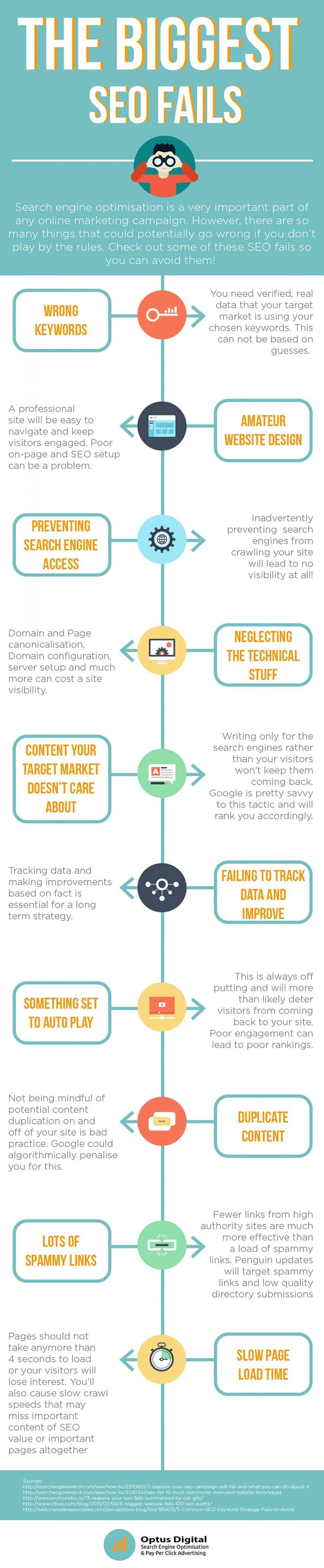
In the ever-evolving world of digital marketing, Search Engine Optimization (SEO) remains a cornerstone of success. A well-executed SEO strategy can help your website rank higher on search engine results pages (SERPs), driving organic traffic and boosting your online visibility. However, for every SEO success story, there are countless failures that can have a devastating impact on your online strategy.
In this blog post, we’ll explore 10 common SEO fails that can cripple your online presence. By understanding these pitfalls, you can take proactive steps to avoid them and set your website on the path to SEO success.
- Neglecting Keyword Research
One of the most fundamental SEO mistakes is neglecting keyword research. Keywords are the foundation of SEO, as they determine how your target audience finds your content online. Failing to conduct thorough keyword research means you’re essentially shooting in the dark, hoping that your content will resonate with your audience.
To avoid this fail, invest time in comprehensive keyword research. Use tools like Google Keyword Planner, SEMrush, or Ahrefs to identify relevant keywords with sufficient search volume and low competition. Incorporate these keywords strategically into your content to improve your chances of ranking higher on SERPs.
- Ignoring On-Page SEO
On-page SEO refers to optimizing individual web pages to improve their search engine rankings. Neglecting on-page SEO elements is a grave mistake that can severely impact your online strategy. Key on-page elements to consider include:
- Title Tags: Craft compelling and keyword-rich title tags for each page.
- Meta Descriptions: Write informative meta descriptions to entice users to click on your links.
- Header Tags: Use header tags (H1, H2, H3) to structure your content and make it more readable.
- Optimized Content: Ensure your content is high-quality, relevant, and incorporates targeted keywords.
- Image Alt Text: Include descriptive alt text for images to improve accessibility and SEO.
By overlooking these elements, you’re essentially leaving your website’s fate in the hands of search engines, which can be detrimental to your online strategy.
- Neglecting Mobile Optimization
As mobile device usage continues to surge, optimizing your website for mobile users is no longer optional—it’s imperative. Failing to provide a seamless mobile experience is a significant SEO fail that can alienate a substantial portion of your audience.
Google considers mobile-friendliness a critical ranking factor, and websites that aren’t mobile-responsive are penalized in search rankings. To avoid this SEO fail, ensure that your website is fully responsive, loads quickly on mobile devices, and offers an intuitive user experience.
- Not Creating Quality Content
Content is king in the world of SEO, and producing low-quality, thin, or duplicate content is a surefire way to destroy your online strategy. When your content fails to provide value to your audience, it won’t attract links, engage users, or rank well on search engines.
To succeed in SEO, focus on creating high-quality, informative, and engaging content that addresses the needs and interests of your target audience. Invest in research, write in-depth articles, and keep your content fresh and updated. Quality content not only improves your SEO but also builds trust and authority in your niche.
- Overlooking Technical SEO
While content is crucial, technical SEO is its backbone. Neglecting technical SEO aspects can lead to severe online strategy fails. Some common technical SEO mistakes include:
- Slow Page Speed: A slow-loading website can drive users away and harm your rankings.
- Broken Links: Broken links disrupt the user experience and affect your SEO.
- Lack of XML Sitemap: An XML sitemap helps search engines crawl and index your site.
- Incorrect URL Structure: A messy URL structure makes it challenging for search engines to understand your site’s hierarchy.
- No SSL Certificate: Without HTTPS, your site may be marked as insecure by browsers, deterring users.
Invest in technical SEO to ensure that your website is well-optimized from a technical perspective. Regularly audit your site, fix issues promptly, and stay up-to-date with best practices.
- Neglecting User Experience
User experience (UX) and SEO are closely intertwined. Failing to provide a positive UX can lead to higher bounce rates and lower rankings. Poor UX can include slow loading times, intrusive pop-ups, difficult navigation, and non-responsive design.
To avoid this SEO fail, focus on enhancing your website’s user experience. Optimize page load times, simplify navigation, and eliminate intrusive elements. A positive UX not only keeps users on your site longer but also signals to search engines that your content is valuable.
- Forgetting About Local SEO
If your business serves a local audience, neglecting local SEO can be a massive fail. Local SEO tactics, such as optimizing your Google My Business profile, building local citations, and earning reviews, are essential for attracting local customers.
Ensure that your NAP (Name, Address, Phone Number) information is consistent across all online platforms and directories. Implement local keywords in your content, and encourage customers to leave reviews. Neglecting local SEO can result in missed opportunities to connect with nearby customers.
- Over-Optimizing Anchor Text
Anchor text plays a vital role in SEO, but over-optimizing it can lead to penalties from search engines. Using the same keyword-rich anchor text excessively in your backlinks can trigger Google’s spam filters, harming your rankings.
Diversify your anchor text by using a mix of branded terms, natural phrases, and variations of your target keywords. This approach not only looks more natural to search engines but also reduces the risk of over-optimization.
- Neglecting Backlink Quality
Acquiring backlinks is a crucial aspect of SEO, but focusing solely on quantity over quality is a significant fail. Low-quality or spammy backlinks can harm your website’s reputation and rankings.
Instead of pursuing every backlink opportunity, prioritize quality over quantity. Seek links from authoritative, relevant, and reputable websites in your niche. Building a strong backlink profile takes time and effort, but it’s worth it for long-term SEO success.
- Failing to Monitor and Adapt
Perhaps the most significant SEO fail of all is neglecting to monitor your SEO efforts and adapt to changes in the digital landscape. SEO is not a one-and-done task; it’s an ongoing process that requires constant attention.
Regularly monitor your website’s performance using tools like Google Analytics and Google Search Console. Keep an eye on keyword rankings, organic traffic, and user behavior. Stay informed about algorithm updates and industry trends, and be prepared to adjust your strategy accordingly.
Conclusion
Avoiding these 10 SEO fails is essential for building a strong online presence and achieving success in the digital landscape. By conducting thorough keyword research, optimizing your website for both users and search engines, and staying up-to-date with industry trends, you can ensure that your online strategy thrives.
Remember that SEO is a long-term investment, and results may not be immediate. Patience and persistence are key. By steering clear of these common pitfalls and focusing on best practices, you’ll be on the path to SEO success and a more robust online strategy.

Author:
Mark Ford