Twitter has become an integral part of our lives, serving as a platform for news, social interaction, and self-expression. With its millions of active users, Twitter is a powerful tool for sharing your thoughts and opinions.
However, like any other social media platform, Twitter has its own set of etiquette and best practices. Unfortunately, not everyone follows these guidelines, which can lead to a frustrating experience for both users and followers.
In this blog post, we’ll explore ten common mistakes that people make on Twitter and why you should stop doing them immediately.
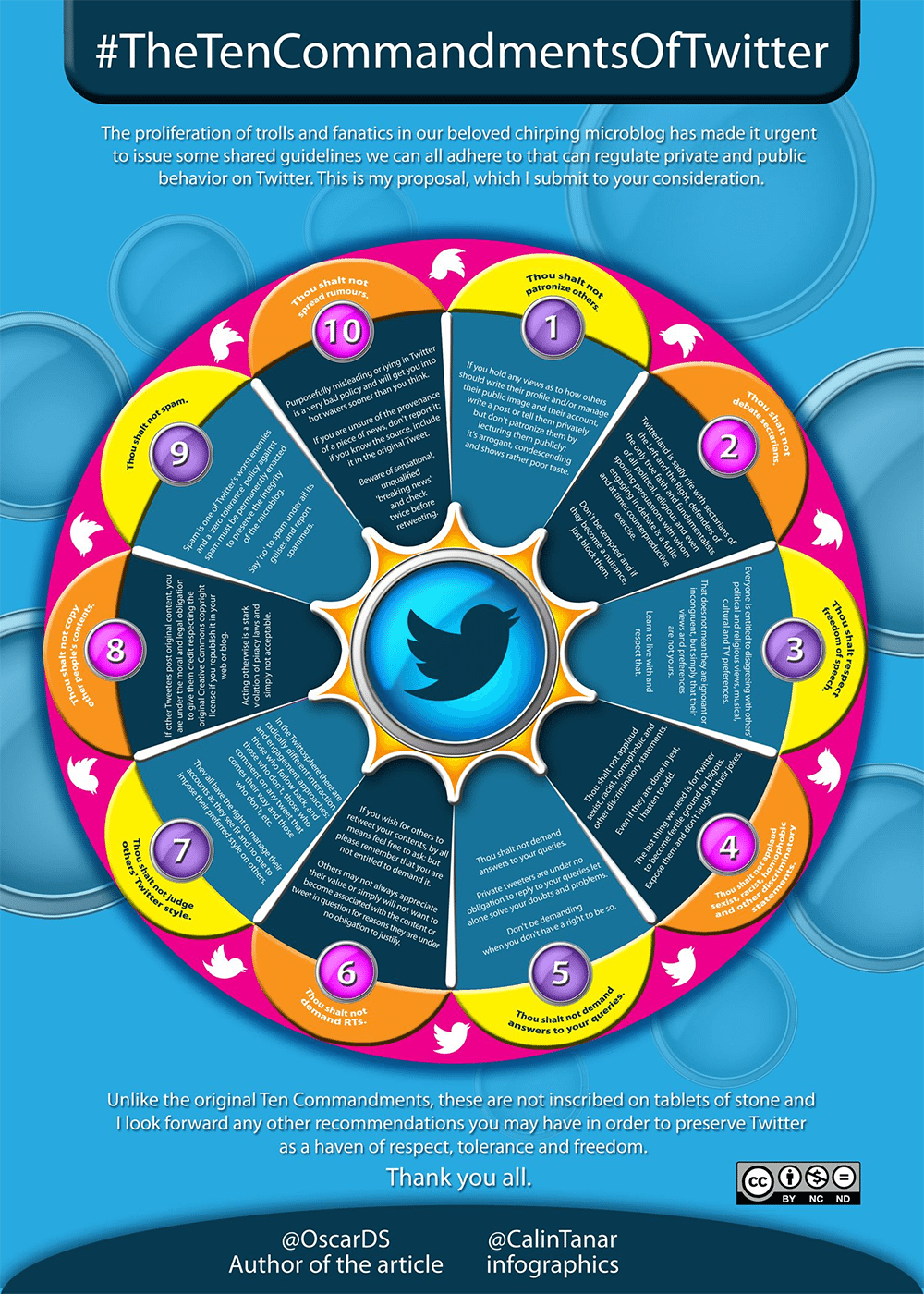
If you want to make the most of the social network follow the 10 commandments listed in the infographic below from Oscar Del Santo. It’s quite hard to read so make sure you click to enlarge.
- Engaging in Twitter Wars
One of the most toxic behaviors on Twitter is engaging in online arguments, also known as “Twitter wars.” While it’s natural to have differing opinions, Twitter wars often devolve into name-calling, harassment, and personal attacks. This type of behavior not only tarnishes your online reputation but also contributes to a hostile online environment.
Instead, if you find yourself in a disagreement, try to maintain a civil tone and engage in a constructive conversation. If the discussion becomes too heated or unproductive, it’s best to disengage or block the user rather than escalating the conflict.
- Overusing Hashtags
Hashtags are a great way to increase the discoverability of your tweets, but overusing them can be counterproductive. Using too many hashtags in a single tweet can make your message appear spammy and difficult to read. Ideally, limit your hashtags to one or two relevant ones per tweet.
Additionally, avoid using trending hashtags to promote unrelated content or hijack a conversation. It’s important to use hashtags that are contextually appropriate to your tweet’s content.
- Auto-DM Spam
Auto-direct messages (auto-DMs) are automated messages that some users send to new followers. While they can be useful for greeting new followers or providing valuable information, they are often misused for spammy self-promotion.
Sending auto-DMs filled with links to your products or services can be annoying and may result in people unfollowing you. Instead, consider using auto-DMs sparingly and genuinely to connect with new followers or offer helpful resources.
- Neglecting to Credit Sources
Twitter is a platform for sharing content, but it’s essential to give credit where credit is due. If you’re sharing someone else’s content, whether it’s an article, image, or video, make sure to attribute it to the original source by mentioning their Twitter handle or providing a link to their profile or website. Failing to do so can be seen as plagiarism or content theft.
- Sharing Fake News
In today’s age of information overload, it’s crucial to be responsible when sharing news articles or information on Twitter. Misinformation and fake news can spread rapidly and have real-world consequences. Before retweeting or sharing any news, take a moment to fact-check it using reputable sources.
Always prioritize accuracy over speed when sharing information. Retweeting false or unverified information can damage your credibility and contribute to the spread of false narratives.
- Excessive Self-Promotion
While it’s acceptable to promote your work, products, or services on Twitter, doing it excessively can annoy your followers. Constantly bombarding your followers with self-promotional tweets can make your account appear spammy and unengaging.
Instead, balance self-promotion with valuable content, such as informative articles, helpful tips, or engaging discussions. This will help you build a more authentic and loyal following.
- Neglecting Engagement
Twitter is a social platform, and socializing is at its core. Neglecting to engage with your followers can hinder your growth and impact on the platform. Responding to comments, retweeting interesting content, and participating in conversations related to your interests can help you build meaningful connections.
Make an effort to be present and responsive to your audience. Engaging with others will not only increase your visibility but also enhance your overall Twitter experience.
- Ignoring Accessibility
Accessibility is often overlooked on social media, but it’s essential to make your content accessible to everyone. Avoid using excessive emojis or special characters that can be difficult for screen readers to interpret. Ensure that your images have alt text descriptions, making them accessible to people with visual impairments.
Moreover, use camel case when creating hashtags like #InclusiveDesign instead of #inclusivedesign. This makes them more readable for screen readers.
- Sharing Personal Information
Protecting your privacy online is crucial. Avoid sharing personal information, such as your home address, phone number, or financial details, on Twitter. Additionally, be cautious when clicking on links or opening direct messages from unknown sources, as they may lead to phishing attempts or scams.
Remember that not everyone on Twitter has good intentions, so always exercise caution when sharing personal information.
- Neglecting Online Etiquette
Finally, remember to practice good online etiquette on Twitter. This includes being respectful, kind, and considerate to others. Avoid trolling, bullying, or engaging in hateful speech. Treat others on the platform as you would in real-life conversations.
Conclusion
Twitter can be a valuable platform for networking, sharing ideas, and engaging with a global audience. However, it’s essential to use it responsibly and follow proper etiquette to ensure a positive experience for yourself and others. By avoiding the ten behaviors mentioned in this blog post, you can become a more respectful and effective Twitter user, contributing to a healthier and more engaging online community.

Author:
Mark Ford

How to Create Platform-Specific Social Media Content Without Doubling Your Workload
Are you struggling to keep your social media content consistent across platforms without it eating up your time? Want to learn how to adapt one idea for Facebook, Instagram, LinkedIn, TikTok, and X without creating everything from scratch? […]