
In the digital age, social media has become an integral part of business marketing strategies. Among the various platforms available, Twitter stands out as a powerful tool for engaging with your audience, building brand awareness, and promoting your products or services.
However, not all tweets are created equal. To make the most of your Twitter presence, you need to carefully consider what you should tweet about and what you should avoid.
In this blog post, we’ll explore 10 things your business should tweet about and 7 things you shouldn’t.
Infographic from Social Research Strategies.
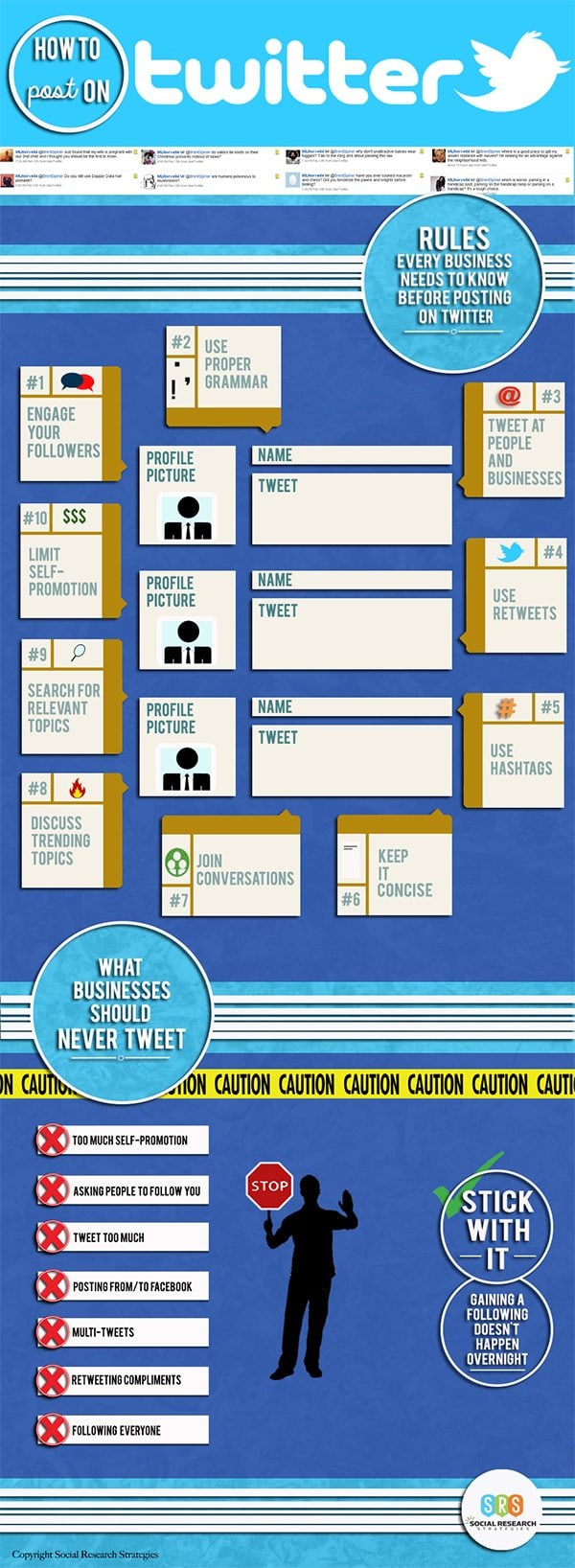
What to Tweet About
1. Promotions and Discounts
One of the most effective ways to capture your audience’s attention is by tweeting about promotions and discounts. Whether you’re running a limited-time sale, offering a special discount code, or giving away freebies, sharing these offers on Twitter can help boost your sales and attract new customers.
2. Product or Service Updates
Keep your audience informed about the latest developments in your business. When you release a new product, update an existing one, or launch a new service, share the news on Twitter. Provide details about the features, benefits, and how it can solve your customers’ problems.
3. Customer Testimonials
Reinforce trust in your brand by sharing customer testimonials and reviews. Positive feedback from satisfied customers can be a powerful marketing tool. Include their comments and, if possible, a photo or video testimonial to make it more authentic.
4. Behind-the-Scenes Insights
Humanize your brand by giving your audience a peek behind the curtain. Share behind-the-scenes photos or videos of your team, workplace, or production process. This helps build a connection with your audience and shows the people behind your business.
5. Industry News and Trends
Position your business as an industry leader by sharing relevant news and trends. Share articles, reports, or your own insights on topics related to your niche. This demonstrates your expertise and keeps your followers informed.
6. User-Generated Content
Encourage your customers to create content related to your products or services and share it on Twitter. Repost user-generated content with proper credit, showcasing how your offerings are making a positive impact on your customers’ lives.
7. Educational Content
Provide value to your followers by sharing educational content. This can include how-to guides, tips and tricks, and informative articles related to your industry. Establishing yourself as a valuable resource can help you gain credibility and followers.
8. Company Milestones
Celebrate your company’s achievements, such as anniversaries, awards, or significant milestones. Share your journey and express gratitude to your customers for their support. It’s an opportunity to reflect on your growth and successes.
9. Polls and Surveys
Engage with your audience by creating polls and surveys. Ask for their opinions on various topics, including product preferences or future developments. It not only fosters interaction but also helps you gather valuable feedback.
10. Social Causes and Community Involvement
Demonstrate your commitment to social responsibility by tweeting about your involvement in community activities or supporting social causes. Show your support for local charities, environmental initiatives, or humanitarian efforts.
Now that we’ve covered what your business should tweet about let’s explore what you should avoid.
What Not to Tweet About
1. Personal Opinions
As a business, it’s crucial to maintain a professional tone on Twitter. Avoid sharing personal opinions on controversial topics, as they can alienate potential customers who hold different views. Stick to your brand’s messaging and values.
2. Negative Comments about Competitors
While healthy competition is normal, publicly criticizing your competitors on Twitter can backfire. Instead of focusing on their flaws, concentrate on your own strengths and what sets your business apart.
3. Offensive or Insensitive Content
Steer clear of any content that may be offensive, insensitive, or discriminatory. Always be mindful of the potential impact your tweets may have on your audience. Maintain a respectful and inclusive tone.
4. Overly Promotional Content
While it’s essential to promote your products or services, bombarding your followers with constant self-promotion can lead to unfollows. Balance promotional tweets with valuable, non-sales content.
5. Excessive Hashtags
Using hashtags can increase the discoverability of your tweets, but overusing them can make your tweets appear spammy. Stick to a few relevant and trending hashtags per tweet.
6. Unverified Information
Ensure that the information you share is accurate and from credible sources. Spreading false or misleading information can damage your reputation and erode trust with your audience.
7. Neglecting Engagement
Don’t treat Twitter as a one-way communication channel. Neglecting to engage with your followers by responding to comments, messages, and mentions can make your brand seem distant and uninterested.
In conclusion, Twitter is a valuable platform for businesses to connect with their audience, promote their products or services, and establish their brand identity. By following these guidelines on what to tweet about and what to avoid, you can harness the power of Twitter to grow your business, engage with your customers, and build a strong online presence. Remember, the key to Twitter success is a strategic and authentic approach to sharing content that resonates with your target audience.

Author:
Mark Ford