In the fast-paced world of the internet, capturing and holding the attention of your website visitors is a challenging task.
Research suggests that you have just about 20 seconds to make a positive impression and convince visitors to stay on your site. In this digital age, where information is abundant, it’s crucial to engage your audience effectively through your written content.
Whether you’re running a blog, an e-commerce website, or a personal portfolio, the quality of your writing plays a significant role in keeping visitors engaged.
In this blog post, we will explore ten valuable writing tips that can help you keep your website visitors on your site longer than 20 seconds.
These tips are applicable to a wide range of websites and can make a substantial difference in reducing bounce rates and increasing user engagement.
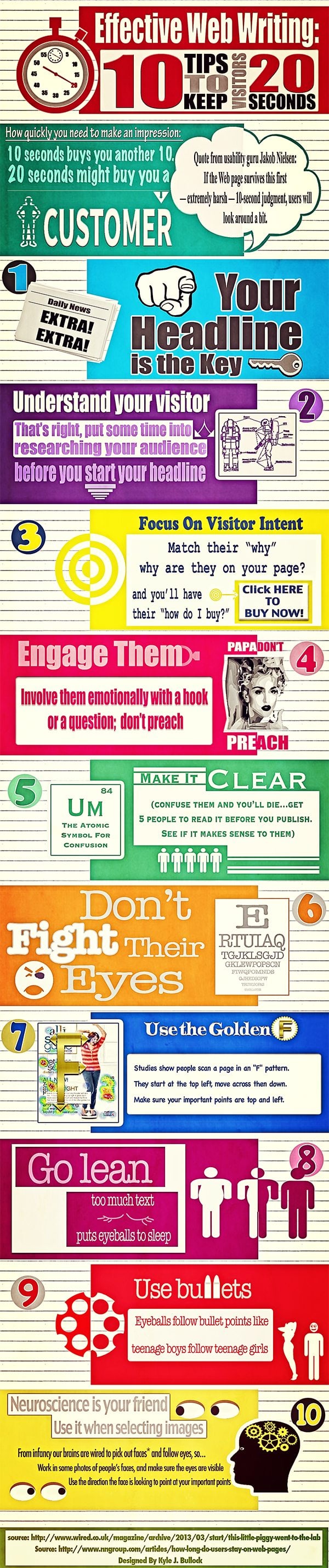
1. Know Your Audience
Understanding your target audience is the foundation of effective writing for the web. Before you start crafting content, take the time to research and define your ideal readers or customers. What are their interests, needs, and pain points? What kind of language do they use? By gaining insights into your audience, you can tailor your writing style and content to resonate with them.
For instance, if your website is about fitness and your target audience is primarily young adults interested in weightlifting, your writing tone should be energetic and motivational. On the other hand, if you’re running a financial advice blog for retirees, a more formal and informative tone would be appropriate.
2. Start with a Compelling Headline
Your headline is the first thing visitors see, and it’s often the deciding factor in whether they stay or leave. Craft a headline that grabs their attention, addresses their interests or problems, and promises value. Use action words, numbers, and intriguing questions to pique curiosity.
For example, compare these two headlines for a cooking blog:
- “Cooking Tips for Beginners”
- “Unlock the Secrets to Perfectly Flavored Dishes: Cooking Tips for Beginners”
The second headline is more compelling and specific, making it more likely to engage readers.
3. Write Clear and Concise Content
In the digital era, people consume content quickly, so it’s essential to get to the point. Avoid long-winded sentences and paragraphs. Use clear and concise language to convey your message. Break up your content into easily scannable sections with subheadings, bullet points, and lists.
Online readers tend to skim, so make sure your content is scannable. Use bold text to highlight key points and incorporate images, infographics, and videos to complement your text and make it more engaging.
4. Use Storytelling
Storytelling is a powerful tool for capturing and holding the attention of your website visitors. Stories create a connection, evoke emotions, and make your content more memorable. Whether you’re sharing personal anecdotes, customer success stories, or case studies, weave storytelling into your content to make it relatable and engaging.
For example, if you’re writing about a product or service, share a customer’s journey and how it transformed their life. Use before-and-after scenarios to illustrate the positive impact.
5. Address Pain Points and Provide Solutions
One of the most effective ways to engage your audience is by addressing their pain points and offering solutions. Identify the problems or challenges your audience faces and provide actionable advice or solutions to help them overcome those obstacles. When visitors see that your content can make their lives better or easier, they’re more likely to stay and explore further.
For instance, if your website is about gardening, you can address common issues like pests or soil quality and offer practical tips and solutions to resolve these problems.
6. Use Relevant Keywords
Search engine optimization (SEO) is essential for driving organic traffic to your website. To keep visitors on your site longer, your content needs to be discoverable in search engine results. Research and use relevant keywords related to your niche to improve your content’s visibility.
However, don’t overstuff your content with keywords. Use them naturally and in context. Google’s algorithms are getting smarter, and they prioritize user experience over keyword density. High-quality, informative content is more likely to rank well and engage visitors.
7. Engage with Your Audience
Engagement is a two-way street. Encourage interaction and feedback from your audience by including calls to action (CTAs) in your content. Ask questions, invite comments, and promote social sharing. When visitors feel like they have a voice and can actively participate in the conversation, they are more likely to stay on your site.
Additionally, be responsive to comments and messages. Engaging with your audience shows that you value their input and are willing to build a community around your content.
8. Create a Strong Opening
The first few sentences of your content are crucial. They set the tone and determine whether visitors will continue reading. Start with a hook—a compelling statement, a thought-provoking question, or a surprising fact. Make it clear from the beginning what value your content offers.
For example, if you’re writing a travel blog post about a recent adventure, you might begin with an exciting anecdote or a breathtaking description of the destination you visited.
9. Use Visuals Wisely
Incorporating visuals, such as images and videos, can significantly enhance the appeal of your content. Visual content not only breaks up the text but also provides context and engages different types of learners.
Ensure that your visuals are relevant to your content and enhance the reader’s understanding. Use high-quality images and videos that load quickly to avoid frustrating your visitors. Alt text for images is essential for accessibility and SEO.
10. Proofread and Edit
Nothing drives visitors away faster than poorly written, error-filled content. Take the time to proofread and edit your articles thoroughly. Check for spelling and grammar errors, awkward phrasing, and inconsistencies. Consider using tools like Grammarly or hiring a professional editor if necessary.
Well-edited content not only looks more professional but also demonstrates your commitment to providing high-quality information.
Conclusion
Keeping your website visitors engaged for more than 20 seconds is a significant achievement in the online world. By implementing these ten writing tips, you can create content that resonates with your audience, captures their attention, and encourages them to stay and explore your site further. Remember that effective writing is an ongoing process of improvement, so continuously analyze your content’s performance and adapt your strategies to keep your audience engaged and coming back for more.

Author:
Mark Ford