Search Engine Optimization (SEO) is the key to ensuring that your website gets the visibility it deserves on search engines like Google. The higher your website ranks in search results, the more organic traffic you’re likely to receive.
SEO can seem complex, but there are many straightforward strategies you can implement today to boost your website’s SEO. In this blog post, we’ll explore 12 actionable ways to improve the SEO of your website right now.
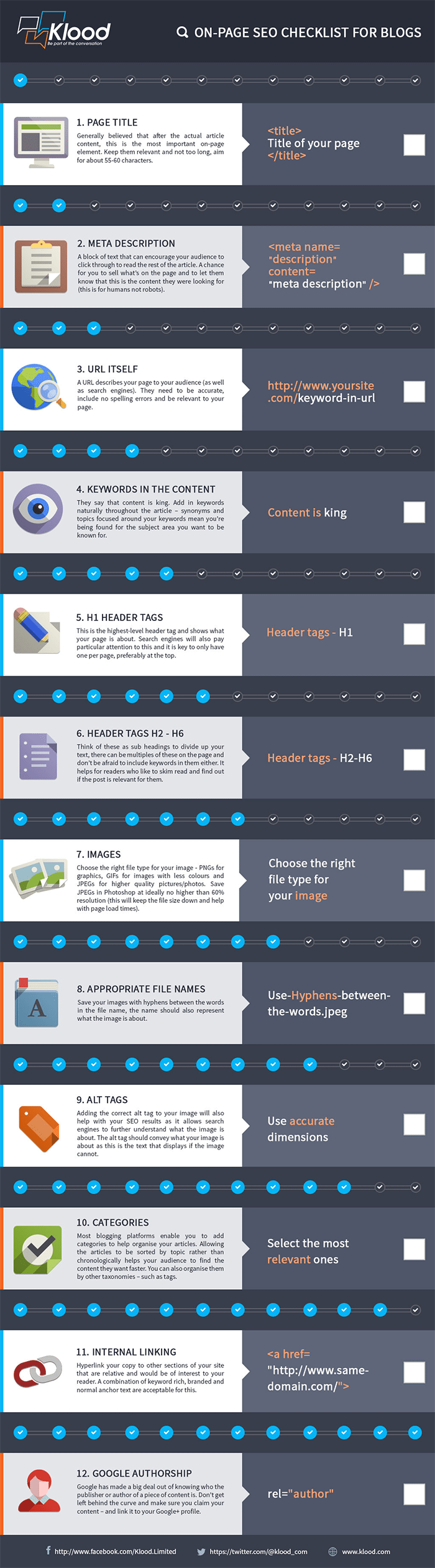
Take a look at the infographic below from Klood which gives you 12 on site SEO improvements you can make today.
1. Optimize Your Content for Keywords
Keywords are the foundation of SEO. Start by conducting keyword research to identify relevant search terms related to your niche. Use tools like Google Keyword Planner or SEMrush to find keywords with a good search volume and low competition. Once you have your target keywords, integrate them naturally into your content, including headings, body text, and meta tags. However, avoid keyword stuffing, as it can harm your rankings.
2. Create High-Quality, Relevant Content
Search engines reward websites that provide valuable and relevant content to users. Invest in creating high-quality, informative, and engaging content that addresses your audience’s needs and interests. Regularly update your blog with fresh content to keep both users and search engines coming back for more.
3. Optimize Your Website’s Loading Speed
A fast-loading website not only improves user experience but also enhances your SEO. Use tools like Google’s PageSpeed Insights to analyze your site’s speed and receive recommendations for improvement. Consider compressing images, using browser caching, and choosing a reliable hosting provider to boost your website’s loading speed.
4. Ensure Mobile Responsiveness
With the increasing use of mobile devices for web browsing, having a mobile-responsive website is crucial. Google prioritizes mobile-friendly websites in its search results. Use responsive design techniques to ensure that your website adapts seamlessly to different screen sizes and devices.
5. Optimize Meta Tags
Meta tags, including title tags and meta descriptions, play a vital role in SEO. Craft compelling, keyword-rich titles and meta descriptions for each page on your website. These tags provide users with a preview of your content in search results and can significantly impact click-through rates.
6. Build High-Quality Backlinks
Backlinks, or incoming links from other websites, are a fundamental aspect of SEO. However, not all backlinks are created equal. Focus on acquiring high-quality, relevant backlinks from authoritative websites in your industry. Guest posting, influencer outreach, and content marketing can help you build a strong backlink profile.
7. Optimize Your Website’s Architecture
A well-organized website structure makes it easier for search engines to crawl and index your content. Use a logical hierarchy with clear navigation menus and breadcrumbs to guide users and search engine bots through your site. An XML sitemap can also help search engines understand your website’s structure.
8. Implement Schema Markup
Schema markup, also known as structured data, provides additional context to search engines about the content on your website. By implementing schema markup, you can enhance how your website appears in search results, potentially increasing click-through rates and visibility.
9. Regularly Update and Improve Old Content
Don’t forget about your older content. Periodically review and update existing articles and pages to ensure their relevance and accuracy. This signals to search engines that your website is actively maintained and provides valuable, up-to-date information.
10. Monitor Your Website’s Performance
Stay informed about how your website is performing in search results by using tools like Google Search Console. This free tool offers valuable insights into your site’s performance, including which keywords are driving traffic and where you can make improvements.
11. Optimize Images and Multimedia Elements
Images and multimedia elements can enhance your content, but they can also slow down your website if not optimized correctly. Compress images, use descriptive alt text for accessibility and SEO purposes, and consider lazy loading to improve page load times.
12. Secure Your Website with HTTPS
Security is a top priority for both users and search engines. Secure your website with an SSL certificate to enable HTTPS. Google has confirmed that HTTPS is a ranking factor, so making this change can boost your SEO.
In conclusion, SEO is an ongoing process that requires consistent effort and adaptation to algorithm changes. By implementing these 12 strategies, you can significantly improve the SEO of your website today. Remember that SEO is not a one-time task but a continuous endeavor that will help your website climb the search engine rankings and drive more organic traffic over time.

Author:
Mark Ford