Search Engine Optimization (SEO) is a dynamic field that constantly evolves as search engines update their algorithms and user behavior changes.
Unfortunately, with so much information available online, there are many SEO myths and misconceptions that can lead website owners and digital marketers down the wrong path.
In this blog post, we will debunk 14 common SEO myths that you should ignore to ensure that your SEO efforts are effective and up-to-date.
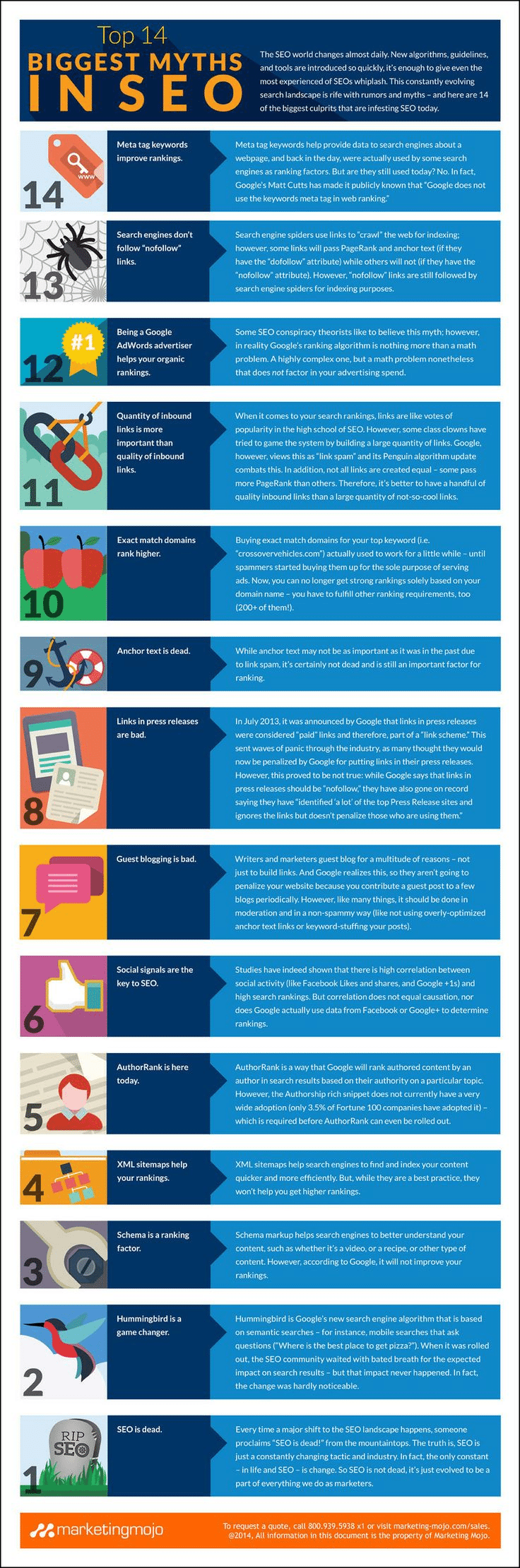
The infographic below from Marketing Mojo gives you 14 of the most common myths they think you’re likely to hear.
Myth 1: SEO is All About Keywords
While keywords are an essential part of SEO, the belief that it’s the only factor that matters is a common myth. SEO encompasses various elements, including on-page optimization, technical SEO, content quality, user experience, and backlinks. Focusing solely on keywords won’t lead to long-term success. A holistic approach is key.
Myth 2: The More Keywords, the Better
Keyword stuffing, or the practice of overloading a webpage with keywords, used to work in the early days of SEO. However, modern search engines are much smarter and penalize websites for this tactic. Instead, focus on using keywords naturally and providing valuable content.
Myth 3: SEO is a One-Time Task
SEO is an ongoing process, not a one-time task. Search engines continually update their algorithms, and your competitors are constantly optimizing their websites. To maintain and improve your rankings, you must regularly update and refine your SEO strategies.
Myth 4: Content Quantity Trumps Quality
Creating vast amounts of low-quality content is not an effective SEO strategy. Search engines prioritize content that is valuable, informative, and engaging to users. Quality should always take precedence over quantity.
Myth 5: Backlinks Are All That Matters
While backlinks are essential for SEO, not all backlinks are equal. Quality matters more than quantity. Spammy or low-quality backlinks can harm your website’s ranking. Focus on earning high-quality, relevant backlinks from authoritative sources.
Myth 6: Meta Keywords Tag is Important
The meta keywords tag was once used by search engines to determine a page’s topic, but it’s now obsolete. Search engines rely on other signals to understand the content of a page, so there’s no need to waste time on meta keywords.
Myth 7: SEO is Only About Google
Google is the dominant search engine, but it’s not the only one. Ignoring other search engines like Bing or Yahoo can mean missing out on valuable traffic. Optimize your site for multiple search engines to reach a broader audience.
Myth 8: SEO Guarantees Immediate Results
SEO is a long-term strategy, and results take time to manifest. Beware of SEO providers who promise immediate results, as they often use black-hat tactics that can lead to penalties. Be patient and focus on sustainable SEO practices.
Myth 9: Exact Match Domains (EMDs) are a Must
In the past, having an exact match domain (e.g., keyword.com) could provide an SEO advantage. However, search engines have become more sophisticated, and EMDs no longer guarantee a ranking boost. Choose a domain name that reflects your brand and is user-friendly.
Myth 10: Duplicate Content Will Result in Penalties
Duplicate content can harm your SEO, but not all duplicate content is penalized. Search engines understand that duplicate content can occur for legitimate reasons, such as product descriptions or syndicated articles. However, it’s essential to use canonical tags and avoid plagiarism.
Myth 11: Social Media Has No Impact on SEO
While social media signals themselves do not directly impact search engine rankings, they can indirectly influence SEO. Social media can help drive traffic to your site, increase brand awareness, and attract backlinks—all of which can benefit your SEO efforts.
Myth 12: Mobile Optimization is Optional
With the increasing use of mobile devices, having a mobile-friendly website is no longer optional. Google uses mobile-first indexing, meaning it primarily uses the mobile version of your site for ranking and indexing. Ensure your website is responsive and provides an excellent mobile user experience.
Myth 13: SEO is Too Technical for Non-Experts
SEO can be technical, but it’s not exclusive to experts. Many aspects of SEO can be learned and implemented by non-technical individuals. There are plenty of resources and tools available to help website owners and marketers improve their SEO knowledge and skills.
Myth 14: SEO is Dead
One of the most persistent myths is the belief that SEO is dead or no longer relevant. In reality, SEO continues to evolve and adapt to changes in the digital landscape. As long as search engines exist, SEO will remain crucial for improving online visibility and driving organic traffic.
In conclusion, SEO is a complex and ever-changing field, and it’s essential to separate fact from fiction to achieve success. By debunking these 14 common SEO myths and staying informed about the latest best practices, you can ensure that your SEO efforts are effective and aligned with the current state of search engine optimization. Remember that SEO is a long-term investment, and consistent, high-quality optimization is the key to achieving and maintaining strong search engine rankings.

Author:
Mark Ford