Twitter, with its 330 million monthly active users, has become a hotbed of social interaction, news dissemination, and content sharing.
But like any online platform, it has its own set of trends and terminologies that can sometimes leave you scratching your head. Whether you’re new to the Twitterverse or a seasoned user, you’ve probably encountered some buzzwords that make you roll your eyes.
In this blog post, we’re going to explore 15 of the most annoying Twitter buzzwords you’re likely to hear, decode what they mean, and discuss why they can be so vexing.
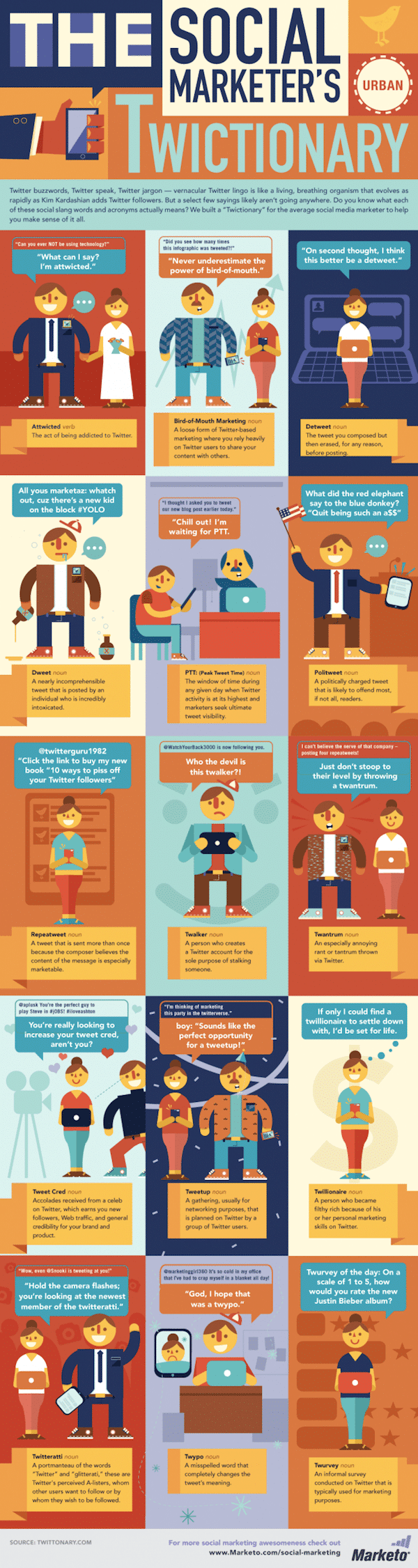
Infographic by Marketo.
- “Viral”
Let’s start with one of the most overused and misunderstood buzzwords on Twitter: “viral.” When someone tweets something and claims it went “viral,” it typically means their tweet gained a significant amount of attention and engagement. However, what constitutes “viral” can vary greatly, from a few thousand retweets to millions. The annoyance factor comes in when people casually label any tweet with a bit more attention than usual as “viral,” diluting the term’s meaning.
- “Influencer”
“Influencer” is a buzzword that extends beyond Twitter, but it’s particularly irksome on the platform. Influencers are individuals who have a substantial following and wield some degree of influence over their audience’s opinions and behaviors. The annoyance arises when seemingly everyone and their cat self-proclaims as an influencer, making it harder to distinguish genuine influencers from those merely seeking freebies or vanity metrics.
- “Thought Leader”
Similar to “influencer,” the term “thought leader” is thrown around excessively on Twitter. It refers to individuals who are recognized as experts in their field and whose opinions are highly respected. Yet, some users attach this label to themselves without substantial evidence of expertise, diminishing its significance.
- “Epic Tweetstorm”
A tweetstorm is a series of tweets posted in quick succession to convey a more extended thought or narrative. While they can be informative, the term “epic tweetstorm” is often used ironically to mock lengthy rants or threads that may not warrant such attention.
- “Cancel Culture”
“Cancel culture” describes the practice of boycotting or shunning individuals or entities deemed problematic, often due to offensive statements or actions. While the concept is important for holding people accountable, it’s overused and misapplied on Twitter, turning it into a buzzword used to dismiss legitimate criticisms or disagreements.
- “Meme-able”
“Meme-able” refers to content that has the potential to become a meme, those humorous and often viral images or videos. The annoyance arises when people force content into meme status by overusing the term, undermining the spontaneity and creativity that make memes funny in the first place.
- “Going Live”
When a user announces they’re “going live” on Twitter, they’re typically about to start a live video stream. While live streams can be engaging and informative, this buzzword is often overused, leading to a flood of notifications and making it challenging to discern which streams are genuinely worth watching.
- “Engagement Bait”
“Engagement bait” refers to posts designed to artificially boost engagement metrics, such as asking followers to “like” or “retweet” a tweet for no real reason. It’s annoying because it clutters your timeline with content that doesn’t offer value and manipulates social media algorithms.
- “Hack”
On Twitter, “hack” is used to describe tips or tricks to improve your social media game. While genuine hacks can be useful, the term is often misused to promote clickbait content that doesn’t live up to its promise, leaving users feeling deceived.
- “Trending”
Twitter’s trending topics are subjects, hashtags, or phrases that are currently popular and widely discussed on the platform. However, the annoyance factor comes in when users mindlessly jump on trending bandwagons without understanding or contributing meaningfully to the conversation.
- “Clout Chasing”
“Clout chasing” refers to the act of seeking attention and popularity by associating with or capitalizing on trending topics or influential users. While genuine engagement is encouraged, the term is often used negatively to criticize those who exploit trends for personal gain.
- “Engagement Pods”
Engagement pods are groups of Twitter users who coordinate to like, retweet, and comment on each other’s content to boost engagement metrics artificially. This practice is frowned upon by many because it promotes inauthentic engagement and distorts the true reach and impact of content.
- “FOMO”
“FOMO,” or the fear of missing out, is a psychological term that describes the anxiety people feel when they believe others are experiencing something they’re not. On Twitter, it’s often used to manipulate users into participating in trends, events, or purchasing decisions out of a sense of urgency.
- “Link in Bio”
Link in bio” is a common phrase used when someone wants to direct their followers to a specific webpage, blog, or product. While it’s a practical way to share content, it can become tiresome when it’s overused or abused for self-promotion.
- “Twitter Spaces”
Twitter Spaces is a feature that allows users to host live audio conversations. It can be an excellent platform for discussions and knowledge sharing. However, the term is sometimes overused, with users constantly announcing their Twitter Spaces sessions, which can clutter your feed.
Conclusion
While Twitter can be a fantastic platform for connecting with others, sharing ideas, and staying informed, it’s not immune to buzzwords and trends that can be more annoying than enlightening. As you navigate the ever-evolving landscape of Twitter, keep in mind that meaningful interactions and genuine content often outweigh the noise created by overused buzzwords. Stay discerning, and don’t be afraid to mute or unfollow accounts that consistently contribute to the annoyance factor. In the end, Twitter is what you make of it, and by curating your experience, you can enjoy the platform to its fullest while avoiding the most annoying buzzwords that come your way.

Author:
Mark Ford

How to Create Platform-Specific Social Media Content Without Doubling Your Workload
Are you struggling to keep your social media content consistent across platforms without it eating up your time? Want to learn how to adapt one idea for Facebook, Instagram, LinkedIn, TikTok, and X without creating everything from scratch? […]