

Search Engine Optimization, commonly known as SEO, is a digital marketing strategy that has been at the forefront of online success for years.
It’s the practice of optimizing your website to rank higher on search engine results pages (SERPs), thereby increasing organic traffic and visibility. Yet, despite its proven track record and ongoing relevance, there are still individuals and groups who persistently claim that SEO is dead.
In this blog post, we’ll explore 15 types of people who make this claim and delve into why they are, in fact, deluded.
Infographic from SEO Book.
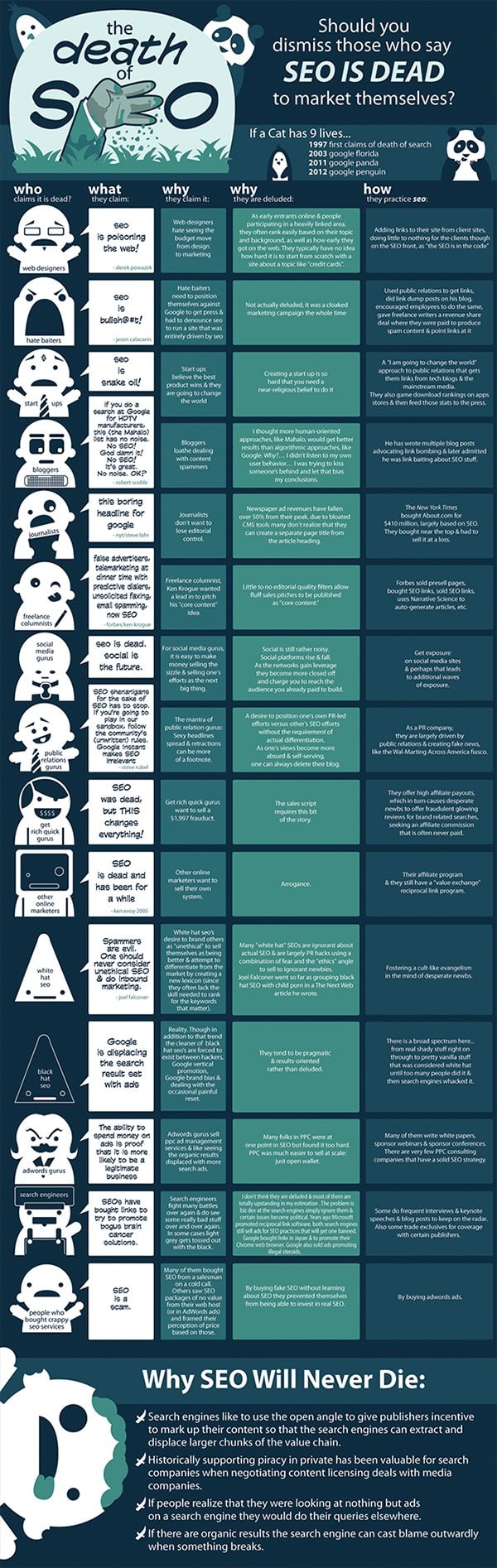
1. The Misinformed Blogger
Misinformed bloggers often jump on the SEO-is-dead bandwagon without fully understanding the intricacies of search engine optimization. They may have had a bad experience or failed to see immediate results, leading them to believe that SEO no longer works. In reality, SEO is a long-term strategy that requires patience and expertise.
2. The Social Media Enthusiast
Some individuals are so enamored with the world of social media that they overlook the importance of SEO. They argue that social media has replaced SEO as the primary source of online traffic. While social media is crucial, SEO remains a fundamental pillar of digital marketing, working in tandem with social platforms to drive organic traffic.
3. The Paid Advertising Advocate
Paid advertising advocates often claim that SEO is dead because they believe that paid ads are the only way to achieve quick results. While paid ads have their place, they can be costly, and the traffic they generate stops once the ad campaign ends. SEO, on the other hand, provides long-term benefits by improving organic search rankings.
4. The Impatient Entrepreneur
Entrepreneurs with high expectations and little patience may prematurely declare the death of SEO. They expect instant results and may not fully commit to the time and effort required for a successful SEO strategy. SEO is not a get-rich-quick scheme; it’s a continuous process that yields sustainable results over time.
5. The Algorithm Skeptic
With frequent search engine algorithm updates, some people become skeptical of SEO’s effectiveness. They argue that search engines change their algorithms so frequently that SEO is impossible to keep up with. While algorithms do change, SEO experts adapt their strategies to stay ahead and maintain rankings.
6. The “I Tried It Once” Individual
One-time attempts at SEO rarely yield significant results. Some individuals dabble in SEO, make minimal changes to their website, and then claim that SEO doesn’t work. Effective SEO requires ongoing efforts and a comprehensive approach, not a single half-hearted attempt.
7. The Content-Is-King Extremist
While quality content is essential for SEO, some enthusiasts claim that it’s the only factor that matters. They dismiss technical SEO, link building, and other crucial elements. In reality, a holistic SEO approach includes optimizing both content and technical aspects.
8. The Tech-Savvy Minimalist
Tech-savvy individuals may argue that SEO is dead because search engines have become smarter and can understand websites without optimization. While search engines have evolved, SEO is still necessary to ensure that search engines can effectively index and understand your content.
9. The SEO Tool Lover
Overreliance on SEO tools can lead some people to claim that SEO is dead. They believe that these tools can automate everything, making SEO expertise obsolete. Tools are valuable aids, but they can’t replace the insights and strategies provided by experienced SEO professionals.
10. The Trend Follower
Trend followers are quick to jump on the latest digital marketing trends, often neglecting established practices like SEO. They assume that newer trends like influencer marketing or chatbots render SEO obsolete. In reality, these trends can complement and enhance SEO efforts.
11. The Local Business Skeptic
Local businesses sometimes doubt the relevance of SEO, especially if they primarily serve a small geographic area. They may think that word-of-mouth and local advertising are sufficient. However, local SEO can significantly boost visibility and customer acquisition for local businesses.
12. The DIY Enthusiast
Do-it-yourselfers might claim that SEO is dead because they’ve attempted to handle it themselves without much success. SEO is a specialized field that requires in-depth knowledge and expertise. DIY efforts often lack the finesse of professional SEO services.
13. The Industry Naysayer
Certain industries, such as print media or brick-and-mortar retail, may have seen a decline due to digitalization. Individuals from these sectors may mistakenly generalize that SEO is also dead. In reality, digitalization makes SEO even more critical for staying competitive.
14. The Impression Chaser
Some individuals are solely focused on getting clicks and impressions without considering the quality of traffic. They may argue that SEO is dead because it doesn’t always result in high click-through rates. However, SEO aims to attract the right audience, not just any audience.
15. The Innovator Ostrich
Innovators are constantly on the lookout for the next big thing and may disregard established practices like SEO. They believe that focusing on the latest innovations is the key to success. However, SEO remains a foundational strategy that should be integrated into broader marketing initiatives.
Now that we’ve explored these 15 types of people who claim that SEO is dead, let’s address why they are deluded in their beliefs:
Why They Are Deluded
1. Lack of Understanding
Many of these individuals lack a deep understanding of SEO. They fail to grasp the complexity and nuance of search engine optimization and its role in digital marketing. SEO is not a one-size-fits-all solution, and success requires expertise.
2. Unrealistic Expectations
Impatient entrepreneurs and those seeking quick wins often fail to understand that SEO is a long-term investment. It takes time to see significant results, and expecting immediate success is unrealistic.
3. Ignoring SEO’s Evolution
Search engines have evolved, but so has SEO. SEO professionals continually adapt to algorithm changes, ensuring that their strategies remain effective. Dismissing SEO based on outdated knowledge is misguided.
4. Neglecting Holistic SEO
Some individuals focus solely on content or technical aspects while neglecting other essential elements of SEO. A holistic approach, addressing both content and technical aspects, is crucial for success.
5. Overlooking Local SEO
Local businesses that dismiss SEO fail to recognize the power of local SEO in attracting nearby customers. Ignoring this aspect can put them at a disadvantage in their local market.
6. Underestimating Professional Expertise
DIY enthusiasts may underestimate the depth of knowledge and experience required for effective SEO. Professional SEO services offer a level of expertise that DIY efforts often lack.
7. Failure to Adapt
The digital landscape is ever-changing, and trends come and go. However, SEO remains a constant. Those who fail to adapt to these changes and continue to invest in SEO may see their online presence suffer.
8. Misinterpreting Click Metrics
Measuring the success of SEO solely by clicks and impressions can be misleading. SEO aims to attract the right audience and improve conversion rates, not just increase traffic.
9. Underestimating the Competitive Landscape
In competitive industries, neglecting SEO can result in losing market share to competitors who invest in it. Assuming that SEO is dead can put businesses at a disadvantage.
In conclusion, while there are various types of people who claim that SEO is dead, their beliefs are often rooted in misconceptions and a lack of understanding. SEO remains a powerful and essential digital marketing strategy that, when executed correctly, can drive organic traffic, improve visibility, and deliver long-term results. Rather than declaring SEO dead, individuals and businesses should invest in understanding and implementing effective SEO strategies to stay competitive in the digital landscape.

Author:
Mark Ford

The Most Common Local SEO Mistakes That Stop You Getting Found Online
Are you struggling to understand why your business isn’t showing up in local search results when customers are actively looking for your services? Want to uncover the common local SEO mistakes that could be quietly costing you enquiries and visibility? […]


