

In the ever-evolving digital landscape, search engine optimization (SEO) remains a critical factor for online success.
If you want your website to thrive and rank high in search engine results, you must stay updated on the latest SEO trends and strategies.
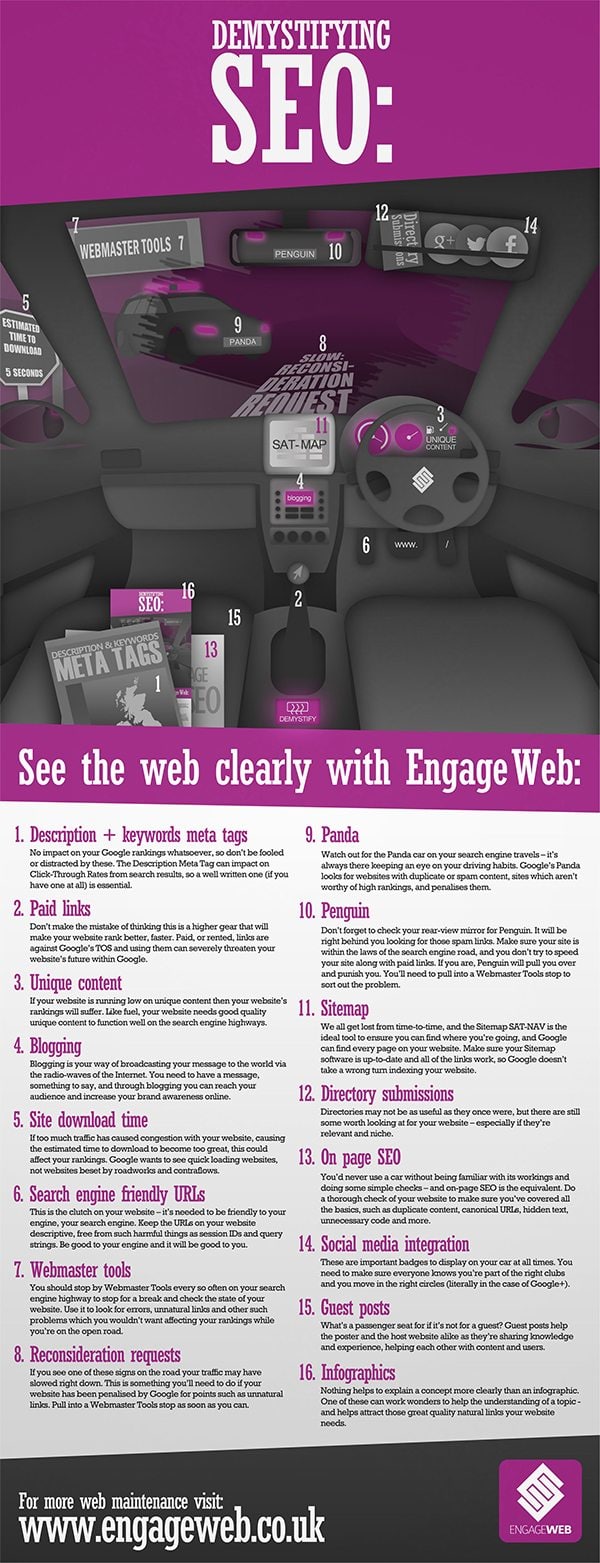
In this blog post, we’ll explore 16 essential things you need to know about SEO to ensure your online survival.
Infographic by Engage Web.
1. SEO Basics
Before diving into advanced techniques, it’s crucial to understand the fundamentals of SEO. SEO is the process of optimizing your website to improve its visibility in search engine results pages (SERPs). It involves various on-page and off-page factors, including keywords, content quality, backlinks, and user experience.
2. Keyword Research
Keyword research is the foundation of SEO. Identifying the right keywords helps you understand what your target audience is searching for. Use tools like Google Keyword Planner, SEMrush, or Ahrefs to discover relevant keywords with high search volumes and low competition.
3. Content Quality
Quality content is king in the world of SEO. Create informative, engaging, and valuable content that addresses the needs and interests of your audience. Ensure that your content is well-researched, well-written, and free of grammatical errors.
4. On-Page SEO
On-page SEO involves optimizing individual web pages to rank higher in search results. Key elements include optimizing meta titles, meta descriptions, header tags, and incorporating target keywords naturally within the content.
5. User Experience (UX)
Google considers user experience a crucial ranking factor. Ensure your website is mobile-friendly, loads quickly, and has an intuitive navigation structure. Provide a seamless browsing experience to keep visitors engaged.
6. Mobile Optimization
With the increasing use of mobile devices, mobile optimization is paramount. Google uses mobile-first indexing, meaning it primarily uses the mobile version of your website for ranking and indexing. Make sure your website is responsive and functions flawlessly on mobile devices.
7. Technical SEO
Technical SEO focuses on the backend of your website. It includes optimizing website speed, fixing broken links, creating XML sitemaps, and ensuring proper URL structure. Use tools like Google Search Console to identify and rectify technical issues.
8. Backlinks
Backlinks, or inbound links from other websites to yours, play a significant role in SEO. High-quality backlinks indicate authority and trustworthiness to search engines. Build relationships with authoritative websites and earn backlinks through quality content.
9. Local SEO
For businesses with a physical presence, local SEO is essential. Optimize your Google My Business listing, solicit customer reviews, and ensure consistent NAP (Name, Address, Phone Number) information across online directories.
10. Voice Search Optimization
As voice-activated devices become more popular, optimizing for voice search is vital. Use natural language in your content and provide concise answers to commonly asked questions to rank well in voice search results.
11. Schema Markup
Schema markup is a structured data vocabulary that helps search engines understand the content on your website better. Implementing schema markup can enhance your search results by providing rich snippets, such as star ratings and event information.
12. Content Freshness
Regularly updating your content shows search engines that your website is active and relevant. Fresh content can help improve your rankings, so consider updating older blog posts and articles with new information.
13. Core Web Vitals
Google introduced Core Web Vitals as a ranking factor to assess the user experience. Focus on improving metrics like loading speed, interactivity, and visual stability to ensure your website meets these standards.
14. SEO Analytics
Monitoring your website’s performance is crucial. Utilize tools like Google Analytics and Google Search Console to track organic traffic, keyword rankings, and user behavior. Analyze the data to make informed SEO decisions.
15. Algorithm Updates
Search engines regularly update their algorithms. Stay informed about these updates, as they can have a significant impact on your website’s ranking. Follow industry news and adapt your SEO strategies accordingly.
16. Patience and Persistence
SEO is not a quick-fix solution. It takes time to see significant results, and the landscape is competitive. Be patient, and don’t give up if you don’t see immediate improvements. Consistent effort and ongoing optimization are key to SEO success.
In conclusion, SEO is a dynamic field that requires constant adaptation to stay relevant. By understanding and implementing these 16 essential aspects of SEO, you can improve your website’s visibility, attract more organic traffic, and ultimately survive and thrive in the competitive online environment. Stay informed, keep learning, and be persistent in your SEO efforts to achieve long-term success.

Author:
Mark Ford

The Most Common Local SEO Mistakes That Stop You Getting Found Online
Are you struggling to understand why your business isn’t showing up in local search results when customers are actively looking for your services? Want to uncover the common local SEO mistakes that could be quietly costing you enquiries and visibility? […]


