In the ever-evolving landscape of search engine optimization (SEO), staying on the right side of the line between ethical practices and black hat tactics is crucial. Black hat SEO techniques may provide short-term gains, but they can result in long-term damage to your website’s reputation and rankings.
Search engines like Google continually update their algorithms to identify and penalize websites employing these tactics. In this blog post, we’ll explore 19 black hat SEO techniques you should avoid at all costs to ensure the long-term success of your online presence.
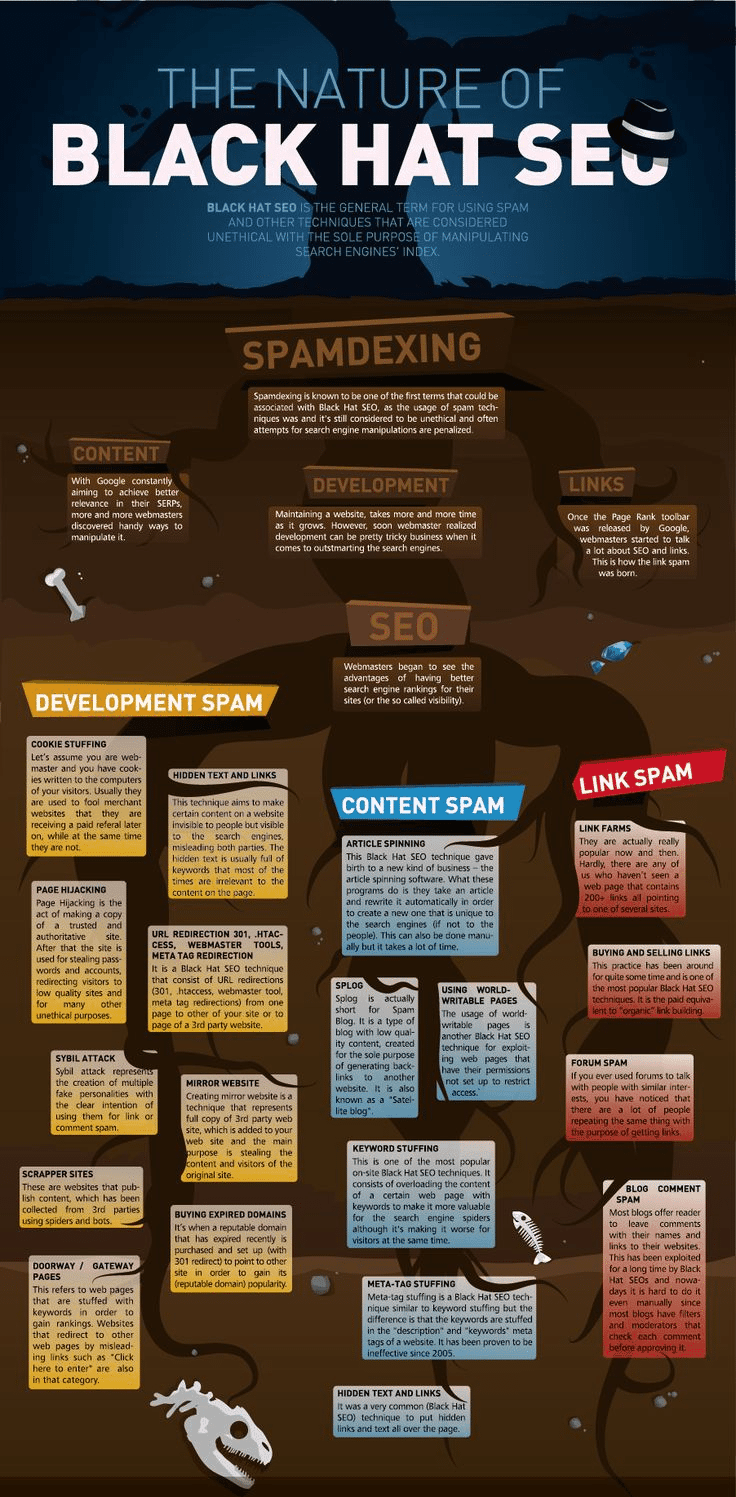
The infographic below from Animhut gives you 19 black hat SEO techniques you should avoid.
- Keyword Stuffing
Keyword stuffing involves overloading your content with keywords in an attempt to manipulate search engine rankings. Not only does this make your content unreadable, but it also violates search engine guidelines. Instead, focus on using keywords naturally and in context to provide value to your readers.
- Duplicate Content
Copying content from other websites or even duplicating your content across multiple pages can lead to penalties. Create unique, high-quality content that addresses your audience’s needs and interests.
- Cloaking
Cloaking is the practice of showing different content to search engines and users. This deceptive technique can lead to severe penalties. Ensure that the content visible to search engine crawlers is the same as what users see.
- Hidden Text and Links
Hiding text or links by making them the same color as the background or using tiny font sizes is a black hat tactic. It’s best to keep your content and links visible and easily accessible to users.
- Paid Links
Purchasing links to artificially boost your website’s authority is against search engine guidelines. Instead, focus on earning high-quality backlinks through content and outreach.
- Link Farms
Link farms are networks of websites that exist solely for the purpose of linking to each other. These schemes can result in penalties. Cultivate natural backlinks from authoritative and relevant websites.
- Private Blog Networks (PBNs)
Private Blog Networks are collections of websites controlled by a single entity to manipulate search engine rankings. Engaging in PBNs can result in severe consequences. Concentrate on building a legitimate online presence.
- Automated Content Generation
Using automated tools to generate content can produce low-quality, irrelevant, and often nonsensical text. Human-generated, high-quality content is always preferable.
- Doorway Pages
Doorway pages are designed solely for search engines, not users, and typically redirect users to other pages. Avoid creating doorway pages and focus on delivering valuable content.
- Content Scraping
Copying content from other websites without permission is both unethical and against search engine guidelines. Always create original content or properly attribute and link to the source.
- Clickbait
Creating misleading or sensationalized headlines to drive traffic is a black hat tactic. It can result in high bounce rates and damage to your site’s reputation. Craft honest and engaging headlines instead.
- Comment Spam
Posting irrelevant or promotional comments on blogs and forums with links to your website can lead to penalties. Engage in meaningful discussions and only leave comments when they add value.
- Over-Optimized Anchor Text
Using exact-match keywords excessively in anchor text can raise red flags with search engines. Diversify your anchor text with natural variations.
- Link Buying
Purchasing links directly from websites or link brokers is a black hat technique. Earn links organically by creating valuable content and fostering relationships with other websites.
- Social Media Spam
Excessive promotion and spammy behavior on social media platforms can harm your brand’s reputation and impact search rankings indirectly. Engage authentically with your audience.
- Abusing Rich Snippets
Misusing structured data markup (rich snippets) to display false or misleading information can lead to penalties. Only use structured data that accurately represents your content.
- Misleading Redirects
Redirecting users to unrelated or malicious websites is against search engine guidelines. Ensure that your redirects are relevant and beneficial to users.
- Thin Content
Publishing low-quality, shallow content that lacks value is detrimental to your SEO efforts. Focus on creating comprehensive, informative content that addresses user queries.
- Neglecting Mobile Optimization
With the increasing importance of mobile search, neglecting mobile optimization is a black hat tactic in today’s SEO landscape. Ensure your website is responsive and provides a seamless mobile experience.
Conclusion
While black hat SEO techniques may offer short-lived advantages, the long-term risks far outweigh the benefits. Search engines like Google are constantly improving their algorithms to identify and penalize unethical practices. To build a sustainable online presence and achieve lasting success in SEO, focus on white hat techniques that prioritize user experience, valuable content, and ethical practices. By avoiding these 19 black hat SEO techniques, you can safeguard your website’s reputation and rankings in the ever-competitive digital landscape.

Author:
Mark Ford