
Are you looking for proven ways to attract more customers and boost sales through your ecommerce website? Want to learn which marketing strategies deliver real, measurable results for online stores?
You’ll find 20 practical ecommerce marketing ideas in this post to help you grow your traffic, conversions, and revenue.
Here’s a summary of what’s covered:
- Google Marketing (Search & Ads)
- Email & Content Marketing
- General Ecommerce Strategies
- Social Media Marketing
Check out the post below for more.
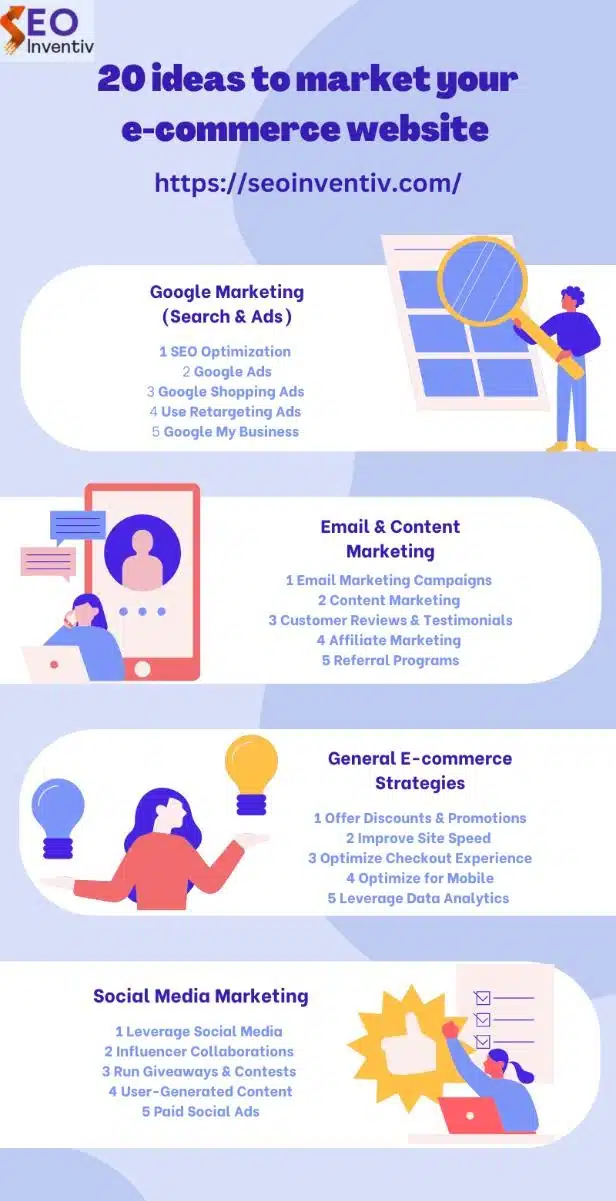
Running an ecommerce website is one thing—making it thrive is another. With so many competitors fighting for attention, you need a marketing strategy that not only attracts visitors but converts them into loyal customers. The key lies in combining the right mix of SEO, advertising, content, email, and social media tactics to build momentum and long-term growth.
Below are 20 proven strategies to market your ecommerce website effectively and increase your sales potential. Each idea focuses on practical actions that help you reach the right audience, strengthen your brand, and maximise your revenue.
SEO Optimisation
Search Engine Optimisation (SEO) is the foundation of any successful ecommerce marketing strategy. By improving your website’s visibility in search results, you attract more organic visitors who are already searching for what you offer. A well-optimised site also improves user experience and builds trust.
- Conduct detailed keyword research for product and category pages.
- Optimise meta titles, descriptions, and headings with relevant keywords.
- Use clean URLs, descriptive image alt text, and internal linking.
- Regularly publish SEO-friendly blog posts to target long-tail queries.
Google Ads
Google Ads can drive instant visibility and sales for your ecommerce business. Paid ads place your products directly in front of high-intent customers searching for similar items. When managed strategically, they deliver a strong return on investment and measurable results.
- Set clear campaign goals such as conversions or ROAS targets.
- Use precise keyword targeting to avoid wasted spend.
- Test multiple ad creatives and landing pages for performance.
- Monitor and adjust bids based on conversion data and seasonality.
Google Shopping Ads
Google Shopping Ads showcase your products with images, prices, and store details directly in search results. This visual format gives shoppers a clear idea of what they’re buying before they click, helping you attract more qualified leads.
- Upload a well-structured product feed to Google Merchant Center.
- Include high-quality product photos and accurate descriptions.
- Segment campaigns by product category or margin to optimise spend.
- Track conversions and refine bids for top-performing items.
Use Retargeting Ads
Retargeting brings back users who visited your website but didn’t purchase. These ads follow users across the web, reminding them of products they viewed and encouraging them to return. It’s one of the most effective ways to recover lost sales.
- Install tracking pixels from Google and Facebook to capture audiences.
- Show personalised ads based on viewed or abandoned items.
- Experiment with dynamic product retargeting campaigns.
- Adjust frequency caps to avoid ad fatigue and maintain engagement.
Google My Business
Even if your ecommerce store operates online, a Google My Business (GMB) profile helps improve your brand’s credibility. It enhances your visibility in local and branded searches, driving both awareness and trust.
- Claim and verify your GMB profile for accurate business details.
- Add images, opening hours, and a link to your ecommerce website.
- Encourage satisfied customers to leave positive reviews.
- Regularly update posts to showcase new products or offers.
Email Marketing Campaigns
Email remains one of the most profitable marketing channels for ecommerce. It helps you connect directly with customers, nurture leads, and encourage repeat purchases. The key is to send timely, relevant, and valuable messages that drive engagement.
- Segment your email list by customer behaviour or purchase history.
- Automate welcome sequences and abandoned cart reminders.
- Include exclusive offers and personalised product recommendations.
- Test subject lines and send times to maximise open rates.
Content Marketing
High-quality content builds brand authority and supports SEO while engaging potential buyers. It allows you to educate your audience, tell your brand story, and showcase the benefits of your products in a natural way.
- Create detailed product guides, blogs, and how-to articles.
- Share behind-the-scenes stories or expert tips to build trust.
- Use keyword-optimised content to attract organic search traffic.
- Repurpose long-form content into videos, infographics, and posts.
Customer Reviews & Testimonials
Social proof is essential for online sales. Shoppers want reassurance from others before making a purchase, and genuine reviews build that confidence. Featuring testimonials can also improve SEO and click-through rates.
- Send automated review requests after each purchase.
- Highlight customer testimonials on key landing pages.
- Respond professionally to both positive and negative reviews.
- Incentivise reviews through loyalty points or small discounts.
Affiliate Marketing
Affiliate marketing leverages other people’s platforms to promote your products. It’s a cost-effective way to reach new audiences and only pay for performance, making it ideal for ecommerce growth.
- Partner with relevant bloggers, influencers, and niche publishers.
- Offer competitive commission rates to attract top affiliates.
- Provide tracking links, banners, and promotional materials.
- Monitor affiliate activity and performance through analytics tools.
Referral Programmes
Word-of-mouth remains a powerful driver of sales. Referral programmes reward your existing customers for bringing in new ones, helping you grow your customer base organically while building loyalty.
- Create an easy-to-share referral link or code system.
- Offer meaningful rewards such as discounts or cashback.
- Promote the programme via email and social media.
- Track and measure participation to improve effectiveness.
Offer Discounts & Promotions
Strategic discounts can boost sales, clear old inventory, and attract first-time buyers. However, they should be planned carefully to maintain profitability and brand value.
- Use limited-time offers to create urgency.
- Offer bundle deals or free shipping thresholds.
- Create exclusive discounts for newsletter subscribers.
- Schedule seasonal promotions tied to key shopping events.
Improve Site Speed
A slow website frustrates users and damages sales. Shoppers expect fast-loading pages, especially on mobile devices, and even a one-second delay can reduce conversions significantly.
- Compress images and enable browser caching.
- Use a reliable hosting provider with good uptime.
- Minimise scripts and plugins that slow performance.
- Regularly test speed using Google PageSpeed Insights or GTmetrix.
Optimise Checkout Experience
A smooth, simple checkout process is vital for reducing cart abandonment. Every unnecessary step or form field increases the risk of losing a sale, so aim for convenience and clarity.
- Offer guest checkout to remove sign-up barriers.
- Provide multiple payment and shipping options.
- Display progress indicators to guide users through checkout.
- Show security badges and clear return policies for reassurance.
Optimise for Mobile
With most ecommerce traffic coming from mobile devices, a responsive design is non-negotiable. A mobile-optimised website ensures visitors can browse, add to cart, and check out effortlessly.
- Use a responsive theme that adjusts to all screen sizes.
- Simplify navigation and reduce text input for small screens.
- Optimise images and CTAs for mobile performance.
- Test checkout flow on multiple devices before launch.
Leverage Data Analytics
Understanding your website data helps you make smarter marketing decisions. Analytics reveal what’s working, what’s not, and where customers drop off in their journey.
- Set up Google Analytics and conversion tracking.
- Monitor traffic sources, bounce rates, and top-performing pages.
- Use heatmaps to understand user behaviour on product pages.
- Test changes and measure performance before scaling up.
Leverage Social Media
Social media remains one of the most effective platforms to build brand awareness and drive ecommerce traffic. By creating engaging content, you can turn followers into paying customers.
- Post a mix of product highlights, stories, and educational content.
- Use analytics to determine the best times to post.
- Engage with followers through comments and messages.
- Include clear CTAs linking back to your ecommerce site.
Influencer Collaborations
Influencers provide credibility and reach within specific audiences. Partnering with them allows your brand to tap into trust and authenticity that traditional advertising can’t easily achieve.
- Identify influencers who align with your brand values.
- Offer free products or commission-based partnerships.
- Set clear campaign goals and deliverables.
- Track engagement and conversions through unique links or codes.
Run Giveaways & Contests
Giveaways and contests encourage engagement and attract new followers quickly. They create buzz around your brand and motivate users to interact with your products.
- Choose prizes that appeal directly to your target customers.
- Set simple entry rules to maximise participation.
- Promote across all social media platforms and email lists.
- Announce winners publicly to build credibility and excitement.
Encourage User-Generated Content
User-generated content (UGC) builds community and authenticity. When customers share photos or reviews of your products, it influences others to buy and strengthens brand loyalty.
- Create a branded hashtag for customers to use.
- Repost customer photos and videos with permission.
- Offer incentives such as discounts for UGC submissions.
- Feature the best content on your homepage or social channels.
Paid Social Ads
Paid social campaigns help you reach targeted audiences with precision. Platforms like Facebook, Instagram, and TikTok allow you to tailor your ads to specific interests, behaviours, and demographics.
- Define clear objectives such as conversions or traffic.
- Use retargeting ads to re-engage past website visitors.
- Test multiple creatives and ad formats for performance.
- Continuously monitor results and adjust budgets strategically.
Conclusion
Marketing your ecommerce website effectively requires more than a single tactic—it’s about combining multiple strategies to create a cohesive, results-driven approach. From SEO and Google Ads to social media and email campaigns, every channel plays a role in attracting, converting, and retaining customers.
By applying these 20 proven techniques, you can strengthen your online presence, build brand loyalty, and drive consistent sales growth. Ecommerce success doesn’t happen overnight, but with the right marketing mix, your store can become a trusted destination for customers and a reliable source of revenue for your business.

Author:
Mark Ford