
Are you looking for ways to boost your local search rankings and attract more nearby customers? Want to learn proven local SEO tactics that will help you outrank your competitors?
You’ll find some SEO basics in this infographic.
Here’s a summary of what’s covered:
- Claim and Optimise Google Business Profile
- Use Local Keywords
- Add Local Schema
- Consistent NAP
- List on Local Directories
- Create Location-Based Pages
- Get Customer Reviews
- Respond to Reviews
- Optimise for Mobile
- Build Local Backlinks
Check out the post below for more.
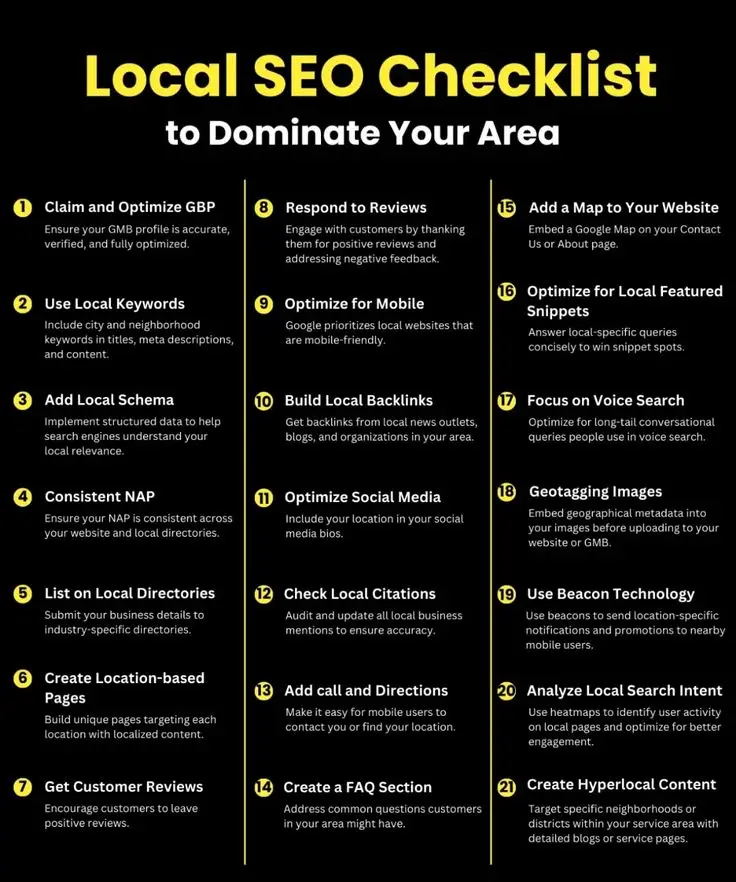
Local SEO is one of the most powerful ways for businesses to stand out in their area. With customers relying heavily on Google to find nearby services, optimising your online presence is essential.
This guide covers the proven local SEO tactics that will help you build visibility, attract more customers, and consistently outrank your competitors.
Claim and Optimise Google Business Profile
Your Google Business Profile (GBP) is the foundation of local SEO success. It ensures your business shows up in map results, local packs, and search listings with accurate details. An optimised profile builds trust and makes it easier for potential customers to find you. Treat it as your digital shopfront.
- Verify your listing to ensure ownership and control.
- Add complete business information, including hours and services.
- Upload high-quality images of your business and team.
- Keep your profile updated with regular posts and offers.
Use Local Keywords
Local keywords make your website more relevant to customers searching in your area. By targeting city or neighbourhood names in your content, you signal to search engines exactly where you serve. This increases your chances of appearing in searches with local intent.
- Add location keywords to page titles and meta descriptions.
- Include city or town names naturally in service pages.
- Optimise blog posts with local references and topics.
- Use tools like Google Keyword Planner to find local search terms.
Add Local Schema
Schema markup provides structured data that helps search engines interpret your business details. Implementing local schema boosts your visibility in search results with rich snippets and makes your business appear more trustworthy. It’s a simple technical step with big impact.
- Use schema.org’s LocalBusiness markup on your site.
- Include your business name, address, and phone number.
- Add operating hours and customer review schema.
- Test your markup with Google’s Rich Results tool.
Consistent NAP
Your Name, Address, and Phone number (NAP) must be consistent everywhere online. Even small discrepancies can confuse search engines and hurt your rankings. Consistency builds authority and ensures customers can contact you without frustration.
- Standardise your NAP format across all platforms.
- Update business details immediately when they change.
- Audit directory listings for accuracy.
- Monitor your citations regularly with SEO tools.
List on Local Directories
Directory listings extend your online footprint and create backlinks that benefit SEO. Being visible in trusted industry-specific and regional directories increases your authority. Customers also use directories directly when searching for businesses.
- Submit details to relevant local business directories.
- Target niche directories linked to your industry.
- Ensure your NAP is accurate in every listing.
- Avoid spammy directories with low-quality links.
Create Location-Based Pages
Dedicated location pages allow you to target specific areas individually. Each page can focus on local keywords and highlight your services in that region. This makes your website more relevant to customers searching within those boundaries.
- Build unique service pages for each city or town you serve.
- Include testimonials or case studies from that area.
- Add maps and directions to your local branches.
- Optimise content with neighbourhood-specific details.
Get Customer Reviews
Positive reviews are a key ranking factor for local SEO and influence customer decisions. They provide social proof that builds trust with searchers considering your business. Encouraging happy customers to leave reviews can boost visibility and conversions.
- Ask satisfied customers for reviews at the right moment.
- Provide links to your GBP or review platforms.
- Incentivise feedback ethically without offering rewards.
- Respond to reviews to show engagement.
Respond to Reviews
Engaging with reviews demonstrates that you value customer feedback. Thanking customers for positive comments builds loyalty, while addressing negative ones shows professionalism. Active responses can even influence other potential customers.
- Thank reviewers for their positive feedback.
- Respond to negative reviews calmly and constructively.
- Highlight improvements made based on feedback.
- Keep your tone friendly, empathetic, and professional.
Optimise for Mobile
Google now prioritises mobile-friendly websites in local searches. If your site isn’t easy to use on smartphones, you risk losing visitors to competitors. Mobile optimisation ensures customers can quickly find what they need.
- Use responsive design that adapts to any device.
- Compress images for faster load times.
- Simplify navigation for smaller screens.
- Test your site using Google’s Mobile-Friendly tool.
Build Local Backlinks
Backlinks from local websites signal to search engines that your business is trusted in your community. Quality local links strengthen your authority and improve rankings. Building relationships locally is just as valuable online as offline.
- Partner with local news sites for coverage.
- Contribute guest posts to community blogs.
- Sponsor local events or charities with backlinks.
- Network with local organisations for mutual links.
Optimise Social Media
Your social media presence can directly support local SEO. By including your location in bios and posts, you align your brand with your community. Consistent updates also keep your business relevant to searchers.
- Add city or region to your profile descriptions.
- Share content that highlights your local involvement.
- Use location-specific hashtags in posts.
- Engage with local customers and influencers online.
Check Local Citations
Local citations are mentions of your business across the web. Inaccurate citations harm your credibility with both search engines and customers. Regular checks help you maintain consistency and accuracy across platforms.
- Use SEO tools to audit your citations.
- Correct incorrect details immediately.
- Remove duplicate or outdated listings.
- Monitor ongoing mentions of your business name.
Add Call and Directions
Customers should be able to contact or visit your business with minimal effort. Adding clear calls and directions helps them take action quickly. This improves user experience and supports conversions from search.
- Add a “Call Now” button for mobile users.
- Embed Google Maps with directions to your location.
- Display your contact details prominently on every page.
- Ensure all numbers are clickable on mobile devices.
Create a FAQ Section
A Frequently Asked Questions section addresses customer queries directly. This can improve user experience, reduce customer service workload, and help you capture long-tail keywords. It also positions your business as helpful and transparent.
- Identify common questions customers often ask.
- Write concise, informative answers.
- Include local details in your responses.
- Use FAQ schema to improve search visibility.
Add a Map to Your Website
Embedding a map makes it easier for customers to locate your business. It’s a visual cue that reinforces your location details while boosting trust. Google Maps integration also helps with local search optimisation.
- Add a map to your contact or about page.
- Embed interactive Google Maps with directions.
- Highlight multiple branches if you have them.
- Ensure the map is mobile-friendly and accessible.
Optimise for Local Featured Snippets
Featured snippets appear at the top of search results and drive significant traffic. By optimising for local-specific queries, you increase your chances of occupying these coveted spots. Answering questions directly is the key.
- Research local search queries in your industry.
- Write content that answers those questions concisely.
- Use structured data for clarity.
- Format answers in lists or short paragraphs.
Focus on Voice Search
Voice search is becoming increasingly common, particularly for local queries. Optimising for conversational phrases makes it easier for your business to be found through smart assistants. This is especially valuable for “near me” searches.
- Target long-tail, natural-sounding keywords.
- Include FAQs that mimic spoken questions.
- Optimise for mobile as voice searches often happen there.
- Ensure your GBP is complete for voice-driven results.
Geotag Images
Adding location metadata to images reinforces your connection to a specific area. Geotagged images can strengthen your local relevance and improve how your business appears in image searches.
- Add geographical metadata before uploading photos.
- Tag images used on your website and GBP.
- Use authentic local photos of your business or team.
- Ensure file names include local keywords.
Use Beacon Technology
Beacon technology allows you to deliver targeted messages to mobile users nearby. This creates real-time engagement with local audiences. It’s a powerful way to drive foot traffic and build brand awareness.
- Install beacons in your physical business location.
- Send promotions to customers within a set range.
- Provide local event updates or announcements.
- Integrate beacon campaigns with your mobile app.
Analyse Local Search Intent
Understanding user intent helps you create content that meets customer needs. Analysing local search behaviour highlights what people want when searching for businesses like yours. This insight enables smarter optimisation.
- Use heatmaps to track user behaviour on your site.
- Analyse popular local search queries.
- Segment keywords by informational, navigational, or transactional intent.
- Adjust content to better match search intent.
Create Hyperlocal Content
Hyperlocal content targets specific districts or neighbourhoods. This makes your business highly relevant to nearby customers and improves your visibility for very specific searches. It’s about narrowing your focus to win locally.
- Write blog posts about community events.
- Feature local case studies or customer stories.
- Create content that highlights neighbourhood landmarks.
- Target ultra-specific location keywords.
Conclusion
Outranking competitors in local SEO requires a comprehensive, ongoing approach. From claiming your Google Business Profile to creating hyperlocal content, each tactic contributes to stronger visibility and customer engagement.
By applying these proven strategies, you’ll not only improve your rankings but also attract more customers, build trust in your community, and ensure your business thrives for the long term.

Author:
Mark Ford