So, you’re working hard on your SEO to try and rank higher on Google, but are you making mistakes that are doing more harm than good?
Search Engine Optimization (SEO) is a critical aspect of online success in today’s digital world. When done right, it can propel your website to the top of search engine results pages (SERPs), driving organic traffic and increasing your online visibility. However, SEO is not a one-time task; it’s an ongoing process that requires careful planning and execution.
Unfortunately, many website owners make common SEO mistakes that hinder their website’s performance. These mistakes can lead to poor rankings, decreased traffic, and lost opportunities. In this comprehensive guide, we’ll explore 25+ common SEO mistakes and how to avoid them to ensure your website’s success in the competitive online landscape.
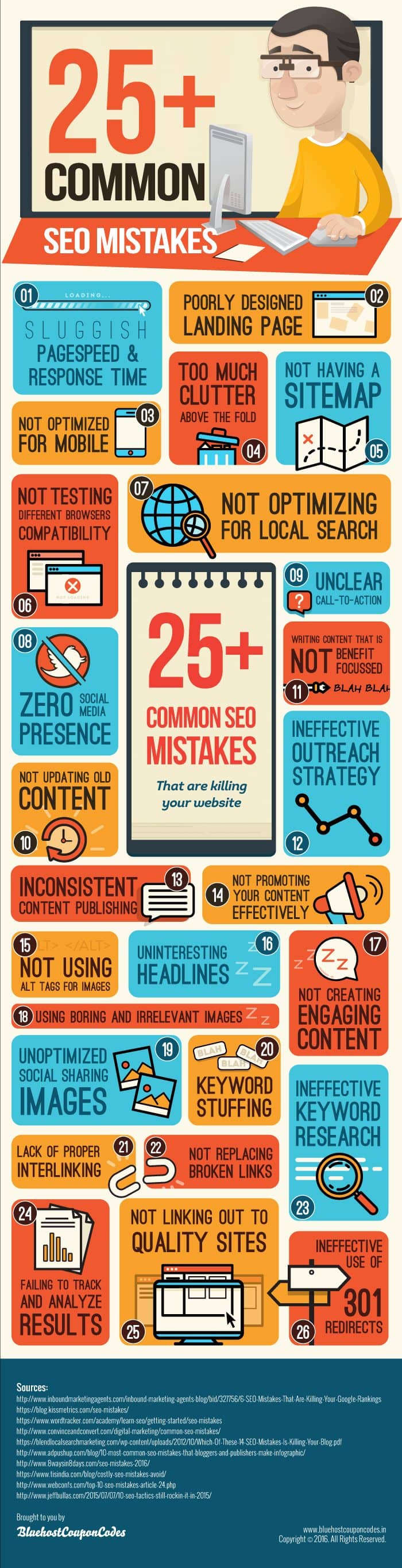
Bluehost Coupon Codes share 25 SEO mistakes to avoid in this infographic.
1. Neglecting Keyword Research
Keyword research is the foundation of any effective SEO strategy. Failing to conduct proper keyword research means you’re missing out on valuable opportunities to target the right audience. Avoid this mistake by using keyword research tools like Google Keyword Planner, SEMrush, or Ahrefs to discover relevant keywords in your niche.
2. Overstuffing Keywords
While keywords are essential, stuffing them into your content can backfire. Keyword stuffing makes your content read unnaturally and can lead to penalties from search engines. Instead, focus on creating high-quality, valuable content that naturally incorporates keywords.
3. Ignoring Long-Tail Keywords
Don’t concentrate solely on broad keywords. Long-tail keywords, which are longer and more specific, can be easier to rank for and often lead to more targeted traffic.
4. Neglecting Mobile Optimization
With the majority of internet traffic coming from mobile devices, it’s crucial to have a mobile-responsive website. Failing to optimize your site for mobile users can result in a poor user experience and lower search rankings.
5. Slow Page Load Times
A slow-loading website can frustrate visitors and harm your SEO efforts. Use tools like Google PageSpeed Insights to identify and fix performance issues that affect page load times.
6. Not Optimizing Images
Images are an essential part of web content, but large, unoptimized images can slow down your website. Compress images and use descriptive alt text to improve SEO.
7. Not Creating Quality Content
High-quality content is a cornerstone of SEO success. Publishing thin or duplicate content can lead to lower rankings. Focus on creating valuable, informative, and unique content that addresses your audience’s needs.
8. Neglecting Title Tags and Meta Descriptions
Title tags and meta descriptions are crucial for attracting clicks from search engine results pages. Craft compelling, keyword-rich titles and descriptions that accurately represent your content.
9. Not Using Header Tags Properly
Header tags (H1, H2, H3, etc.) structure your content and make it more accessible to both users and search engines. Use them to organize your content and emphasize important points.
10. Forgetting About Internal Linking
Internal links help search engines understand the structure of your website and how different pages are related. Include relevant internal links in your content to improve navigation and user experience.
11. Neglecting External Linking
Outbound links to authoritative sources can boost your website’s credibility and help establish your content as valuable. Don’t be afraid to link to reputable websites when appropriate.
12. Neglecting Backlinks
Backlinks from high-quality, authoritative websites are crucial for SEO. Building a strong backlink profile should be an ongoing effort. Avoid spammy or low-quality backlinks, as they can harm your rankings.
13. Not Optimizing for Local SEO
If you have a local business, optimizing for local SEO is essential. Claim and optimize your Google My Business listing, encourage customer reviews, and include local keywords in your content.
14. Ignoring User Experience
User experience (UX) is a ranking factor. Ensure your website is easy to navigate, loads quickly, and provides a seamless experience for visitors.
15. Not Mobile-Friendly
A responsive design is not enough; your website should be mobile-friendly. Test your site on various devices to ensure it looks and performs well across the board.
16. Not Paying Attention to Analytics
Failing to analyze your website’s performance through tools like Google Analytics can prevent you from identifying issues and opportunities for improvement.
17. Overlooking Voice Search Optimization
With the rise of voice-activated devices, optimizing for voice search is becoming increasingly important. Focus on natural language and long-tail keywords.
18. Not Creating a Sitemap
A sitemap helps search engines crawl and index your site more effectively. Create and submit a sitemap to improve your site’s discoverability.
19. Duplicate Content Issues
Duplicate content, whether within your own site or across multiple sites, can lead to SEO problems. Use canonical tags and address duplicate content issues promptly.
20. Neglecting Local SEO Citations
Consistent business information (NAP: Name, Address, Phone number) across online directories is vital for local SEO. Ensure your NAP data is accurate and up-to-date.
21. Neglecting Social Media
Social signals can indirectly impact your SEO. Maintain an active presence on social media platforms to increase your online visibility and engagement.
22. Skipping HTTPS
Google considers HTTPS a ranking factor. Install an SSL certificate to secure your website and improve its search engine ranking.
23. Not Optimizing for Featured Snippets
Featured snippets are prominent in search results. Create content that answers common questions in your niche to increase your chances of appearing in featured snippets.
24. Ignoring Mobile-First Indexing
Google primarily uses the mobile version of a page for indexing and ranking. Ensure your mobile and desktop versions have consistent content and functionality.
25. Not Monitoring Broken Links
Broken links can harm user experience and SEO. Regularly check for and fix broken links on your website.
26. Ignoring Structured Data Markup
Structured data markup (schema markup) helps search engines understand your content better. Implement structured data where relevant to enhance your website’s visibility in search results.
27. Failing to Optimize for Core Web Vitals
Google’s Core Web Vitals are now ranking factors. Address issues related to loading, interactivity, and visual stability to improve your site’s performance in search results.
Conclusion
Avoiding these common SEO mistakes is crucial to maintaining and improving your website’s performance in search engine rankings. SEO is a dynamic field, and it’s essential to stay updated with the latest best practices and search engine algorithm changes. Regularly auditing your website for these mistakes and taking corrective actions can help ensure that your website continues to attract organic traffic and thrive in the competitive online landscape.

Author:
Mark Ford