
So you’ve setup an online shop, your products are loaded and ready to be shipped, now you just need some visitors to buy your stuff?
In the ever-expanding world of e-commerce, having a stunning website and great products is just the beginning. To succeed, you need to drive traffic to your e-commerce website and turn those visitors into loyal customers.
Fortunately, there are several effective strategies that can help you achieve this goal without breaking the bank. In this blog post, we’ll explore four easy ways to drive traffic to your e-commerce website and boost your online sales.
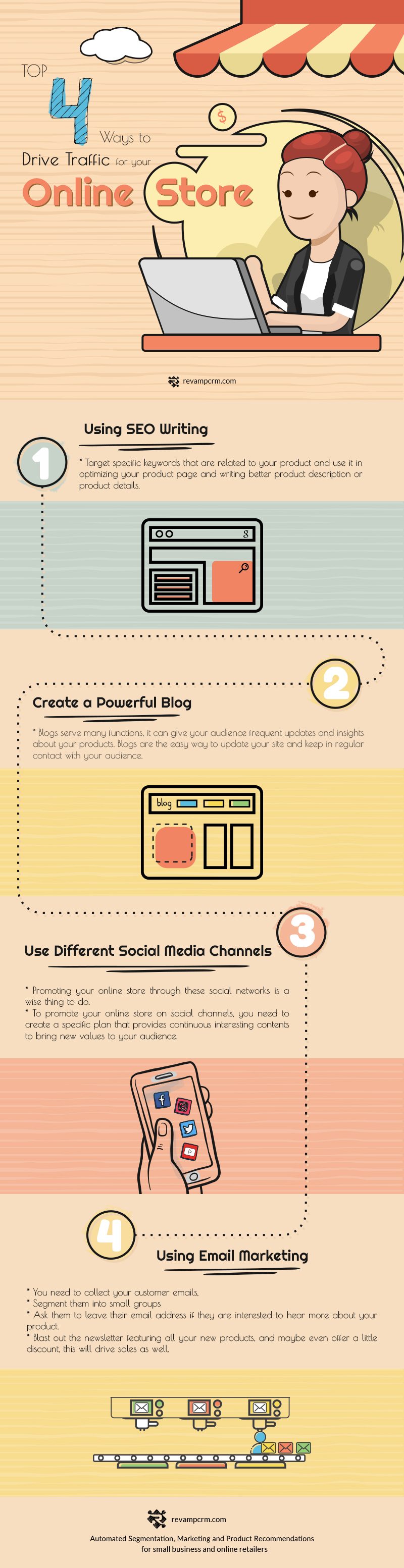
Revamp CRM share the basics of generating traffic to your online store in this infographic.
1. Search Engine Optimization (SEO)
Search Engine Optimization, or SEO, is the art of making your website more visible to search engines like Google. When done right, SEO can drive organic (unpaid) traffic to your e-commerce website. Here’s how to get started:
Keyword Research
Start by conducting keyword research to identify the terms and phrases potential customers are using to search for products in your niche. Tools like Google Keyword Planner, SEMrush, and Ahrefs can help you discover high-traffic keywords relevant to your business.
Once you’ve identified these keywords, incorporate them strategically into your website’s content. This includes product descriptions, category pages, and blog posts. Be sure to use keywords naturally and avoid keyword stuffing, which can negatively impact your search engine rankings.
High-Quality Content
Creating high-quality, informative, and engaging content is essential for SEO success. Consider starting a blog on your e-commerce site where you can publish articles related to your products, industry trends, and customer guides. This not only helps you target additional keywords but also positions your brand as an authority in your niche.
On-Page Optimization
Optimize your website’s on-page elements for search engines. This includes optimizing title tags, meta descriptions, and image alt tags. Ensure that your website loads quickly and is mobile-responsive, as these factors also affect your search engine rankings.
Link Building
Building high-quality backlinks to your e-commerce website is another crucial aspect of SEO. Reach out to relevant websites, bloggers, and influencers in your industry to collaborate and earn backlinks. Guest posting on industry-related blogs is an effective way to build links and increase your site’s authority.
Regular Updates
SEO is an ongoing process, so be prepared to regularly update and improve your website’s content and optimization. Search engines favor fresh, relevant content, so consistently adding new products, blog posts, and updates can help maintain and improve your rankings.
2. Social Media Marketing
Social media platforms offer a massive potential audience for your e-commerce business. With billions of users worldwide, platforms like Facebook, Instagram, Twitter, and Pinterest can help you drive traffic to your website. Here’s how to leverage social media marketing effectively:
Choose the Right Platforms
Not all social media platforms are created equal. To maximize your efforts, focus on the platforms where your target audience is most active. For example, if you sell visually appealing products like clothing or home decor, Instagram and Pinterest might be ideal. For B2B products, LinkedIn could be more effective.
Consistent Branding
Maintain consistent branding across all your social media profiles and your e-commerce website. This includes using the same logo, color schemes, and messaging. Consistency helps customers recognize and trust your brand.
Engage with Your Audience
Engagement is key to success on social media. Respond promptly to comments, messages, and mentions. Run contests, polls, and surveys to encourage interaction and gather valuable feedback from your audience.
Visual Content
Visual content, such as images and videos, tends to perform exceptionally well on social media. Showcase your products in the best possible light with high-quality visuals. Consider using user-generated content, like customer reviews and photos, to build trust and authenticity.
Paid Advertising
Social media platforms offer highly targeted advertising options. Invest in paid advertising campaigns to reach a broader audience. Platforms like Facebook Ads and Instagram Ads allow you to define your target audience based on demographics, interests, and behavior.
3. Email Marketing
Email marketing remains one of the most cost-effective ways to drive traffic and sales for e-commerce businesses. Here’s how to make the most of your email marketing efforts:
Build and Segment Your Email List
Start by building a robust email list of customers and potential leads. Offer incentives like discounts or exclusive content to encourage people to subscribe. Segment your list based on customer behavior, preferences, and purchase history to send relevant and personalized emails.
Abandoned Cart Emails
Cart abandonment is a common issue in e-commerce. Send automated emails to remind customers of their abandoned carts and encourage them to complete their purchases. Include enticing product descriptions and images in these emails.
Promotions and Newsletters
Regularly send out newsletters and promotional emails to keep your subscribers informed about new products, sales, and special offers. Use compelling subject lines and visually appealing email templates to capture your audience’s attention.
Personalization
Personalize your email content to make recipients feel valued. Address subscribers by their names and recommend products based on their browsing and purchase history. Personalization can significantly increase open rates and conversions.
A/B Testing
Experiment with different email elements, such as subject lines, content, and send times, through A/B testing. This helps you identify what resonates best with your audience and optimize your email campaigns accordingly.
4. Influencer Marketing
Influencer marketing involves partnering with individuals who have a significant online following and credibility in your industry. These influencers can help you promote your products to a wider audience. Here’s how to implement influencer marketing:
Identify Relevant Influencers
Research and identify influencers in your niche who align with your brand and target audience. Look for individuals whose followers match your ideal customer demographics.
Reach Out and Collaborate
Reach out to potential influencers and propose collaboration. Offer to send them your products for review or sponsor their content featuring your products. Be clear about your expectations and the terms of the partnership.
Authenticity Matters
Authenticity is crucial in influencer marketing. Encourage influencers to provide honest and unbiased reviews of your products. Authentic recommendations from trusted influencers can have a significant impact on their followers’ purchasing decisions.
Track and Measure
Use tracking tools and metrics to measure the effectiveness of your influencer marketing campaigns. Monitor engagement, click-through rates, and sales generated through influencer partnerships. This data will help you assess the ROI of your efforts.
Long-Term Relationships
Consider building long-term relationships with influencers who consistently deliver results. Building a network of brand advocates can lead to ongoing exposure and increased trust in your brand.
Conclusion
Driving traffic to your e-commerce website doesn’t have to be a daunting task. By implementing these four easy strategies—SEO, social media marketing, email marketing, and influencer marketing—you can attract more visitors and ultimately increase your online sales. Remember that success in e-commerce often requires patience and consistent effort, so stay committed to these strategies and adapt them as needed to meet the evolving needs of your audience and industry. With dedication and creativity, you can turn your e-commerce website into a thriving online business.

Author:
Mark Ford