So you’ve just got yourself a brand spanking new website, you’ve spent weeks crafting your text and images and you’ve just “gone live”. For any new business owner it’s a monumental occasion and one you can’t wait to share with the world.
Launching a new website is an exciting endeavor. Whether you’re starting a blog, an e-commerce platform, or a business website, the ultimate goal is to reach as many people as possible. However, simply having a website is not enough to guarantee success.
To achieve your online objectives, you need to drive traffic to your website. In this blog post, we’ll explore four essential techniques that new website owners should use to generate web traffic and increase their online visibility.
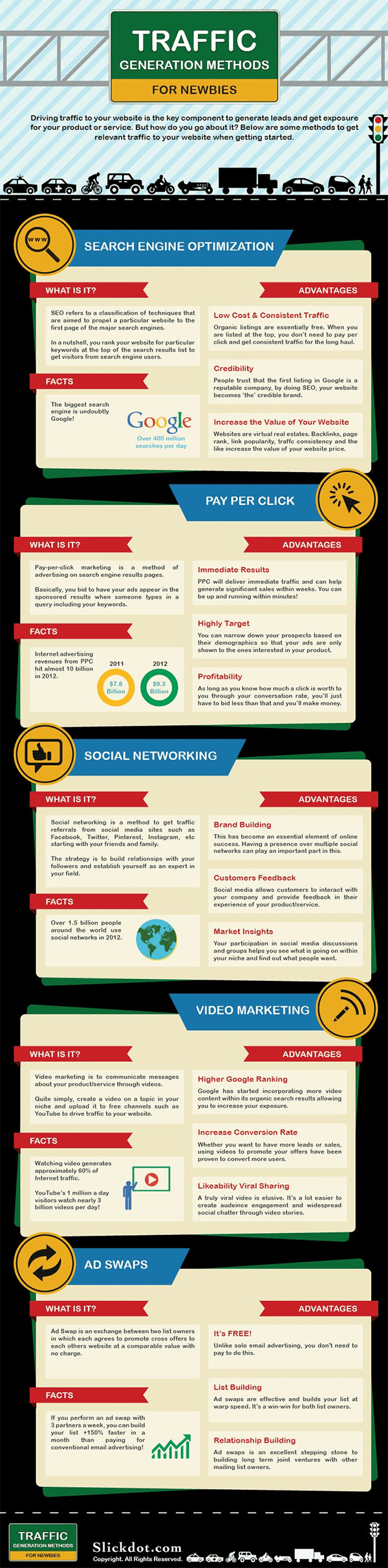
Use the first 4 techniques listed on the infographic below from Slickdot to start building traffic. Ignore the fifth, that’s just a load of rubbish! Just replace it with running a blog.
1. Search Engine Optimization (SEO)
Search Engine Optimization, commonly known as SEO, is the foundation of any successful online presence. It involves optimizing your website to rank higher in search engine results pages (SERPs) like Google, Bing, and Yahoo. When your website ranks well in search results, it becomes more visible to potential visitors who are actively searching for information, products, or services related to your niche. Here’s how to get started with SEO:
a. Keyword Research
Start by conducting keyword research to identify the terms and phrases people use when searching for content related to your website. There are various keyword research tools available, such as Google Keyword Planner, SEMrush, and Ahrefs. These tools can help you discover relevant keywords and assess their search volume and competitiveness.
b. On-Page SEO
Once you have your target keywords, integrate them strategically into your website’s content. This includes optimizing your titles, headings, meta descriptions, and the body of your articles or product pages. Ensure that your content is informative, well-structured, and provides value to your audience.
c. Quality Backlinks
Backlinks are links from other websites that point to your site. Search engines consider backlinks as votes of confidence in your content’s quality and relevance. Building high-quality backlinks from reputable websites can significantly boost your SEO efforts. You can acquire backlinks through guest posting, outreach to industry influencers, and participating in online communities.
d. Technical SEO
Technical SEO focuses on the backend aspects of your website. Ensure that your site is mobile-friendly, loads quickly, and has a secure SSL certificate (HTTPS). Properly structure your website with XML sitemaps, robots.txt files, and a clear URL structure. These technical elements contribute to better search engine rankings.
2. Content Marketing
Content marketing is a powerful strategy for attracting and retaining website visitors. By consistently creating valuable and relevant content, you can establish your website as an authoritative source in your niche. Here’s how to leverage content marketing effectively:
a. Blogging
Blogging is one of the most popular and effective content marketing tactics. Start a blog on your website and publish high-quality articles that address the needs and interests of your target audience. Use the keywords you identified during your SEO research to optimize your blog posts for search engines.
b. Video Marketing
Video content is gaining tremendous popularity on the internet. Create engaging and informative videos related to your niche or products. You can host videos on platforms like YouTube and embed them on your website. Don’t forget to optimize your video titles and descriptions for SEO.
c. Social Media Content
Leverage social media platforms to share your content and engage with your audience. Create visually appealing and shareable posts that link back to your website. Social media can be a powerful source of traffic when used strategically.
d. E-books and Guides
Offer valuable resources such as e-books, guides, or whitepapers in exchange for visitors’ email addresses. Building an email list can be an invaluable asset for driving traffic and nurturing leads over time.
3. Social Media Marketing
Social media platforms are a treasure trove of potential website traffic. With billions of active users worldwide, platforms like Facebook, Instagram, Twitter, and LinkedIn offer excellent opportunities to connect with your audience and promote your website. Here’s how to make the most of social media marketing:
a. Choose the Right Platforms
Not all social media platforms are created equal, and not every platform will be suitable for your niche. Identify the platforms where your target audience is most active and focus your efforts there. For instance, if you’re in the fashion industry, Instagram may be a better choice than LinkedIn.
b. Consistency is Key
Consistency is crucial in social media marketing. Regularly post content, interact with your followers, and maintain a consistent brand voice and style. Establishing a content calendar can help you stay organized and on track.
c. Paid Advertising
Consider using paid advertising on social media platforms to reach a broader audience. Most social media platforms offer robust ad targeting options, allowing you to tailor your ads to specific demographics, interests, and behaviors.
d. User-Generated Content
Encourage your followers to create and share content related to your products or services. User-generated content not only promotes your brand but also builds trust among potential customers.
4. Email Marketing
Email marketing is a cost-effective method for driving website traffic and nurturing leads. When done correctly, it can yield a high return on investment (ROI). Here are some key email marketing strategies:
a. Build an Email List
Start by building a list of subscribers who have expressed interest in your website or products. You can collect email addresses through sign-up forms on your website, social media contests, or incentives like discounts or freebies.
b. Personalize Your Emails
Personalization is essential in email marketing. Segment your email list based on user behavior, demographics, or preferences. Tailor your email content to each segment to provide a more personalized experience.
c. Provide Value
Your emails should provide value to your subscribers. Send informative content, exclusive offers, and updates that are relevant to their interests. Avoid spammy or overly promotional emails, as they can lead to unsubscribes.
d. A/B Testing
Regularly test different email subject lines, content formats, and call-to-action buttons to determine what resonates best with your audience. A/B testing can help you optimize your email campaigns for better results.
In conclusion, generating web traffic for a new website requires a multifaceted approach. By implementing a combination of SEO, content marketing, social media marketing, and email marketing techniques, new website owners can increase their online visibility and attract a steady flow of visitors. Keep in mind that building web traffic takes time and consistent effort, so be patient and persistent in your strategies. As you work on these techniques, monitor your website’s analytics to track your progress and make necessary adjustments to achieve your traffic goals.

Author:
Mark Ford