In the vast and competitive landscape of modern business, storytelling has emerged as a powerful tool for small businesses to connect with their audience, build brand identity, and ultimately achieve success.
Crafting a compelling marketing story can differentiate your business from the crowd, evoke emotions, and inspire customer loyalty.
In this blog post, we’ll explore the five essential ingredients of a successful small business marketing story.
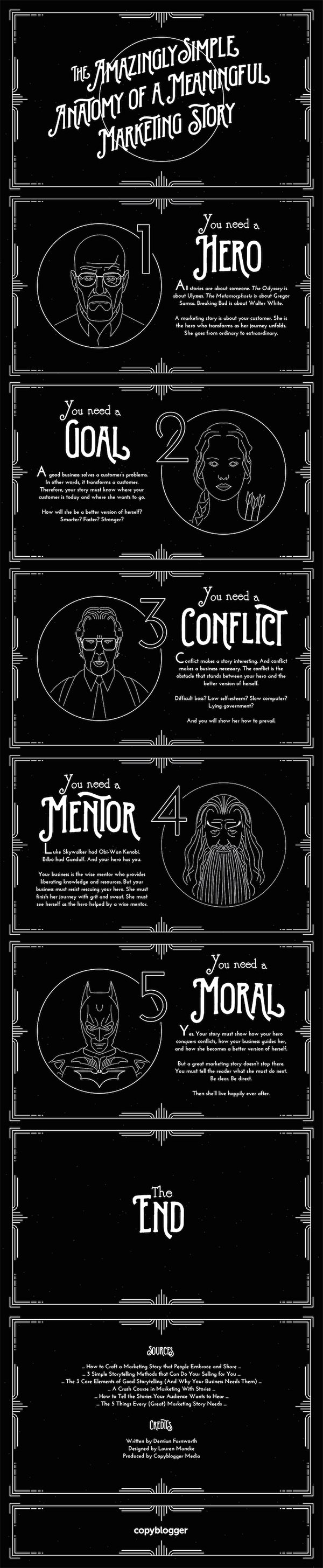
Infographic by Copyblogger.
- Authenticity
Authenticity is the cornerstone of any successful marketing story. It’s the genuine and transparent portrayal of your brand’s values, mission, and personality. Authenticity resonates with consumers because it builds trust, and trust is essential for long-term customer relationships.
To infuse authenticity into your marketing story:
- Share your brand’s origin: How did your business start? What motivated you to start it? Share personal anecdotes and experiences that led to the creation of your business.
- Highlight your values: Clearly communicate your brand’s core values and how they guide your business decisions. Consumers want to support businesses that align with their beliefs.
- Use real customer experiences: Incorporate genuine testimonials and success stories from satisfied customers to demonstrate the real-world impact of your products or services.
Example: Patagonia, the outdoor clothing company, has built its brand around environmental sustainability and social responsibility. Their marketing story authentically reflects these values through their “Worn Wear” campaign, which encourages customers to buy used Patagonia clothing and reduce their environmental footprint.
- Emotional Engagement
Great marketing stories evoke emotions. They connect with the audience on a personal level, making them feel something—whether it’s happiness, inspiration, empathy, or nostalgia. Emotions are powerful drivers of consumer behavior and can lead to brand loyalty.
To create emotional engagement:
- Identify your target emotions: Understand the emotions you want to evoke in your audience. For example, a coffee shop might aim to evoke feelings of warmth and comfort.
- Use relatable characters: Develop relatable characters or personas in your marketing story that the audience can connect with. This could be your team members, customers, or even fictional characters.
- Employ storytelling techniques: Craft your narrative using storytelling techniques such as conflict, resolution, and character development to create emotional depth.
Example: Coca-Cola’s iconic holiday advertisements, featuring the “Holidays are Coming” theme, tap into the emotions of joy, togetherness, and anticipation. These ads have become synonymous with the holiday season, creating a strong emotional connection between the brand and consumers.
- Clarity and Simplicity
A successful marketing story must be clear and simple. Complex narratives can confuse the audience and dilute your message. Clarity and simplicity ensure that your story is easily understood and memorable.
To achieve clarity and simplicity:
- Define your core message: Identify the central message or takeaway you want your audience to remember. This message should be concise and aligned with your brand’s values.
- Avoid jargon: Use language that your target audience can relate to and understand. Avoid industry jargon or technical terms that might alienate potential customers.
- Keep it focused: Stick to the most relevant aspects of your story. Avoid unnecessary details that can overwhelm your audience.
Example: Apple’s marketing story is a masterclass in simplicity. Their “Think Different” campaign celebrated innovation and individuality by featuring iconic figures like Albert Einstein and Martin Luther King Jr., paired with a simple yet powerful message: “Here’s to the crazy ones.”
- Visual and Multimedia Elements
In today’s digital age, visual and multimedia elements are essential components of a compelling marketing story. Images, videos, infographics, and other visuals can enhance engagement and help convey your message more effectively.
To incorporate visual and multimedia elements:
- Create captivating visuals: Invest in high-quality images and videos that align with your brand’s identity and message. These visuals should be consistent across all marketing materials.
- Use storytelling through visuals: Visuals can tell a story on their own. Use them to complement and reinforce your narrative, providing a richer and more immersive experience.
- Optimize for mobile and social media: Ensure that your visual content is mobile-friendly and shareable on social media platforms, where many consumers engage with brands.
Example: Airbnb’s website and marketing materials are filled with visually stunning images of unique accommodations around the world. These visuals transport potential travelers to different destinations, igniting their wanderlust and desire to book with Airbnb.
- Consistency and Longevity
Consistency and longevity are key to the success of your small business marketing story. Your story should not be a one-time effort but an ongoing narrative that evolves with your brand.
To maintain consistency and longevity:
- Establish brand guidelines: Create brand guidelines that outline the tone, style, and visual elements that should be consistently used across all marketing materials.
- Adapt to change: While consistency is essential, your story should also evolve to reflect changes in your business, industry, or customer preferences.
- Maintain a presence: Continuously engage with your audience through various channels, including social media, email marketing, and content creation, to keep your story alive.
Example: Nike’s “Just Do It” campaign has been a consistent and iconic part of their marketing story for decades. It has evolved to feature various athletes and social causes, remaining relevant and resonating with audiences of all ages.
Conclusion
In the world of small business marketing, a compelling story can be a game-changer. By infusing authenticity, emotional engagement, clarity, visual elements, consistency, and longevity into your marketing narrative, you can create a powerful connection with your audience, differentiate your brand, and drive long-term success. Remember, a great marketing story is not just about selling a product or service—it’s about creating a memorable and meaningful relationship with your customers.

Author:
Mark Ford

From Confusion to Clarity: How to Steer Your Marketing Away from These Frequent Errors
Are you struggling to make sense of your marketing strategy and wondering why your results aren’t matching your effort? Want to learn how to avoid the most common marketing mistakes and create a clear, focused plan that actually delivers results? […]

85 Game-Changing Tools for Creators, Marketers, and Entrepreneurs
Are you searching for powerful yet free tools to help you grow your brand, streamline your workflow, and boost your online presence? Want to discover game-changing platforms that every creator, marketer, and entrepreneur should be using right now? […]