Do you have a marketing strategy in place to cater for people using mobile devices? If not, your business could you be losing customers!
In light of Google’s recent mobile friendly algorithm update a mobile marketing strategy has become more important than ever before so take the time to review how your business is catering for the rapidly expanding mobile user base.
For some guidance take a look at this infographic from Formstack which highlights some of the most common mistakes people make.
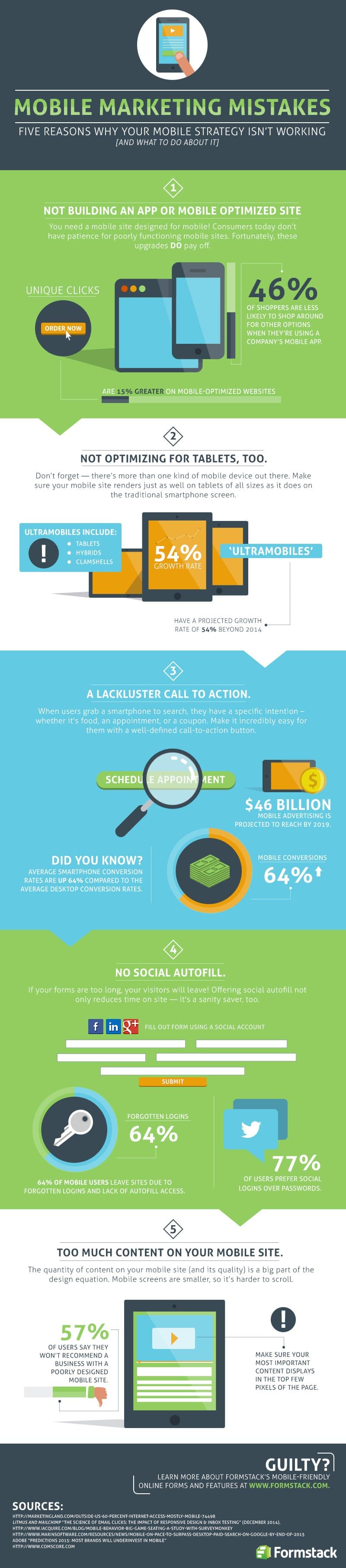
In today’s digital age, mobile marketing has become an essential component of any successful marketing strategy. With the increasing use of smartphones and mobile devices, reaching your target audience through mobile channels is more important than ever. However, many businesses make common mistakes that can hinder the effectiveness of their mobile marketing efforts. In this blog post, we’ll explore five of these mistakes and discuss how you can avoid them to create a more successful mobile marketing strategy.
Mistake 1: Neglecting Mobile-First Design
One of the biggest mistakes that businesses make in their mobile marketing strategy is neglecting mobile-first design principles. Mobile-first design means creating websites, emails, and content with the mobile user experience as the top priority. With a significant portion of internet traffic coming from mobile devices, failing to optimize for mobile can be detrimental to your marketing efforts.
Solution: To avoid this mistake, start by ensuring that your website is responsive and mobile-friendly. This means that your site should adapt to different screen sizes and provide a seamless user experience on smartphones and tablets. Use responsive design techniques, optimize images and content for mobile loading speed, and prioritize mobile users in your design decisions.
Additionally, when creating email campaigns or landing pages, design them with mobile users in mind. Use a responsive email template, keep your emails concise, and make sure that the call-to-action buttons are easily tappable on small screens.
Mistake 2: Ignoring Mobile SEO
Search engine optimization (SEO) is crucial for driving organic traffic to your website. However, many businesses focus on desktop SEO and neglect mobile SEO, which is a significant mistake. Google and other search engines prioritize mobile-friendly websites in their rankings, so ignoring mobile SEO can lead to a drop in your search engine rankings.
Solution: To address this mistake, make sure your website is optimized for mobile search. This includes using mobile-friendly design, ensuring fast loading times, and creating mobile-specific content. You should also pay attention to local SEO, as many mobile users search for businesses and services in their vicinity.
Furthermore, take advantage of tools like Google’s Mobile-Friendly Test and PageSpeed Insights to assess your website’s mobile performance and get recommendations for improvement. Regularly monitor your mobile SEO rankings and make necessary adjustments to maintain or improve your position in mobile search results.
Mistake 3: Overlooking Mobile Analytics
Effective marketing requires data-driven decision-making, and this applies to mobile marketing as well. Many businesses make the mistake of not investing enough in mobile analytics or not properly interpreting the data they collect from mobile users.
Solution: To avoid this mistake, use analytics tools to track and analyze mobile user behavior on your website, in your apps, and in your marketing campaigns. Tools like Google Analytics and mobile app analytics platforms provide valuable insights into user demographics, engagement, and conversion rates on mobile devices.
Pay attention to key mobile metrics such as bounce rate, mobile conversion rate, and user journey analysis. Use A/B testing to optimize mobile landing pages and marketing campaigns. By understanding how mobile users interact with your content and identifying pain points in their mobile experience, you can make data-driven improvements to your mobile marketing strategy.
Mistake 4: Neglecting Mobile App Optimization
If your business has a mobile app, optimizing it for user engagement is essential. Neglecting your mobile app can result in low retention rates and missed opportunities for customer engagement and revenue.
Solution: To address this mistake, focus on optimizing your mobile app for user experience and retention. Regularly update your app to fix bugs, improve performance, and add new features that enhance the user experience. Encourage users to enable push notifications to keep them engaged and informed about your latest offerings.
Consider implementing in-app analytics to track user behavior within your app. This data can help you understand how users are engaging with your app, where they drop off, and what features are most popular. Use this information to make data-driven decisions about app improvements and updates.
Additionally, promote your mobile app through your other marketing channels, such as email, social media, and your website. Encourage users to download and install the app, and provide incentives for doing so, such as exclusive discounts or content.
Mistake 5: Failing to Personalize Mobile Marketing
Personalization is a key driver of successful marketing campaigns, and it’s just as important in mobile marketing. Many businesses make the mistake of sending generic, one-size-fits-all messages to their mobile audience, which can result in low engagement and conversions.
Solution: To avoid this mistake, leverage the power of personalization in your mobile marketing efforts. Segment your mobile audience based on their preferences, behaviors, and demographics. Use this segmentation to send targeted messages that are relevant to each group.
Personalization can extend beyond just messages; you can also personalize the user experience within your mobile app or website. For example, recommend products or content based on a user’s past behavior or preferences. Personalized recommendations can significantly increase user engagement and conversion rates.
Implementing personalization in your mobile marketing strategy may require the use of marketing automation tools and customer relationship management (CRM) systems. These tools can help you track and analyze user data, segment your audience, and automate personalized messages and offers.
Conclusion
Mobile marketing is a vital component of a modern marketing strategy, but it’s essential to avoid common mistakes that can undermine your efforts. By addressing these five mistakes—neglecting mobile-first design, ignoring mobile SEO, overlooking mobile analytics, neglecting mobile app optimization, and failing to personalize mobile marketing—you can create a more effective and successful mobile marketing strategy.
Remember that the mobile landscape is constantly evolving, so it’s crucial to stay updated with the latest trends and technologies in mobile marketing. Continuously test and refine your mobile marketing strategy to adapt to changing user behaviors and preferences. With the right approach, you can harness the full potential of mobile marketing to reach and engage your target audience effectively.

Author:
Mark Ford

The Essential Marketing Toolkit: 19 Tools Every Modern Marketer Should Know About
Are you looking for the most effective tools to streamline your marketing, boost creativity, and save time? Want to discover the must-have platforms that every modern marketer should be using to stay ahead of the competition? […]