

Search Engine Optimization (SEO) is an ever-evolving field, and staying updated with the latest trends and techniques is crucial for any online business or website owner. While it’s true that SEO trends can change rapidly, some fundamental strategies and insights from the past can still provide value today.
In this blog post, we’ll explore five SEO trends from 2014 that have stood the test of time and are just as relevant in today’s digital landscape. These trends have proven to be effective in improving website visibility, driving organic traffic, and enhancing the overall user experience.
So, let’s dive into these timeless SEO strategies that you must start using today.
Infographic by Implode Media.
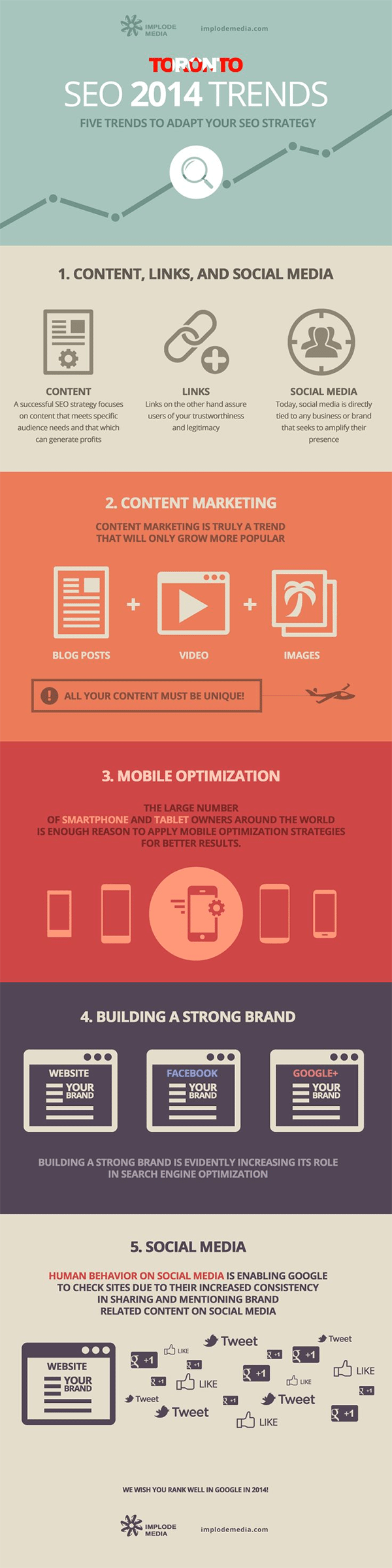
1. Quality Content Is King
In 2014, the phrase “Content is King” was already a well-established concept in the world of SEO, and it remains just as relevant today. High-quality, valuable, and relevant content continues to be a driving force behind successful SEO strategies.
Why Quality Content Matters
- User Engagement: Quality content attracts and engages users. When visitors find valuable information on your website, they are more likely to stay longer, explore other pages, and interact with your content.
- Backlinks: Well-written and informative content naturally attracts backlinks from other websites. These backlinks can significantly boost your website’s authority and search engine rankings.
- Keyword Optimization: Quality content allows you to naturally incorporate relevant keywords, making it easier for search engines to understand your content and rank it appropriately.
How to Implement Quality Content
To leverage the power of quality content, consider the following tips:
- Conduct thorough research to understand your target audience’s interests and pain points.
- Create content that addresses these needs and provides valuable solutions.
- Optimize your content for SEO by incorporating relevant keywords and structuring it with headings, subheadings, and bullet points.
- Regularly update and refresh your content to ensure it remains accurate and relevant over time.
2. Mobile Optimization
Mobile optimization was gaining traction in 2014, but it has since become an absolute necessity. With the increasing use of smartphones and tablets, Google introduced mobile-friendliness as a ranking factor in its search algorithm in 2015. Today, mobile optimization is a must for SEO success.
Why Mobile Optimization Is Crucial
- User Experience: A mobile-responsive website ensures that users have a positive experience regardless of the device they use. Sites that load quickly and display correctly on mobile devices are more likely to retain visitors.
- Google’s Mobile-First Indexing: Google primarily uses the mobile version of a website for indexing and ranking. If your site isn’t mobile-friendly, it may not rank well in search results, leading to a loss of organic traffic.
How to Implement Mobile Optimization
To optimize your website for mobile devices:
- Choose a responsive web design that adapts to different screen sizes.
- Ensure fast loading times by compressing images and optimizing code.
- Use mobile-friendly fonts and buttons that are easy to click on smaller screens.
- Test your site’s mobile-friendliness using Google’s Mobile-Friendly Test tool.
3. Voice Search Optimization
Voice search technology has come a long way since 2014, with virtual assistants like Siri, Google Assistant, and Alexa becoming household names. Optimizing your content for voice search is essential to keep up with this growing trend.
Why Voice Search Matters
- Changing Search Queries: Voice searches tend to be more conversational and longer than typed queries. Optimizing for voice search allows you to capture these natural language search phrases.
- Local Search: Many voice searches are location-based, making it crucial for local businesses to optimize for voice to attract nearby customers.
How to Implement Voice Search Optimization
To make your content voice-search-friendly:
- Focus on natural language and long-tail keywords in your content.
- Create an FAQ section with questions your audience might ask via voice search.
- Optimize your Google My Business listing for local voice search queries.
- Monitor and adapt to changes in voice search trends.
4. Semantic SEO and User Intent
In 2014, Google’s algorithms were already shifting towards understanding user intent and context. Today, semantic SEO is a vital aspect of optimizing your content for search engines.
Why Semantic SEO Matters
- Better Understanding of Content: Semantic SEO helps search engines comprehend the context and meaning of your content, leading to more accurate rankings.
- User-Centric Results: By focusing on user intent, you can create content that directly addresses what users are looking for, enhancing their experience and increasing the chances of conversion.
How to Implement Semantic SEO
To implement semantic SEO:
- Conduct thorough keyword research to identify related terms and synonyms.
- Create content that naturally incorporates these related terms and provides comprehensive information on the topic.
- Structure your content logically to cover all aspects of the user’s query.
- Use structured data markup to provide additional context to search engines.
5. Backlinks and Off-Page SEO
Backlinks have been a crucial part of SEO since its inception, and in 2014, they were already recognized as a powerful ranking factor. Today, building high-quality backlinks and effective off-page SEO strategies remain essential for search engine optimization.
Why Backlinks Are Important
- Authority and Trust: Backlinks from reputable websites signal to search engines that your content is trustworthy and authoritative.
- Traffic Generation: Quality backlinks can drive referral traffic to your site, increasing your overall web presence.
How to Build Effective Backlinks
To build high-quality backlinks:
- Create valuable and shareable content that naturally attracts links from other websites.
- Outreach to industry influencers and websites in your niche to collaborate on content or guest posting opportunities.
- Monitor your backlink profile and disavow low-quality or spammy links that could harm your site’s reputation.
- Focus on building a diverse backlink profile with a mix of anchor text and referring domains.
Conclusion
While the field of SEO has evolved significantly since 2014, some fundamental strategies and insights from that time remain highly effective today. Quality content, mobile optimization, voice search, semantic SEO, and backlinks continue to be essential elements of a successful SEO strategy.
By implementing these timeless SEO trends, you can enhance your website’s visibility, drive organic traffic, and improve the overall user experience. As you embrace these strategies, keep in mind that staying updated with the latest SEO trends and adapting to changes is also crucial for long-term success in the ever-evolving world of SEO. So, start implementing these 2014 SEO trends today, and watch your website climb the search engine rankings and attract more organic traffic.

Author:
Mark Ford

The Most Common Local SEO Mistakes That Stop You Getting Found Online
Are you struggling to understand why your business isn’t showing up in local search results when customers are actively looking for your services? Want to uncover the common local SEO mistakes that could be quietly costing you enquiries and visibility? […]


