In today’s digital age, a picture is worth more than a thousand words—it’s worth conversions, engagement, and a great user experience.
Images are a vital component of any website, serving as the visual storytellers that capture your audience’s attention and convey your brand message.
However, not all images are created equal, and using low-quality or irrelevant stock photos can have a detrimental impact on your website’s credibility and effectiveness. Stock images can be a valuable resource, but only when chosen wisely.
In this blog post, we’ll explore five essential tips to ensure the stock images you use on your website don’t suck and help you create a visually appealing and engaging online presence.
Infographic from My Clever Agency.
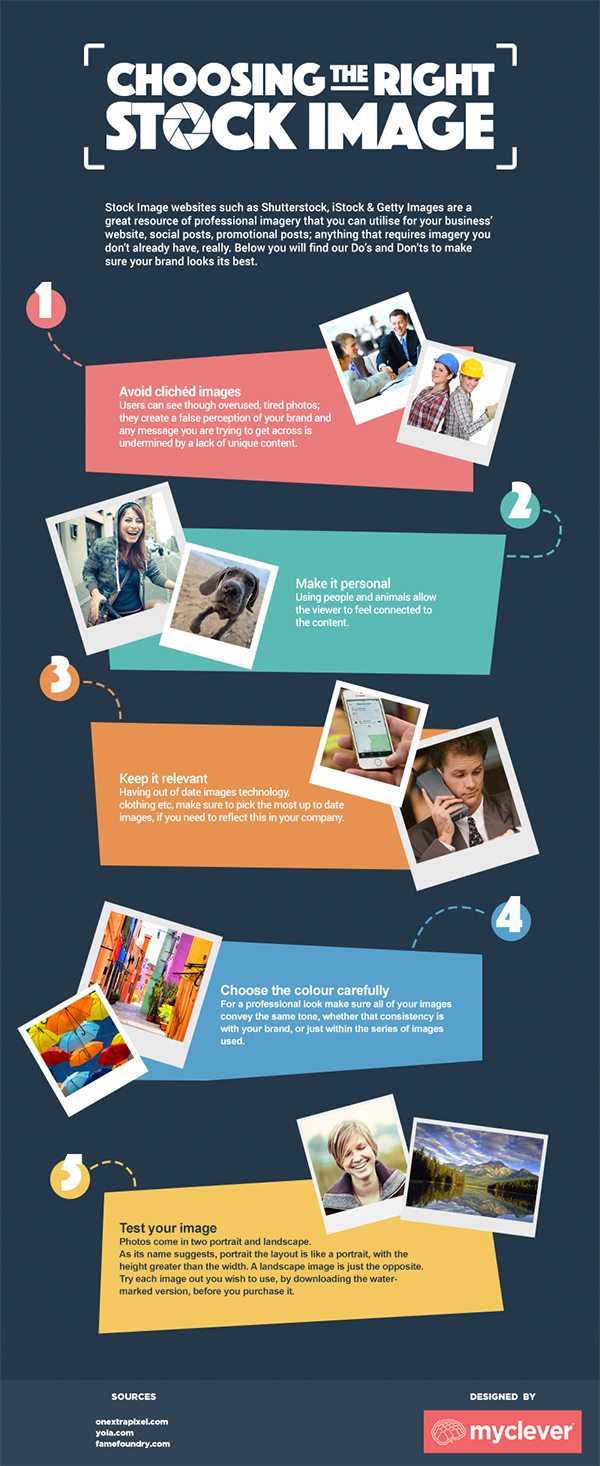
1. Define Your Brand Identity
Before you start searching for stock images, it’s crucial to have a clear understanding of your brand identity. What are your brand’s core values, mission, and target audience? What emotions or messages do you want to convey through your website? Your chosen images should align with these elements seamlessly.
If your brand is known for its eco-friendly products, using images of lush green landscapes or sustainable practices can reinforce your message. On the other hand, if your brand is in the technology sector, sleek and modern images may be more appropriate. Take the time to create a brand style guide that outlines your brand’s visual aesthetics, including colors, typography, and the types of images that resonate with your audience.
By defining your brand identity, you’ll have a solid foundation to guide your stock image selections and ensure they complement your website’s overall design and messaging.
2. Avoid Generic and Overused Images
One of the biggest pitfalls in using stock images is falling into the trap of cliché and overused visuals. We’ve all seen those cringe-worthy images of people in suits shaking hands or smiling at a whiteboard during a brainstorming session. These images lack authenticity and fail to connect with your audience.
To avoid using generic and overused stock photos, try the following strategies:
- Search for Unique Perspectives: Instead of using the most obvious keywords, experiment with different search terms to find hidden gems that haven’t been used as frequently.
- Explore Niche Stock Image Websites: Consider exploring specialized stock image platforms that offer a more unique selection tailored to specific industries or themes.
- Opt for Candid and Authentic Shots: Choose images that capture real moments and emotions rather than staged, posed shots. Authenticity resonates with users and helps build trust.
- Customize Stock Images: Many stock images can be edited or combined to create unique visuals that better align with your brand. Consider adding filters, overlays, or text to personalize the image.
By veering away from the generic and embracing more authentic visuals, you can make your website stand out and leave a lasting impression on your visitors.
3. Pay Attention to Quality and Resolution
The quality and resolution of your chosen stock images matter significantly. Blurry or pixelated images not only look unprofessional but can also harm your website’s loading speed. Slow-loading websites can result in a high bounce rate, which is detrimental to your SEO and user experience.
When selecting stock images, ensure they meet the following criteria:
- High Resolution: Choose images with a resolution suitable for the intended use. For website banners or hero images, opt for high-resolution photos to maintain sharpness and clarity.
- Proper Compression: Compress images without compromising quality to optimize loading times. Numerous online tools can help you strike the right balance between quality and file size.
- Consistent Image Sizes: Maintain consistency in image dimensions throughout your website to create a polished and professional look.
- Check Licensing and Usage Rights: Always review the licensing terms of stock images to ensure you have the appropriate rights to use them on your website without legal issues.
By prioritizing image quality and resolution, you’ll enhance your website’s visual appeal while maintaining optimal performance.
4. Tell a Story with Images
Images have the power to tell stories and evoke emotions. Instead of using stock photos merely for decoration, consider how they can complement your content and narrative. Use images that reinforce your message and engage your audience on a deeper level.
Here are some strategies to tell a story with images:
- Support Your Content: Choose images that directly relate to your written content. For instance, if you’re writing a blog post about travel, include images of picturesque destinations or adventurous activities.
- Use Visual Hierarchy: Place images strategically to guide the reader’s eye and emphasize key points. Hero images, for instance, can set the tone for an article, while smaller images can break up text and maintain engagement.
- Create a Visual Flow: Arrange images in a sequence that helps readers follow the story. This can be particularly useful for step-by-step tutorials or storytelling articles.
- Embrace Diversity: Represent a diverse range of perspectives and backgrounds in your images to make your website more inclusive and relatable to a broader audience.
By integrating images seamlessly into your content and using them to enhance your storytelling, you’ll create a more compelling and memorable user experience.
5. Conduct A/B Testing and Gather Feedback
The effectiveness of your chosen stock images can vary based on your audience and your website’s specific goals. To ensure that the images you use are resonating with your visitors, consider conducting A/B tests to compare the performance of different visuals.
A/B testing involves presenting two versions of a webpage—one with a particular set of images and another with an alternative set—to different groups of users. By tracking metrics such as bounce rate, click-through rate, and conversion rate, you can determine which set of images performs better.
Additionally, gather feedback from your website’s users through surveys, user testing, or social media. Understanding your audience’s preferences and opinions can provide valuable insights into the types of images that resonate with them.
Conclusion
Stock images can be a valuable asset in creating a visually appealing and engaging website. However, selecting the right images is crucial to avoid conveying the wrong message or harming your brand’s credibility. By defining your brand identity, avoiding generic images, prioritizing quality, telling a story, and testing and gathering feedback, you can ensure that the stock images you use on your website don’t suck. Instead, they’ll enhance your online presence, captivate your audience, and contribute to your website’s overall success. Remember, the right image can make all the difference in leaving a lasting impression on your visitors.

Author:
Mark Ford