One of the most common questions we get asked is What legal information do I need on my business website?
In the digital age, having a website is a fundamental aspect of running a business or personal blog. It’s your online presence, a platform to connect with your audience, and a space to share your ideas or promote your products and services.
However, creating and maintaining a website comes with responsibilities, including legal ones. To protect yourself and your visitors, you may need to include various legal documents on your website. In this blog post, we’ll explore six essential legal documents that you may need for your website.
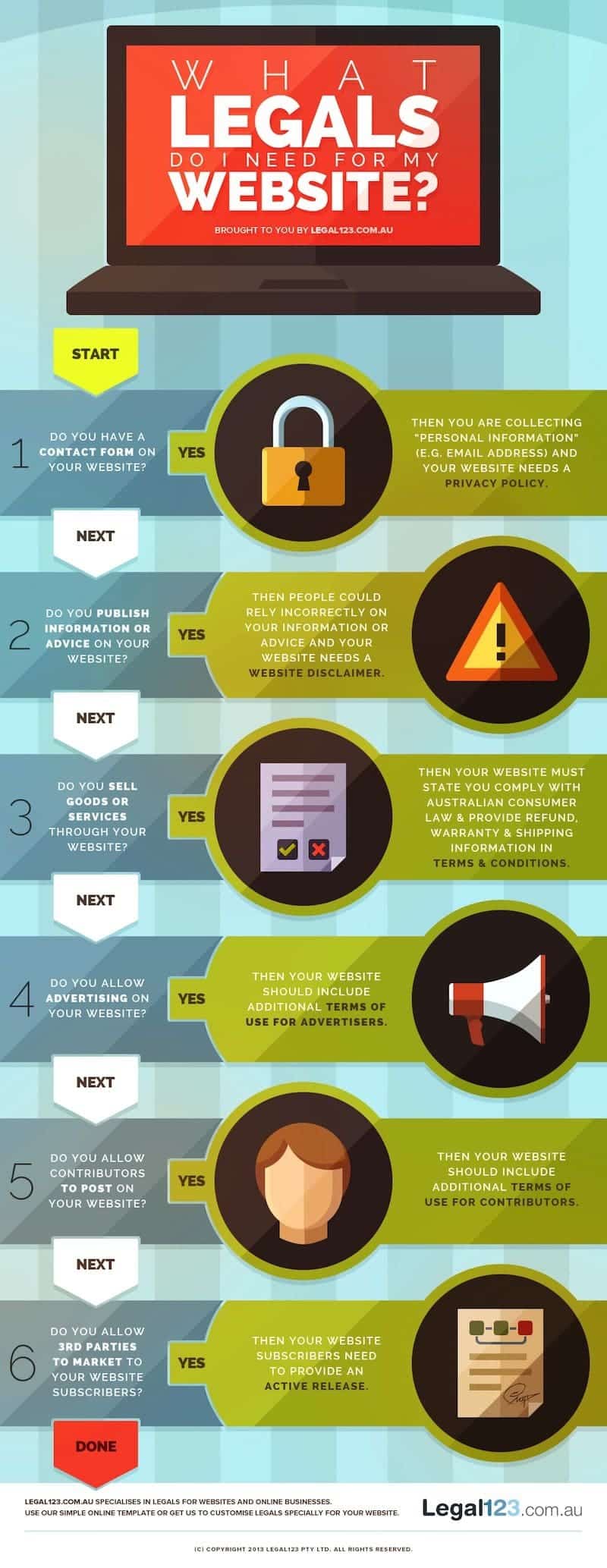
The infographic below from Legal 123 gives you 6 legal documents you may want to include on your site.
1. Privacy Policy
A Privacy Policy is a crucial legal document for any website that collects and processes personal information from visitors. This includes information like names, email addresses, phone numbers, and more. Even if you only collect basic information through a contact form or newsletter sign-up, you are still required to have a Privacy Policy in most jurisdictions.
Here are some key components to include in your Privacy Policy:
Information Collection:
Explain what types of information you collect and how you collect it. Be transparent about the data you gather from your visitors.
Use of Information:
Specify how you intend to use the collected information. Whether it’s for sending newsletters, processing orders, or improving your website, your visitors have the right to know.
Data Sharing:
Clarify whether you share this data with third parties, such as analytics providers or advertisers.
Cookies:
If your website uses cookies or other tracking technologies, disclose this in your Privacy Policy and explain their purpose.
Security Measures:
Assure your visitors that you take necessary security measures to protect their data.
User Rights:
Inform users of their rights regarding their personal data, including the right to access, correct, or delete their information.
Contact Information:
Provide a way for users to contact you if they have questions or concerns about their data.
Having a well-crafted Privacy Policy not only helps you comply with privacy laws but also builds trust with your audience. Be sure to keep it updated to reflect any changes in your data collection and processing practices.
2. Terms and Conditions (Terms of Service)
Terms and Conditions, also known as Terms of Service or Terms of Use, outline the rules and guidelines that govern the use of your website. While they may not be as legally mandated as a Privacy Policy, they are essential for protecting your interests and setting expectations for your visitors.
Here are some key elements to include in your Terms and Conditions:
Acceptance of Terms:
Explain that by using your website, visitors agree to abide by your terms and conditions.
Intellectual Property:
Specify who owns the content on your website (e.g., text, images, videos) and what uses are permitted (e.g., sharing with proper attribution).
User Conduct:
Define what constitutes acceptable and unacceptable behavior on your site. This may include rules against spam, harassment, or illegal activities.
Dispute Resolution:
Outline the process for resolving disputes, whether through arbitration, mediation, or litigation.
Limitation of Liability:
Limit your liability for any damages that may occur while visitors use your website.
Termination:
Explain under what circumstances you may terminate a user’s access to your website.
It’s important to note that your Terms and Conditions should be easily accessible, typically through a link in your website’s footer. Users should be prompted to agree to these terms before using your website, especially if they involve user-generated content or e-commerce transactions.
3. Disclaimer
A Disclaimer is a legal statement that clarifies the limitations of your website’s content and the information it provides. It’s especially important if your website offers advice, information, or commentary that could be misconstrued as professional guidance.
Here are some points to cover in your Disclaimer:
Content Accuracy:
State that while you strive for accuracy, the information on your website may not always be up-to-date or error-free.
Not Legal or Financial Advice:
Make it clear that the information on your site should not be taken as legal, financial, or professional advice.
External Links:
If your website contains links to external websites, disclaim any responsibility for the content and practices of those sites.
User Responsibility:
Highlight that users are responsible for their own decisions and actions based on the information provided on your website.
A well-crafted Disclaimer can help protect you from potential liability and ensure that visitors understand the nature of the content you provide. Remember to keep it prominently displayed, so users see it before relying on your website’s information.
4. Cookie Policy
If your website uses cookies or similar tracking technologies, it’s essential to have a Cookie Policy. Many countries have strict regulations regarding the use of cookies, and your policy should inform users about the types of cookies you use and their purpose.
Here’s what to include in your Cookie Policy:
Types of Cookies:
Explain the different types of cookies used on your website, such as functional, analytical, and advertising cookies.
Cookie Purpose:
Detail the specific purpose of each type of cookie, whether it’s for site functionality, analytics, or personalized content.
Consent Mechanism:
Explain how users can give or withdraw consent for cookie usage. In many regions, you must obtain explicit consent before placing non-essential cookies.
Opt-Out Options:
Provide instructions on how users can manage or disable cookies through browser settings or third-party tools.
Updates:
State that your Cookie Policy may be updated to reflect changes in cookie usage.
A clear and informative Cookie Policy helps you comply with privacy regulations like the General Data Protection Regulation (GDPR) and ePrivacy Directive while respecting your users’ privacy preferences.
5. Copyright Notice
A Copyright Notice is a simple but important legal document that asserts your ownership of the content on your website. It informs visitors that your content is protected by copyright law and outlines the rights and restrictions associated with your work.
Here’s what to include in your Copyright Notice:
Ownership:
Declare that you own the copyright to all original content on your website.
Rights Reserved:
Specify the rights you reserve, such as reproduction, distribution, and public display.
Permission Requests:
Explain how visitors can request permission to use your content, including any required attribution.
DMCA Compliance:
If applicable, state that you comply with the Digital Millennium Copyright Act (DMCA) and provide a way for copyright holders to report infringements.
By displaying a Copyright Notice on your website, you establish your ownership and make it clear that you take copyright seriously. This can deter unauthorized use of your content and provide a basis for legal action if necessary.
6. Accessibility Statement
In recent years, web accessibility has become a significant legal concern. Laws such as the Americans with Disabilities Act (ADA) and the Web Content Accessibility Guidelines (WCAG) mandate that websites be accessible to individuals with disabilities. To ensure compliance and inclusivity, consider including an Accessibility Statement on your website.
Here’s what to include in your Accessibility Statement:
Commitment to Accessibility:
Express your commitment to making your website accessible to all users, regardless of disabilities.
Compliance Standards:
Specify the accessibility standards you follow, such as WCAG 2.1, and provide information about any exceptions or limitations.
Contact Information:
Provide a way for users to report accessibility issues and request assistance.
Updates:
State that your Accessibility Statement will be updated as needed to reflect ongoing efforts to improve accessibility.
Creating an inclusive website not only helps you comply with legal requirements but also broadens your audience and demonstrates your commitment to social responsibility.
In conclusion, while the internet offers countless opportunities for communication and commerce, it also comes with legal responsibilities. To protect your interests and provide a safe and transparent experience for your website visitors, consider incorporating these six legal documents: a Privacy Policy, Terms and Conditions, Disclaimer, Cookie Policy, Copyright Notice, and Accessibility Statement. These documents not only help you comply with legal requirements but also build trust and credibility with your audience. Always remember to keep these documents up-to-date as your website evolves, and consult with legal professionals to ensure compliance with the latest regulations in your jurisdiction. By doing so, you can enjoy the benefits of your online presence while minimizing legal risks.

Author:
Mark Ford

Mastering the Art of the Landing Page: Design, Copy, and Conversion in Harmony
Are you trying to design a landing page that not only looks great but actually converts visitors into customers? Want to learn how to balance design, copy, and strategy to create landing pages that work in perfect harmony? […]