How is 2015 shaping up for your business? Is your marketing strategy generating the results you had hoped for?
If you’re not keeping up with trends and doing the same old thing just like everybody else the chances are you’re not standing out. And if you’re not standing out you can be sure your strategy isn’t generating the level of business it should be.
To keep up with the trends that are hot right now take a look at this infographic from Wrike.
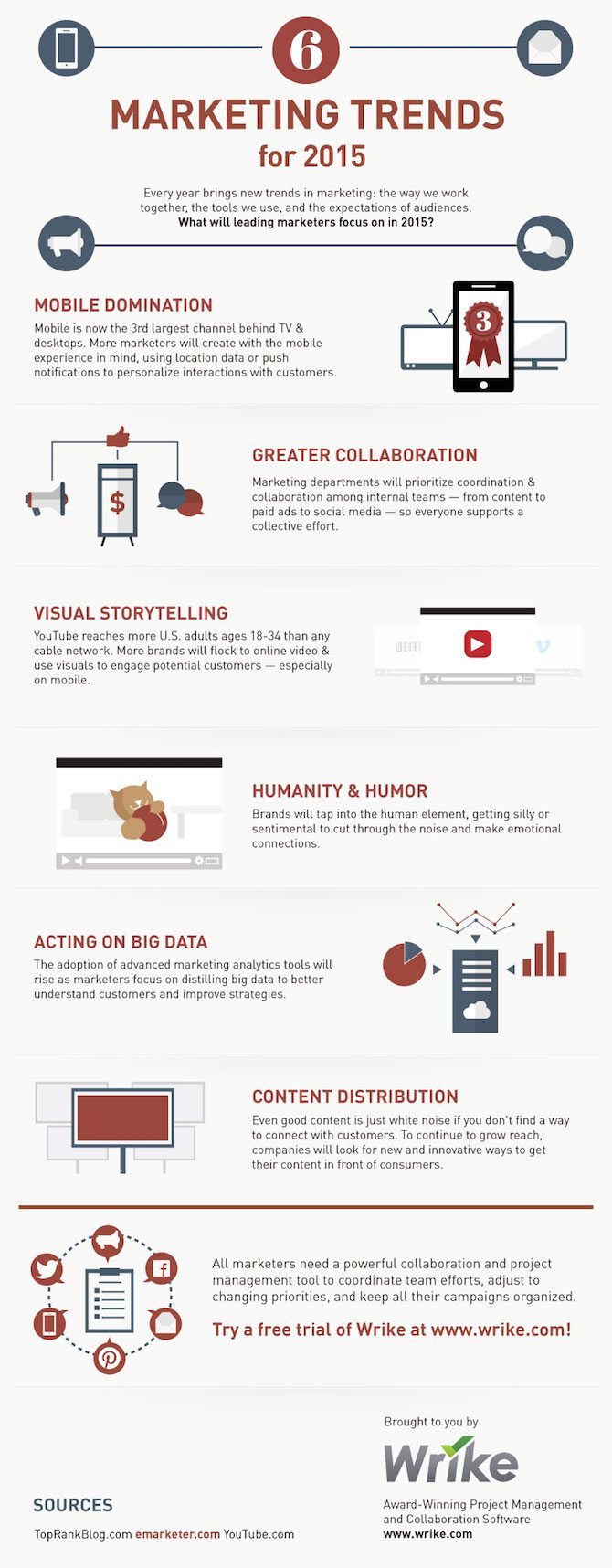
The world of marketing is constantly evolving, with new trends and technologies shaping the way businesses reach and engage with their audiences. In 2015, several marketing trends emerged as game-changers, revolutionizing the way companies promote their products and services. In this blog post, we’ll delve into six marketing trends that were rocking 2015 and explore whether businesses were taking full advantage of these opportunities.
- Content Marketing: The Reigning King
Content marketing has been on the rise for several years, but 2015 saw it reach new heights. Brands began to realize the power of creating valuable and relevant content to attract and retain customers. Content marketing wasn’t just about blogging; it encompassed a wide range of formats, including videos, infographics, podcasts, and more.
Companies that embraced content marketing in 2015 reaped the rewards. They positioned themselves as industry thought leaders, built trust with their audience, and saw increased website traffic and engagement. Brands like Red Bull, with their extreme sports videos, and HubSpot, with their educational blog content, were pioneers in this trend.
However, not all businesses fully harnessed the potential of content marketing in 2015. Some struggled to consistently produce high-quality content or failed to understand their target audience’s needs. To take full advantage of this trend, companies needed a well-defined content strategy, regular content creation, and a deep understanding of their audience’s preferences.
- Mobile-First Marketing
The shift to mobile devices was in full swing in 2015. Smartphones and tablets were becoming the primary means of accessing the internet for many consumers. Marketers had to adapt their strategies to cater to mobile users effectively.
Responsive web design became a necessity to ensure websites looked and functioned well on smaller screens. Mobile apps also gained popularity, providing businesses with a direct channel to engage users. Social media platforms optimized their apps for mobile use, making it easier for brands to connect with their audiences on the go.
Some forward-thinking companies launched mobile advertising campaigns that specifically targeted mobile users. Mobile apps like Uber and Airbnb transformed their respective industries by leveraging mobile technology to create seamless user experiences.
However, many businesses were slow to adapt to the mobile-first mindset. Some websites remained non-responsive, frustrating mobile visitors and causing them to bounce. Brands that failed to optimize their content for mobile risked losing a significant portion of their audience.
- Social Media Advertising
Social media platforms continued to grow in popularity in 2015, and marketers saw the potential for reaching vast audiences through these channels. Paid social media advertising became a powerful tool for businesses to promote their products and services.
Facebook, in particular, led the way in social media advertising with its highly targeted ad campaigns. Companies could specify their audience demographics, interests, and behaviors, ensuring that their ads reached the right people. Twitter, Instagram, and Pinterest also introduced advertising options, giving businesses multiple avenues to connect with consumers.
Brands that embraced social media advertising in 2015 experienced increased visibility and engagement. They used these platforms to run contests, share user-generated content, and interact with customers in real-time. Companies like Coca-Cola and McDonald’s leveraged social media to run successful marketing campaigns.
However, some businesses were hesitant to invest in social media advertising, viewing it as an uncertain and potentially costly endeavor. They missed out on the opportunity to tap into the vast reach and targeting capabilities of these platforms.
- Video Marketing: The Rise of Visual Content
In 2015, video marketing exploded onto the scene. Platforms like YouTube, Vine, and later, Snapchat, demonstrated the power of short-form video content. Brands quickly recognized that videos could convey their messages in a compelling and engaging way.
Video marketing wasn’t limited to social media platforms. Businesses started embedding videos in their email campaigns, websites, and landing pages to capture their audience’s attention. Live streaming also gained traction, allowing brands to connect with viewers in real-time.
Companies like GoPro and Dove used video marketing to tell powerful stories and connect with their audience on an emotional level. These videos went viral and generated massive brand awareness.
However, some businesses were slow to adopt video marketing due to perceived production costs and technical challenges. They missed the opportunity to leverage one of the most engaging forms of content available.
- Personalization and Big Data
2015 was the year when personalization in marketing reached new heights. With the help of big data and advanced analytics, companies could tailor their marketing messages to individual consumers. This level of personalization was a game-changer, as it allowed brands to deliver highly relevant content and offers.
E-commerce giants like Amazon were pioneers in this trend, using data to recommend products to users based on their browsing and purchase history. Email marketing also saw a surge in personalization, with companies sending targeted emails that reflected each recipient’s interests and behavior.
However, not all businesses fully embraced the power of personalization in 2015. Some lacked the necessary data infrastructure or the expertise to implement effective personalization strategies. As a result, they missed out on the opportunity to create deeper connections with their customers.
- Native Advertising
In 2015, native advertising gained momentum as a way for brands to seamlessly integrate their content into the user experience of various platforms. Instead of interrupting users with traditional banner ads, native advertising blended in with the surrounding content, making it less intrusive.
Platforms like BuzzFeed and Forbes successfully incorporated native advertising into their websites, providing brands with a unique opportunity to reach their target audience in a natural and engaging manner. Native ads were also prevalent on social media platforms like Facebook and Twitter, where they appeared as sponsored content.
However, not all businesses executed native advertising effectively. Some failed to create content that resonated with the platform’s audience, leading to low engagement and negative feedback. Successful native advertising required a deep understanding of the platform and its users, as well as the ability to create content that seamlessly fit into the user experience.
Conclusion
In 2015, marketing was undergoing a transformation, driven by new technologies and changing consumer behaviors. Content marketing, mobile-first strategies, social media advertising, video marketing, personalization, and native advertising were the key trends rocking the marketing world.
Businesses that embraced these trends and adapted their marketing strategies accordingly reaped the rewards in terms of increased visibility, engagement, and brand loyalty. However, those that were slow to adapt or hesitant to invest in these new approaches missed out on significant opportunities.
The marketing landscape continues to evolve, and staying up-to-date with the latest trends and technologies remains essential for businesses looking to succeed in today’s competitive environment. As we look back on the marketing trends of 2015, it’s clear that those who embraced change and innovation were the ones who truly rocked the marketing world. The question now is, are you taking advantage of the latest trends in marketing to propel your business forward?

Author:
Mark Ford

From Confusion to Clarity: How to Steer Your Marketing Away from These Frequent Errors
Are you struggling to make sense of your marketing strategy and wondering why your results aren’t matching your effort? Want to learn how to avoid the most common marketing mistakes and create a clear, focused plan that actually delivers results? […]

85 Game-Changing Tools for Creators, Marketers, and Entrepreneurs
Are you searching for powerful yet free tools to help you grow your brand, streamline your workflow, and boost your online presence? Want to discover game-changing platforms that every creator, marketer, and entrepreneur should be using right now? […]