
Social media has become an integral part of our lives, offering a platform for people to connect, share their thoughts, and engage in meaningful discussions.
However, the anonymity and accessibility of these platforms also make them a breeding ground for trolls – individuals who thrive on creating chaos and negativity. Dealing with social media trolls can be frustrating and disheartening, but it’s essential to know how to handle them effectively without letting their actions impact your online experience.
In this blog post, we’ll explore six steps to help you deal with social media trolls and maintain a positive and constructive online presence.
Infographic brought to you by Kuno Creative.
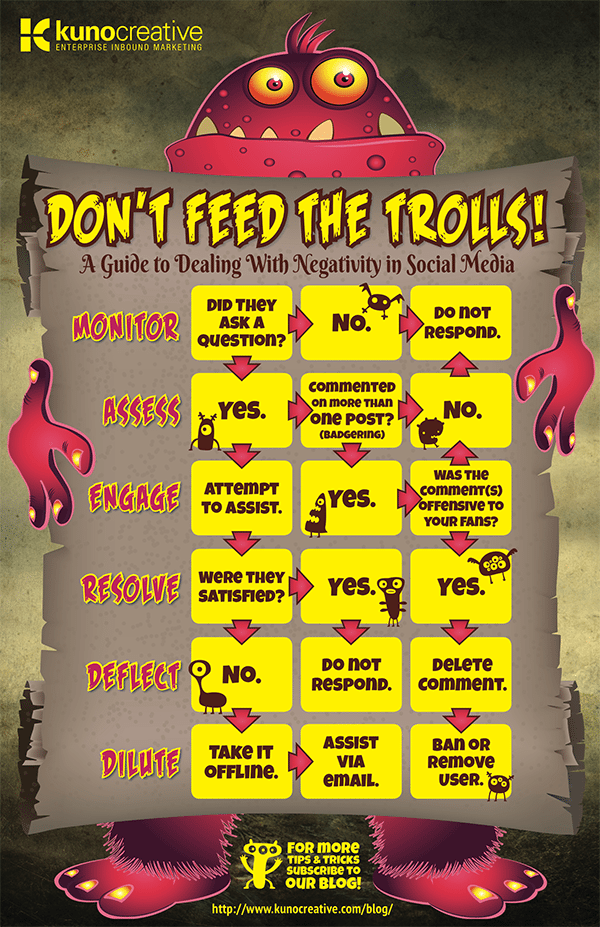
Step 1: Recognize the Troll
Before you can effectively deal with a troll, it’s crucial to recognize one when you encounter them. Trolls often exhibit certain characteristics that set them apart from genuine users:
- Provocative Behavior: Trolls aim to provoke emotional reactions from others by posting offensive, inflammatory, or controversial content.
- Anonymity: Many trolls hide behind pseudonyms or fake profiles to avoid accountability for their actions.
- Repetitive Comments: Trolls frequently post the same negative or disruptive comments on multiple threads or accounts.
- Insults and Personal Attacks: Trolls resort to name-calling, insults, and personal attacks rather than engaging in civil discourse.
- Derailing Conversations: They divert discussions away from the main topic, creating confusion and chaos.
Identifying these characteristics will help you differentiate trolls from regular users who may have differing opinions but engage in constructive dialogue.
Step 2: Avoid Feeding the Trolls
The age-old advice of “Don’t feed the trolls” still holds true. Trolls thrive on attention and reactions. Engaging with them only fuels their behavior. Here’s how to avoid feeding the trolls:
- Ignore Them: Sometimes, the best response is no response. By not reacting to a troll’s comments, you deny them the satisfaction of getting under your skin.
- Block or Mute: Most social media platforms offer features to block or mute specific users. Utilize these tools to remove trolls from your feed, so their comments don’t appear to you.
- Report Abuse: If a troll’s behavior violates the platform’s terms of service, report them to the platform administrators. They may take action against the troll’s account.
- Set Boundaries: Maintain clear boundaries for your online interactions. Let trolls know that their behavior is unacceptable, and you won’t tolerate it.
By refusing to engage with trolls, you take away their power and discourage them from targeting you further.
Step 3: Maintain a Positive Tone
When you choose to engage in discussions on social media, it’s essential to maintain a positive and constructive tone. Responding to negative comments with respect and patience can defuse tense situations and discourage trolls from continuing their behavior. Here are some tips for maintaining a positive tone:
- Stay Calm: Don’t let a troll’s provocations upset you. Respond calmly and rationally.
- Use Humor: Sometimes, humor can be an effective way to disarm trolls. A well-placed joke or witty response can shift the tone of the conversation.
- Offer Constructive Feedback: If you believe there’s room for a productive discussion, provide constructive feedback instead of resorting to insults.
- Be Empathetic: Try to understand the troll’s perspective, even if you don’t agree with it. Showing empathy can humanize the interaction.
- Stay Focused: Keep the conversation on the topic at hand. Trolls often try to derail discussions, so steer clear of their distractions.
By maintaining a positive tone, you not only improve the quality of your interactions but also set an example for others to follow.
Step 4: Engage in Meaningful Discussions
One effective way to combat troll behavior is to focus on meaningful discussions and positive interactions with other users. When your online presence is marked by valuable contributions, trolls are less likely to target you. Here’s how to engage in meaningful discussions:
- Choose Your Battles: Not every comment or post requires a response. Prioritize discussions that align with your interests and values.
- Share Knowledge: Share your expertise and knowledge on topics you’re passionate about. Valuable insights can attract like-minded individuals and encourage constructive conversations.
- Support Others: Be supportive of others who are facing troll attacks. By standing up for each other, you create a more resilient online community.
- Encourage Empathy: Promote empathy and understanding in your interactions. Encourage users to see different perspectives and engage in civil discourse.
- Use Evidence: When discussing controversial topics, back your arguments with credible sources and evidence. This can elevate the quality of the conversation.
By actively participating in meaningful discussions, you contribute positively to the online environment and reduce the impact of trolls.
Step 5: Educate and Raise Awareness
Dealing with social media trolls is not just an individual endeavor; it’s also about creating a safer online space for everyone. You can help by educating others and raising awareness about troll behavior and its consequences. Here’s how:
- Share Information: Post articles, videos, or infographics that explain troll behavior and its impact on individuals and communities.
- Foster Digital Literacy: Promote digital literacy skills that help users recognize and respond to trolls effectively.
- Encourage Reporting: Encourage your followers to report troll behavior and support them in doing so when necessary.
- Advocate for Change: If you witness online harassment or trolling campaigns, advocate for policy changes and platform improvements to combat these issues.
- Support Anti-Trolling Initiatives: Get involved with or support organizations and initiatives dedicated to addressing online harassment and trolling.
By educating and raising awareness, you empower others to take action against trolls and create a more welcoming online environment.
Step 6: Take Care of Your Mental Health
Dealing with social media trolls can take a toll on your mental health. It’s essential to prioritize your well-being and practice self-care. Here are some strategies to help you manage the emotional impact of dealing with trolls:
- Take Breaks: Don’t hesitate to take breaks from social media when needed. Disconnecting for a while can help you recharge.
- Talk to Friends and Family: Share your experiences with trusted friends and family members who can provide emotional support.
- Seek Professional Help: If the stress of dealing with trolls becomes overwhelming, consider speaking with a mental health professional.
- Practice Mindfulness: Mindfulness techniques, such as meditation and deep breathing, can help you stay centered and reduce stress.
- Remember Your Value: Remind yourself of your worth and the positive impact you have in online communities.
Conclusion
Dealing with social media trolls is an unfortunate reality of the digital age, but it doesn’t have to define your online experience. By recognizing trolls, avoiding engagement, maintaining a positive tone, engaging in meaningful discussions, educating others, and prioritizing your mental health, you can effectively navigate the online world and contribute to a more positive and constructive social media environment. Remember, you have the power to shape your online experience and make a difference in the digital community you belong to.

Author:
Mark Ford

How to Create Platform-Specific Social Media Content Without Doubling Your Workload
Are you struggling to keep your social media content consistent across platforms without it eating up your time? Want to learn how to adapt one idea for Facebook, Instagram, LinkedIn, TikTok, and X without creating everything from scratch? […]