In today’s digital age, a website is often the first point of contact between a business and its potential customers. Your website’s design, content, and functionality play a crucial role in shaping the perception of your brand and influencing purchasing decisions.
One powerful technique to build trust and credibility with your online audience is through social proof. Social proof is the psychological phenomenon where people look to the actions and opinions of others to determine their own behavior.
In the context of your website, it’s about showcasing evidence that others have already benefited from your products or services, which can persuade visitors to take the desired actions, such as making a purchase.
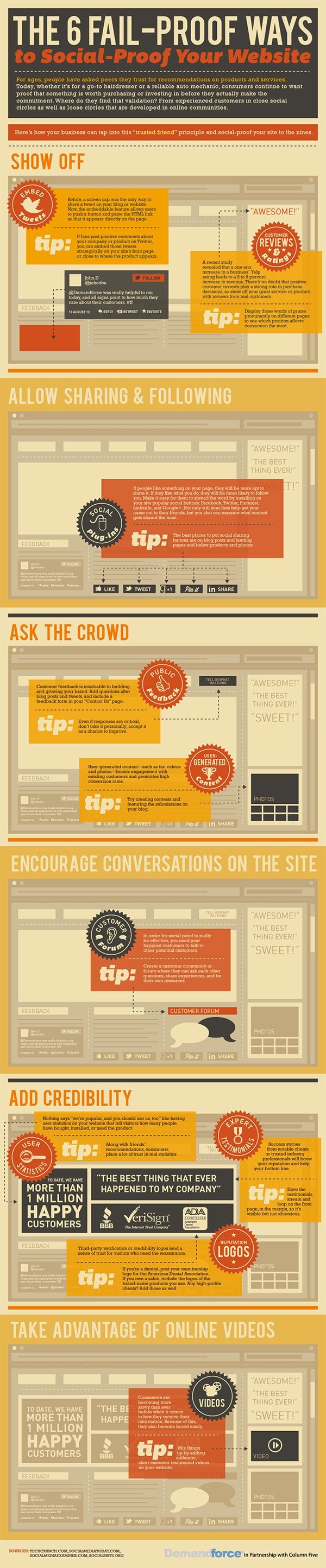
In this blog post, we will explore six effective ways to social proof your website and convince your visitors to buy from you.
Infographic from Demand Force.
1. Customer Reviews and Testimonials
One of the most potent forms of social proof is customer reviews and testimonials. When potential customers see that others have had positive experiences with your products or services, it builds trust and confidence. Here’s how to make the most of this powerful tool:
a. Collect Genuine Reviews
Encourage your customers to leave honest reviews after making a purchase. You can send follow-up emails, offering incentives like discounts or exclusive content in return for their feedback. Ensure that you have a dedicated section on your website where these reviews are prominently displayed.
b. Showcase Diverse Testimonials
Include a variety of testimonials from different customers, highlighting various aspects of your products or services. This diversity can help address a wider range of potential concerns and objections that your visitors may have.
c. Use Real Names and Photos
Whenever possible, include the real names and photos of your customers next to their testimonials. This makes the reviews feel more authentic and trustworthy. Video testimonials can be even more compelling as they allow potential customers to see and hear real people talking about their positive experiences.
2. Trust Seals and Badges
Trust seals and badges from reputable organizations can instantly boost your website’s credibility. These symbols indicate that your website is secure, follows best practices, or has received recognition from trusted entities. Here’s how to use them effectively:
a. SSL Certificate
Ensure that your website has an SSL (Secure Sockets Layer) certificate, which encrypts data transmitted between your site and your visitors. Display the SSL seal prominently on your website, usually in the footer or checkout pages, to assure visitors that their information is secure.
b. Industry Awards and Certifications
If your business has received industry awards or certifications, proudly display them on your website. These accolades provide immediate credibility and can influence visitors to trust your expertise.
c. Payment and Security Seals
If you accept online payments, prominently display recognized payment and security seals. This reassures visitors that their financial transactions are safe and that your website follows industry-standard security protocols.
3. User-Generated Content
User-generated content (UGC) is any content created by your customers or users. It can include product reviews, testimonials, social media posts, and even user-submitted photos or videos featuring your products. Here’s how to harness the power of UGC:
a. Create a Hashtag
Encourage customers to use a specific hashtag when sharing their experiences with your products or services on social media. Curate and display these posts on your website to showcase real people engaging with your brand.
b. Run Contests and Challenges
Engage your customers by running contests or challenges that encourage them to create content related to your brand. Offer prizes or incentives to participants and feature the winning entries on your website.
c. Share Customer Stories
Share in-depth stories or case studies that highlight how your products or services have made a positive impact on your customers’ lives. These stories add depth to your social proof efforts and help visitors relate to real-world scenarios.
4. Social Media Following and Engagement
Your social media presence is an extension of your website’s social proof. A strong and engaged social media following can significantly influence visitors’ perceptions of your brand. Here’s how to leverage social media effectively:
a. Display Social Media Icons
Include easily accessible social media icons on your website, usually in the header or footer. This allows visitors to connect with you on various platforms, demonstrating your active online presence.
b. Showcase Follower Counts
Display your social media follower counts prominently, especially if they are substantial. High follower counts indicate popularity and can enhance your website’s credibility.
c. Encourage Engagement
Prompt visitors to follow, like, share, and comment on your social media posts directly from your website. Engaging with your content can further solidify their connection to your brand.
5. Influencer Endorsements
Influencer marketing has gained immense popularity in recent years. Collaborating with influencers in your niche can provide your website with valuable social proof. Here’s how to make the most of influencer endorsements:
a. Identify Relevant Influencers
Find influencers whose audience aligns with your target demographic. Look for those who have a genuine interest in your products or services.
b. Collaborate for Authentic Content
Partner with influencers to create authentic content that showcases how they use and benefit from your offerings. Authenticity is key to building trust with your audience.
c. Feature Influencer Content
Display influencer-generated content on your website, such as blog posts, videos, or social media posts. Highlight the partnership and the positive impact your products or services have had on the influencer’s life.
6. Live Chat and Customer Support
Providing real-time customer support through live chat can demonstrate your commitment to customer satisfaction. It offers immediate assistance to visitors and can serve as a form of social proof. Here’s how to implement it effectively:
a. Display Availability
Show when your live chat support is available and prominently display it on your website. Visitors should know that they can reach out for help at any time.
b. Showcase Response Times
Highlight your average response times for live chat inquiries. Faster response times can indicate exceptional customer service.
c. Share Success Stories
Share success stories or anecdotes from previous live chat interactions where customers’ issues were resolved promptly and satisfactorily.
In conclusion, social proof is a potent tool for convincing website visitors to trust your brand and make purchasing decisions. By incorporating customer reviews, trust seals, user-generated content, social media engagement, influencer endorsements, and live chat support, you can create a compelling online presence that resonates with your audience. Remember that building trust takes time, so consistently apply these social proof strategies to enhance your website’s credibility and, ultimately, drive more conversions and sales.

Author:
Mark Ford