
Twitter is a powerful social media platform that can help you reach a wide audience, connect with influencers, and promote your brand or business.
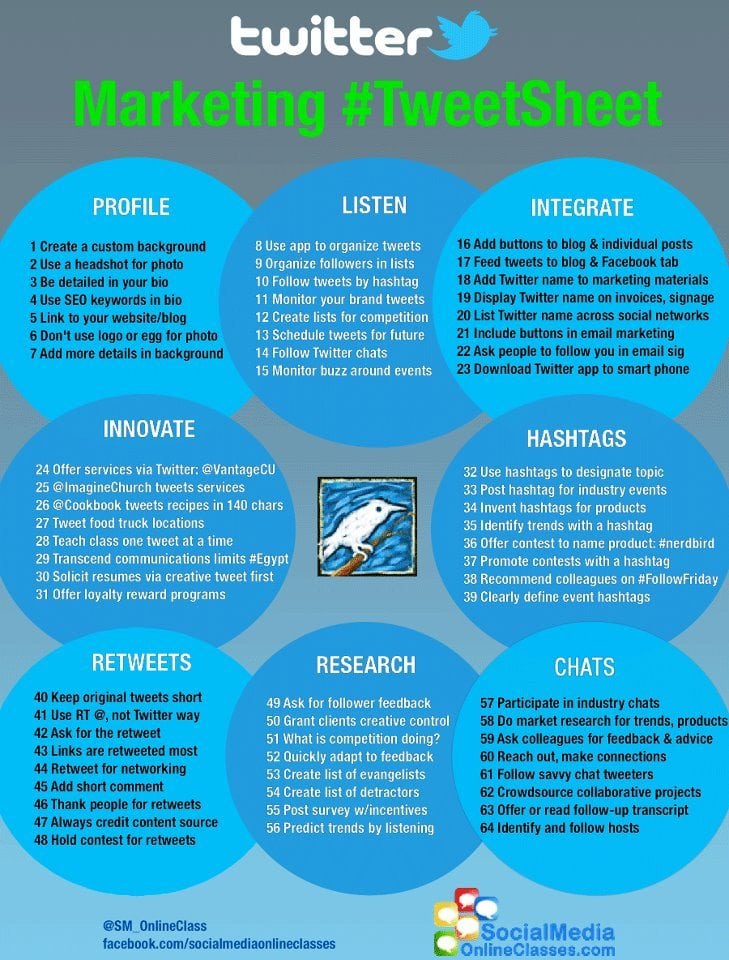
Whether you’re new to Twitter or looking to up your Twitter marketing game, these 64 quick and simple Twitter marketing tips for beginners will help you get started and make the most of this platform.
Infographic by Social Media Online Classes.
Setting up Your Twitter Profile
- Choose a Clear Profile Picture: Use a high-quality profile picture that represents you or your brand. A headshot or a recognizable logo works best.
- Craft a Memorable Bio: Your bio is your elevator pitch. In 160 characters, describe who you are and what you do. Include relevant keywords and hashtags.
- Add a Header Image: Use the header image to convey your brand’s personality, showcase promotions, or tell a story.
- Use a Consistent Username: Try to keep your Twitter handle consistent across all social media platforms to make it easier for people to find you.
- Verify Your Account: If possible, get your account verified. This adds credibility to your profile.
Tweeting Basics
- Keep it Concise: Twitter has a character limit of 280 characters. Make your tweets short and to the point.
- Use Hashtags Wisely: Incorporate relevant hashtags to increase the discoverability of your tweets. But don’t overdo it; one to three hashtags per tweet is ideal.
- Engage with Visuals: Tweets with images or videos tend to get more engagement. Use eye-catching visuals to make your tweets stand out.
- Use Emojis Sparingly: Emojis can add personality to your tweets, but don’t overuse them. A few well-placed emojis can enhance your message.
- Tweet Regularly: Consistency is key. Try to tweet at least once a day to keep your audience engaged.
Content Strategy
- Share Valuable Content: Provide value to your followers by sharing informative articles, tips, and insights related to your niche.
- Mix Up Content Types: Tweet a variety of content, including text, images, videos, and links, to keep your feed interesting.
- Curate Relevant Content: Share content from other influencers and thought leaders in your industry. It shows that you’re connected and informed.
- Create Polls: Engage your audience with polls. They’re a great way to gather opinions and boost interaction.
- Use Twitter Threads: When you have a lot to say on a topic, create a thread by replying to your own tweets. This keeps your content organized and engaging.
Building Your Twitter Community
- Follow Relevant Accounts: Follow accounts in your niche, industry, and related areas to stay informed and connect with like-minded individuals.
- Interact with Others: Reply to tweets, retweet interesting content, and engage in conversations. Being active in the Twitter community helps you gain visibility.
- Use Mention Tags: Mention other users in your tweets when relevant. It increases the likelihood of them seeing and engaging with your content.
- Participate in Twitter Chats: Join relevant Twitter chats to network with others in your industry and share your expertise.
- Host Twitter Chats: Consider hosting your own Twitter chat on a topic related to your niche. It’s a great way to establish authority.
Twitter Etiquette
- Be Respectful: Treat others with respect, even if you disagree with them. Avoid confrontations and arguments.
- Avoid Spammy Behavior: Don’t spam your followers with excessive self-promotion. Balance your promotional tweets with valuable content.
- Acknowledge Mentions and Messages: Respond to mentions and direct messages in a timely manner to show you’re attentive.
- Avoid Over-automation: While scheduling tweets can be helpful, avoid automating all your interactions. Authenticity matters.
- Mind Your Timing: Tweet when your target audience is most active. Use Twitter analytics to determine the best times to post.
Twitter Analytics and Tracking
- Use Twitter Analytics: Take advantage of Twitter’s built-in analytics tools to track the performance of your tweets and understand your audience better.
- Track Hashtags: Monitor the performance of specific hashtags to see what’s trending in your industry and join relevant conversations.
- Track Link Clicks: Use link shorteners and analytics tools to track how many people are clicking on your shared links.
- Monitor Mentions: Set up alerts or use social media monitoring tools to keep track of when your brand or username is mentioned.
- Review Your Strategy Regularly: Continuously assess your Twitter marketing strategy and adjust it based on what works best for your audience.
Twitter Advertising
- Promote Tweets: Use Twitter Ads to promote your most important tweets to a wider audience.
- Target Your Audience: Make use of Twitter’s targeting options to reach the right audience based on demographics, interests, and behaviors.
- Run Contests and Giveaways: Boost engagement by running Twitter contests and giveaways. Encourage retweets and follows for participation.
- Experiment with Twitter Cards: Twitter Cards allow you to attach media experiences to your tweets. They can drive more traffic to your website.
- Budget Wisely: Set a reasonable budget for your Twitter advertising campaigns and monitor their performance closely.
Twitter Lists
- Create Twitter Lists: Organize the accounts you follow into lists to make it easier to monitor specific topics or industries.
- Join Lists: Join existing lists created by others in your niche to discover new accounts and stay updated.
- Be a List Curator: Create valuable lists for your followers. This positions you as an authority in your industry.
- Engage with List Members: Interact with members of your Twitter lists by retweeting their content and starting conversations.
- Use Lists for Research: Use Twitter lists to research competitors, influencers, and trending topics in your industry.
Twitter for Customer Service
- Monitor Mentions and Messages: Keep a close eye on mentions and direct messages for customer inquiries and feedback.
- Respond Promptly: Respond to customer queries and complaints promptly and professionally.
- Use Private Messages: For sensitive or personal issues, switch to private messages to maintain customer privacy.
- Acknowledge Positive Feedback: Don’t just respond to complaints. Acknowledge and thank customers for positive feedback.
- Train Your Team: If you have a team managing your Twitter account, ensure they are trained in handling customer service effectively.
Twitter for Networking
- Attend Twitter Events: Participate in Twitter events like Twitter chats, live-tweeting conferences, and industry-specific hashtags.
- Engage with Influencers: Interact with influencers and thought leaders in your industry. Their endorsements can be invaluable.
- Collaborate with Others: Collaborate with complementary businesses and influencers on Twitter campaigns or projects.
- Attend Twitter Meetups: In some areas, there are local Twitter meetups or events. Attend them to connect with people in your community.
- Share Others’ Content: Retweet and engage with the content of your network. They are likely to return the favor.
Twitter for Content Promotion
- Pin Important Tweets: Pin a tweet with a link to your latest blog post or promotion at the top of your profile.
- Use Twitter Moments: Create Twitter Moments to curate and showcase the best tweets and content from an event or campaign.
- Leverage Twitter Threads: Use threaded tweets to break down and promote longer-form content, such as blog posts.
- Tweet Regularly About Your Content: Don’t be afraid to share your content multiple times, especially if it’s evergreen and valuable.
- Tag Relevant Accounts: Tag influencers, brands, or people mentioned in your content when you promote it for increased visibility.
Twitter for Brand Building
- Maintain Consistency: Keep your branding elements, such as colors, logo, and messaging, consistent across your Twitter profile.
- Showcase Your Personality: Inject your brand’s personality into your tweets and interactions to make it more relatable.
- Tell Your Brand Story: Share the story behind your brand. People love to connect with the humans behind the logo.
- Celebrate Milestones: Share your achievements and milestones with your audience to build trust and credibility.
- Highlight User-generated Content: Encourage customers to share their experiences and use your products, then highlight their content.
Twitter for Lead Generation
- Promote Lead Magnets: Use Twitter to promote free resources, like ebooks or webinars, to capture email leads.
- Run Twitter Contests: Create contests that require participants to enter with their email addresses, helping you build your list.
- Use Call-to-Actions: Include clear calls-to-action in your tweets, guiding users to take the desired action, such as signing up for your newsletter.
- Leverage Twitter Cards: Use Twitter Cards to collect leads directly on Twitter by offering gated content.
In conclusion, Twitter offers a wealth of opportunities for marketers and individuals looking to expand their online presence. By following these 64 quick and simple Twitter marketing tips for beginners, you’ll be well on your way to building a strong Twitter presence, engaging with your audience, and achieving your marketing goals. Remember, success on Twitter takes time, so be patient, stay consistent, and adapt your strategy as needed to keep growing your Twitter community. Happy tweeting!

Author:
Mark Ford