Blogging has evolved from being a mere hobby to a lucrative career and a powerful tool for expressing ideas and building communities.
Whether you’re passionate about a niche topic, want to share your expertise, or simply enjoy writing, starting a blog is an exciting endeavor. However, for newbie bloggers, it can be overwhelming at first.
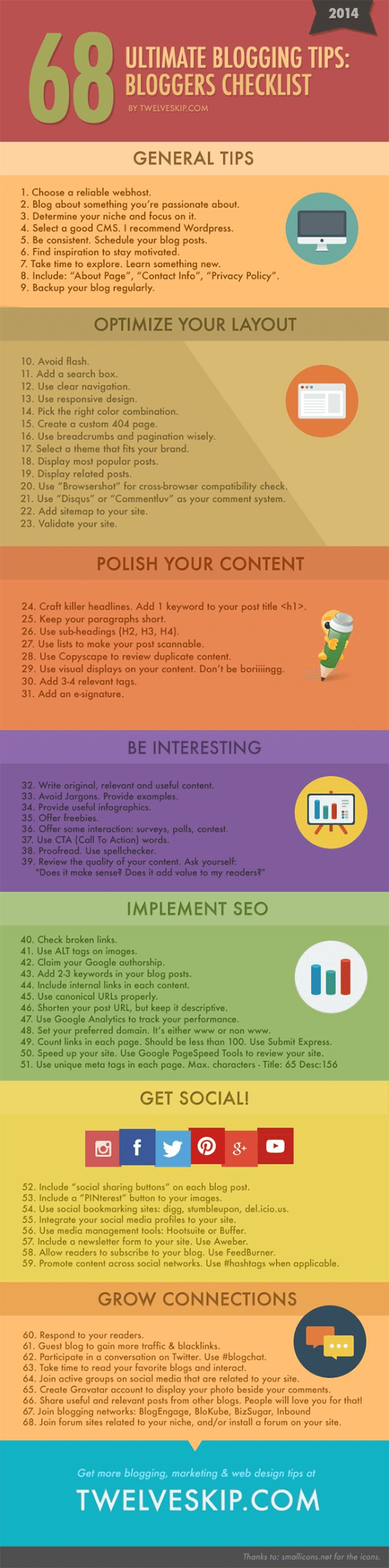
That’s why we’ve compiled a comprehensive list of 68 tips to help you kickstart your blogging journey and set yourself up for success.
Infographic by Twelveskip.
1. Find Your Passion
Before you start your blog, identify your passion. Blogging about something you genuinely care about will keep you motivated and engaged in the long run.
2. Define Your Niche
Narrow down your blog’s focus to a specific niche. This will help you target a specific audience and stand out in a crowded blogosphere.
3. Research Your Audience
Understand your target audience’s preferences, needs, and pain points. This knowledge will inform your content strategy.
4. Choose the Right Blogging Platform
Select a user-friendly platform like WordPress, Blogger, or Wix to host your blog. These platforms offer customizable templates and tools for beginners.
5. Invest in a Professional Domain Name
A unique and memorable domain name adds credibility to your blog. Avoid long and complicated domain names.
6. Set Clear Goals
Determine what you want to achieve with your blog, whether it’s building a personal brand, monetizing your content, or educating others.
7. Craft a Compelling About Page
Write an engaging ‘About Me’ page that introduces yourself and your blog’s mission. It’s often one of the most visited pages on a blog.
8. Develop a Content Strategy
Plan your content in advance. Create an editorial calendar to ensure a consistent posting schedule.
9. Write High-Quality Content
Focus on creating well-researched, informative, and engaging blog posts. Quality content is key to attracting and retaining readers.
10. Master SEO Basics
Learn the fundamentals of search engine optimization (SEO) to increase your blog’s visibility on search engines like Google.
11. Use Eye-catching Headlines
Craft attention-grabbing headlines to entice readers to click on your articles.
12. Incorporate Visuals
Include images, infographics, and videos to make your content more visually appealing and shareable.
13. Be Consistent
Stick to a regular posting schedule to keep your audience engaged and coming back for more.
14. Engage with Your Audience
Respond to comments and interact with your readers on social media. Building a community around your blog is crucial.
15. Guest Post on Other Blogs
Guest posting on established blogs in your niche can help you reach a wider audience and build backlinks to your site.
16. Utilize Social Media
Promote your blog posts on social media platforms like Facebook, Twitter, Instagram, and Pinterest to drive traffic.
17. Build an Email List
Start collecting email addresses from your readers early on. Email marketing is an effective way to nurture relationships and promote your content.
18. Offer Value
Always provide value to your readers. Solve their problems, answer their questions, and address their concerns.
19. Learn from Successful Bloggers
Study successful bloggers in your niche to gain insights and inspiration.
20. Analyze Your Analytics
Regularly review your blog’s analytics to track your performance and identify areas for improvement.
21. Monetize Wisely
Explore various monetization options like affiliate marketing, sponsored posts, and selling digital products, but do so with integrity and transparency.
22. Create a Professional Design
Invest in a clean and visually appealing blog design that’s easy to navigate.
23. Optimize for Mobile Devices
Ensure your blog is mobile-friendly, as a significant portion of your audience will access it from smartphones and tablets.
24. Protect Your Content
Use copyright notices and consider adding a plagiarism checker to deter content thieves.
25. Network with Other Bloggers
Connect with fellow bloggers in your niche. Collaboration can lead to new opportunities and a supportive network.
26. Master the Art of Storytelling
Craft compelling narratives to engage your audience and make your content more relatable.
27. Develop Your Unique Voice
Find your writing style and personality that sets you apart from other bloggers.
28. Stay Updated
Keep up with industry trends and news related to your niche.
29. Use a Proofreading Tool
Eliminate grammar and spelling errors with the help of proofreading tools like Grammarly.
30. Prioritize User Experience
Ensure your blog loads quickly, is easy to navigate, and provides a seamless experience for your visitors.
31. Experiment with Different Content Formats
Don’t limit yourself to text-only content. Experiment with podcasts, webinars, and interactive content.
32. Leverage Long-form Content
Longer, in-depth articles tend to perform well in search engines and can establish you as an authority in your niche.
33. Create Compelling Calls to Action (CTAs)
Encourage readers to take action by including clear and persuasive CTAs in your posts.
34. Guest Podcast on Other Shows
If you’re comfortable with public speaking, consider guesting on podcasts to expand your reach.
35. Collaborate with Influencers
Partner with influencers in your niche for cross-promotion and exposure.
36. Join Blogging Communities
Participate in forums and groups related to blogging to learn from others and share your experiences.
37. Don’t Neglect Email Marketing
Email remains one of the most effective ways to reach your audience directly.
38. Invest in Professional Photography
High-quality images can enhance your blog’s visual appeal and professionalism.
39. Don’t Chase Trends Blindly
While it’s important to stay current, avoid jumping on trends that don’t align with your blog’s niche or values.
40. Be Patient
Blogging takes time. Don’t get discouraged if you don’t see immediate results.
41. Research Keywords
Use keyword research tools to find relevant keywords to target in your content.
42. Interlink Your Posts
Link to your own articles within your blog posts to keep readers on your site longer.
43. Keep Your Writing Clear and Concise
Avoid unnecessary jargon and complex language. Write in a way that’s easy for your audience to understand.
44. Create Evergreen Content
Produce content that remains relevant and valuable over time, reducing the need for constant updates.
45. Develop a Unique Selling Proposition (USP)
Identify what sets your blog apart from others in your niche and highlight it.
46. Promote Ethical Practices
Maintain transparency and ethical standards in all your blogging activities.
47. Learn Basic HTML and CSS
A basic understanding of HTML and CSS can be handy for customizing your blog’s design.
48. Build Relationships with Your Readers
Engage with your audience, ask for feedback, and incorporate their suggestions.
49. Use Analytics to Improve
Analyze your blog’s performance to identify your most popular content and areas for improvement.
50. Stay Committed
Blogging can be challenging, but persistence is key to long-term success.
51. Offer Freebies
Create valuable free resources like eBooks, templates, or guides to attract subscribers.
52. Embrace Failure
Mistakes happen. Learn from them and use them as stepping stones to improve.
53. Attend Blogging Conferences
Participate in blogging conferences and workshops to network and learn from industry experts.
54. Respect Copyright Laws
Always attribute and seek permission when using others’ content.
55. Don’t Overload Your Blog with Ads
While ads can generate revenue, an excessive number can deter readers.
56. Prioritize Accessibility
Ensure your blog is accessible to all users, including those with disabilities.
57. Test Different Monetization Strategies
Experiment with various revenue streams to find what works best for your audience.
58. Stay True to Your Brand
Maintain consistency in your branding, from your blog’s logo to your social media profiles.
59. Engage with Your Email Subscribers
Segment your email list and send targeted content to different groups.
60. Join Affiliate Programs
Consider joining affiliate programs related to your niche to earn commissions on product recommendations.
61. Diversify Your Content
Include a mix of how-to guides, opinion pieces, and personal stories to keep your blog interesting.
62. Use Social Proof
Display social share counts and testimonials to build trust with your audience.
63. Build an Effective Sales Funnel
Guide your readers through a journey that leads to conversions, whether it’s signing up for your newsletter or making a purchase.
64. Invest in SEO Tools
Utilize SEO tools like SEMrush or Ahrefs to optimize your content and track your rankings.
65. Collaborate with Brands Ethically
If you work with brands, ensure the partnerships align with your blog’s values and provide value to your audience.
66. Stay Inspired
Regularly consume content outside of your niche to spark creativity and new ideas.
67. Be Adaptable
The blogging landscape is always changing. Be ready to adapt to new technologies and trends.
68. Celebrate Milestones
Acknowledge and celebrate your achievements, no matter how small. Blogging is a journey, and every milestone is worth celebrating.
In conclusion, starting a blog is an exciting endeavor that can lead to personal fulfillment and even financial success. While the journey may seem daunting at first, these 68 tips will help newbie bloggers navigate the world of blogging with confidence and purpose. Remember, it’s not just about the destination but the journey itself that can be incredibly rewarding. So, roll up your sleeves, start writing, and let your blogging adventure begin!

Author:
Mark Ford

The Complete Content Mix: What Every Business Should Be Publishing
Are you struggling to decide what types of content your business should be publishing to attract more traffic and engagement? Want to learn how to build the perfect content mix that keeps your audience interested and your brand growing? […]