In the ever-evolving landscape of digital marketing, two key strategies have emerged as powerhouses in their own right: Social Media Marketing (SMM) and Search Engine Optimization (SEO).
While they are often considered distinct tactics, their synergy can be a game-changer for businesses looking to maximize their online presence and drive meaningful results.
In this blog post, we’ll explore seven compelling reasons why Social Media Marketing and SEO should be done together.
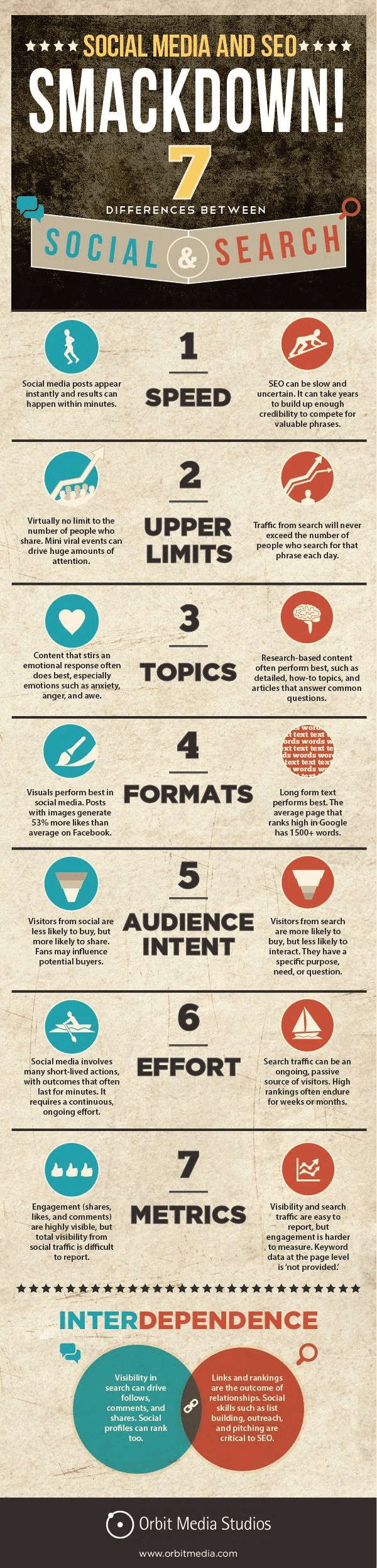
Infographic by Orbit Media Solutions.
1. Enhanced Brand Visibility
One of the primary goals of both SMM and SEO is to increase brand visibility. Social media platforms like Facebook, Twitter, and Instagram have billions of active users. Leveraging these platforms allows you to put your brand in front of a massive audience. SEO, on the other hand, helps your website rank higher in search engine results pages (SERPs). When you combine these efforts, you create a powerful online presence that ensures your brand is seen by a wide range of potential customers.
Imagine this scenario: a user encounters your brand on social media, becomes interested, and searches for related keywords on Google. If your website appears near the top of the search results, you’ve successfully captured their attention twice. This dual exposure significantly increases the chances of the user engaging with your brand and becoming a customer.
2. Quality Backlinks and Social Signals
Search engines consider backlinks and social signals as important ranking factors. Backlinks are links from other websites to your site, and social signals are the metrics that show how active and engaging your social media profiles are. When SMM and SEO are combined, you can leverage social media to generate high-quality backlinks.
Sharing valuable content on social media can attract attention from bloggers, influencers, and other websites. When they find your content valuable, they may link to it from their own sites, thereby improving your SEO rankings. Additionally, social signals like likes, shares, and comments on your social media posts can positively influence your website’s SEO performance.
3. Targeted Traffic Generation
Both SMM and SEO are focused on driving relevant traffic to your website. However, the methods they use to achieve this goal are slightly different. Social media marketing allows you to target specific demographics, interests, and behaviors when promoting your content or products. This means you can tailor your social media campaigns to reach an audience that is more likely to convert.
SEO, on the other hand, targets users searching for specific keywords or phrases related to your business. By optimizing your website for these keywords and phrases, you can attract organic traffic from users actively seeking the products or services you offer. When SMM and SEO work in tandem, you can enjoy a steady flow of both targeted social media traffic and organic search traffic, increasing your chances of conversions.
4. Content Amplification
Content is at the heart of both SMM and SEO strategies. Social media platforms are excellent channels for amplifying your content. When you share blog posts, videos, infographics, or other valuable content on social media, you increase its reach and engagement potential. Social media users who discover and engage with your content may also share it with their networks, extending your content’s reach even further.
Moreover, search engines favor fresh and high-quality content. By consistently creating and sharing valuable content on social media, you not only engage your audience but also provide search engines with new content to index. This can lead to improved SEO rankings, as search engines recognize your website as a valuable source of information.
5. Reputation Management
Online reputation is a critical factor for businesses today. Social media plays a significant role in shaping public perception and can be a platform for both positive and negative reviews or comments. Combining SMM and SEO allows you to actively manage and improve your online reputation.
When you have a strong social media presence and regularly engage with your audience, you have more control over the narrative surrounding your brand. Addressing customer inquiries, responding to comments, and resolving issues promptly on social media can demonstrate your commitment to customer satisfaction, which can be a positive signal for search engines.
Furthermore, when users search for your brand or related keywords, they are likely to encounter your social media profiles alongside your website in the search results. Consistently updated and well-maintained social media profiles can project a professional image and instill trust in potential customers.
6. Comprehensive Keyword Research
Keyword research is a fundamental aspect of SEO. It involves identifying the keywords and phrases that your target audience is searching for. Social media can be a valuable source of insights for keyword research. By monitoring social media conversations related to your industry or niche, you can gain a better understanding of the language and terminology your audience uses.
Additionally, social media platforms often provide tools and analytics that can help you identify trending topics and keywords. Integrating these insights into your SEO strategy allows you to optimize your website for the most relevant and high-impact keywords, ultimately improving your search rankings.
7. Improved User Experience
User experience (UX) is a critical factor in SEO. Search engines prioritize websites that provide a positive and seamless experience for users. Social media can contribute to improved user experience in several ways.
First, social media can drive traffic to your website, increasing its overall visibility. Second, it can serve as a platform for customer engagement, allowing you to address user inquiries and provide valuable information in real-time. Third, social media can be used to share user-generated content and testimonials, which can enhance your website’s credibility and trustworthiness.
When SMM and SEO are executed together, they create a holistic digital marketing strategy that not only attracts users but also provides them with a seamless and engaging experience, leading to improved SEO performance.
Conclusion
In today’s competitive digital landscape, businesses must utilize every available opportunity to enhance their online presence and reach their target audience. Social Media Marketing and SEO are powerful strategies on their own, but when combined, they form a symbiotic relationship that can amplify results.
From increased brand visibility to targeted traffic generation, quality backlinks, and enhanced user experience, the benefits of integrating SMM and SEO are clear. By recognizing the value of these two strategies working together, businesses can establish a stronger online presence, engage their audience effectively, and ultimately drive growth and success in the digital realm.

Author:
Mark Ford