
In the ever-evolving landscape of digital marketing, social media has become a powerful tool for businesses to connect with their audience, build brand awareness, and drive sales.
However, with the rapid growth of social media platforms and the continuous emergence of new trends and strategies, it’s easy for misconceptions to arise.
In this blog post, we’ll debunk seven common social media marketing myths that your business should ignore to thrive in the digital age.
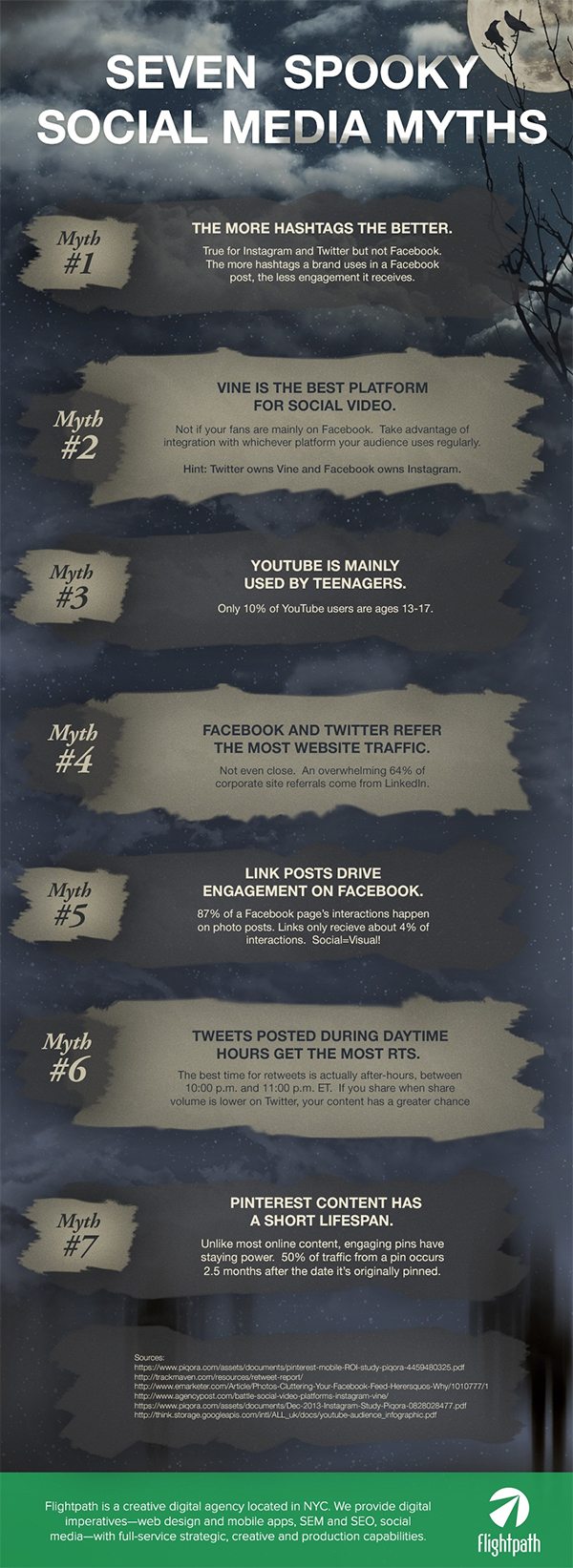
Infographic by Flightpath.
Myth 1: You Need to Be on Every Social Media Platform
One of the most prevalent myths in social media marketing is the belief that you need to have a presence on every platform available. While it’s true that social media can be a valuable asset, it’s equally important to understand that not all platforms are suitable for every business.
Each social media platform has its unique demographics, features, and user behaviors. Instead of spreading your resources thin across numerous platforms, focus on the ones that align with your target audience and business goals. Conduct thorough research to identify where your potential customers are most active and concentrate your efforts there.
For instance, if you’re a B2B company, platforms like LinkedIn might be more effective for reaching professionals, while lifestyle brands may find success on Instagram or Pinterest. By strategically selecting the platforms that matter most to your business, you can allocate your resources more effectively and engage with your audience more meaningfully.
Myth 2: Social Media Marketing is Free
It’s a common misconception that social media marketing is entirely free. While it’s true that creating social media profiles and posting content doesn’t cost money, effective social media marketing often involves advertising and paid promotions.
Social media platforms offer advertising options that allow you to reach a larger and more targeted audience. These paid campaigns can be highly effective in driving traffic, conversions, and brand awareness. However, they come at a cost.
To succeed in social media marketing, it’s essential to allocate a budget for paid advertising. Carefully plan and optimize your campaigns to ensure you get the best return on investment (ROI). The key is to strike a balance between organic and paid strategies to maximize your reach and engagement without breaking the bank.
Myth 3: Posting Frequently is Always Better
Many businesses believe that flooding their social media channels with frequent posts is the key to success. While consistent posting is essential for maintaining an active presence, quality should always take precedence over quantity.
Overloading your audience with too many posts can lead to fatigue and disengagement. Instead, focus on creating valuable, relevant, and engaging content that resonates with your audience. The right content, even if posted less frequently, can yield better results than a high volume of mediocre posts.
Use data and analytics to determine the best posting schedule for your audience. Experiment with different posting frequencies and times to identify when your audience is most active and receptive to your content. Consistency and relevance should guide your posting strategy, rather than sheer volume.
Myth 4: Social Media is Only for Millennials and Gen Z
Another common myth is that social media is primarily for younger generations, such as Millennials and Gen Z. While it’s true that these demographics are active users of social media, platforms like Facebook have a broad user base that spans all age groups.
As of my last knowledge update, Facebook reported that over half of its users are over the age of 35. This means that businesses targeting older demographics can still find success on social media platforms. The key is to understand your target audience’s preferences and behaviors and choose the platforms that align with them.
Moreover, social media platforms are continually evolving to cater to a diverse audience. They offer various ad targeting options that allow you to reach specific age groups, interests, and demographics. Don’t make the mistake of assuming that social media is only for the young; it’s a versatile tool that can be effective for reaching a wide range of audiences.
Myth 5: It’s All About the Number of Followers
Having a large following on social media can be impressive, but it’s not the only metric that matters. The number of followers alone does not guarantee the success of your social media marketing efforts.
What’s more important than the quantity of followers is the quality of your audience engagement. It’s better to have a smaller, highly engaged following that interacts with your content, shares your posts, and converts into customers than a large, passive audience.
Focus on building genuine relationships with your followers. Respond to comments, engage in conversations, and provide value through your content. Nurture your community, and over time, you’ll see more meaningful results in terms of brand loyalty and conversion rates.
Myth 6: Social Media Marketing Generates Instant Results
In our fast-paced digital age, many businesses expect instant results from their social media marketing efforts. However, social media success is rarely achieved overnight. Building a strong and sustainable social media presence takes time and consistent effort.
It’s important to set realistic expectations and understand that social media marketing is a long-term strategy. While you may see some immediate benefits, such as increased website traffic or engagement, the full impact of your efforts may take months or even years to manifest.
Be patient and stay committed to your social media strategy. Consistency, quality content, and continuous optimization are key to achieving lasting results. Monitor your analytics to track your progress and make data-driven adjustments to improve your performance over time.
Myth 7: Negative Comments Should Be Deleted
The final myth we’ll debunk is the belief that negative comments and feedback on social media should be deleted or ignored. In reality, negative comments can be an opportunity for your business to demonstrate transparency, professionalism, and a commitment to customer satisfaction.
Instead of immediately deleting negative comments, consider responding to them thoughtfully. Address the issue, offer a solution if applicable, and show that you value feedback from your customers. Handling negative comments in a constructive and empathetic manner can turn a potentially damaging situation into a positive one.
Furthermore, authenticity and transparency can enhance your brand’s credibility and trustworthiness. When other users see that you handle criticism professionally, it can actually boost your reputation and strengthen customer relationships.
In conclusion, social media marketing is a dynamic and ever-changing field, and it’s crucial for businesses to stay informed and adapt to the evolving landscape. By dispelling these seven common social media marketing myths and focusing on data-driven strategies, businesses can harness the full potential of social media to achieve their marketing goals, connect with their audience, and drive long-term success in the digital age.

Author:
Mark Ford

How to Create Engaging Instagram Reels Without Ever Showing Your Face
Are you looking for creative ways to make engaging Instagram Reels without stepping in front of the camera? Want to discover proven content ideas that help your brand stand out on social media while keeping your privacy intact? […]