
In today’s digital age, Facebook has become an integral part of our lives. With over 2.8 billion monthly active users, it’s a platform that connects people, businesses, and communities worldwide.
Whether you use Facebook for personal connections, marketing your business, or sharing your thoughts, it’s important to be aware of the platform’s rules and guidelines to ensure a positive experience for yourself and others.
Unfortunately, many users unknowingly violate these rules, which can lead to consequences like content removal, account suspension, or even permanent bans.
In this blog post, we’ll explore seven common ways you might be breaking Facebook’s rules and what you should do instead to stay in compliance.
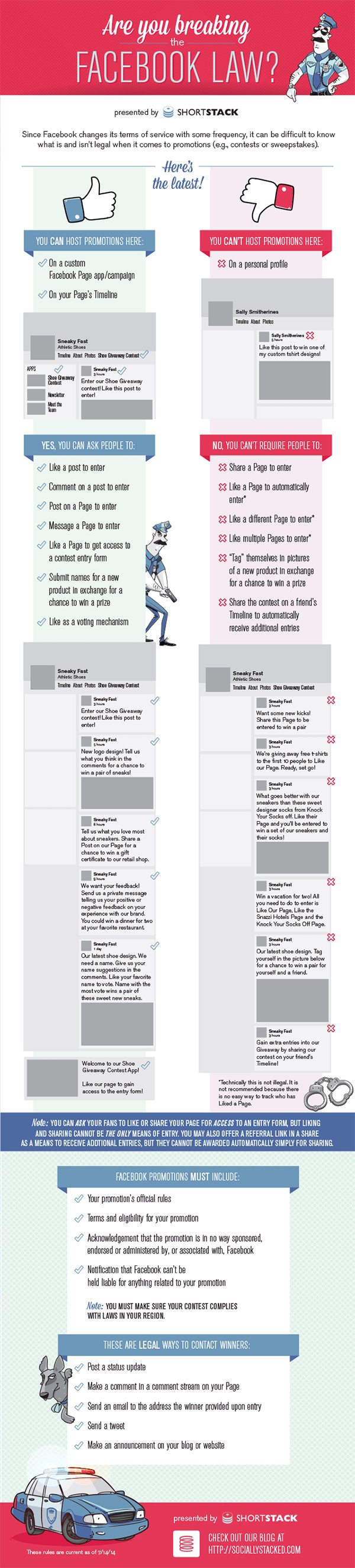
Infographic from Shortstack.
1. Violating Community Standards: Hate Speech and Harassment
Facebook’s Community Standards are in place to foster a safe and welcoming environment for all users. Hate speech, harassment, and bullying are strictly prohibited. If you engage in such behavior, you risk having your content removed, your account temporarily suspended, or even being permanently banned.
What You Should Do Instead: Always maintain respectful and civil discourse when interacting on Facebook. Avoid using hate speech, offensive language, or engaging in any form of harassment. Promote positive interactions and report any content that violates these standards.
2. Impersonation
Creating a fake profile or impersonating someone else on Facebook is a clear violation of its policies. Impersonation can mislead and deceive users, causing harm or confusion.
What You Should Do Instead: Use your real name and accurate information on your Facebook profile. If you represent a brand or business, create a Facebook Page specifically for that purpose. Authenticity and transparency are key.
3. Sharing False Information or Misleading Content
In recent years, the spread of false information, also known as “fake news,” has become a significant concern. Facebook takes this issue seriously and has implemented measures to combat it. Sharing false information or misleading content can result in penalties.
What You Should Do Instead: Verify the accuracy of the information you share before posting it. Be cautious of sensational headlines and always fact-check your sources. Share credible and reliable information to contribute to a more informed online community.
4. Spamming and Excessive Promotion
Constantly bombarding your friends or groups with promotional content, links, or advertisements can be seen as spammy behavior. Facebook discourages spam and excessive self-promotion.
What You Should Do Instead: Strike a balance between sharing valuable content and self-promotion. Engage with your audience genuinely and provide them with useful information. Avoid overposting or sending unsolicited messages.
5. Using Automated Bots
Automated bots are against Facebook’s policies. They can be used for various purposes, including mass messaging, spamming, or inflating engagement metrics. Such activities are not only unethical but can also result in account suspension.
What You Should Do Instead: Engage with users manually and authentically. Avoid using automated tools or scripts to manipulate your Facebook activity. Building genuine connections is more valuable in the long run.
6. Violating Copyright and Intellectual Property Rights
Sharing content on Facebook that you don’t have the rights to can lead to copyright infringement issues. This includes using copyrighted images, videos, or music without permission.
What You Should Do Instead: Always respect copyright and intellectual property rights. If you want to use someone else’s content, obtain the necessary permissions or ensure you’re using it within the boundaries of fair use.
7. Running Unauthorized Contests and Giveaways
Facebook has specific guidelines for running contests and giveaways on its platform. Failure to adhere to these rules can result in the removal of your content or account.
What You Should Do Instead: Review Facebook’s rules on running contests and giveaways. Ensure you follow their guidelines, including the use of third-party apps for managing contests. Transparency and fairness are essential.
Conclusion
Facebook is a powerful platform that can be immensely beneficial when used correctly. However, it’s crucial to understand and abide by its rules and policies to avoid any negative consequences. By avoiding hate speech, impersonation, false information, spam, automated bots, copyright violations, and unauthorized contests, you can contribute to a positive and respectful online community. Always remember that being a responsible and ethical Facebook user benefits both you and the platform’s vast user base.

Author:
Mark Ford