In today’s digital age, a company’s online presence plays a pivotal role in shaping its brand image and influencing customer perceptions.
Your website and marketing strategy are often the first touchpoints potential customers have with your business. When executed well, they can build trust, engage visitors, and drive conversions. However, when poorly executed, they can have the opposite effect and creep out your customers.
Creepy websites and marketing strategies can send potential customers running for the hills, tarnishing your brand and costing you valuable leads and sales. To ensure your digital presence doesn’t leave a creepy impression, here are seven common mistakes to avoid.
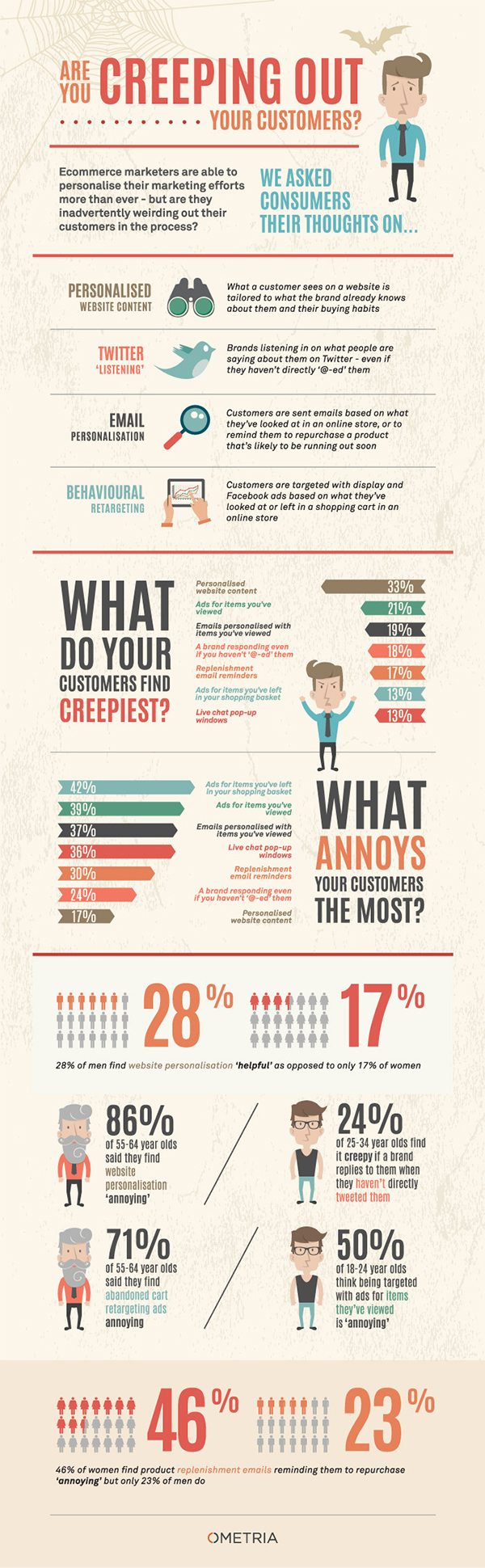
Infographic by Ometria.
1. Overzealous Personalization
Personalization is a powerful tool for creating tailored user experiences. However, it can easily cross the line from helpful to creepy when taken to the extreme. Imagine visiting a website and immediately being greeted by your first name, last product viewed, and a list of suggested products based on your browsing history. While some personalization is appreciated, too much can feel intrusive.
Solution: Strike a balance between personalization and privacy. Allow users to control their data and the extent to which it’s used for personalization. Always ask for consent before collecting personal information and use it wisely to enhance the user experience, not overwhelm it.
2. Aggressive Pop-Ups and Interstitials
Pop-ups and interstitials can be effective for capturing leads or conveying important information. However, when they appear excessively or obstructively, they become annoying and intrusive. Pop-ups that are difficult to close or follow you as you scroll down the page can make users feel trapped.
Solution: Use pop-ups sparingly and strategically. Ensure they’re easy to close and don’t interfere with the user’s ability to navigate the website. A/B test different pop-up strategies to find what works best for your audience without overwhelming them.
3. Excessive Tracking and Data Collection
Collecting data on user behavior is essential for optimizing your website and marketing efforts. However, when users feel like they’re being surveilled every step of the way, it can create discomfort and mistrust. Creepy data practices can result in privacy concerns and potential legal issues.
Solution: Be transparent about your data collection practices. Clearly communicate your privacy policy and allow users to opt out of data tracking when possible. Only collect data that’s necessary for improving the user experience and obtaining user consent for more invasive tracking methods.
4. Misleading Language and Imagery
Marketing relies heavily on persuasive language and imagery, but when it veers into deception, it can quickly alienate customers. Using clickbait headlines, fake urgency, or overly sensationalized imagery to lure users can damage your credibility and reputation.
Solution: Be honest and transparent in your marketing materials. Avoid sensationalism and clickbait tactics. Highlight genuine benefits and features of your products or services without exaggerating or misrepresenting them. Building trust with your audience should be a top priority.
5. Intrusive Cookies and Consent Requests
With the rise of data privacy regulations like GDPR and CCPA, websites are required to obtain user consent for tracking cookies. While it’s important to comply with these regulations, intrusive cookie banners and consent requests that cover the entire screen can create a negative user experience.
Solution: Implement a non-intrusive cookie consent mechanism that allows users to make informed choices about their data. Provide clear information about what cookies are used for and allow users to adjust their preferences easily. Make sure the consent banner doesn’t disrupt the user’s interaction with your website.
6. Stalker-Like Retargeting Ads
Retargeting ads can be an effective way to re-engage potential customers who have visited your website. However, when retargeting efforts become too aggressive, they can make users feel like they’re being followed around the internet. Seeing the same ad repeatedly on multiple websites can be unnerving.
Solution: Set frequency caps on retargeting ads to limit how often they’re shown to a single user. Use retargeting as an opportunity to provide valuable content or exclusive offers to re-engage users, rather than bombarding them with the same ad.
7. Lack of Accessibility
Accessibility is not just about following legal requirements; it’s also about providing an inclusive and respectful user experience. Websites that don’t consider the needs of users with disabilities can come across as inconsiderate and exclusionary.
Solution: Invest in making your website accessible to all users. Ensure that it’s navigable with screen readers, has adjustable text sizes, and offers alternatives for multimedia content. Not only will this improve your reputation, but it will also expand your potential customer base.
Conclusion
Your website and marketing strategy are powerful tools for building a positive brand image and attracting customers. However, when executed poorly, they can have the opposite effect and creep out your audience. By avoiding the common mistakes discussed in this article and prioritizing user experience, transparency, and respect for privacy, you can ensure that your digital presence is inviting rather than creepy. Remember, the key is to build trust and engage customers, not send them running in the opposite direction.

Author:
Mark Ford