
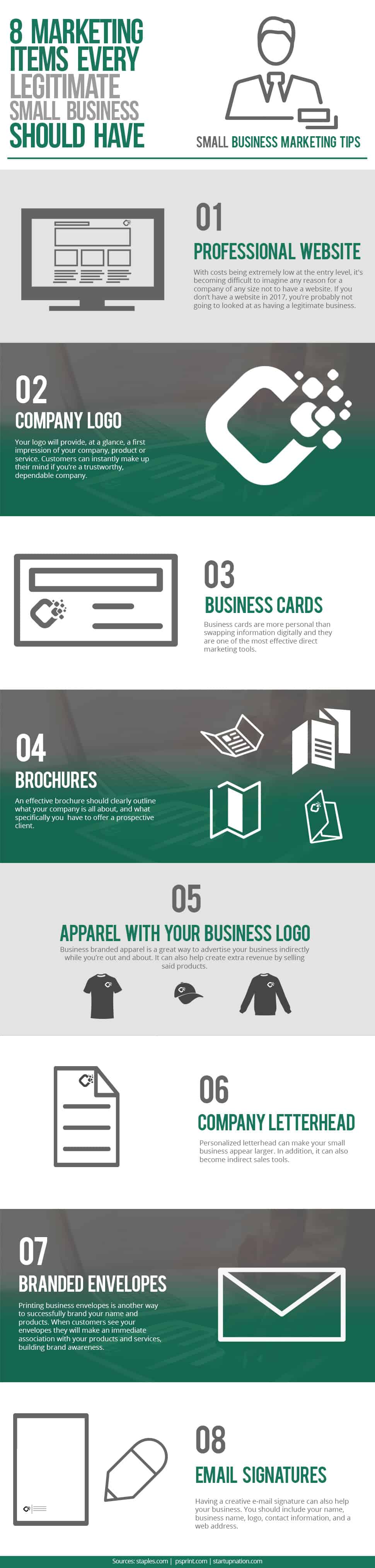
Are you looking for ways to market your small business? Want to know the branded items that could help you stand out from your competition?
You’ll find 8 branded marketing items to add to your arsenal in this infographic.
Here’s what makes the list
- Professional website
- Company logo
- Business cards
- Brochures
- Branded apparel
- Company letterhead
- Branded envelopes
- Email signatures
Check out the infographic for more detail.
Building a memorable brand identity is crucial for any business, large or small. A strong brand identity helps you stand out in a crowded marketplace, fosters customer loyalty, and ultimately drives sales. Creating a cohesive and professional image across all your marketing materials is essential.
This post will discuss eight essential marketing items that contribute to a memorable brand identity.
Professional Website
In the digital era, your website acts as your business’s online face.
For small businesses, a professional website is not just a nice-to-have; it’s an essential tool for building credibility, attracting customers, and ultimately driving sales. A well-designed website can set you apart from competitors and serve as a hub for your online marketing efforts.
Here’s how you can create a professional website that effectively represents your brand.
Key Elements of a Professional Website
User-Friendly Design
- Navigation: Ensure your website has a clear and intuitive navigation menu. Visitors should easily find information about your products, services, and contact details. Consider using descriptive labels for menu items and limiting the number of items to avoid overwhelming users.
- Hierarchy: Use headings and subheadings to create a logical structure for your content. This not only helps with navigation but also enhances readability. Prioritize important information at the top of each page.
- Loading Speed: Optimize your website for fast loading times. Users may leave if a page takes too long to load. Use tools like Google PageSpeed Insights to test and improve your site’s speed.
Responsive Design
- Mobile Optimization: With a significant number of users browsing the internet on mobile devices, ensure your website is fully responsive. Test how your site appears on different screen sizes and devices to ensure a seamless experience.
- Fluid Layout: Use flexible grids and images that adapt to various screen sizes. A mobile-friendly design improves user experience and can positively impact your search engine ranking.
Branding Consistency
- Visual Identity: Your website should reflect your brand’s colors, fonts, and imagery consistently across all pages. This includes headers, footers, buttons, and any graphic elements. Consistent branding helps visitors recognize your business and fosters trust.
- Tone and Voice: Ensure the language and tone used on your website align with your brand identity. For instance, if your brand is casual and fun, your website’s copy should reflect that. Consistency in voice builds rapport with your audience.
Quality Content
- Value-Driven: Create informative and engaging content that addresses the needs and interests of your target audience. Your website should not only sell products or services but also provide solutions to potential customers’ problems.
- SEO Optimization: Incorporate relevant keywords naturally into your content to improve search engine visibility. Use tools like Google Keyword Planner to identify popular search terms related to your industry. Additionally, optimize images with alt text and descriptive filenames.
- Regular Updates: Keep your content fresh and up to date. Regularly update your blog or news section with industry trends, company news, or helpful tips. This not only boosts your SEO but also encourages repeat visits.
Call to Action (CTA)
- Strategic Placement: Include clear and compelling CTAs throughout your website. Whether it’s “Contact Us,” “Sign Up for Our Newsletter,” or “Shop Now,” CTAs guide visitors on the next steps to take.
- Visual Design: Make your CTAs stand out by using contrasting colors and strategic placement on the page. Consider using buttons instead of text links to increase visibility.
Essential Website Features for Small Businesses
Contact Information
- Visibility: Ensure your contact information is easy to find. Include a dedicated “Contact Us” page with your phone number, email address, and physical location. Consider placing contact details in the header or footer of your site for easy access.
- Contact Form: Incorporate a simple contact form that allows visitors to reach out without leaving your website. Keep the form concise by asking for essential information only (name, email, message).
About Us Page
- Storytelling: Share your business’s story, mission, and values. This personal touch can help build a connection with your audience and differentiate you from competitors.
- Team Introduction: Consider including brief bios and photos of your team members to humanize your brand and build trust.
Portfolio or Testimonials
- Showcase Work: If applicable, create a portfolio page showcasing your best work, case studies, or client testimonials. This builds credibility and provides social proof of your expertise.
- Customer Reviews: Encourage satisfied customers to leave reviews and display them on your website. Positive testimonials can significantly influence potential customers’ decisions.
Blog Section
- Value Addition: Regularly publish blog posts that provide valuable information related to your industry. This not only positions you as an expert but also enhances your SEO.
- Engagement: Enable comments to foster engagement and interaction with your audience. Respond to comments to build a community around your brand.
E-Commerce Functionality (if applicable)
- User Experience: If you sell products online, ensure the purchasing process is straightforward. This includes having a secure payment gateway, easy-to-navigate product categories, and a clear checkout process.
- Product Descriptions: Write compelling product descriptions that highlight the benefits and features. Use high-quality images to entice customers visually.
Best Practices for Website Maintenance
- Regular Backups: Schedule regular backups of your website to prevent data loss. Use reliable backup solutions or services to automate this process.
- Updates and Security: Keep your website’s software, plugins, and themes updated to protect against vulnerabilities. Implement SSL encryption to secure user data and build trust.
- Analytics and Performance Monitoring: Utilize tools like Google Analytics to track website performance, user behavior, and traffic sources. Regularly review this data to identify areas for improvement and adjust your strategy accordingly.
- Testing: Regularly test your website for broken links, loading issues, and overall functionality. A smooth user experience is critical for retaining visitors.
Conclusion
A professional website is a cornerstone of your brand identity and a powerful marketing tool for small businesses.
By investing time and resources into creating a user-friendly, visually appealing, and informative website, you can effectively showcase your products or services, build credibility, and attract customers.
Remember, your website is often the first impression potential customers have of your business—make it count!
Company Logo
Your company logo is often the first visual representation of your brand that potential customers encounter.
It serves as a powerful symbol that encapsulates your brand’s identity, values, and mission. A well-designed logo not only enhances your brand recognition but also helps establish credibility and trust with your audience.
In today’s competitive market, having a memorable logo can set you apart from the competition and leave a lasting impression.
Key Elements of an Effective Logo
Simplicity
- Minimalist Design: A simple logo is easier to recognize and remember. Avoid clutter and overly complex designs that can confuse or overwhelm your audience. Think of iconic logos like Nike or Apple—both are simple yet instantly recognizable.
- Versatility: A simple logo works well across various mediums, from business cards to billboards. Ensure your design looks great in color, black and white, and various sizes.
Relevance
- Reflect Your Brand: Your logo should align with your brand’s identity and values. Consider the emotions and messages you want to convey. For instance, a tech company might opt for a modern and sleek design, while a family-oriented business might choose a warm and inviting aesthetic.
- Target Audience: Think about your target audience and what resonates with them. For example, a logo for a children’s toy brand might incorporate playful elements, while a luxury brand may favor elegance and sophistication.
Memorability
- Unique Design: Strive for a design that stands out and is easily recognizable. Conduct competitor research to ensure your logo is distinct and does not resemble other brands in your industry.
- Visual Impact: Utilize bold colors, shapes, or typography that capture attention and create a strong visual impact. A memorable logo can become a key part of your brand’s identity.
Timelessness
- Longevity: Aim for a design that will remain relevant over time. While trends can influence design choices, avoid overly trendy elements that may quickly become outdated.
- Enduring Appeal: Think about the long-term vision for your brand. Your logo should be able to withstand the test of time and continue to resonate with your audience for years to come.
Versatility
- Scalability: Ensure your logo looks great in various sizes. It should be clear and legible whether displayed on a small business card or a large banner.
- Multiple Formats: Your logo should work well in different formats, including digital and print. Create versions of your logo that can adapt to various backgrounds and uses.
Steps to Create an Effective Company Logo
Define Your Brand Identity
- Brand Personality: Identify the key attributes that define your brand. Are you innovative, trustworthy, playful, or luxurious? Understanding your brand personality will guide your logo design choices.
- Core Values: Consider your brand’s mission and values. Your logo should visually communicate these elements to your audience.
Research and Inspiration
- Competitor Analysis: Study logos of competitors in your industry to understand design trends and identify gaps you can fill. Take note of what works and what doesn’t in their branding.
- Mood Boards: Create a mood board that captures colors, images, and designs that resonate with your vision. This visual reference can help you or your designer create a cohesive design.
Choose Your Design Elements
- Color Palette: Select colors that reflect your brand’s personality and evoke the right emotions. For example, blue often conveys trust and professionalism, while green can represent growth and health.
- Typography: Choose fonts that align with your brand’s tone. A modern brand may opt for sans-serif fonts, while a classic brand may choose serif fonts. Ensure the typography is legible and complements the overall design.
Logo Design Process
- Sketching Ideas: Start with rough sketches of your ideas. This exploratory phase allows you to experiment with different concepts without commitment.
- Digital Design: Once you have a few solid concepts, use graphic design software to create digital versions. Programs like Adobe Illustrator, Canva, or online logo makers can help with this step.
- Mockups: Create mockups of your logo in different contexts, such as on a business card, website, or merchandise. This helps you visualize how the logo will look in real-world applications.
Feedback and Refinement
- Seek Opinions: Share your logo concepts with trusted colleagues, friends, or potential customers. Gather feedback on what resonates and what doesn’t.
- Iterate and Refine: Use the feedback to make necessary adjustments. Don’t hesitate to go through several rounds of revisions to ensure your logo meets your expectations.
Finalize and Protect Your Logo
- Vector Format: Once you’re satisfied with the design, create a vector version of your logo. This format allows for scaling without loss of quality, making it suitable for various applications.
- Trademark Registration: Consider trademarking your logo to protect your brand identity legally. This step can prevent others from using similar designs and help you establish brand ownership.
Best Practices for Using Your Logo
Consistent Usage
- Brand Guidelines: Create brand guidelines that outline how to use your logo. Include specifications for size, spacing, colors, and acceptable variations (e.g., color vs. monochrome).
- Avoid Alterations: Ensure that your logo is used consistently across all platforms and materials. Avoid altering the colors or proportions of the logo, as this can dilute your brand identity.
Prominent Placement
- Visibility: Make sure your logo is prominently displayed on your website, social media profiles, business cards, and any promotional materials. This helps reinforce brand recognition.
- Signature Use: Incorporate your logo in your email signature and other correspondence to enhance brand visibility.
Adapting to Different Mediums
- High-Resolution Files: Use high-resolution versions of your logo for print materials to ensure clarity and professionalism.
- Web Optimization: Optimize your logo for web use by using appropriate file formats (like PNG or SVG) that maintain quality while minimizing loading times.
Emotional Connection
- Storytelling: Consider sharing the story behind your logo design. Communicating the thought process and inspiration behind your logo can deepen the emotional connection customers have with your brand.
Conclusion
A well-designed company logo is a cornerstone of your brand identity and plays a crucial role in how customers perceive your business. By investing time and resources into creating an effective logo, you can establish a strong visual presence that resonates with your audience and sets you apart from competitors.
Remember, your logo is more than just a pretty picture; it’s a symbol of your brand’s values, mission, and promise to your customers. Prioritize thoughtful design and consistent usage to ensure your logo makes a lasting impression.
Business Cards
Business cards are a crucial marketing tool for small businesses, serving as a tangible representation of your brand.
Despite the rise of digital communication, business cards remain an effective way to network, establish credibility, and leave a lasting impression. They are often exchanged during networking events, meetings, and casual encounters, making them an essential component of your branding strategy.
A well-designed business card communicates your professionalism, facilitates networking opportunities, and provides potential clients with your contact information. In a world where first impressions matter, a memorable business card can be the key to ensuring that your brand is remembered.
Key Elements of an Effective Business Card
Clear Branding
- Logo: Include your company logo prominently on the card. Your logo should be the focal point, reinforcing brand recognition and creating a cohesive identity.
- Color Scheme: Use colors that reflect your brand’s palette. Consistency in color helps create a visual connection between your business card and other marketing materials.
Essential Information
- Contact Details: Include vital information such as your name, title, company name, phone number, email address, and website. Ensure that the information is accurate and up-to-date.
- Social Media Handles: If applicable, add links to your professional social media profiles (LinkedIn, Instagram, etc.). This allows potential clients to connect with you online.
Readable Typography
- Font Choices: Select fonts that are legible and align with your brand’s personality. Avoid overly decorative fonts that may be difficult to read, especially at smaller sizes.
- Hierarchy: Use different font sizes and weights to create a clear hierarchy. Your name and company name should stand out, while additional information can be smaller.
Optimal Size and Shape
- Standard Dimensions: The most common business card size is 3.5 x 2 inches. This size fits easily into wallets and cardholders. Consider other shapes or sizes only if they serve a specific purpose or fit your branding.
- Unique Shapes: If appropriate, explore creative shapes or materials that can help your card stand out. However, ensure they remain practical for storage and transportation.
Steps to Create an Effective Business Card
Define Your Goals
- Purpose: Identify the primary purpose of your business card. Are you looking to generate leads, establish connections, or create brand awareness? Your goals will guide the design process.
- Target Audience: Consider your audience and what information they would find most valuable. Tailor your business card to meet their needs and expectations.
Design Inspiration
- Research Competitors: Look at business cards from competitors in your industry to gather inspiration. Identify elements that resonate and differentiate your card.
- Mood Boards: Create a mood board with design ideas, colors, and typography that align with your brand identity. This can serve as a visual guide for your design process.
Select a Design Tool
- Graphic Design Software: Use software like Adobe Illustrator or Canva to create your business card design. These tools offer customizable templates and allow for professional-quality designs.
- Templates: If you lack design skills, consider using pre-designed templates. Many online printing services offer customizable templates tailored for business cards.
Design Considerations
- Front and Back: Decide whether to use both sides of the card. Utilizing the back allows for additional information, such as a tagline, a QR code, or a brief description of your services.
- Whitespace: Incorporate ample whitespace to prevent the card from looking cluttered. A clean, spacious design is more visually appealing and makes important information stand out.
Proofread and Test
- Double-Check Details: Carefully proofread all text for spelling, grammar, and accuracy. Incorrect information can undermine your credibility.
- Print Mockups: Before placing a bulk order, print a few mockups on regular paper to evaluate the design, size, and overall appearance. This allows you to make necessary adjustments.
Printing Your Business Cards
Choosing a Printing Service
- Local vs. Online: Decide whether to use a local printing service or an online platform. Local printers may offer more personalized service, while online platforms often provide a wider variety of options and competitive pricing.
- Quality: Research printing services to ensure they use high-quality materials and printing methods. Read reviews and request samples if possible.
Material Options
- Paper Quality: Choose a durable cardstock that feels substantial in hand. Thicker cards often convey a sense of professionalism and quality.
- Finishes: Consider various finishes, such as matte, glossy, or textured. A matte finish can provide an elegant look, while a glossy finish can enhance colors and details.
Quantity and Cost
- Bulk Orders: Consider ordering in bulk to reduce costs per card. However, ensure you have enough demand to justify a larger order.
- Budget: Set a budget for your business card design and printing. Remember, investing in quality cards can lead to better networking opportunities and brand recognition.
Best Practices for Using Business Cards
Always Carry Them
- Preparedness: Keep a stack of business cards with you at all times. You never know when a networking opportunity might arise.
- Cardholder: Use a professional cardholder to protect your cards from bending or getting damaged. This adds to your professional image.
Strategic Distribution
- Networking Events: Distribute your cards at networking events, trade shows, and industry conferences. Be proactive in handing out your cards to potential clients or partners.
- Follow-Up: When exchanging cards, take a moment to engage in conversation. This personal touch can make your card more memorable.
Social Media Integration
- Encourage Connections: When handing out your business card, encourage recipients to connect with you on social media. This can lead to increased visibility and engagement with your brand.
- Digital Business Cards: Consider creating a digital version of your business card for easy sharing via email or messaging apps.
Networking Etiquette
- Respect Preferences: Be mindful of people’s preferences regarding sharing contact information. Not everyone may want to exchange cards, so be respectful and considerate.
- Personalized Notes: If possible, jot down a brief note on the card about your conversation. This personal touch can help recipients remember you better.
Conclusion
Business cards are an essential tool for small businesses to establish connections, convey professionalism, and leave a lasting impression.
By focusing on clear branding, essential information, and thoughtful design, you can create business cards that effectively represent your brand and facilitate networking opportunities. Remember to keep your cards handy and distribute them strategically to maximize their impact.
With a well-designed business card, you can enhance your brand identity and create meaningful connections that lead to business growth.
Brochures
Brochures are a versatile and effective marketing tool for small businesses, providing a physical representation of your brand and services.
They serve as a compact way to convey information about your products, services, and company ethos. Unlike business cards, which provide basic contact information, brochures allow you to present more detailed content, making them particularly useful for explaining complex offerings, promoting special deals, or introducing new products.
When designed well, brochures can leave a lasting impression on potential customers, educate them about your brand, and drive them to take action, whether that’s visiting your website, signing up for a newsletter, or making a purchase.
Types of Brochures
- Bi-Fold Brochures: A simple fold creating four panels, making it easy to distribute and store. Ideal for providing concise information about services or products.
- Tri-Fold Brochures: A popular format that divides the brochure into three equal panels. This layout allows for organized sections, making it easy for readers to navigate through your content.
- Z-Fold Brochures: Similar to tri-folds but with a zigzag fold that opens out flat. This design works well for sequential storytelling or when you want to emphasize different sections.
- Booklet Brochures: A multi-page booklet that allows for more in-depth information. Great for detailed product catalogs or company profiles.
Key Elements of an Effective Brochure
Clear Branding
- Logo and Color Scheme: Your brochure should prominently feature your company logo and use your brand colors. Consistent branding reinforces recognition and creates a cohesive look across your marketing materials.
Compelling Headline
- Attention-Grabbing: Use a catchy headline that immediately captures attention and conveys the brochure’s main message. It should be engaging enough to encourage readers to continue exploring the content.
Informative Content
- Value Proposition: Clearly articulate what makes your business unique. Explain the benefits of your products or services and why potential customers should choose you over competitors.
- Bullet Points and Short Paragraphs: Use bullet points, headers, and short paragraphs to make the content scannable and easy to read. Avoid overwhelming the reader with dense text.
High-Quality Images
- Visual Appeal: Use high-resolution images that align with your brand and message. Visuals can create emotional connections and help to illustrate your products or services effectively.
- Infographics and Icons: Consider using infographics or icons to represent data or complex ideas visually. This can help break up text and make your brochure more engaging.
Call to Action (CTA)
- Encouragement to Act: Include a clear and compelling CTA, directing readers on what to do next (e.g., “Call now for a free consultation,” “Visit our website for more information,” or “Sign up for our newsletter”). Make sure the CTA stands out, possibly using contrasting colors or bold text.
Steps to Create an Effective Brochure
Define Your Goals
- Target Audience: Identify your target audience and tailor your brochure content to address their specific needs and pain points. Understanding your audience will help you create a more relevant and appealing message.
- Purpose: Determine the primary goal of your brochure. Are you promoting a specific product, providing an overview of your services, or educating potential clients about your brand?
Design Inspiration
- Competitor Research: Look at brochures from competitors to gather ideas and inspiration. Identify what works well and what doesn’t, ensuring your design stands out.
- Mood Board: Create a mood board that includes design elements, colors, fonts, and images that resonate with your brand. This will serve as a visual guide throughout the design process.
Choose a Design Tool
- Graphic Design Software: Use software such as Adobe InDesign, Canva, or Microsoft Publisher to design your brochure. These tools offer templates and customization options that can help create a professional look.
- Templates: If you lack design skills, consider using pre-designed templates from online printing services or design software. Templates can save time and ensure a polished appearance.
Content Development
- Outline: Create an outline of the content you want to include in your brochure. Organize it logically, starting with an introduction, followed by details about your products or services, and concluding with your call to action.
- Editing: Proofread all content carefully. Ensure that there are no spelling or grammatical errors and that all information is accurate and up-to-date.
Layout and Design Considerations
- Whitespace: Incorporate whitespace to create a clean and organized layout. This helps to prevent the brochure from feeling cluttered and allows important information to stand out.
- Font Choices: Select fonts that are easy to read and align with your brand identity. Use different font sizes and weights to create hierarchy and emphasis.
- Image Placement: Strategically place images to enhance the layout. Images should complement the text, not overpower it.
Printing Your Brochure
Choosing a Printing Service
- Local vs. Online: Decide whether to use a local printer or an online service. Local printers may offer personalized service and quick turnaround times, while online platforms often provide a wider range of options and competitive pricing.
- Quality Assurance: Research printing services to ensure they provide high-quality printing and materials. Read reviews and request samples to assess the quality before placing an order.
Material Options
- Paper Quality: Choose a sturdy cardstock that conveys professionalism. The weight and feel of the paper can impact how your brand is perceived.
- Finishes: Consider different finishes, such as matte, glossy, or textured. A matte finish can provide an elegant, sophisticated look, while glossy finishes can enhance colors and details.
Quantity and Budget
- Bulk Orders: Consider ordering in bulk to lower the cost per brochure. However, ensure you can realistically use the quantity you order.
- Budget Planning: Set a budget for your brochure design and printing. Remember, investing in quality brochures can yield a significant return in terms of customer engagement and sales.
Best Practices for Distributing Brochures
Strategic Placement
- Business Locations: Place brochures in your store, reception area, or at events where potential customers may gather. Ensure they are easily accessible to visitors.
- Networking Events: Hand out brochures at trade shows, industry conferences, and networking events. They can serve as conversation starters and provide a physical reminder of your business.
Direct Mail Campaigns
- Targeted Mailings: Consider including brochures in direct mail campaigns to reach potential customers in specific demographics or locations. This approach can be particularly effective for local businesses.
- Personalized Touch: If possible, personalize the brochure with a handwritten note or tailored content for the recipient. This can increase engagement and make your outreach feel more genuine.
Online Sharing
- Digital Versions: Create a digital version of your brochure for online sharing. This allows you to reach a broader audience through email marketing, social media, or your website.
- QR Codes: Include a QR code in your printed brochures that links to your website or a landing page. This provides an easy way for readers to access more information or special offers.
Follow-Up
- Post-Event Engagement: After networking events, follow up with potential leads you met. Reference the brochure you provided to jog their memory and encourage further conversation.
- Customer Feedback: Consider soliciting feedback from customers who received your brochure. Understanding their perspectives can help you improve future designs and content.
Conclusion
Brochures are a powerful marketing tool for small businesses, providing an effective way to communicate your brand message and offerings.
By focusing on clear branding, informative content, and appealing design, you can create brochures that engage potential customers and drive them to take action. Utilize strategic distribution methods to maximize the impact of your brochures, and consider creating digital versions to expand your reach.
With well-crafted brochures, you can enhance your brand identity and foster meaningful connections with your target audience.
Branded Apparel
Branded apparel is more than just clothing; it serves as a powerful marketing tool that can enhance your brand identity and promote your business. When designed effectively, branded apparel can foster a sense of unity among employees, increase brand visibility, and create a professional image for your business.
Wearing branded apparel can help employees feel more connected to the company and its mission. Additionally, it provides an excellent opportunity for organic marketing; when employees wear the brand’s clothing in public or at events, they essentially become walking advertisements.
This visibility can spark conversations about your business, generating interest and attracting potential customers.
Types of Branded Apparel
T-Shirts and Polo Shirts
- Casual Wear: T-shirts and polo shirts are versatile options for everyday wear. They can be worn by employees, given as gifts to customers, or sold as merchandise.
- Event Merchandise: Ideal for events, fundraisers, or giveaways, these items can serve as a memorable reminder of your brand.
Hoodies and Sweatshirts
- Comfort and Style: Hoodies and sweatshirts are popular for their comfort and casual style. They can help create a relaxed yet professional atmosphere, especially in creative or tech industries.
Caps and Hats
- Outdoor Promotions: Caps and hats are practical for outdoor events and can be particularly effective in sunny or warm weather. They provide shade while promoting your brand.
Outerwear
- Seasonal Options: Jackets, vests, and coats can be branded for colder seasons or outdoor events, allowing your brand to remain visible year-round.
Work Uniforms
- Professional Appearance: Uniforms create a cohesive look for employees and enhance brand recognition. They are especially important in service-oriented industries, such as hospitality and retail.
Key Elements of Effective Branded Apparel
Quality Materials
- Comfort and Durability: Choose high-quality fabrics that ensure comfort and longevity. Employees will appreciate wearing clothing that feels good, and durable materials can withstand regular wear and washing.
Design Consistency
- Logo Placement: Ensure your logo is prominently displayed but not overwhelming. Common placements include the left chest, back, or sleeves.
- Color Scheme: Use your brand’s color palette to maintain consistency. This ensures that your apparel aligns with other marketing materials and strengthens brand recognition.
Variety of Sizes and Styles
- Inclusive Options: Offer a range of sizes to accommodate all employees and customers. Additionally, consider providing different styles (e.g., crew neck vs. v-neck) to cater to varying preferences.
Functionality
- Practical Features: Depending on your industry, consider adding functional features such as pockets or moisture-wicking fabrics. For example, if your employees work outdoors, breathable materials and UV protection might be beneficial.
Trendy Elements
- Stay Relevant: Keep up with current fashion trends to ensure your branded apparel appeals to a modern audience. Collaborating with a local designer can add unique flair and attract attention.
Steps to Create Effective Branded Apparel
Define Your Goals
- Purpose of Apparel: Determine whether the apparel is for employee uniforms, promotional giveaways, or merchandise for sale. Understanding the purpose will guide your design and marketing strategy.
- Target Audience: Identify your target audience for the apparel. This will influence design choices and the type of clothing you offer.
Collaborate with Designers
- Professional Help: Consider working with a graphic designer who specializes in apparel design. They can help you create a cohesive and visually appealing design that represents your brand effectively.
- Mockups: Request mockups of the apparel to visualize how the design will look on actual clothing before proceeding with production.
Choose a Printing Method
- Screen Printing: Ideal for bulk orders and designs with few colors. It produces vibrant colors and is durable but may require a higher initial investment.
- Embroidery: Offers a professional appearance, especially for logos. It is durable and can be used on various fabrics but may be more expensive than printing.
- Direct-to-Garment (DTG): Suitable for intricate designs or small runs. It allows for detailed prints but may not be as durable as screen printing.
Select a Reliable Vendor
- Research Suppliers: Look for reputable vendors that specialize in custom apparel. Read reviews and request samples to assess quality before placing larger orders.
- Bulk Ordering: Consider ordering in bulk to lower costs. Ensure you can effectively distribute the apparel to avoid excess inventory.
Budget Planning
- Cost Considerations: Set a budget for your branded apparel that includes design, materials, and printing costs. Factor in potential expenses for shipping and any promotional campaigns.
- ROI Considerations: Evaluate how branded apparel can contribute to your overall marketing strategy. Consider the potential for increased brand awareness and customer engagement.
Best Practices for Using Branded Apparel
Employee Engagement
- Incentives: Encourage employees to wear branded apparel by creating incentive programs. Consider offering prizes for the most creative or enthusiastic use of branded clothing.
- Brand Ambassadors: Designate employees as brand ambassadors who actively promote the apparel during events and customer interactions. This can create a sense of pride and ownership.
Social Media Integration
- Encourage Sharing: Motivate employees and customers to share photos of themselves wearing branded apparel on social media. Create a specific hashtag for these posts to enhance visibility.
- User-Generated Content: Feature user-generated content on your website and social media channels. This provides authentic promotion and builds community around your brand.
Incorporate into Events
- Trade Shows and Networking: Utilize branded apparel during trade shows, networking events, and community outreach. This not only enhances your brand’s visibility but also fosters a professional image.
- Team Events: Have employees wear branded apparel during team-building events, charity runs, or community service. This promotes camaraderie and reinforces the brand’s identity.
Promotional Giveaways
- Customer Engagement: Consider giving away branded apparel as promotional items during events, contests, or customer loyalty programs. This encourages customers to wear your brand and increases visibility.
- Seasonal Promotions: Utilize seasonal themes to promote specific apparel items (e.g., hoodies in winter or caps in summer) to maintain relevance throughout the year.
Measure Impact
- Track Visibility: Assess how branded apparel contributes to brand recognition and customer engagement. Use metrics such as social media interactions, website traffic, and sales to evaluate effectiveness.
- Gather Feedback: Collect feedback from employees and customers regarding the apparel. This can provide valuable insights for future designs and improve overall satisfaction.
Conclusion
Branded apparel is a valuable investment for small businesses looking to enhance their brand identity and visibility.
By focusing on quality, consistent design, and strategic use, you can create apparel that resonates with employees and customers alike. With effective distribution and marketing strategies, branded clothing can serve as a powerful tool for promoting your business, fostering loyalty, and creating a cohesive brand image.
Embrace the opportunity to showcase your brand through apparel, turning your team and customers into enthusiastic ambassadors for your business.
Company Letterhead
A well-designed company letterhead serves as an essential element of your brand identity and professionalism.
It is the first thing recipients see when they receive a printed letter or document, and it sets the tone for your communication. A professional letterhead not only reinforces your brand image but also establishes credibility, enhances recognition, and provides essential contact information.
A consistent letterhead design across all business correspondence can strengthen your brand’s visual identity. It ensures that every piece of communication, from invoices to official letters, reflects your brand values and aesthetic, creating a cohesive and professional appearance.
Key Elements of Effective Company Letterhead
Logo
- Prominent Placement: Your company logo should be prominently displayed at the top of the letterhead. It serves as the visual centerpiece and helps recipients immediately recognize your brand.
- Consistency: Ensure that the logo’s color and size are consistent with your brand guidelines. This reinforces brand recognition and professionalism.
Company Name
- Clear and Legible: The company name should be easily readable, typically placed near the logo. Use a font that reflects your brand’s personality—whether it’s modern, classic, or playful.
- Hierarchy: If applicable, include your company’s tagline or slogan below the name to give recipients more insight into your business’s mission or values.
Contact Information
- Essential Details: Include key contact information such as the address, phone number, email, and website URL. This information should be easy to find and legible.
- Social Media Links: Consider adding links to your business’s social media profiles to encourage engagement and connection. Ensure these links are visually distinct yet harmonious with the overall design.
Design Elements
- Color Scheme: Use your brand’s color palette to maintain consistency across all your marketing materials. This reinforces brand identity and ensures your letterhead stands out while remaining professional.
- Typography: Choose fonts that reflect your brand style. Use no more than two complementary fonts—one for headings (e.g., company name) and another for body text (e.g., contact information). Ensure the fonts are readable and appropriately sized.
Layout
- Balanced Design: Create a balanced layout with adequate white space to avoid overcrowding. This ensures that all elements are easy to read and visually appealing.
- Top Margin: Ensure there is enough space at the top of the letterhead to accommodate your letterhead design without interfering with the body of the letter.
Steps to Create an Effective Company Letterhead
Define Your Brand Identity
- Brand Guidelines: Before designing your letterhead, review your brand guidelines to ensure that the design aligns with your overall branding strategy. This includes logos, color schemes, and typography.
- Target Audience: Consider your target audience when designing your letterhead. The design should resonate with them and reflect the professionalism expected within your industry.
Choose Design Software
- Design Tools: Use design software like Adobe Illustrator, Canva, or Microsoft Word to create your letterhead. Many of these tools offer templates specifically designed for letterheads, making the process easier.
- Professional Assistance: If design is not your strength, consider hiring a professional graphic designer. They can help you create a unique and polished letterhead that aligns with your brand.
Create a Draft
- Mockups: Start with a few different mockup designs to explore various layouts and styles. Experiment with different font combinations, logo placements, and color schemes.
- Feedback: Share the mockups with colleagues, stakeholders, or trusted customers to gather feedback. This input can provide valuable insights into what resonates most with your audience.
Finalize the Design
- Refinement: Based on feedback, refine your chosen design. Pay attention to details, ensuring that all elements are aligned, legible, and visually appealing.
- Format Selection: Save the final design in various formats (e.g., PDF, PNG, or Word) for different uses. A high-resolution PDF is ideal for printing, while a PNG may be useful for digital communications.
Print Quality
- Professional Printing: For the best results, consider using a professional printing service. High-quality printing can enhance the overall appearance of your letterhead, making it look more polished and professional.
- Paper Selection: Choose a quality paper stock that reflects your brand’s image. Options include textured, matte, or glossy finishes, depending on your aesthetic.
Best Practices for Using Company Letterhead
Consistency Across Documents
- Uniformity: Use the same letterhead design across all formal correspondence, including letters, invoices, memos, and reports. This reinforces brand consistency and professionalism.
- Templates: Create templates for various document types (e.g., standard letters, memos) to maintain a cohesive look throughout all communications.
Legal and Compliance Considerations
- Business Information: Depending on your location, certain information may need to be included for legal reasons, such as company registration number or VAT number. Ensure compliance with local regulations.
- Updates: Regularly review and update your letterhead information, especially if there are changes in contact details, business structure, or branding elements.
Digital Use
- Email Signature: Consider incorporating your letterhead design into your email signature. This creates a cohesive look across both physical and digital correspondence.
- PDF Use: When sending letters via email, convert them to PDF format to preserve the letterhead design and formatting. This ensures that recipients see the document exactly as intended.
Promotional Materials
- Complementary Design: Use the design elements from your letterhead in other promotional materials, such as brochures, flyers, and business cards. This helps maintain brand consistency across all touchpoints.
- Marketing Collateral: Integrate your letterhead design into other branding collateral, such as presentation slides and proposals, to ensure a cohesive brand experience.
Monitor Impact
- Customer Feedback: Pay attention to feedback from clients and customers regarding your professional correspondence. If you notice any negative responses, consider revisiting your letterhead design.
- Engagement Metrics: For digital communications, track metrics like open rates and response rates. A well-designed letterhead can enhance the perceived professionalism of your communications, which may positively impact these metrics.
Conclusion
A professional company letterhead is a crucial component of your brand identity. By carefully designing your letterhead to reflect your brand’s values, maintaining consistency, and adhering to best practices, you can create a powerful tool for enhancing your business’s credibility and professionalism.
This not only helps you stand out in a competitive market but also builds trust and recognition among your clients and stakeholders. Invest the time and resources into creating a compelling letterhead, and it will pay dividends in how your business is perceived in every piece of correspondence you send.
Branded Envelopes
Branded envelopes are more than just a means to send documents; they are a critical extension of your brand identity.
Just like your letterhead, they communicate professionalism, consistency, and attention to detail. When a client or customer receives a piece of correspondence in a branded envelope, it adds a level of credibility and care to the communication.
This small but significant touch can enhance your overall branding strategy and leave a lasting impression.
Key Elements of Effective Branded Envelopes
Logo Placement
- Visibility: Your company logo should be prominently displayed on the envelope. Typically, the upper left corner or the center of the envelope is ideal for visibility.
- Size and Clarity: Ensure that the logo is large enough to be easily recognized but not overwhelming. It should be clear and maintain its integrity, even when printed in a smaller format.
Company Name and Tagline
- Inclusion: Incorporate your company name, and if space permits, your tagline. This reinforces brand recognition and informs recipients about your business’s purpose.
- Font Choice: Use fonts that align with your brand’s typography. Ensure they are legible and appropriately sized to maintain professionalism.
Contact Information
- Essential Details: Include relevant contact information, such as your phone number, email, and website. This should be easily readable and accessible without overcrowding the design.
- Social Media Links: If applicable, add icons or URLs for your business’s social media platforms. This encourages engagement and connection beyond the correspondence.
Color Scheme and Design
- Brand Colors: Use your brand’s color palette to create a cohesive look. This not only enhances recognition but also reflects your brand’s personality.
- Design Elements: Consider adding design elements, such as patterns, borders, or images, that complement your brand. Ensure these do not detract from the main information on the envelope.
Quality Materials
- Envelope Quality: Choose high-quality envelopes that reflect your brand’s values. A sturdy, well-constructed envelope protects its contents and conveys professionalism.
- Finish Options: Options like matte, glossy, or textured finishes can enhance the tactile experience and visual appeal of your envelopes. Choose a finish that aligns with your brand aesthetic.
Steps to Create Effective Branded Envelopes
Define Your Brand Identity
- Brand Guidelines: Review your brand guidelines to ensure the envelope design aligns with your overall branding strategy, including logos, colors, and typography.
- Audience Consideration: Understand your target audience and tailor your envelope design to resonate with them. This might mean choosing a more formal design for corporate clients or a creative one for a more casual audience.
Choose Design Software or Templates
- Design Tools: Use design software like Adobe InDesign, Canva, or Microsoft Word to create your envelope design. Many of these platforms offer customizable templates for envelopes.
- Professional Help: If design is not your forte, consider hiring a professional graphic designer who can create a polished and unique envelope design that represents your brand effectively.
Draft Your Design
- Create Multiple Mockups: Experiment with various layouts, sizes, and color schemes. Consider how the logo, company name, and contact information will be arranged.
- Seek Feedback: Share your mockups with trusted colleagues or clients to gather feedback. This input can provide valuable insights into what elements work well together and which may need refinement.
Finalize the Design
- Refine Based on Feedback: Adjust your design based on the feedback received. Ensure that all elements are aligned and visually appealing.
- Export Formats: Save the final design in multiple formats (e.g., PDF for printing, PNG for digital use) to ensure versatility for various uses.
Printing Considerations
- Professional Printing: For the best results, consider using a professional printing service. High-quality printing enhances the overall appearance of your envelopes and ensures color accuracy.
- Paper Selection: Choose an appropriate paper stock that matches your brand’s image. Consider factors like weight, texture, and finish to create a premium look and feel.
Best Practices for Using Branded Envelopes
Consistency Across Correspondence
- Uniformity: Use the same envelope design for all business correspondence, including invoices, contracts, and marketing materials. This reinforces brand consistency and professionalism.
- Templates: Create templates for various envelope sizes and formats to maintain a cohesive look across all your communications.
Legal Considerations
- Compliance: Ensure that any necessary legal information is included on the envelope, especially for official documents. This may include your business registration number or VAT number.
- Updates: Regularly review and update your envelope design, particularly if there are changes to your branding or contact information.
Utilize for Marketing
- Promotional Campaigns: Incorporate branded envelopes into your marketing strategies, such as sending promotional materials, newsletters, or special offers. A branded envelope can enhance the perceived value of your marketing messages.
- Direct Mail Campaigns: Use your branded envelopes in direct mail campaigns to create a strong first impression. Personalize the envelope for each recipient to increase engagement.
Digital Integration
- Email Correspondence: For digital communications, consider using an electronic version of your envelope design as a header for PDF documents or in email signatures. This maintains a consistent brand image across all formats.
- PDF Use: When sending documents via email, convert them into PDF format to preserve the envelope design and formatting. This ensures recipients see the document as intended.
Monitor and Adjust
- Customer Feedback: Pay attention to feedback regarding your branded envelopes. If clients comment positively or negatively, consider adjusting the design to better meet their preferences.
- Engagement Metrics: For direct mail campaigns, track response rates to assess the effectiveness of your branded envelopes. Adjust your designs or messaging based on what resonates with your audience.
Conclusion
Branded envelopes are a vital component of your business’s branding strategy. By carefully designing your envelopes to reflect your brand identity, maintaining consistency across all correspondence, and adhering to best practices, you can create a powerful tool for enhancing your business’s professionalism and credibility.
Investing in high-quality branded envelopes not only helps you stand out in a crowded marketplace but also fosters trust and recognition among your clients and stakeholders. Make sure your envelopes serve as a testament to your brand’s quality and attention to detail with every piece of correspondence you send.
Email Signatures
Email signatures are often overlooked yet play a crucial role in establishing a professional brand identity. Every time you send an email, your signature is an opportunity to promote your business, provide essential contact information, and reinforce your brand image.
A well-designed email signature can enhance your credibility, create a lasting impression, and encourage recipients to engage with your business.
Key Elements of an Effective Email Signature
Full Name and Job Title
- Professionalism: Always include your full name and job title. This informs recipients who they are communicating with and adds a layer of professionalism to your correspondence.
- Clarity: Make sure your name is easy to read. Avoid using nicknames unless you are well-known by them in your business network.
Company Name and Logo
- Brand Recognition: Include your company name and logo prominently in your email signature. This helps recipients recognize your brand immediately.
- Logo Placement: Position your logo either above or next to your name for visual balance. Ensure it is clear and retains its quality when resized.
Contact Information
- Essential Details: Include your phone number, email address, and website URL. This information should be easily accessible so recipients can reach out to you or learn more about your business.
- Social Media Links: Add icons or links to your professional social media profiles (LinkedIn, Twitter, etc.). This encourages connections beyond the email and allows recipients to engage with your brand on multiple platforms.
Call to Action (CTA)
- Promotional Element: Consider including a brief CTA in your signature, such as a link to your latest blog post, a special offer, or a signup link for your newsletter. This can drive traffic to your website and increase engagement with your content.
- Subtlety: Ensure the CTA is subtle and not overly aggressive. It should feel like a natural extension of your signature rather than an imposition.
Visual Elements
- Color Scheme: Use colors that align with your brand identity. Consistent colors reinforce brand recognition and enhance the visual appeal of your signature.
- Font Style and Size: Choose fonts that are easy to read and align with your brand’s typography. Keep the font size legible, generally between 10-12 points for optimal visibility.
- Images and Icons: Incorporate small images or icons for social media links. Ensure these are optimized for web use so they load quickly and display correctly across different devices.
Steps to Create an Effective Email Signature
Define Your Brand Identity
- Brand Guidelines: Review your brand guidelines to ensure your email signature reflects your overall branding strategy, including logos, colors, and typography.
- Consistency: Make sure your email signature is consistent with other branded materials, like your website and business cards.
Choose a Design Tool
- Design Software: Use design tools such as Canva, Adobe Spark, or a dedicated email signature generator to create your signature. These platforms often have templates to help streamline the design process.
- HTML Signature: If you’re comfortable with coding, consider creating an HTML email signature for greater customization and flexibility.
Draft Your Signature
- Layout Options: Experiment with different layouts, such as vertical or horizontal designs. Choose a layout that suits your brand and ensures all elements are well-organized and visually appealing.
- Seek Feedback: Share your draft with colleagues or trusted clients to gather feedback on clarity and effectiveness. Input from others can help you refine your design.
Finalize the Design
- Refine Based on Feedback: Adjust your signature design based on the feedback received. Ensure all elements are aligned and visually balanced.
- Test Across Platforms: Send test emails to yourself and colleagues using different email clients (Gmail, Outlook, etc.) to ensure your signature displays correctly.
Implement Your Signature
- Email Settings: Go to your email client settings (e.g., Gmail, Outlook) and find the signature settings. Copy and paste your final design into the designated area.
- Test Functionality: Send a few test emails to confirm that your signature appears as intended and that all links are functional.
Best Practices for Using Email Signatures
Keep It Simple and Clean
- Avoid Clutter: While it’s essential to include necessary information, avoid overcrowding your signature with too much text or images. A clean design enhances readability and professionalism.
- Limit Colors and Fonts: Stick to a maximum of two or three colors and two font styles to maintain a cohesive and professional look.
Regular Updates
- Timely Changes: Update your email signature regularly to reflect any changes in your contact information, job title, or branding.
- Seasonal Promotions: Consider temporarily modifying your signature to promote seasonal offers or events, ensuring recipients are aware of current initiatives.
Email Signature for Teams
- Unified Design: For businesses with multiple employees, consider creating a standard email signature template to maintain consistency across the team. This reinforces brand identity and professionalism.
- Customization Options: Allow room for personalization, such as individual names and titles, while keeping core design elements consistent.
Mobile Optimization
- Responsive Design: Ensure your email signature looks good on mobile devices, as many emails are read on smartphones. Test your signature on different devices to confirm its appearance and functionality.
- Font Size and Links: Use a larger font size and easily clickable links for mobile users. This enhances user experience and makes it easier for recipients to engage with your content.
Compliance and Legal Considerations
- Disclaimers: Depending on your industry, consider adding a legal disclaimer in your signature. This can protect your business and clarify the nature of the correspondence.
- Confidentiality Notices: If applicable, include confidentiality notices in your signature to protect sensitive information shared in emails.
Conclusion
An effective email signature is an essential aspect of your branding strategy. By thoughtfully designing your email signature to reflect your brand identity, incorporating key elements like your logo and contact information, and adhering to best practices, you can create a powerful tool for enhancing your business’s professionalism and visibility.
An email signature is more than just a sign-off; it’s an opportunity to communicate your brand’s values, connect with recipients, and drive engagement with your business. Make sure your email signature represents the quality and attention to detail that defines your brand, leaving a lasting impression with every email you send.
Conclusion
Email signatures are a simple yet effective way to reinforce your brand identity. They serve as a digital business card, providing essential information while promoting your brand with every correspondence.
Creating a memorable brand identity requires consistency and attention to detail across all marketing materials. By investing in a professional website, company logo, business cards, brochures, branded apparel, company letterhead, branded envelopes, and email signatures, you can establish a cohesive and recognizable brand presence.
Each item plays a vital role in reinforcing your brand identity and building trust with your customers. Start implementing these essential marketing items today, and watch your brand identity flourish!

Author:
Mark Ford

From Confusion to Clarity: How to Steer Your Marketing Away from These Frequent Errors
Are you struggling to make sense of your marketing strategy and wondering why your results aren’t matching your effort? Want to learn how to avoid the most common marketing mistakes and create a clear, focused plan that actually delivers results? […]

85 Game-Changing Tools for Creators, Marketers, and Entrepreneurs
Are you searching for powerful yet free tools to help you grow your brand, streamline your workflow, and boost your online presence? Want to discover game-changing platforms that every creator, marketer, and entrepreneur should be using right now? […]