Search Engine Optimization (SEO) is a critical aspect of building and maintaining a successful online presence. For new website owners, understanding the basics of SEO is essential to drive organic traffic and improve visibility on search engines like Google, Bing, and Yahoo.
In this blog post, we’ll explore eight fundamental SEO principles that every new website owner should know. By implementing these basics, you can lay a strong foundation for your website’s SEO strategy and set yourself up for long-term success.
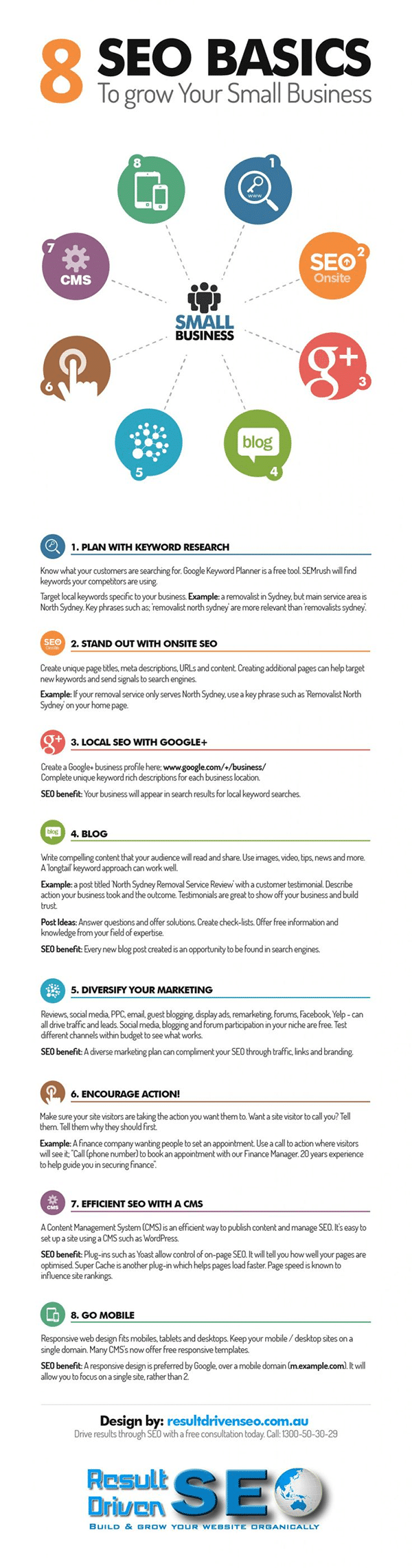
Infographic by Result Driven SEO.
- Keyword Research
Keyword research is the cornerstone of any effective SEO strategy. It involves identifying the keywords and phrases that your target audience is using to search for information related to your website’s content or products. Effective keyword research can help you understand your audience’s needs and preferences.
To get started with keyword research, you can use tools like Google Keyword Planner, SEMrush, or Ahrefs. These tools provide valuable insights into search volume, competition, and related keywords. Once you’ve identified relevant keywords, integrate them naturally into your website’s content, including titles, headings, and body text. However, avoid keyword stuffing, which can lead to penalties from search engines.
- High-Quality Content
Creating high-quality, valuable content is one of the most effective ways to improve your website’s SEO. Search engines prioritize content that is informative, engaging, and relevant to users’ queries. When visitors find your content helpful, they are more likely to stay on your site, reducing bounce rates and increasing your chances of ranking higher in search results.
When developing content, focus on your target audience’s needs and interests. Create comprehensive, well-researched articles, blog posts, and other content formats that provide solutions to their problems or answers to their questions. Additionally, make sure your content is easy to read, well-structured, and free of spelling and grammatical errors.
- On-Page Optimization
On-page optimization refers to the process of optimizing individual web pages to improve their visibility in search engine results. This involves several key elements, including:
- Title Tags: Craft descriptive and keyword-rich title tags for each page on your website. These tags appear as the clickable links in search results and are crucial for attracting user clicks.
- Meta Descriptions: Write compelling meta descriptions that summarize the content of your pages. Although meta descriptions do not directly impact rankings, they can influence click-through rates.
- Header Tags: Use header tags (H1, H2, H3, etc.) to structure your content and make it easier for both users and search engines to understand. Include relevant keywords in your headers where appropriate.
- URL Structure: Create user-friendly and search engine-friendly URLs that reflect the content of your pages. Avoid long, complex URLs with unnecessary parameters.
- Internal Linking: Link to other relevant pages within your website to help users navigate and search engines crawl your site more effectively.
- Mobile Optimization
With the increasing use of mobile devices for internet browsing, mobile optimization has become a crucial aspect of SEO. Search engines like Google prioritize mobile-friendly websites in their rankings. To ensure your website is mobile-optimized:
- Use a responsive web design that adapts to various screen sizes and devices.
- Optimize images and other media for fast loading on mobile devices.
- Test your website’s mobile-friendliness using tools like Google’s Mobile-Friendly Test.
- Ensure that your site’s content is easily readable and navigable on small screens.
- Page Speed
Page speed is a critical ranking factor for search engines. Slow-loading websites frustrate users and can lead to high bounce rates. To improve your website’s page speed:
- Compress images and use formats that are efficient for the web.
- Minimize the use of large files, such as videos and graphics, on your web pages.
- Enable browser caching to reduce the load time for returning visitors.
- Use a content delivery network (CDN) to distribute your website’s content across multiple servers, reducing load times for users in different locations.
- SSL Certificate (HTTPS)
Having a secure website is not only important for user trust but also for SEO. Google, in particular, gives preference to websites that use HTTPS (Hypertext Transfer Protocol Secure) over HTTP. To secure your website with HTTPS:
- Obtain an SSL certificate from a trusted certificate authority (CA).
- Install the SSL certificate on your web server.
- Configure your website to use HTTPS by default.
- Update internal and external links to use HTTPS.
- User Experience (UX)
User experience plays a significant role in SEO because search engines want to deliver the best possible results to users. A positive user experience can lead to longer dwell times and lower bounce rates, which are indicators of valuable content. To enhance user experience on your website:
- Ensure your website is easy to navigate with clear menus and a logical structure.
- Make sure your website is accessible to all users, including those with disabilities.
- Optimize for mobile devices, as mentioned earlier.
- Keep your website design clean and clutter-free.
- Backlinks
Backlinks, also known as inbound links, are links from other websites to your site. They are a crucial part of off-page SEO and can significantly impact your website’s authority and rankings. However, it’s essential to focus on acquiring high-quality, relevant backlinks rather than pursuing quantity.
Some strategies to build backlinks include:
- Creating high-quality, shareable content that other websites naturally want to link to.
- Guest posting on reputable websites in your niche.
- Building relationships with influencers and industry experts who can mention or link to your content.
- Monitoring your backlink profile to disavow any spammy or low-quality links that could harm your SEO efforts.
Conclusion
SEO can be a complex and ever-evolving field, but mastering the basics is essential for new website owners. By conducting keyword research, creating high-quality content, optimizing your pages, ensuring mobile-friendliness, improving page speed, implementing HTTPS, enhancing user experience, and building high-quality backlinks, you can set your website on the path to better visibility and higher rankings in search engine results. Keep in mind that SEO is an ongoing process, and staying up-to-date with industry trends and algorithm changes is crucial for long-term success in the competitive online landscape.

Author:
Mark Ford