Google’s SEO guidelines are clear: Create great content that people will naturally want to share and link to. Blogging is one of the most widely used form of creating content and Authorship is Google’s way of recognising and rewarding writers and blog owners for the content they create.
In the vast and ever-evolving landscape of digital content, Google Authorship and Author Rank have emerged as significant factors that can influence how content is ranked and displayed in search engine results.
Whether you’re a seasoned content creator or just starting your journey in the world of online publishing, understanding these concepts can greatly benefit your online presence and credibility. In this comprehensive beginner’s guide, we’ll delve into the intricacies of Google Authorship and Author Rank, exploring their importance and how to harness their power effectively.
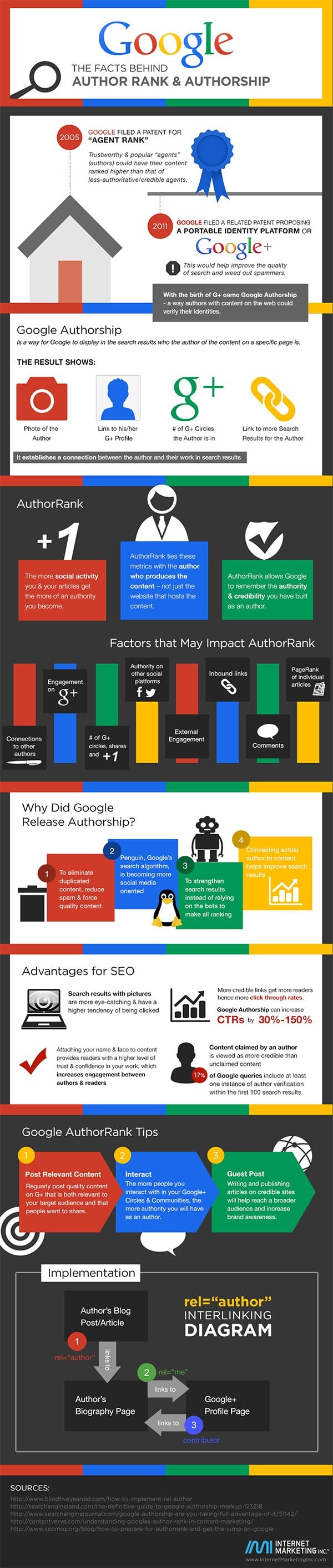
The infographic below from Internet Marketing Inc gives you an introduction to Google Authorship, the advantages it offers and some tips on how to make the most of it.
1. Introduction
The Changing Landscape of Online Content
The internet has undergone a remarkable transformation in the way information is created, consumed, and shared. With billions of websites competing for attention, search engines like Google have become the go-to tools for finding relevant content. As a result, staying visible in search results is crucial for individuals and businesses alike.
The Birth of Google Authorship and Author Rank
In an effort to enhance the credibility of search results and connect content to its creators, Google introduced two significant features: Google Authorship and Author Rank. While Google Authorship was eventually retired in 2014, its influence on content ranking remains, now integrated into a broader concept known as Author Rank.
2. Google Authorship: What Is It?
The Basics of Google Authorship
Google Authorship was a feature introduced by Google that allowed content creators to associate their online content with their Google+ profiles. This association displayed the author’s profile picture and a byline in search results, offering a visual connection between the content and its creator.
Why Google Authorship Matters
Google Authorship served several important purposes:
- Credibility: It added a layer of credibility to content by showcasing the author’s identity and expertise.
- Visibility: Content with authorship markup was more likely to attract clicks and attention due to the enhanced display in search results.
- Author Recognition: It allowed authors to build a reputation and loyal following.
Setting Up Google Authorship
To set up Google Authorship, you needed a Google+ profile and a piece of code (rel=”author”) placed on your content pages that linked to your Google+ profile. However, as of my last knowledge update, Google had discontinued Google+, rendering this feature obsolete. Nevertheless, the concept of authorship lives on through Author Rank.
3. Author Rank: The Influence of Authorship on SEO
Understanding Author Rank
Author Rank, also known as Author Authority, is a measure of an author’s influence and expertise in a specific field or niche. It represents Google’s attempt to evaluate the trustworthiness and credibility of individual authors and factor these assessments into search rankings.
How Author Rank Affects Search Rankings
Author Rank has a significant impact on how content ranks in search results. When Google recognizes an author as an authority in a particular domain, their content is more likely to rank higher in relevant search queries. This not only benefits the author but also ensures that users receive content from trusted sources.
Factors That Contribute to Author Rank
Several factors contribute to the calculation of Author Rank:
- Content Quality: High-quality, well-researched, and informative content is more likely to boost an author’s authority.
- Consistency: Regularly producing content in a specific niche or domain signals expertise and commitment.
- Engagement: Content that receives engagement in the form of comments, shares, and backlinks is considered more valuable.
- Authorship Verification: Google’s algorithms assess the credibility of an author’s profile and their associated content.
4. Building Your Authorship Profile
Crafting High-Quality Content
The foundation of a strong Author Rank is high-quality content. Here are some tips for creating content that stands out:
- In-Depth Research: Thoroughly research your topics to provide valuable and accurate information.
- Originality: Strive to offer unique perspectives and insights on your chosen topics.
- Engaging Writing: Make your content engaging and easy to read, keeping your audience’s needs in mind.
Consistency in Authorship
Consistency is key to building authority in your niche. This involves:
- Regular Posting: Maintain a consistent posting schedule to keep your audience engaged.
- Staying Updated: Stay updated with the latest trends and developments in your field.
Niche Authority and Expertise
Becoming an authority in a specific niche is a valuable strategy for building Author Rank. Focus on:
- Specialization: Narrow down your focus to a specific niche within your broader domain.
- Deep Knowledge: Develop deep expertise in your chosen niche through research and experience.
5. Promoting Your Authorship Profile
Social Media Presence
Active engagement on social media can significantly boost your Author Rank. Here’s how to do it effectively:
- Share Your Content: Share your articles and posts on platforms like Twitter, LinkedIn, and Facebook to increase visibility.
- Interact with Followers: Engage with your followers by responding to comments and participating in relevant discussions.
Guest Blogging and Collaborations
Collaborating with other authors and contributing guest posts to reputable websites can expand your reach and authority:
- Guest Blogging: Write high-quality guest posts for established websites in your niche.
- Collaborations: Collaborate on projects, co-author articles, or participate in joint ventures with other experts.
Networking and Building Connections
Networking within your niche can help you gain recognition and build valuable relationships:
- Attend Conferences: Attend conferences, webinars, and industry events to connect with peers and experts.
- Online Communities: Participate in online forums and communities related to your niche.
6. Monitoring and Improving Your Author Rank
Tools and Metrics for Author Rank
Several tools can help you monitor and improve your Author Rank:
- Google Search Console: This tool provides insights into your content’s performance in Google’s search results.
- Google Analytics: Analyze user behavior and engagement with your content.
- Backlink Analysis Tools: Monitor the quality and quantity of backlinks to your content.
Strategies for Improving Your Author Rank
Continuously work on improving your Author Rank:
- Stay Informed: Keep up with changes in search engine algorithms and SEO best practices.
- Quality Over Quantity: Focus on creating high-quality content rather than churning out numerous pieces.
- Collaborate and Network: Continue to build relationships within your niche to expand your influence.
7. Conclusion
The Long-term Benefits of Google Authorship and Author Rank
Google Authorship may have been retired, but the concept lives on through Author Rank. By consistently producing high-quality content, engaging with your audience, and building your niche authority, you can enhance your online presence and enjoy the long-term benefits of increased visibility, credibility, and trustworthiness.
In the ever-evolving landscape of online content, the principles of authorship and authority remain constant. As you embark on your journey as a content creator, remember that establishing yourself as a trusted and authoritative author is a valuable investment that can pay dividends in the form of higher search rankings, increased traffic, and a loyal audience.
So, whether you’re a beginner or an experienced writer, take the time to harness the power of Google Authorship and Author Rank to elevate your online presence and make your mark in the digital world. Your journey to becoming a respected authority in your field starts now.

Author:
Mark Ford