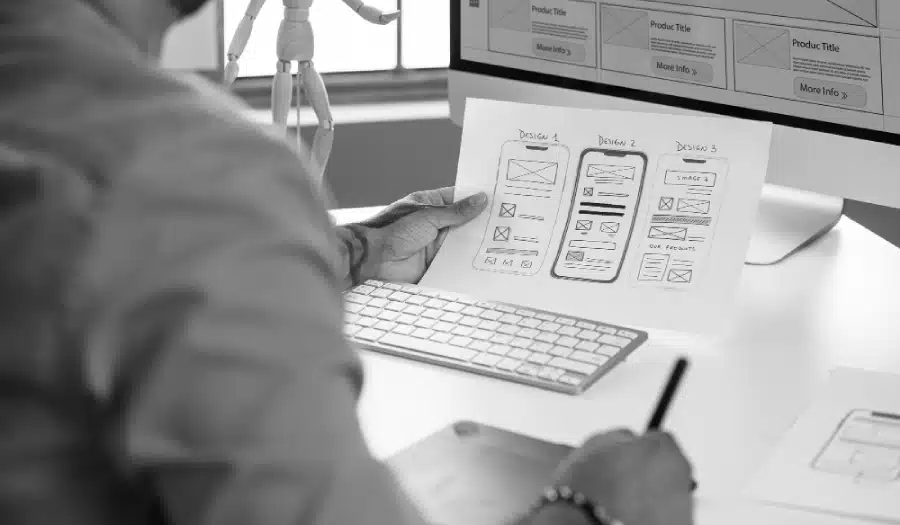
Are you looking for ways to improve your homepage design? Want to convert more visitors into leads and enquiries?
The HOTH share their ideal sales page design in this infographic.
Here’s a quick summary:
- Grab attention with a bold headline
- Give a quick overview
- Show benefits and features
- Show the process
- Use social proof
- Clearly address pricing
- Show a guarantee
- Strong CTA
Check out the infographic for more detail.
![The Anatomy of a Killer Homepage: How to Boost Website Conversions [Infographic]](https://red-website-design.co.uk/wp-content/uploads/The-Anatomy-of-a-Killer-Homepage-How-to-Boost-Website-Conversions.jpg)
In the digital age, your website’s homepage is often the first point of contact between your business and potential customers. It’s your digital storefront, your virtual handshake, and your opportunity to make a strong first impression. But a homepage is more than just a pretty design – it’s a crucial element in your digital marketing strategy. A well-optimized homepage can significantly boost your website conversions, turning casual visitors into loyal customers.
In this blog post, we’ll dissect the anatomy of a killer homepage and explore the essential elements and strategies you need to employ to maximize your website’s conversion potential.
Understanding the Importance of Homepage Conversions
Before we delve into the specific components of an effective homepage, let’s take a moment to understand why homepage conversions are so critical for your business.
- First Impressions Matter: Your homepage is often the first page visitors encounter. It’s your chance to make a lasting impression and communicate your brand identity. A well-optimized homepage can establish trust and credibility right from the start.
- Lead Generation: Converting homepage visitors into leads is essential for building your email list and nurturing potential customers. An effective homepage should include elements that encourage visitors to share their contact information.
- Sales Funnel Entry Point: The homepage serves as an entry point into your sales funnel. By optimizing it for conversions, you can guide visitors toward making a purchase or taking other desired actions.
- Reduced Bounce Rate: A homepage that engages visitors and provides value is more likely to keep them on your site. This, in turn, reduces your bounce rate and increases the chances of further interactions.
- Improved SEO: A well-optimized homepage can also contribute to better search engine rankings. When visitors engage with your homepage, spend time on your site, and navigate to other pages, search engines view your site as valuable and relevant.
Now that we’ve established the importance of homepage conversions, let’s break down the key components that make up an effective homepage.
1. Clear and Compelling Headline
Your homepage’s headline is the first thing visitors see, and it should instantly communicate what your business is about and what value you offer. It should be concise, clear, and compelling. Use action-oriented language that addresses your target audience’s pain points or desires.
For example, if you run an e-commerce website selling organic skincare products, your headline might be something like, “Discover Radiant Skin with Our All-Natural Skincare Products.
2. Engaging Visuals
Humans are visual creatures, and the imagery on your homepage plays a crucial role in capturing visitors’ attention and conveying your brand message. Use high-quality, relevant images, graphics, and videos that align with your brand identity and resonate with your target audience.
Consider incorporating the following visual elements:
- Hero Image or Video: A large, eye-catching image or video at the top of your homepage can set the tone and tell a story about your brand.
- Product or Service Showcase: Use visuals to highlight your best-selling products or services, showcasing their benefits and features.
- Customer Testimonials: Include images or videos of satisfied customers to build trust and credibility.
- Call to Action (CTA) Buttons: Make your CTA buttons visually prominent and enticing.
Remember that visuals should load quickly and be optimized for different devices and screen sizes to ensure a seamless user experience.
3. Compelling Value Proposition
Your homepage should clearly communicate the unique value your business offers. What sets you apart from the competition? Why should visitors choose your products or services? Your value proposition should be concise and prominently displayed on your homepage.
Consider using a subheadline or a brief paragraph to expand on your value proposition and address key benefits or solutions you provide.
4. Clear Navigation
User-friendly navigation is essential to guide visitors through your website seamlessly. Your homepage should feature a clean and organized navigation menu that makes it easy for users to find what they’re looking for. Common navigation elements include:
- Menu Bar: A horizontal menu bar at the top of the homepage with clear labels for different sections of your site.
- Search Bar: A search bar can help users quickly locate specific products or content.
- Footer Links: Include links to important pages, such as About Us, Contact, FAQs, and Blog, in the footer section.
Ensure that your navigation is intuitive and consistent across your website, making it easy for visitors to explore further.
5. Trust Signals
Building trust is essential for conversions. Your homepage should include trust signals that reassure visitors of your credibility and reliability. Some effective trust signals include:
- Customer Reviews and Testimonials: Display positive reviews and testimonials from satisfied customers.
- Trust Badges: If applicable, showcase industry awards, certifications, or security badges (e.g., SSL certificates) to convey trustworthiness.
- Logos of Partner Organizations: If you collaborate with reputable organizations, display their logos to build credibility.
- Guarantees and Policies: Highlight money-back guarantees, return policies, and customer support availability.
Trust signals help alleviate doubts and hesitations that potential customers may have.
6. Compelling Calls to Action (CTAs)
Your homepage should include clear and persuasive calls to action that prompt visitors to take specific actions. CTAs should stand out visually and use action-oriented language. Examples of effective CTAs include:
- “Shop Now”
- “Get Started”
- “Subscribe Today”
- “Request a Quote”
- “Book Your Appointment”
Place CTAs strategically throughout your homepage, considering where visitors are likely to be in their customer journey. For example, you might have a CTA to encourage immediate purchases and another to invite visitors to join your email list.
7. Lead Generation Forms
If one of your primary homepage goals is to capture leads, incorporate lead generation forms. These forms should be prominently placed and ask for minimal information initially, such as a name and email address. You can gradually collect more information as the lead progresses through your sales funnel.
Offer an incentive, such as a downloadable e-book, a discount, or access to exclusive content, in exchange for visitors’ contact information. Ensure that your forms are mobile-friendly and load quickly.
8. Highlighted Products or Services
Depending on your business, you may want to showcase your best-selling products or highlight your key services directly on your homepage. Use visually appealing images, concise descriptions, and compelling CTAs to encourage visitors to explore these offerings further.
Consider rotating or updating these featured products or services periodically to keep your homepage fresh and engaging.
9. Engaging Content
High-quality, relevant content not only informs and educates your audience but also keeps them engaged and encourages them to stay on your site. Consider including the following types of content on your homepage:
- Blog Posts: Feature recent or popular blog posts with eye-catching images and headlines.
- Videos: Embed informative or promotional videos that capture visitors’ attention.
- Slider or Carousel: Use a slider or carousel to showcase multiple pieces of content or images in a compact space.
- Infographics: Present data or key information in a visually appealing way.
Ensure that your content is updated regularly and aligns with your target audience’s interests and needs.
10. Mobile Optimization
With an increasing number of users accessing websites on mobile devices, mobile optimization is non-negotiable. Your homepage should be responsive and adapt seamlessly to various screen sizes. Test your homepage on different devices to ensure a consistent and user-friendly experience.
11. Performance and Speed
A slow-loading homepage can drive visitors away. Optimize your homepage’s performance by:
- Compressing images and videos to reduce file sizes.
- Minimizing HTTP requests.
- Enabling browser caching.
- Using a content delivery network (CDN) for faster delivery of content.
Tools like Google PageSpeed Insights can help you identify areas for improvement.
12. Analytics and Testing
To continuously improve your homepage’s conversion rates, leverage analytics tools like Google Analytics or Hotjar. Monitor user behavior, track conversions, and gather insights into what’s working and what needs improvement.
Consider conducting A/B tests to compare different homepage elements, such as headlines, CTA buttons, or visuals, to determine which variations perform best.
Conclusion
Your website’s homepage is a critical asset for boosting conversions and driving business growth. By understanding the key elements and strategies that make up a killer homepage, you can create a compelling online presence that captures the attention of visitors and guides them toward taking desired actions.
Remember that homepage optimization is an ongoing process. Regularly analyze performance data, gather user feedback, and adapt your homepage to align with changing customer needs and industry trends. With dedication and strategic thinking, your homepage can become a powerful tool for maximizing website conversions and achieving your business goals.

Author:
Mark Ford