
Is your business going through a rough patch? Wondering how to prevent your company from collapse?
Headway Capital share 8 examples for your inspiration in this infographic.
Here’s who makes their list:
- FedEx
- Apple
- Marvel
- Delta
- Nintendo
- Netflix
- Lego
- Ford
Check out the infographic for more detail.


Every entrepreneur knows that the road to success is often fraught with challenges.
Some of the world’s most successful companies have faced significant crises—yet managed to bounce back stronger than ever. These stories of resilience offer valuable lessons for businesses struggling today.
In this blog post, we’ll explore how eight iconic companies navigated their darkest hours to emerge as industry leaders.
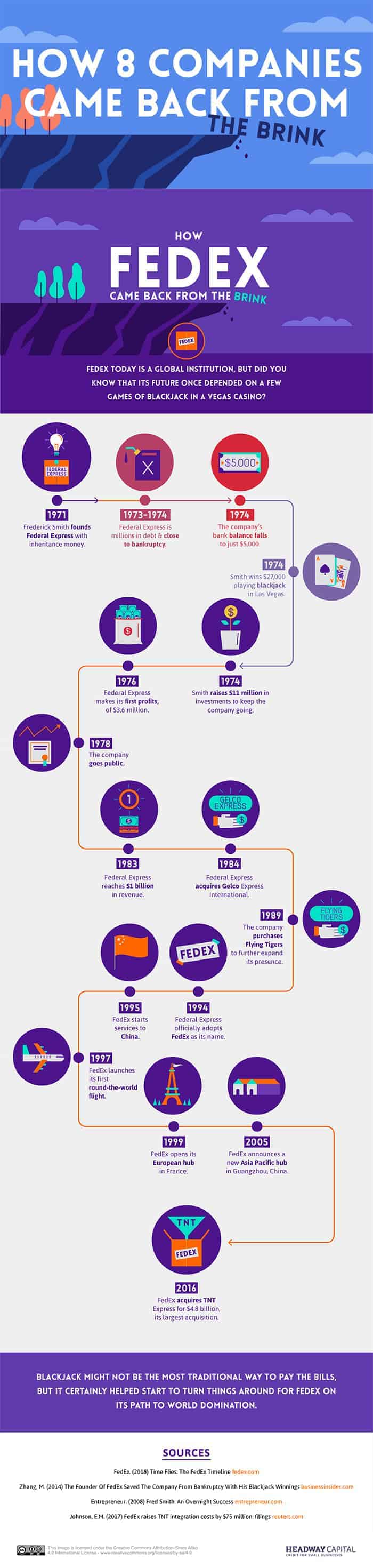
FedEx: Betting Everything on Blackjack
The story of FedEx’s survival and eventual success is nothing short of legendary. In the early 1970s, FedEx was a pioneering company with a vision to revolutionize package delivery. The idea of overnight shipping was new and innovative, but it was also risky.
FedEx’s early days were marked by financial struggles, and by 1973, the company was on the brink of bankruptcy. With only $5,000 left in the bank and bills piling up, founder Frederick W. Smith made a desperate move that would become the stuff of business lore: he took the company’s last remaining funds to Las Vegas and won $27,000 at a blackjack table.
This gamble gave FedEx just enough cash to keep operating for a few more days, during which Smith secured crucial funding that ultimately saved the company.
While Smith’s trip to Las Vegas is often highlighted as a turning point, it’s important to recognize that FedEx’s comeback wasn’t solely the result of a lucky bet. Smith’s leadership, strategic risk-taking, and relentless focus on innovation were the true drivers behind the company’s survival and success.
For small businesses facing their own challenges, the FedEx story offers valuable lessons in resilience, decision-making, and the importance of calculated risks.
Here’s an in-depth look at how small businesses can apply the principles behind FedEx’s turnaround to their own struggles:
Recognize the Power of Strategic Risk-Taking
One of the key takeaways from FedEx’s story is the importance of taking calculated risks. Smith’s gamble in Las Vegas wasn’t a reckless move—it was a strategic decision made in a moment of crisis. While betting the company’s last dollars at a blackjack table isn’t a recommended strategy for most businesses, the underlying principle of taking bold, informed risks is crucial for survival in challenging times.
Tips for Small Businesses:
- Assess Your Situation: Before taking any risks, thoroughly assess your business’s financial situation, market conditions, and potential outcomes. Identify areas where taking a calculated risk could yield significant benefits.
- Have a Backup Plan: While taking risks is sometimes necessary, it’s important to have a contingency plan in place. This could involve securing alternative sources of funding, diversifying your revenue streams, or cutting costs to free up resources for new initiatives.
- Learn from Your Failures: Not all risks will pay off, but each failure presents an opportunity to learn and improve. Analyze what went wrong, adjust your strategy, and use the lessons learned to inform future decisions.
Focus on Innovation and Core Competencies
FedEx’s success was not just about taking risks; it was also about staying true to its core competencies and continuously innovating. Despite its early financial struggles, FedEx never wavered from its commitment to revolutionizing package delivery. Smith and his team focused on building a logistics system that was unparalleled in speed and reliability, which eventually became the foundation of the company’s success.
Tips for Small Businesses:
- Identify Your Unique Value Proposition: What sets your business apart from the competition? Focus on what you do best and find ways to enhance your core offerings. Whether it’s superior customer service, a unique product, or a specialized service, double down on your strengths.
- Invest in Innovation: Innovation doesn’t always mean developing cutting-edge technology. It can also mean finding new ways to improve processes, enhance customer experiences, or adapt to changing market conditions. Continuously seek out opportunities to innovate, even if it means making small, incremental changes.
- Stay Customer-Centric: FedEx’s commitment to fast, reliable delivery was driven by a deep understanding of customer needs. Make sure your innovations align with what your customers value most. Regularly solicit feedback, and be willing to pivot if you identify new ways to meet customer demands.
Understand the Importance of Timing
Timing played a critical role in FedEx’s turnaround. Smith’s decision to gamble in Las Vegas was a last resort, but it bought the company the time it needed to secure additional funding. Timing is often a critical factor in business success, whether it involves launching a new product, entering a new market, or seeking investment.
Tips for Small Businesses:
- Know When to Act: In business, timing can make or break a decision. Pay close attention to market trends, customer behavior, and economic conditions to determine the best time to make a move. Whether you’re considering expanding, launching a new product, or seeking investment, ensure the timing aligns with external factors.
- Be Prepared to Act Quickly: Sometimes, opportunities arise suddenly, and you need to be ready to act quickly. This requires having a clear decision-making process in place, as well as the agility to pivot or accelerate your plans when necessary.
- Balance Patience with Urgency: While timing is crucial, it’s also important to balance patience with a sense of urgency. Don’t rush into decisions without thorough consideration, but also avoid overanalyzing to the point of inaction. Strive to make timely decisions based on a blend of data, intuition, and experience.
Build Strong Relationships with Stakeholders
After his successful trip to Las Vegas, Smith used the additional time to secure crucial funding that would ultimately save FedEx. This was possible because of the relationships he had built with investors, lenders, and other stakeholders. In times of crisis, having a network of supportive and reliable partners can make all the difference.
Tips for Small Businesses:
- Cultivate Relationships: Building strong relationships with stakeholders—whether they’re investors, suppliers, customers, or employees—can provide a safety net during tough times. Keep lines of communication open, and ensure that your stakeholders understand your business’s value and potential.
- Be Transparent: In challenging times, transparency is key. Keep your stakeholders informed about the difficulties you’re facing and the steps you’re taking to overcome them. Honesty can build trust and encourage stakeholders to support you when you need it most.
- Leverage Your Network: Don’t be afraid to ask for help when you need it. Whether it’s seeking advice, securing a loan, or forming a strategic partnership, your network can be an invaluable resource. The stronger your relationships, the more likely you are to receive the support you need.
Maintain Resilience and Determination
Perhaps the most important lesson from FedEx’s story is the value of resilience. Despite facing near-bankruptcy and seemingly insurmountable challenges, Smith never gave up on his vision for FedEx. His determination to see the company succeed was a driving force behind its eventual recovery and growth.
Tips for Small Businesses:
- Stay Committed to Your Vision: Running a business is never easy, and there will be times when it feels like everything is falling apart. During these moments, it’s crucial to stay committed to your vision and goals. Remind yourself why you started your business in the first place, and use that as motivation to keep pushing forward.
- Develop a Resilient Mindset: Resilience is about more than just weathering the storm—it’s about learning and growing from adversity. Cultivate a mindset that embraces challenges as opportunities to learn and improve. Encourage your team to adopt the same approach, and foster a culture of resilience within your organization.
- Celebrate Small Wins: In tough times, it’s easy to focus on what’s going wrong. However, celebrating small wins can boost morale and provide the momentum needed to keep going. Acknowledge and reward the efforts of your team, and use these victories as building blocks for larger successes.
Be Prepared to Make Tough Decisions
Smith’s decision to gamble FedEx’s last $5,000 was a tough one, but it was made out of necessity. Similarly, FedEx’s leadership had to make many other difficult decisions to cut costs, streamline operations, and secure the company’s future. Small businesses, too, often face difficult choices during times of crisis.
Tips for Small Businesses:
- Don’t Shy Away from Difficult Choices: Whether it’s cutting expenses, laying off staff, or discontinuing underperforming products, tough decisions are sometimes necessary for long-term survival. While these choices can be painful, they can also be the key to turning your business around.
- Prioritize Long-Term Sustainability: When making difficult decisions, always keep the long-term sustainability of your business in mind. Short-term sacrifices may be necessary to achieve long-term success. Evaluate each decision based on its potential to contribute to your business’s recovery and growth.
- Seek Advice and Counsel: Making tough decisions can be isolating, but you don’t have to go through it alone. Seek advice from mentors, advisors, or peers who have faced similar challenges. Their insights can help you make more informed decisions and provide you with the confidence to act decisively.
Conclusion
The story of FedEx’s turnaround is a powerful reminder of what’s possible when determination, innovation, and strategic risk-taking come together.
For small businesses facing their own challenges, the lessons from FedEx offer a roadmap for navigating tough times. By embracing resilience, focusing on core competencies, and being willing to take calculated risks, small businesses can overcome obstacles and emerge stronger than ever.
Remember, every business faces setbacks, but it’s how you respond to those setbacks that determines your ultimate success. Just as FedEx transformed from a struggling startup into a global logistics powerhouse, your business, too, has the potential to turn adversity into opportunity. Stay focused, stay resilient, and never lose sight of your vision.
Apple: The Return of Steve Jobs
Apple’s comeback story is one of the most famous turnarounds in business history. By the mid-1990s, the company that had once revolutionized personal computing was floundering. Apple was struggling with poor leadership, an unfocused product line, and dwindling market relevance.
Many believed the company was on the verge of collapse. Then, in 1997, Apple’s co-founder Steve Jobs returned, and through a combination of visionary leadership, sharp focus, and innovation, he transformed Apple into one of the most successful companies in the world.
The lessons from Apple’s resurgence under Jobs’ leadership provide valuable guidance for small businesses facing their own challenges. Here’s a deep dive into how Apple’s strategies can be applied to help your business thrive.
The Power of Visionary Leadership
Steve Jobs’ return to Apple marked a turning point for the company, largely due to his clear and compelling vision for its future. Jobs didn’t just want to save Apple; he wanted to reinvent it. His ability to articulate a vision that resonated with both employees and customers was crucial to Apple’s turnaround.
Tips for Small Businesses:
- Define Your Vision: A clear, compelling vision is essential for guiding your business through tough times. It should be more than just a goal; it should represent the core purpose of your business and inspire everyone involved. Take the time to define what success looks like for your company and communicate that vision clearly to your team.
- Lead by Example: Visionary leadership isn’t just about setting goals—it’s about embodying the values and principles that your vision represents. Lead by example in everything you do, from your work ethic to the way you treat customers and employees. When your team sees that you are committed to the vision, they are more likely to buy into it and work toward it with passion.
- Stay Adaptable: While a strong vision is crucial, it’s also important to stay adaptable. The business landscape can change rapidly, and visionary leaders need to be able to pivot when necessary. Stay open to new ideas and be willing to adjust your vision as circumstances evolve.
Streamlining and Focusing on Core Strengths
One of Jobs’ first actions after returning to Apple was to drastically streamline the company’s product line. At the time, Apple was producing a confusing array of products that lacked coherence and drained resources.
Jobs slashed the product line down to just four key products: two desktop computers and two laptops, aimed at consumers and professionals. This focus on fewer products allowed Apple to concentrate its efforts on creating high-quality, innovative offerings.
Tips for Small Businesses:
- Simplify Your Offerings: If your business is struggling, it might be time to streamline your product or service offerings. Evaluate what you’re currently offering and identify your core strengths. Focus on the products or services that best align with your vision and that offer the most value to your customers. By simplifying your offerings, you can concentrate your resources on delivering higher quality and innovation.
- Cut the Clutter: Just as Jobs eliminated unnecessary products, you should consider eliminating any aspects of your business that are not contributing to your core mission. This might mean cutting costs, discontinuing underperforming products, or even reevaluating your target market. The goal is to create a lean, focused operation that is more efficient and effective.
- Invest in What Matters: Once you’ve streamlined your offerings, reinvest the resources you’ve freed up into improving and expanding your core products or services. This could mean enhancing product quality, investing in marketing, or developing new features that add value for your customers. The key is to focus on what will drive growth and differentiation in the marketplace.
Innovation as a Key Driver of Growth
Under Jobs’ leadership, Apple became synonymous with innovation. The company didn’t just create products; it created entirely new categories of products. From the iMac to the iPod, iPhone, and iPad, Apple consistently pushed the boundaries of technology and design. This relentless focus on innovation helped Apple not only recover but also dominate the tech industry.
Tips for Small Businesses:
- Foster a Culture of Innovation: Innovation doesn’t just happen; it needs to be cultivated. Create an environment where new ideas are encouraged, and where employees feel empowered to experiment and take risks. This can be done by setting aside time for brainstorming sessions, rewarding creative thinking, and being open to ideas from all levels of the organization.
- Focus on the User Experience: One of Apple’s key innovations was its focus on the user experience. Rather than just adding new features for the sake of it, Apple designed products that were intuitive, beautiful, and easy to use. Consider how you can enhance the user experience for your customers. This might involve simplifying your product’s interface, improving customer service, or finding new ways to delight your customers.
- Stay Ahead of Trends: To truly innovate, you need to anticipate what your customers will want before they even know they want it. Stay ahead of industry trends by constantly researching your market, keeping an eye on emerging technologies, and listening to customer feedback. Being a trendsetter rather than a follower can give your business a competitive edge.
Building Strategic Partnerships
One of the most surprising moves Jobs made when he returned to Apple was forging a partnership with Microsoft, Apple’s long-time rival. In 1997, Microsoft invested $150 million in Apple, providing much-needed cash and a vote of confidence that helped stabilize the company.
This partnership also included a commitment from Microsoft to continue developing Office for Mac, which was critical to Apple’s appeal in the business world.
Tips for Small Businesses:
- Look for Win-Win Partnerships: Don’t be afraid to partner with companies that might traditionally be considered competitors if there’s a mutual benefit. Strategic partnerships can provide access to new markets, technologies, or customer bases that you couldn’t reach on your own. The key is to find partners whose strengths complement your own and who share your commitment to mutual success.
- Be Open to Unlikely Alliances: Jobs’ partnership with Microsoft was unexpected, but it was exactly what Apple needed at the time. Be open to considering partnerships that might seem unconventional. Sometimes the best opportunities come from thinking outside the box and being willing to collaborate in unexpected ways.
- Negotiate from a Position of Strength: While it’s important to seek partnerships, it’s equally important to negotiate terms that are favorable to your business. Ensure that any partnership agreements are clear, with well-defined roles, responsibilities, and expectations. A strong partnership can be a powerful tool for growth, but only if it’s built on a solid foundation.
The Importance of Design and Branding
Apple’s products are known not just for their functionality but for their iconic design. Jobs understood that design wasn’t just about aesthetics; it was about creating an emotional connection with customers. Apple’s branding was equally powerful, conveying simplicity, elegance, and innovation. This strong brand identity helped Apple differentiate itself in a crowded market.
Tips for Small Businesses:
- Invest in Quality Design: Design is more than just how your product looks—it’s about how it works and how it makes customers feel. Whether you’re designing a product, a website, or marketing materials, invest in quality design that reflects your brand’s values and appeals to your target audience.
- Build a Strong Brand Identity: A strong brand identity is crucial for standing out in a competitive market. Your brand should reflect your company’s core values and resonate with your target audience. Consider every touchpoint where customers interact with your brand, from your logo and website to your packaging and customer service. Consistency is key to building a strong, recognizable brand.
- Create Emotional Connections: Great brands do more than just sell products—they create emotional connections with customers. Consider how you can create experiences that resonate with your customers on an emotional level. This might involve storytelling, community building, or creating products that solve real problems in meaningful ways.
Never Underestimate the Power of Marketing
When Jobs returned to Apple, he didn’t just focus on products—he also revolutionized Apple’s marketing. The company’s “Think Different” campaign was a masterclass in branding, positioning Apple as a company for creative thinkers and innovators. This powerful marketing message helped to rebuild Apple’s brand and connect with customers on a deeper level.
Tips for Small Businesses:
- Craft a Compelling Message: Effective marketing starts with a compelling message that resonates with your target audience. Your message should clearly communicate what makes your business unique and why customers should care. Whether it’s through advertising, content marketing, or social media, ensure your message is consistent and aligned with your brand’s values.
- Tell a Story: People connect with stories, not just products. Use storytelling to convey your brand’s journey, mission, and values. Whether it’s the story of how your business was founded or the impact your products have on customers’ lives, storytelling can make your marketing more engaging and memorable.
- Leverage Digital Marketing: In today’s digital age, effective marketing often requires a strong online presence. Utilize digital marketing tools such as social media, email marketing, and search engine optimization to reach a wider audience. Tailor your digital marketing strategy to your specific target market, and be sure to track the effectiveness of your campaigns so you can refine them over time.
Customer Experience is King
One of Apple’s defining features under Jobs’ leadership was its obsessive focus on customer experience. From the intuitive design of its products to the seamless shopping experience in its retail stores, Apple consistently prioritized the customer experience above all else. This focus not only built customer loyalty but also turned customers into advocates for the brand.
Tips for Small Businesses:
- Put Yourself in the Customer’s Shoes: To create a great customer experience, you need to understand your customers’ needs, preferences, and pain points. Put yourself in your customers’ shoes and evaluate every aspect of your business from their perspective. Identify areas where you can improve the customer experience, whether it’s through better service, faster response times, or more personalized interactions.
- Provide Exceptional Service: Exceptional customer service is a key component of a great customer experience. Train your team to be responsive, knowledgeable, and empathetic. Empower them to go above and beyond to meet customer needs and resolve issues quickly. Remember, a positive customer experience can turn a one-time buyer into a loyal customer.
- Create a Seamless Experience: Consistency is crucial for a positive customer experience. Ensure that every touchpoint, from your website to your customer service interactions, provides a seamless and cohesive experience. This includes ensuring that your branding, messaging, and quality of service are consistent across all channels.
Conclusion
Apple’s comeback story is a masterclass in leadership, innovation, and strategic thinking. For small businesses facing their own challenges, the lessons from Apple’s resurgence offer valuable insights into how to turn things around.
By focusing on visionary leadership, streamlining operations, embracing innovation, building strategic partnerships, prioritizing design and branding, leveraging powerful marketing, and delivering an exceptional customer experience, small businesses can navigate their challenges and emerge stronger than ever.
The journey won’t be easy, but with the right strategies and mindset, it’s possible to achieve a remarkable turnaround—just as Apple did under Steve Jobs’ leadership. Stay focused, stay committed, and always be willing to innovate and adapt. Your business’s best days could still be ahead.
Marvel: From Bankruptcy to Blockbusters
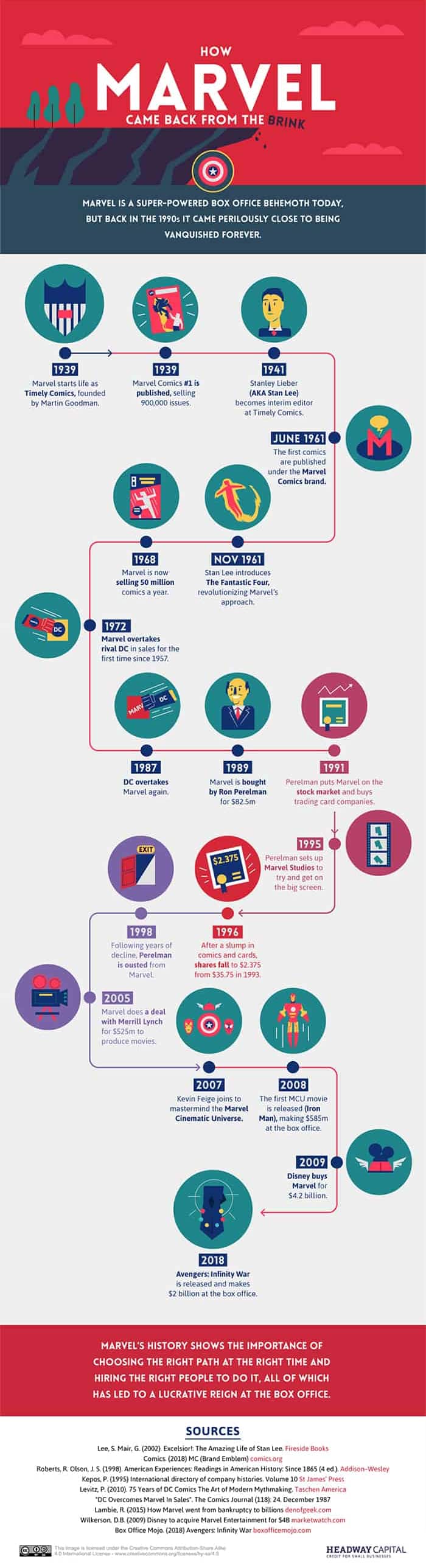
Marvel Entertainment’s journey from bankruptcy in the 1990s to becoming a global entertainment powerhouse is one of the most dramatic turnaround stories in business history. In the mid-90s, Marvel was in dire straits.
The company, known for creating iconic characters like Spider-Man, the X-Men, and the Avengers, had overextended itself by investing in a range of unrelated businesses, including toy manufacturing and other ventures. When the comic book market collapsed, Marvel found itself unable to recover and was forced to file for bankruptcy in 1996.
Faced with the potential loss of its most valuable assets—its characters—Marvel made a bold decision: rather than licensing its characters to other studios, it would take control of its own destiny by creating its own film studio.
This decision led to the creation of the Marvel Cinematic Universe (MCU), beginning with the release of Iron Man in 2008. The MCU became a cultural phenomenon, and Marvel transformed itself into one of the most successful and influential entertainment companies in the world.
For small businesses, Marvel’s story offers powerful lessons in brand management, strategic risk-taking, and the importance of creative control. Here’s an in-depth look at how these lessons can be applied to help your business thrive.
Take Control of Your Brand and Intellectual Property
One of the most significant decisions Marvel made during its turnaround was to retain control over its characters and intellectual property (IP). Instead of selling off or licensing its characters to other studios, Marvel recognized that its IP was its most valuable asset and chose to develop its own films.
This decision not only allowed Marvel to keep a greater share of the profits but also gave the company complete creative control over how its characters were portrayed.
Tips for Small Businesses:
- Understand the Value of Your Brand: Your brand and intellectual property are among your most valuable assets. Whether it’s your company name, logo, product designs, or proprietary processes, it’s essential to protect and leverage your IP effectively. Ensure that your IP is properly registered and legally protected, and consider how you can maximize its value.
- Retain Creative Control: While licensing or partnering with larger companies can provide short-term financial gains, it’s crucial to weigh these benefits against the potential loss of control over your brand. Whenever possible, aim to retain creative control over how your products or services are presented to the market. This ensures that your brand remains consistent and that your vision is realized.
- Explore New Avenues for Your IP: Like Marvel, you can explore new ways to leverage your intellectual property. This might include expanding into new markets, developing complementary products, or even creating entirely new revenue streams based on your existing IP. The key is to think creatively about how your brand can evolve and grow.
Embrace Strategic Risk-Taking
Marvel’s decision to create its own film studio was a high-risk move, especially considering the company’s financial situation at the time. However, this strategic risk paid off in a big way. By betting on its own ability to produce high-quality films, Marvel was able to create a massively successful franchise that redefined the superhero genre and secured the company’s future.
Tips for Small Businesses:
- Evaluate Potential Risks and Rewards: Not all risks are worth taking, but strategic risks—those that are calculated and aligned with your business goals—can lead to significant rewards. When faced with a risky decision, carefully evaluate the potential outcomes. Consider both the best-case and worst-case scenarios, and weigh the potential rewards against the risks.
- Diversify to Mitigate Risks: While taking risks is sometimes necessary, it’s also important to diversify your business to spread those risks. For example, if you’re launching a new product or entering a new market, consider maintaining your existing revenue streams to provide a safety net. This approach allows you to take bold actions without putting your entire business at risk.
- Learn from Failure: Marvel’s history includes numerous failures and setbacks, but the company used these experiences to learn and grow. If a risk doesn’t pay off, analyze what went wrong, learn from the experience, and apply those lessons to future decisions. Failure is often a necessary step on the path to success.
Build a Strong Brand Identity
Marvel’s success is not just about the characters it created; it’s also about the strong brand identity that Marvel built around those characters. Marvel didn’t just make movies—it created a connected universe where each film and character contributed to a larger, cohesive story. This strong brand identity helped Marvel build a loyal fan base and stand out in a crowded entertainment market.
Tips for Small Businesses:
- Create a Cohesive Brand Story: Your brand is more than just a logo or a product; it’s the story you tell to your customers. Consider how all the elements of your business—your products, marketing, customer service, and even company culture—contribute to a cohesive brand story. This story should reflect your company’s values and resonate with your target audience.
- Be Consistent Across All Touchpoints: Consistency is key to building a strong brand identity. Ensure that your brand’s message, visual identity, and tone are consistent across all customer touchpoints, from your website and social media to packaging and customer interactions. Consistency helps build trust and recognition among your customers.
- Engage Your Audience: Marvel built a passionate fan base by engaging directly with its audience. Consider how you can create opportunities for your customers to connect with your brand. This might include social media interactions, events, or community-building activities. By engaging your audience, you can build a loyal customer base that advocates for your brand.
Focus on Quality and Innovation
Marvel’s success was driven by its commitment to quality and innovation. The company didn’t just create movies; it created high-quality, innovative films that pushed the boundaries of what superhero movies could be. This focus on quality helped Marvel stand out in a competitive industry and build a reputation for excellence.
Tips for Small Businesses:
- Prioritize Quality: In a competitive market, quality is often what sets you apart from your competitors. Whether you’re offering products or services, make quality a top priority. Invest in the materials, processes, and training needed to ensure that your offerings meet the highest standards. Customers will notice and appreciate the difference.
- Stay Ahead of the Curve: Marvel’s success was partly due to its ability to innovate and stay ahead of industry trends. Keep an eye on developments in your industry and be proactive in adopting new technologies, processes, or strategies that can give you a competitive edge. Don’t be afraid to experiment and try new things, even if it means taking some risks.
- Continuously Improve: Quality and innovation are ongoing processes. Continuously seek out ways to improve your products, services, and customer experience. Encourage feedback from customers and use it to refine and enhance your offerings. A commitment to continuous improvement will help you maintain a competitive edge and build long-term success.
Leverage Your Strengths
One of Marvel’s key strengths was its extensive library of beloved characters. The company recognized the value of these characters and leveraged them to create a connected cinematic universe that captivated audiences around the world. By focusing on its strengths, Marvel was able to create a unique and compelling brand that stood out in the entertainment industry.
Tips for Small Businesses:
- Identify Your Core Strengths: Take stock of your business’s core strengths—whether it’s your product quality, customer service, industry expertise, or something else—and find ways to leverage them. Your strengths are what make your business unique, and they should be the foundation of your growth strategy.
- Differentiate Your Offerings: Leverage your strengths to differentiate your offerings in the marketplace. Consider what sets your products or services apart from the competition and highlight these differentiators in your marketing and branding efforts. By focusing on what makes you unique, you can carve out a niche in your industry and attract a loyal customer base.
- Expand on Your Strengths: Just as Marvel expanded its universe by building on its characters, look for ways to expand on your strengths. This might involve developing new products or services that complement your existing offerings, entering new markets, or finding new ways to connect with your customers. The key is to build on what you do best.
Adapt to Market Changes
Marvel’s decision to create its own film studio was a response to significant changes in the entertainment industry. The company recognized that the traditional model of licensing its characters to other studios was no longer sustainable and that it needed to adapt to stay relevant. By taking control of its own destiny, Marvel was able to thrive in a rapidly changing market.
Tips for Small Businesses:
- Stay Flexible: The business landscape is constantly changing, and companies that are able to adapt are the ones that succeed. Stay flexible and be willing to pivot your business model, product offerings, or marketing strategies in response to changes in the market. The ability to adapt quickly to new trends or challenges can give you a competitive advantage.
- Monitor Market Trends: Keep a close eye on trends in your industry and the broader economy. Regularly assess how these trends might impact your business and be proactive in adjusting your strategy accordingly. Whether it’s a shift in consumer preferences, technological advancements, or regulatory changes, staying informed will help you stay ahead of the curve.
- Embrace Change: Change can be daunting, but it can also present new opportunities for growth. Embrace change as an opportunity to innovate and improve your business. By being open to change and willing to adapt, you can turn challenges into opportunities and keep your business on the path to success.
Create a Long-Term Vision
Marvel’s decision to create the MCU was not just a short-term strategy; it was part of a long-term vision to build a connected universe that would span multiple films and engage audiences over many years. This long-term vision allowed Marvel to build a coherent and compelling brand that resonated with audiences and created lasting value.
Tips for Small Businesses:
- Think Long-Term: While it’s important to address immediate challenges, don’t lose sight of your long-term goals. Create a strategic plan that outlines your vision for the future and the steps you need to take to achieve it. A long-term vision provides direction and helps you stay focused on what matters most.
- Build for the Future: Make decisions with the long-term health of your business in mind. This might involve investing in research and development, building strong customer relationships, or developing new revenue streams. By focusing on the future, you can create a business that is resilient and sustainable.
- Stay Committed to Your Vision: Achieving a long-term vision takes time, and there will be obstacles along the way. Stay committed to your vision, even when the going gets tough. Your commitment will help you persevere through challenges and keep your business moving forward.
Conclusion
Marvel’s transformation from a bankrupt comic book company to a global entertainment juggernaut is a testament to the power of strategic thinking, innovation, and brand management.
For small businesses facing their own challenges, Marvel’s story offers valuable lessons in how to take control of your brand, embrace strategic risk-taking, build a strong brand identity, focus on quality and innovation, leverage your strengths, adapt to market changes, and create a long-term vision.
By applying these lessons to your own business, you can navigate challenges, seize opportunities, and build a successful and sustainable business. Just as Marvel turned its fortunes around and became a leader in the entertainment industry, your business, too, has the potential to achieve greatness with the right strategies and mindset.
Delta: Navigating the Turbulence of Bankruptcy
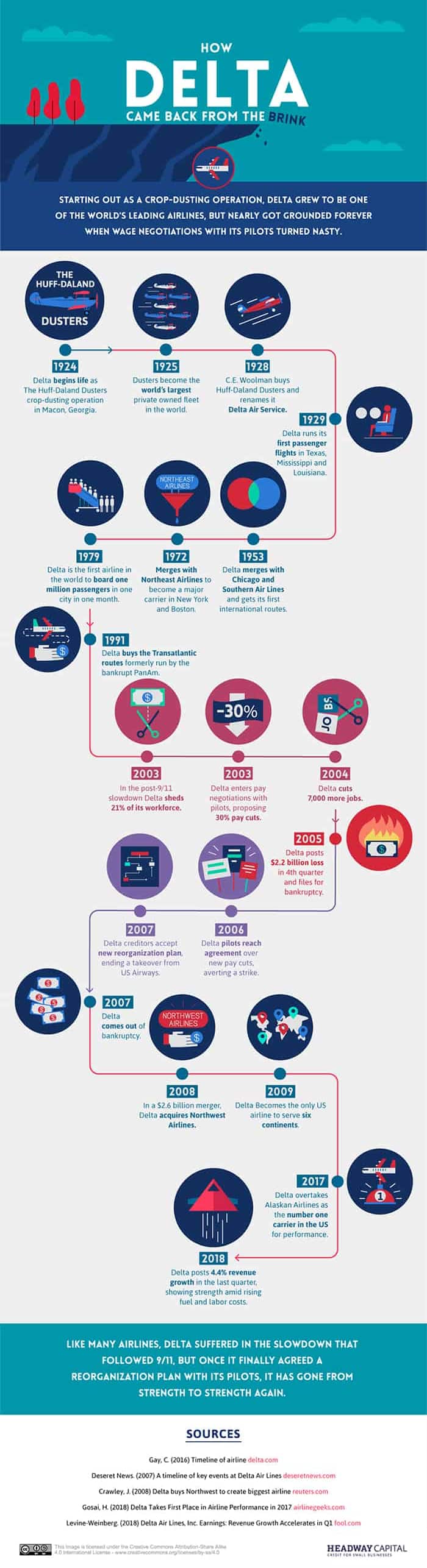
Delta Air Lines is one of the largest and most respected airlines in the world today, but the company’s journey has not been without significant challenges. In the mid-2000s, Delta faced a perfect storm of rising fuel costs, increased competition, and the aftermath of the 9/11 attacks, which had a profound impact on the entire airline industry.
These factors, combined with a heavy debt load, pushed Delta into Chapter 11 bankruptcy protection in 2005. However, through strategic restructuring, a renewed focus on customer service, and innovative thinking, Delta emerged from bankruptcy in 2007 and soon became a leader in the global aviation industry.
Delta’s story provides valuable insights for small businesses facing financial difficulties or industry disruption. Here’s a detailed look at the lessons small businesses can learn from Delta’s turnaround.
The Importance of Financial Discipline and Restructuring
When Delta entered bankruptcy, it was clear that the company needed to make significant changes to its financial structure. This involved renegotiating labor contracts, cutting costs, reducing debt, and streamlining operations. These tough but necessary decisions helped Delta regain its financial footing and positioned the company for long-term success.
Tips for Small Businesses:
- Conduct a Financial Audit: If your business is struggling financially, the first step is to conduct a thorough audit of your finances. Identify where your money is going, which areas are profitable, and where you’re losing money. This will give you a clear picture of your financial health and help you make informed decisions about where to cut costs and how to allocate resources.
- Reduce Unnecessary Expenses: During tough times, it’s crucial to eliminate unnecessary expenses. This could include renegotiating contracts with suppliers, reducing overhead costs, or cutting back on non-essential services. Look for areas where you can trim expenses without compromising the quality of your products or services.
- Restructure Debt: If your business is burdened with debt, consider restructuring your obligations. This might involve renegotiating the terms of your loans, consolidating debt, or even seeking out new financing options with better terms. The goal is to reduce your debt burden and improve your cash flow so that you can focus on rebuilding your business.
Focus on Core Competencies and Streamlining Operations
During its restructuring, Delta made a conscious effort to focus on its core competencies—providing reliable air transportation services—while streamlining operations to improve efficiency. The company cut unprofitable routes, optimized its fleet, and improved operational processes to reduce delays and increase customer satisfaction.
Tips for Small Businesses:
- Identify Your Core Strengths: Determine what your business does best and focus on those areas. Whether it’s a particular product, service, or market segment, doubling down on your core strengths can help you stand out in a crowded marketplace and attract loyal customers.
- Streamline Operations: Look for ways to streamline your operations and improve efficiency. This might involve automating certain processes, reorganizing your team to eliminate redundancies, or adopting new technologies that save time and money. The goal is to create a leaner, more efficient business that can operate effectively even in challenging conditions.
- Eliminate Unprofitable Products or Services: If certain products or services are not contributing to your bottom line, it may be time to phase them out. Focus on the offerings that generate the most revenue and have the greatest potential for growth. This allows you to allocate your resources more effectively and increase profitability.
Prioritize Customer Experience and Satisfaction
Delta recognized that in a highly competitive industry, customer satisfaction could be a key differentiator. As part of its turnaround strategy, Delta invested heavily in improving the customer experience, from reducing delays and cancellations to enhancing in-flight services. This focus on the customer helped Delta rebuild its reputation and foster loyalty among passengers.
Tips for Small Businesses:
- Put the Customer First: In any business, the customer should be at the center of everything you do. Ensure that your products and services meet the needs and expectations of your customers. Consider conducting surveys or gathering feedback to understand what your customers value most and where there is room for improvement.
- Enhance the Customer Experience: Look for ways to enhance the customer experience at every touchpoint. This could include improving your website’s usability, offering personalized customer service, or providing added value through loyalty programs or special offers. A positive customer experience can lead to repeat business and word-of-mouth referrals, which are crucial for growth.
- Respond to Feedback: Actively listen to your customers and respond to their feedback. Whether it’s addressing complaints, implementing suggestions, or simply thanking customers for their input, showing that you value their opinions can help build trust and loyalty.
Invest in Technology and Innovation
As part of its recovery, Delta invested in new technologies and innovations that improved operational efficiency and the customer experience. This included the introduction of more fuel-efficient aircraft, the development of a robust online booking system, and the use of data analytics to optimize flight schedules and reduce delays.
Tips for Small Businesses:
- Adopt Relevant Technologies: In today’s digital age, technology can be a powerful tool for improving efficiency and staying competitive. Identify the technologies that are most relevant to your business and invest in them. This might include software for managing finances, customer relationship management (CRM) systems, or e-commerce platforms.
- Use Data to Drive Decisions: Data can provide valuable insights into your business and help you make more informed decisions. Whether it’s tracking customer behavior, monitoring sales trends, or analyzing operational performance, use data to identify opportunities for improvement and drive your strategy.
- Innovate Continuously: The business landscape is constantly changing, and companies that innovate are more likely to succeed in the long term. Encourage a culture of innovation within your organization, where new ideas are welcomed and explored. This might involve developing new products or services, improving existing offerings, or finding new ways to reach customers.
Build Strong Relationships with Employees and Stakeholders
Delta’s restructuring involved difficult decisions, including layoffs and renegotiated labor contracts. However, the company also recognized the importance of maintaining strong relationships with its employees and stakeholders.
Delta worked closely with labor unions to reach agreements that benefited both the company and its workforce, helping to ensure a smoother recovery process.
Tips for Small Businesses:
- Communicate Openly and Honestly: During challenging times, it’s important to communicate openly and honestly with your employees and stakeholders. Keep them informed about the challenges your business is facing and the steps you’re taking to address them. Transparency builds trust and helps create a sense of shared purpose.
- Involve Employees in the Process: Your employees can be a valuable source of ideas and solutions. Involve them in the decision-making process, especially when it comes to operational improvements or cost-cutting measures. When employees feel heard and valued, they’re more likely to support the changes you’re implementing.
- Foster a Positive Work Environment: Even during difficult times, it’s important to maintain a positive work environment. Recognize and reward hard work, provide opportunities for growth and development, and ensure that your employees feel supported. A motivated and engaged workforce is essential for driving your business forward.
Form Strategic Alliances and Partnerships
Delta’s turnaround involved forming strategic alliances and partnerships that helped the company expand its reach and improve its competitive position. One of the most significant moves was Delta’s merger with Northwest Airlines in 2008, which made Delta the world’s largest airline by traffic and provided access to new markets and resources.
Tips for Small Businesses:
- Identify Potential Partners: Look for opportunities to form strategic partnerships with other businesses that complement your own. This could involve collaborating on marketing efforts, sharing resources, or even merging with another company. The right partnership can provide access to new markets, customers, and capabilities that you wouldn’t have on your own.
- Negotiate Win-Win Agreements: When forming partnerships, ensure that the terms of the agreement benefit both parties. A win-win partnership is more likely to be successful and sustainable in the long term. Be clear about your goals and expectations, and work with your partner to create a mutually beneficial arrangement.
- Leverage Partnerships for Growth: Use your partnerships as a platform for growth. Whether it’s expanding your product line, entering new markets, or reaching new customers, strategic alliances can help you achieve your business objectives more quickly and efficiently.
Focus on Long-Term Sustainability
Delta’s recovery was not just about surviving bankruptcy—it was about building a foundation for long-term sustainability. The company focused on creating a business model that could withstand future challenges, including economic downturns, industry disruptions, and changing customer preferences.
Tips for Small Businesses:
- Plan for the Future: Don’t just focus on short-term survival; think about how you can build a business that will thrive in the long term. This might involve diversifying your revenue streams, investing in research and development, or building a strong brand that can weather market fluctuations.
- Create a Contingency Plan: Prepare for potential challenges by creating a contingency plan. Identify the risks your business might face and develop strategies for mitigating those risks. Having a plan in place can help you respond more effectively to unforeseen events and minimize their impact on your business.
- Build Resilience: Resilience is key to long-term success. This means being adaptable, learning from failures, and continuously improving your business. Encourage a resilient mindset within your organization, where challenges are seen as opportunities to learn and grow.
Conclusion
Delta’s journey from bankruptcy to industry leader is a powerful example of how strategic thinking, financial discipline, and a focus on customer experience can turn a struggling business around.
For small businesses facing their own challenges, the lessons from Delta’s recovery offer valuable insights into how to navigate financial difficulties, streamline operations, prioritize customers, and build a sustainable business model.
By applying these lessons to your own business, you can overcome obstacles, seize new opportunities, and create a path to long-term success. Just as Delta emerged from bankruptcy stronger than ever, your business, too, has the potential to thrive with the right strategies and mindset.
Nintendo: Reinventing the Game
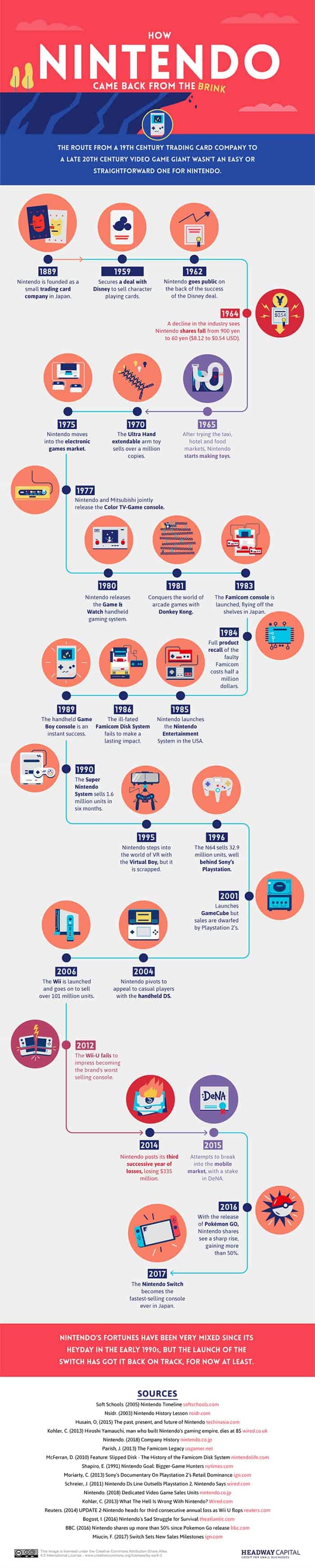
Nintendo’s journey through the gaming industry has been a rollercoaster, marked by both incredible successes and significant challenges. In the early 2000s, the company faced a precarious situation.
The GameCube, Nintendo’s flagship console at the time, was struggling against fierce competition from Sony’s PlayStation and Microsoft’s Xbox. The gaming landscape was changing rapidly, and Nintendo needed to adapt or risk becoming irrelevant.
Rather than trying to compete directly with its rivals in a technological arms race, Nintendo chose a different path. The company focused on innovation and accessibility, culminating in the release of the Wii in 2006.
The Wii revolutionized gaming by introducing motion-sensing controls and targeting a broader audience that included families and casual gamers. This bold move paid off, with the Wii selling over 100 million units and reestablishing Nintendo as a leader in the gaming industry.
Nintendo’s ability to reinvent itself in the face of adversity offers valuable lessons for small businesses. Here’s a detailed look at how you can apply Nintendo’s strategies to your own business to overcome challenges and achieve success.
Embrace Innovation and Differentiation
Nintendo’s decision to differentiate itself from competitors by focusing on innovation rather than raw power was a game-changing move. Instead of competing head-to-head with Sony and Microsoft on graphics and processing power, Nintendo created a new category of gaming that was accessible and fun for a broader audience.
Tips for Small Businesses:
- Identify Opportunities for Innovation: Look for areas in your industry where there is room for innovation. This could involve introducing new products or services, adopting new technologies, or finding creative ways to meet customer needs. Innovation doesn’t always mean creating something entirely new—it can also involve rethinking how existing products or services are delivered.
- Differentiate Your Business: In a competitive market, differentiation is key to standing out. Consider what makes your business unique and how you can leverage that uniqueness to attract customers. This might involve focusing on a niche market, offering personalized services, or creating a distinctive brand identity that resonates with your target audience.
- Be Willing to Take Risks: Innovation often requires taking risks. While it’s important to be strategic, don’t be afraid to try new things, even if they seem unconventional. Some of the most successful innovations come from thinking outside the box and challenging the status quo.
Understand Your Audience
One of Nintendo’s greatest strengths was its deep understanding of its audience. While competitors focused on hardcore gamers, Nintendo recognized an untapped market of casual gamers, families, and older adults who were interested in gaming but intimidated by the complexity of existing consoles. The Wii’s simple, intuitive controls and family-friendly games appealed to this broader audience, driving its success.
Tips for Small Businesses:
- Know Your Customer: Understanding your customer is critical to the success of your business. Conduct market research to identify your target audience’s needs, preferences, and pain points. This will help you tailor your products or services to meet their specific needs and stand out in the market.
- Segment Your Audience: Not all customers are the same, so it’s important to segment your audience based on factors like demographics, behavior, and preferences. This allows you to create more targeted marketing campaigns and develop products or services that resonate with each segment.
- Listen to Feedback: Customer feedback is invaluable for understanding how your business is perceived and where there is room for improvement. Encourage customers to share their thoughts, whether through surveys, reviews, or social media, and use that feedback to refine your offerings and improve the customer experience.
Adapt to Changing Market Conditions
The gaming industry in the early 2000s was rapidly evolving, with new technologies and changing consumer preferences. Nintendo’s ability to adapt to these changes was key to its success. Rather than trying to outmatch its competitors on their terms, Nintendo shifted its focus to areas where it could excel, such as motion controls and accessibility.
Tips for Small Businesses:
- Stay Informed: To adapt to changing market conditions, it’s essential to stay informed about industry trends, technological advancements, and shifts in consumer behavior. Regularly monitor your market and be proactive in adjusting your strategy to stay ahead of the competition.
- Be Flexible: Flexibility is crucial when navigating a changing market. Be willing to pivot your business model, product offerings, or marketing strategies in response to new opportunities or challenges. A flexible approach allows you to quickly adapt to changes and capitalize on emerging trends.
- Plan for the Future: While it’s important to focus on the present, don’t lose sight of the future. Develop a long-term strategy that takes into account potential changes in the market and positions your business for sustainable growth. This might involve investing in research and development, exploring new markets, or diversifying your revenue streams.
Leverage Your Brand’s Strengths
Nintendo’s rich history and iconic characters were significant assets in its turnaround. The company leveraged its strong brand and beloved franchises to build excitement around the Wii and subsequent consoles. By staying true to its brand identity while innovating, Nintendo was able to attract both new and existing customers.
Tips for Small Businesses:
- Identify Your Brand’s Strengths: Every brand has strengths that can be leveraged for growth. Whether it’s your company’s reputation, your unique products, or your customer loyalty, identify what sets your brand apart and find ways to capitalize on those strengths.
- Stay True to Your Brand Identity: While it’s important to innovate and adapt, it’s equally important to stay true to your brand’s core identity. Consistency in your brand’s messaging, values, and customer experience helps build trust and loyalty among your customers.
- Build on Your Successes: If you have successful products, services, or campaigns, look for ways to build on that success. This might involve expanding a popular product line, creating complementary services, or replicating successful marketing strategies in new markets.
Focus on User Experience
The Wii’s success was largely due to its focus on user experience. The console’s intuitive design and easy-to-use motion controls made gaming accessible to people of all ages and skill levels. Nintendo’s emphasis on creating a fun and enjoyable experience for its users helped differentiate the Wii from more complex and intimidating consoles.
Tips for Small Businesses:
- Prioritize Usability: A product or service’s usability is crucial to customer satisfaction. Ensure that your offerings are easy to use and meet the needs of your customers. Consider conducting usability testing to identify any pain points and make improvements where necessary.
- Enhance the Customer Journey: Think about the entire customer journey, from the first interaction with your brand to the post-purchase experience. Look for ways to enhance each touchpoint, whether it’s through a user-friendly website, responsive customer service, or clear and transparent communication.
- Create Memorable Experiences: Beyond functionality, consider how you can create memorable experiences for your customers. This might involve adding personalized touches, surprising and delighting customers with unexpected perks, or creating an emotional connection through storytelling and branding.
Strategic Partnerships and Collaborations
Nintendo’s collaborations with third-party developers and media companies played a significant role in the success of the Wii and subsequent consoles. These partnerships helped Nintendo expand its game library, reach new audiences, and enhance the overall value of its offerings.
Tips for Small Businesses:
- Seek Out Complementary Partners: Look for partnership opportunities with businesses that complement your own. This might involve collaborating with companies in related industries, forming alliances with suppliers or distributors, or partnering with influencers or media outlets to reach new audiences.
- Leverage Collaborative Opportunities: Partnerships can provide access to new resources, expertise, and markets that you wouldn’t have on your own. Leverage these opportunities to enhance your product offerings, expand your reach, and build your brand.
- Negotiate Mutually Beneficial Agreements: When forming partnerships, ensure that the terms of the agreement are beneficial for both parties. A successful partnership is one where both sides contribute value and share in the rewards. Be clear about your goals and expectations, and work collaboratively with your partners to achieve them.
Persevere Through Challenges
Nintendo’s journey was not without its challenges. The company faced intense competition, changing market dynamics, and internal struggles. However, Nintendo’s perseverance, commitment to its vision, and willingness to take risks ultimately led to its success.
Tips for Small Businesses:
- Stay Resilient: Running a business is challenging, and setbacks are inevitable. Stay resilient in the face of adversity, and remember that challenges can also present opportunities for growth. Maintain a positive mindset, and use setbacks as learning experiences to improve your business.
- Commit to Your Vision: Having a clear vision for your business can help you stay focused and motivated, even during tough times. Stay committed to your vision, and let it guide your decisions and actions as you work towards your long-term goals.
- Learn from Failure: Failure is a natural part of the entrepreneurial journey. When things don’t go as planned, take the time to analyze what went wrong, identify the lessons learned, and apply those insights to future endeavors. By learning from failure, you can emerge stronger and more prepared for future challenges.
Conclusion
Nintendo’s remarkable turnaround is a testament to the power of innovation, customer understanding, and strategic thinking. For small businesses facing their own challenges, the lessons from Nintendo’s journey offer valuable insights into how to adapt, differentiate, and succeed in a competitive market.
By embracing innovation, understanding your audience, adapting to changing conditions, leveraging your brand’s strengths, focusing on user experience, forming strategic partnerships, and persevering through challenges, your business can navigate obstacles and achieve long-term success.
Just as Nintendo reinvented itself and became a leader in the gaming industry, your business, too, has the potential to overcome adversity and thrive with the right strategies and mindset.
Netflix: From DVDs to Digital Domination
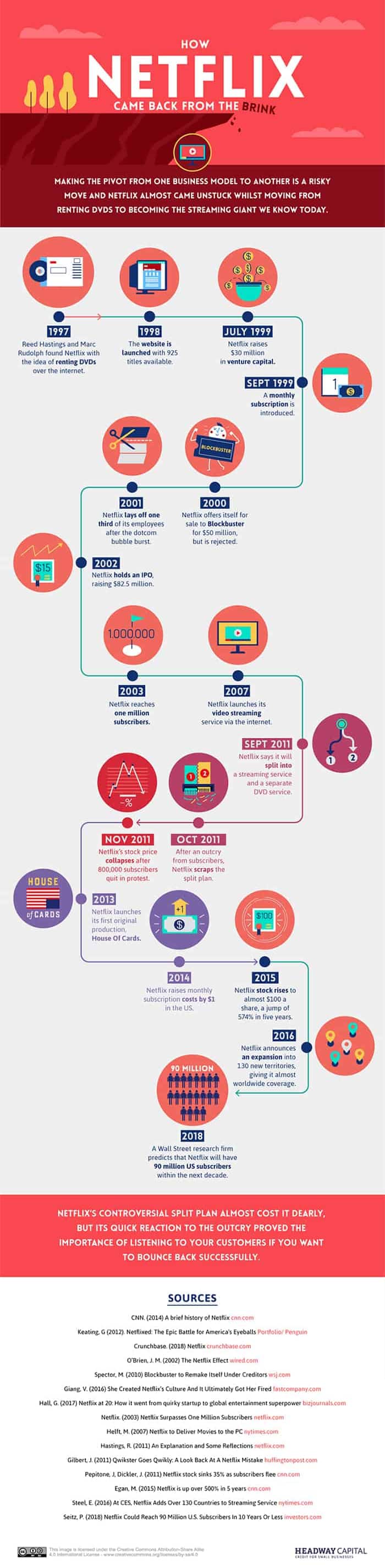
Netflix’s transformation from a DVD rental service to a global streaming giant is one of the most compelling business success stories of the 21st century. Founded in 1997 as a DVD rental-by-mail service, Netflix faced stiff competition from established players like Blockbuster.
By 2000, the company was struggling to scale its business and was losing money rapidly. Netflix even approached Blockbuster with an offer to sell itself, but Blockbuster declined. This rejection turned out to be a pivotal moment in Netflix’s history.
Rather than sticking to its original business model, Netflix’s leadership recognized the potential of digital streaming and began transitioning its focus from physical DVDs to online streaming.
This strategic shift, combined with an early investment in original content, transformed Netflix into a dominant force in the entertainment industry. Today, Netflix is a household name with over 200 million subscribers worldwide.
For small businesses, Netflix’s journey offers valuable lessons in innovation, adaptability, and strategic vision. Here’s an in-depth look at how you can apply these principles to your own business.
Embrace Change and Be Willing to Pivot
One of the key factors behind Netflix’s success was its ability to pivot from a DVD rental service to a streaming platform. This shift was not easy or immediate, but it was necessary for Netflix to stay relevant in a rapidly changing market. The company’s leadership recognized that the future of entertainment was digital and acted decisively to make the transition.
Tips for Small Businesses:
- Be Open to Change: In today’s fast-paced business environment, the ability to adapt is crucial. Be open to the possibility that your current business model might need to evolve to stay competitive. Regularly assess market trends, customer behavior, and technological advancements to identify when it might be time to pivot.
- Don’t Be Afraid to Take Risks: Pivoting often involves taking significant risks, such as investing in new technologies or entering uncharted markets. While these risks can be daunting, they can also lead to substantial rewards. Evaluate the potential benefits of a pivot against the risks, and be prepared to take bold steps if the opportunity is right.
- Learn from Feedback: Customer feedback can be a valuable source of insights when considering a pivot. Pay attention to what your customers are saying about your products or services, and use that information to guide your decision-making. If customers are showing interest in a new trend or technology, it might be worth exploring how your business can adapt to meet that demand.
Invest in Technology and Innovation
Netflix’s shift to streaming was not just about changing its business model; it also involved significant investment in technology. The company developed a robust streaming platform that could handle high volumes of traffic and deliver content seamlessly to users around the world. This commitment to technology and innovation helped Netflix stay ahead of competitors and set the standard for the streaming industry.
Tips for Small Businesses:
- Invest in Technology: Whether it’s improving your website, adopting new software, or automating processes, investing in technology can help your business operate more efficiently and stay competitive. Identify areas where technology can enhance your operations or customer experience, and allocate resources to make those improvements.
- Focus on Innovation: Innovation should be a core part of your business strategy. Encourage your team to think creatively and explore new ideas, whether it’s developing new products, improving existing offerings, or finding new ways to reach customers. Innovation can help your business stay relevant and adapt to changing market conditions.
- Stay Ahead of the Curve: Keep an eye on emerging technologies and industry trends that could impact your business. By staying informed and proactive, you can position your business to take advantage of new opportunities before your competitors do.
Understand the Power of Subscription Models
Netflix’s decision to adopt a subscription-based model was a game-changer. Instead of relying on one-time DVD rentals, Netflix created a recurring revenue stream by offering customers unlimited streaming for a monthly fee. This model not only provided a steady income but also fostered customer loyalty and engagement.
Tips for Small Businesses:
- Consider Subscription Models: If applicable to your business, explore the possibility of adopting a subscription-based model. Subscriptions can provide a predictable revenue stream and help build long-term relationships with customers. Consider offering a subscription service for products or services that customers need regularly, or create a membership program that provides exclusive benefits.
- Focus on Customer Retention: A successful subscription model depends on keeping customers engaged and satisfied. Focus on delivering consistent value to your subscribers, whether through high-quality products, personalized services, or exclusive content. The more value you provide, the more likely customers are to stay subscribed.
- Experiment with Pricing: Pricing is a critical component of any subscription model. Experiment with different pricing tiers, discounts, or bundled services to find the right balance between attracting new subscribers and maximizing revenue. Be transparent about pricing and make it easy for customers to upgrade or downgrade their subscriptions as needed.
Leverage Data and Personalization
One of Netflix’s biggest competitive advantages is its use of data to personalize the user experience. The company collects vast amounts of data on viewer behavior and uses it to recommend content tailored to individual preferences. This personalized approach has been key to keeping users engaged and increasing customer satisfaction.
Tips for Small Businesses:
- Collect and Analyze Data: Data is a powerful tool for understanding your customers and improving your business. Collect data on customer behavior, preferences, and feedback, and use it to make informed decisions. This could involve tracking website analytics, conducting surveys, or analyzing sales data.
- Personalize the Customer Experience: Use the data you collect to personalize the customer experience. This might involve recommending products based on past purchases, tailoring marketing messages to specific customer segments, or offering personalized discounts or promotions. Personalization can help build stronger relationships with customers and increase customer loyalty.
- Test and Iterate: Use data to test different approaches and iterate on your strategies. Whether it’s A/B testing your website design, experimenting with different marketing campaigns, or trying out new product features, data-driven testing can help you identify what works and optimize your efforts for better results.
Focus on Original Content and Differentiation
Netflix’s decision to invest in original content was a turning point in its evolution. By creating its own shows and movies, Netflix differentiated itself from competitors and built a unique brand identity. Original content like House of Cards and Stranger Things not only attracted new subscribers but also established Netflix as a leader in the entertainment industry.
Tips for Small Businesses:
- Differentiate Your Offerings: In a crowded market, differentiation is key to standing out. Consider how you can create unique products or services that set your business apart from competitors. This might involve developing proprietary products, offering exclusive services, or creating a distinctive brand identity that resonates with your target audience.
- Invest in Content Creation: Content can be a powerful tool for building your brand and attracting customers. Consider investing in content creation, whether it’s through blogging, video production, social media, or other forms of digital content. High-quality content can help establish your expertise, engage your audience, and drive traffic to your website or physical location.
- Build a Strong Brand: A strong brand identity can help differentiate your business and build customer loyalty. Focus on creating a consistent brand message, visual identity, and customer experience that reflect your values and resonate with your target audience.
Adapt to Changing Consumer Behavior
Netflix’s success was partly due to its ability to anticipate and adapt to changing consumer behavior. As internet speeds improved and consumer preferences shifted toward on-demand content, Netflix was well-positioned to capitalize on these trends.
The company’s early move into streaming allowed it to stay ahead of competitors and meet the evolving needs of its customers.
Tips for Small Businesses:
- Stay Attuned to Consumer Trends: Consumer behavior is constantly evolving, and businesses that can anticipate and adapt to these changes are more likely to succeed. Regularly monitor trends in your industry and listen to what your customers are saying. Use this information to adjust your offerings, marketing strategies, or business model to better align with consumer preferences.
- Be Proactive, Not Reactive: Instead of waiting for trends to impact your business, be proactive in responding to them. For example, if you notice a growing demand for eco-friendly products, consider how you can incorporate sustainability into your offerings. By being proactive, you can position your business as a leader in your industry rather than a follower.
- Continuously Evolve: The business landscape is always changing, and companies that are willing to evolve are more likely to thrive. Embrace change as an opportunity for growth, and be willing to adjust your strategy, products, or services as needed to stay relevant.
Build a Scalable Business Model
Netflix’s transition from DVDs to streaming was not just about changing its delivery method—it was about creating a scalable business model that could grow with the company. Streaming allowed Netflix to reach a global audience without the limitations of physical distribution, enabling rapid expansion and growth.
Tips for Small Businesses:
- Design for Scalability: As you grow your business, it’s important to consider how your operations, processes, and technology can scale. Design your business model with scalability in mind, whether it’s through automation, outsourcing, or streamlining operations. A scalable model allows you to handle increased demand without compromising quality or customer experience.
- Plan for Growth: Growth doesn’t happen by accident—it requires careful planning. Develop a growth strategy that outlines how you plan to expand your business, whether it’s through new markets, additional products or services, or increased marketing efforts. Ensure that your infrastructure, team, and technology can support that growth.
- Leverage Technology: Technology can be a powerful enabler of scalability. Invest in systems and tools that can grow with your business, such as cloud-based software, customer relationship management (CRM) systems, or e-commerce platforms. The right technology can help you manage growth more effectively and scale your business more efficiently.
Conclusion
Netflix’s journey from a struggling DVD rental service to a global streaming giant is a masterclass in innovation, adaptability, and strategic vision. For small businesses facing their own challenges, the lessons from Netflix’s success offer valuable insights into how to embrace change, invest in technology, differentiate your offerings, and build a scalable business model.
By applying these principles to your own business, you can navigate the challenges of a rapidly changing market, stay ahead of the competition, and position your business for long-term success. Just as Netflix transformed the entertainment industry, your business, too, has the potential to achieve greatness with the right strategies and mindset.
Lego: Building Success from the Ground Up
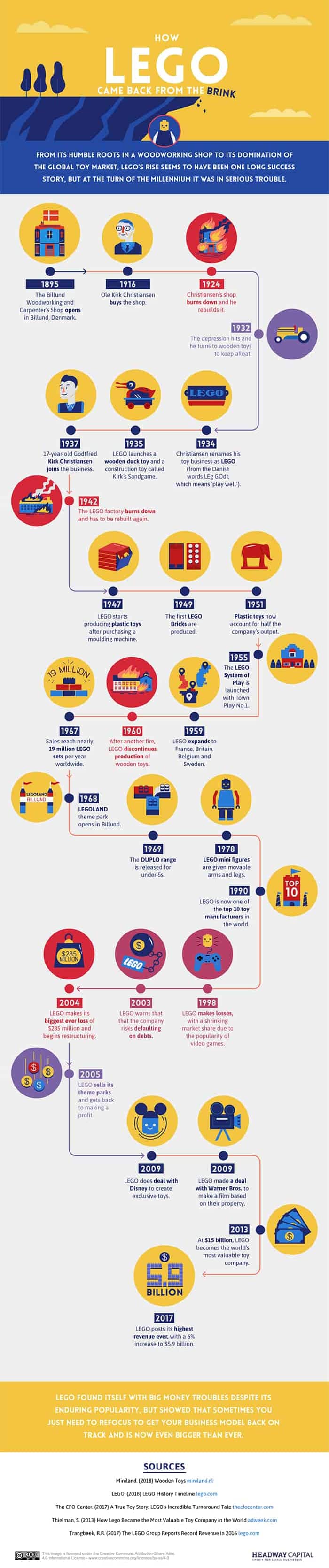
Lego’s journey from near bankruptcy in the early 2000s to becoming one of the world’s most beloved and successful toy companies is an inspiring story of resilience, innovation, and staying true to core values.
Founded in 1932, Lego had enjoyed decades of success, but by the late 1990s and early 2000s, the company was facing serious financial difficulties. Overexpansion into unrelated products, a failure to adapt to the rise of digital entertainment, and a loss of focus on its core product—the iconic Lego brick—left the company in dire straits.
In response, Lego’s leadership made a series of bold decisions to refocus on its core strengths, streamline operations, and embrace new opportunities in the digital age. These efforts paid off, and today, Lego is not only a leader in the toy industry but also a global brand with a presence in movies, video games, and theme parks.
For small businesses, Lego’s turnaround offers valuable lessons in how to stay true to your brand, innovate strategically, and build a sustainable business model. Here’s an in-depth look at how these principles can be applied to help your business thrive.
Refocus on Core Competencies
One of the key steps in Lego’s turnaround was refocusing on its core product—the Lego brick. By the early 2000s, Lego had diversified into too many areas, diluting its brand and draining resources. The company realized that it needed to return to what it did best: creating high-quality, imaginative building sets that encouraged creativity in children.
Tips for Small Businesses:
- Identify Your Core Strengths: Every business has core competencies that differentiate it from competitors. Take a step back and identify what your business does best. What products or services are most popular with your customers? What aspects of your business generate the most revenue or have the greatest potential for growth? Once you’ve identified these core strengths, focus your efforts on maximizing them.
- Eliminate Distractions: Just as Lego eliminated non-core products, consider whether there are aspects of your business that are distracting you from your core mission. This might involve discontinuing underperforming products, scaling back on initiatives that aren’t delivering results, or streamlining operations to focus on what really matters. By eliminating distractions, you can free up resources to invest in your core competencies.
- Double Down on Quality: Lego’s success has always been tied to the quality of its products. Ensure that your core offerings are of the highest quality, whether that’s through superior craftsmanship, excellent customer service, or innovative features. High-quality products and services not only attract customers but also build loyalty and encourage repeat business.
Embrace Innovation While Honoring Tradition
While Lego refocused on its core product, it also embraced innovation in ways that honored the company’s traditions. This balance between innovation and tradition allowed Lego to stay relevant in a rapidly changing market. For example, Lego embraced digital media by launching successful video games and movies, which introduced the brand to new audiences while still celebrating the creativity and imagination that the Lego brick embodies.
Tips for Small Businesses:
- Innovate Within Your Core: Innovation doesn’t mean abandoning your roots. Look for ways to innovate that complement your core strengths and reinforce your brand identity. This might involve introducing new features to existing products, exploring new marketing channels, or finding creative ways to engage with customers. The key is to ensure that your innovations align with your brand’s values and mission.
- Explore New Markets: Innovation can also involve expanding into new markets or customer segments. Consider how you can adapt your core products or services to appeal to different audiences or meet new needs. This might involve creating new product lines, offering additional services, or partnering with other businesses to reach new customers.
- Balance Risk and Reward: While innovation is essential for growth, it’s important to balance the risks and rewards. Before launching a new product or entering a new market, conduct thorough research to assess the potential demand and competition. Be willing to experiment and take calculated risks, but also have a plan in place to manage potential setbacks.
Streamline Operations and Improve Efficiency
Lego’s turnaround also involved significant efforts to streamline operations and improve efficiency. The company simplified its product line, reduced the number of unique components in its sets, and focused on improving supply chain management. These changes helped Lego reduce costs, increase profitability, and improve its ability to respond to market demand.
Tips for Small Businesses:
- Simplify Your Offerings: If your business offers a wide range of products or services, consider whether it’s possible to simplify your offerings. This can reduce complexity, lower costs, and make it easier to manage your business. Focus on the products or services that generate the most revenue or have the greatest growth potential, and consider phasing out less profitable or non-essential items.
- Optimize Supply Chain and Inventory Management: Efficient supply chain and inventory management are crucial for reducing costs and improving customer satisfaction. Look for ways to optimize your supply chain, such as negotiating better terms with suppliers, reducing lead times, or adopting just-in-time inventory practices. This can help you reduce waste, lower costs, and ensure that you have the right products available when customers need them.
- Automate Where Possible: Automation can be a powerful tool for improving efficiency and reducing manual labor. Consider areas of your business where automation could streamline operations, such as order processing, inventory management, or customer communication. Automation can help you save time, reduce errors, and free up resources for more strategic activities.
Leverage Your Brand and Customer Loyalty
Lego’s brand is one of its greatest assets, and the company has leveraged this brand loyalty to drive its resurgence. By staying true to its core values of creativity, imagination, and quality, Lego has built a loyal customer base that spans generations. The company has also successfully extended its brand into new areas, such as movies, video games, and theme parks, further strengthening its market position.
Tips for Small Businesses:
- Build and Maintain Brand Loyalty: Brand loyalty is built on trust, consistency, and delivering on your promises. Focus on providing an exceptional customer experience, from the quality of your products to the service you provide. Engage with your customers regularly, whether through social media, email newsletters, or in-person events, and create opportunities for them to connect with your brand on a deeper level.
- Extend Your Brand Thoughtfully: If your brand has a strong following, consider how you can extend it into new areas without diluting its value. This might involve launching complementary products or services, partnering with other businesses to create co-branded offerings, or expanding into new markets. The key is to ensure that any brand extensions align with your core values and resonate with your target audience.
- Encourage Customer Advocacy: Loyal customers can be your best advocates. Encourage satisfied customers to share their experiences with others, whether through online reviews, testimonials, or social media. Consider implementing a referral program that rewards customers for bringing in new business. By turning your customers into advocates, you can build a strong network of brand ambassadors who help drive growth.
Embrace Digital Transformation
Lego’s resurgence was also driven by its embrace of digital transformation. The company recognized the growing importance of digital entertainment and successfully expanded into video games, online platforms, and movies. These digital initiatives not only introduced Lego to a new generation of customers but also provided new revenue streams and opportunities for growth.
Tips for Small Businesses:
- Adopt Digital Tools and Platforms: Digital transformation can help your business operate more efficiently and reach a wider audience. Consider adopting digital tools and platforms that can enhance your operations, such as e-commerce solutions, digital marketing tools, or customer relationship management (CRM) systems. These tools can help you streamline processes, improve customer engagement, and drive sales.
- Expand Your Online Presence: A strong online presence is essential for reaching customers in today’s digital world. Invest in a user-friendly website, optimize it for search engines (SEO), and leverage social media to connect with your audience. Consider creating content that showcases your expertise, such as blog posts, videos, or webinars, to attract and engage potential customers.
- Explore New Digital Revenue Streams: Digital transformation also opens up new opportunities for revenue generation. Consider how you can monetize your digital presence, whether through e-commerce, digital products, or online services. For example, you might offer virtual consultations, create digital products such as e-books or courses, or launch an online subscription service.
Stay True to Your Values and Mission
Throughout its turnaround, Lego remained true to its core values of creativity, imagination, and quality. The company’s commitment to these values resonated with customers and helped rebuild its reputation. Lego’s success shows that staying true to your values and mission can be a powerful differentiator in the marketplace.
Tips for Small Businesses:
- Define Your Core Values: Your core values are the foundation of your business and should guide everything you do. Take the time to define your company’s values and ensure that they are reflected in your products, services, and interactions with customers. Your values should be more than just words—they should be principles that you live by every day.
- Communicate Your Mission: Clearly communicate your company’s mission to your customers, employees, and stakeholders. Your mission should reflect the purpose and vision of your business and should inspire others to support and engage with your brand. Use your mission statement to guide your strategic decisions and ensure that it is consistently reflected in your marketing, branding, and customer interactions.
- Live Your Values: It’s not enough to simply state your values—you must live them in every aspect of your business. This means delivering on your promises, treating customers and employees with respect, and making decisions that align with your values. When your actions are consistent with your values, you build trust and credibility with your audience.
Create Memorable Experiences
Lego’s success isn’t just about the products it sells—it’s about the experiences it creates for its customers. Whether through its building sets, video games, movies, or theme parks, Lego has created a world of imagination and creativity that resonates with children and adults alike. These memorable experiences have helped build a loyal customer base and a strong brand identity.
Tips for Small Businesses:
- Focus on Customer Experience: The customer experience is a key differentiator in today’s competitive market. Look for ways to create memorable experiences for your customers, whether through exceptional service, personalized interactions, or unique products. Consider every touchpoint where customers interact with your brand and strive to make each one positive and memorable.
- Create Emotional Connections: Memorable experiences often involve creating an emotional connection with your customers. This might involve telling your brand’s story, creating products that evoke nostalgia or joy, or providing exceptional service that goes above and beyond. Emotional connections help build loyalty and encourage customers to return again and again.
- Engage with Your Community: Building a strong community around your brand can also create memorable experiences. Consider hosting events, creating online forums, or encouraging user-generated content that allows customers to connect with each other and with your brand. A strong community can turn customers into brand advocates and create a sense of belonging that keeps them engaged.
Conclusion
Lego’s remarkable turnaround from near bankruptcy to global success is a testament to the power of strategic focus, innovation, and staying true to core values. For small businesses facing their own challenges, the lessons from Lego’s journey offer valuable insights into how to refocus on core strengths, embrace innovation, streamline operations, leverage your brand, and create memorable customer experiences.
By applying these principles to your own business, you can navigate challenges, seize new opportunities, and build a sustainable and successful business model. Just as Lego reinvented itself and became a leader in the toy industry, your business, too, has the potential to overcome adversity and achieve lasting success with the right strategies and mindset.
Ford: Surviving the Great Recession
Ford Motor Company’s survival and eventual resurgence during the Great Recession of 2008 is a powerful example of strategic foresight, disciplined leadership, and resilience. Unlike its competitors General Motors and Chrysler, which accepted government bailouts, Ford chose a different path.
Under the leadership of CEO Alan Mulally, Ford implemented a massive restructuring plan known as “The Way Forward,” which focused on cutting costs, improving product quality, and unifying the company’s global operations. Ford also secured a substantial line of credit before the financial crisis hit, which gave it the liquidity needed to weather the storm without government assistance.
Ford’s ability to not only survive but thrive in the face of economic adversity offers valuable lessons for small businesses. Here’s an in-depth look at how you can apply these strategies to help your business navigate financial challenges and build a foundation for long-term success.
Proactive Financial Management
One of the key reasons Ford was able to avoid bankruptcy and government bailouts during the Great Recession was its proactive approach to financial management.
Before the crisis hit, Ford secured a $23.5 billion line of credit, which provided the company with the liquidity it needed to restructure its operations and invest in new products. This foresight allowed Ford to stay afloat while its competitors struggled.
Tips for Small Businesses:
- Maintain a Healthy Cash Reserve: Cash flow is the lifeblood of any business, and having a cash reserve can help you navigate financial difficulties. Aim to build and maintain a cash reserve that can cover several months of operating expenses. This cushion can provide you with the flexibility to weather unexpected downturns or take advantage of new opportunities.
- Secure Access to Credit: Just as Ford secured a line of credit before the recession, small businesses should ensure they have access to credit when needed. Establish strong relationships with banks and lenders, and consider securing a line of credit even if you don’t need it immediately. Having access to credit can provide a safety net during tough times and allow you to invest in growth opportunities when they arise.
- Monitor Financial Health Regularly: Regularly review your financial statements, including cash flow, profit and loss, and balance sheets, to keep a close eye on your business’s financial health. Identify any potential issues early and take action to address them before they become significant problems. This proactive approach can help you avoid financial crises and maintain stability.
Streamline Operations and Cut Costs
During the Great Recession, Ford implemented significant cost-cutting measures as part of its restructuring plan. This included closing unprofitable plants, reducing the workforce, and streamlining its product lineup. These measures were tough but necessary to ensure the company’s survival and future profitability.
Tips for Small Businesses:
- Evaluate Operational Efficiency: Take a close look at your business’s operations and identify areas where you can improve efficiency. This might involve streamlining processes, reducing waste, or automating tasks that are currently done manually. By improving efficiency, you can reduce costs and increase productivity, which can help your business stay competitive.
- Cut Non-Essential Expenses: In times of financial difficulty, it’s important to focus on essential expenses and cut non-essential ones. Review your budget and identify areas where you can reduce spending without compromising the quality of your products or services. This might include renegotiating contracts with suppliers, reducing discretionary spending, or postponing non-critical investments.
- Optimize Your Product or Service Lineup: Just as Ford streamlined its product lineup, consider whether your business is offering too many products or services. Focus on the offerings that are most profitable or have the greatest growth potential, and consider discontinuing those that are underperforming. This can help you allocate resources more effectively and improve your bottom line.
Invest in Quality and Innovation
Despite the cost-cutting measures, Ford continued to invest in product quality and innovation during the recession. The company introduced new models that were more fuel-efficient and aligned with consumer demand, such as the Ford Fusion and the Ford Fiesta. Ford’s commitment to quality helped rebuild its brand reputation and attract customers.
Tips for Small Businesses:
- Prioritize Quality: Even during tough times, it’s important not to compromise on quality. High-quality products and services are more likely to attract and retain customers, even in a challenging economic environment. Ensure that your offerings meet or exceed customer expectations, and be willing to invest in the resources needed to maintain that quality.
- Focus on Innovation: Innovation is key to staying competitive, especially during economic downturns. Look for opportunities to innovate within your core business, whether it’s by developing new products, improving existing ones, or finding new ways to deliver value to your customers. Innovation can help you differentiate your business and capture market share, even in a tough economy.
- Listen to Customer Needs: During the recession, Ford focused on developing vehicles that met the changing needs of consumers, such as fuel efficiency and affordability. Similarly, pay close attention to what your customers want and need, and be willing to adapt your offerings to meet those needs. This customer-centric approach can help you stay relevant and attract new business.
Strengthen Your Brand and Build Trust
Ford’s decision to forgo government bailouts and rely on its own resources helped strengthen its brand and build trust with consumers. The company’s “Built Ford Tough” slogan resonated with customers who appreciated Ford’s resilience and independence. This trust was a key factor in Ford’s recovery and growth in the years that followed.
Tips for Small Businesses:
- Build a Strong Brand Identity: A strong brand identity can be a powerful asset during tough times. Ensure that your brand reflects your company’s values, mission, and unique selling proposition. Consistency in branding across all customer touchpoints—from your website and social media to packaging and customer service—helps build recognition and trust.
- Communicate Transparently: During challenging times, transparent communication is essential for building and maintaining trust with customers. Be honest about the challenges your business is facing and the steps you’re taking to overcome them. Communicate regularly with your customers, employees, and stakeholders, and keep them informed about any changes or updates.
- Deliver on Your Promises: Trust is built on delivering on your promises. Ensure that your business consistently meets or exceeds customer expectations, whether it’s in the quality of your products, the timeliness of your services, or the responsiveness of your customer support. When customers know they can rely on you, they’re more likely to remain loyal, even during tough times.
Unify and Empower Your Team
Under Alan Mulally’s leadership, Ford adopted a “One Ford” strategy that unified the company’s global operations and fostered a culture of collaboration and accountability. Mulally emphasized the importance of teamwork, transparency, and a shared vision, which helped rally the company’s employees and drive the turnaround effort.
Tips for Small Businesses:
- Create a Unified Vision: A clear, unified vision can help align your team and motivate them to work towards common goals. Define your company’s mission, values, and objectives, and ensure that every employee understands and embraces them. A shared vision fosters a sense of purpose and can help your team stay focused and committed, even during challenging times.
- Empower Your Employees: Empower your employees by giving them the tools, resources, and autonomy they need to succeed. Encourage open communication, collaboration, and innovation, and involve your team in decision-making processes. When employees feel empowered and valued, they’re more likely to take ownership of their work and contribute to the success of your business.
- Foster a Positive Work Culture: A positive work culture is essential for maintaining morale and productivity, especially during difficult times. Focus on creating an environment where employees feel supported, respected, and motivated. Recognize and reward hard work, provide opportunities for growth and development, and ensure that your team feels connected to the company’s mission and values.
Prepare for Future Challenges
Ford’s proactive approach to securing credit and streamlining operations before the recession hit allowed the company to navigate the economic downturn more effectively than its competitors. This forward-thinking approach is a valuable lesson for small businesses in the importance of preparing for future challenges.
Tips for Small Businesses:
- Develop a Contingency Plan: Prepare for potential challenges by developing a contingency plan that outlines how your business will respond to different scenarios, such as an economic downturn, supply chain disruption, or loss of a major client. Having a plan in place can help you respond more quickly and effectively when challenges arise.
- Diversify Revenue Streams: Relying on a single revenue stream can make your business vulnerable to market fluctuations. Consider diversifying your revenue streams by offering new products or services, expanding into new markets, or exploring new sales channels. Diversification can help you spread risk and create more stability for your business.
- Monitor Industry Trends: Stay informed about industry trends, economic indicators, and other factors that could impact your business. Regularly review your market environment and adjust your strategy as needed to stay ahead of potential challenges. By staying proactive and informed, you can position your business to navigate future challenges more effectively.
Commit to Continuous Improvement
Even after emerging from the recession, Ford continued to focus on continuous improvement, whether in product quality, operational efficiency, or customer satisfaction. This commitment to ongoing improvement helped Ford maintain its competitive edge and build a foundation for long-term success.
Tips for Small Businesses:
- Implement Continuous Improvement Processes: Continuous improvement should be an ongoing effort in your business. Encourage your team to regularly review and assess processes, identify areas for improvement, and implement changes that enhance efficiency, quality, and customer satisfaction. Tools like Lean or Six Sigma can provide a structured approach to continuous improvement.
- Solicit Customer Feedback: Regularly seek feedback from your customers to understand their needs, preferences, and areas where your business can improve. Use this feedback to make informed decisions about product development, customer service, and overall business strategy. Customer feedback is a valuable resource for driving continuous improvement.
- Stay Committed to Excellence: Excellence should be a core value in your business. Set high standards for quality, service, and performance, and continuously strive to meet or exceed those standards. By committing to excellence, you can differentiate your business, build customer loyalty, and position yourself for long-term success.
Conclusion
Ford’s remarkable turnaround during the Great Recession is a powerful example of the importance of proactive financial management, operational efficiency, innovation, and strong leadership.
For small businesses facing their own challenges, the lessons from Ford’s recovery offer valuable insights into how to navigate economic difficulties, build a resilient business, and position yourself for long-term success.
By applying these principles to your own business, you can weather financial storms, seize new opportunities, and create a path to sustainable growth. Just as Ford emerged from the recession stronger than ever, your business, too, has the potential to thrive with the right strategies and mindset.
Conclusion
The stories of these eight companies—FedEx, Apple, Marvel, Delta, Nintendo, Netflix, Lego, and Ford—are powerful reminders that even the most successful businesses can face serious challenges. However, they also show that with resilience, innovation, and strategic thinking, it’s possible to turn things around.
Whether you’re facing financial difficulties, stiff competition, or industry disruption, the lessons from these companies offer valuable insights. Focus on what makes your business unique, be willing to take calculated risks, and never stop innovating.
By staying adaptable and true to your core mission, you too can navigate the toughest of challenges and emerge stronger on the other side.

Author:
Mark Ford