When optimising a website most business owners and SEO companies will try to achieve rankings for a short and concise search term.
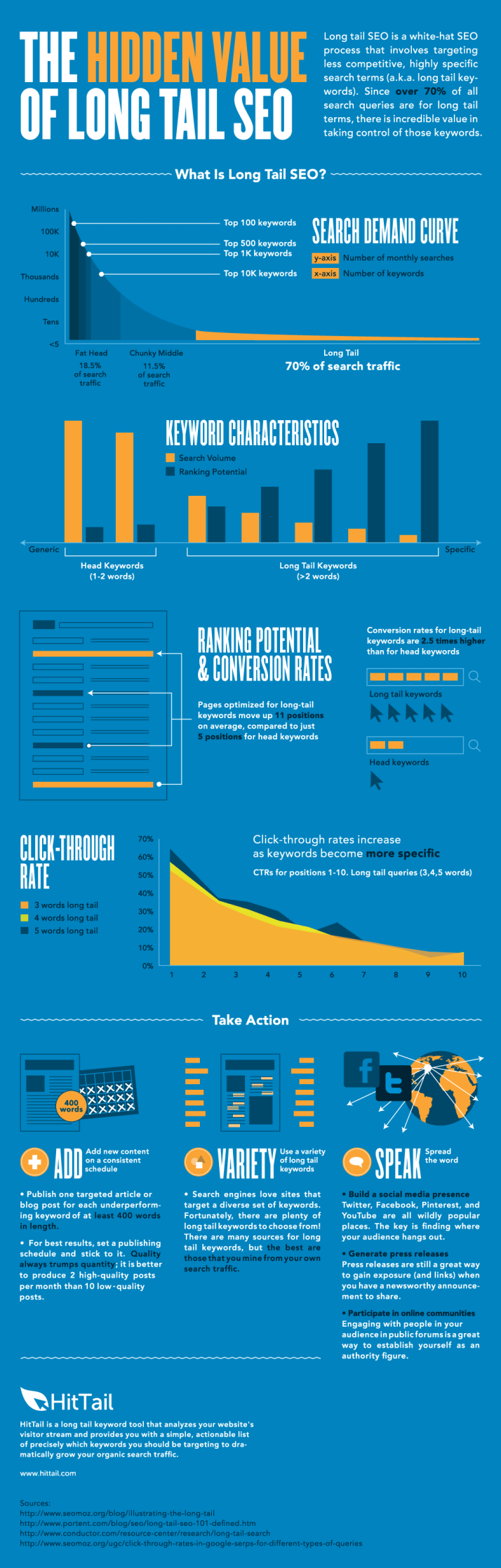
However, over 70% of all search queries are for longer terms which are less competitive but highly specific. One of the most popular types comes in the form of a question. For example: “How do I get my website onto the first page of Google”.
Long tail SEO is the process of targeting these types of phrases and the infographic below from HitTail shows you just how to do that.
In the ever-evolving world of digital marketing, staying ahead of the competition is crucial. Search Engine Optimization (SEO) is at the forefront of this battle for online visibility. One of the most significant challenges in SEO is ranking for keywords that are relevant to your business. Many businesses struggle to outrank their competitors and secure a spot on the coveted first page of search engine results. However, in this blog post, we’ll reveal a powerful SEO trick that can help you beat your competitors to 70% of your keywords and significantly improve your online visibility.
Understanding the SEO Landscape
Before diving into the trick that can give you an edge over your competitors, it’s essential to understand the SEO landscape and why it’s so competitive.
- Search Engine Dominance: Search engines like Google are the primary source of organic traffic for most websites. Google’s search algorithms are incredibly complex and ever-changing, making it challenging to achieve and maintain high rankings.
- Keyword Competition: Keywords are the building blocks of SEO. They are the terms and phrases people type into search engines to find information, products, or services. Popular keywords often have high competition, with numerous websites vying for the top positions.
- Competitor Analysis: To succeed in SEO, you need to keep an eye on your competitors. They are also targeting the same keywords you are, and their strategies can provide valuable insights.
The One SEO Trick That Works
Now, let’s get to the heart of the matter—how can you beat your competitors to 70% of your keywords? The secret lies in a strategy known as “Long-Tail Keywords.”
The Power of Long-Tail Keywords
Long-tail keywords are longer, more specific search phrases that users enter when they’re looking for something particular. Unlike short-tail keywords, which are general and highly competitive, long-tail keywords are often less competitive and more targeted.
Here’s why long-tail keywords are so powerful:
- Lower Competition: Long-tail keywords have less competition because they are more specific. Fewer websites are targeting these phrases, making it easier for you to rank.
- Higher Conversion Rates: Users who search for long-tail keywords are usually further along in the buying process. They know exactly what they want, so they are more likely to convert into customers.
- Improved Relevance: Long-tail keywords allow you to create highly relevant content that directly addresses the user’s query. This improves the user experience and can boost your SEO rankings.
- Voice Search Optimization: With the rise of voice-activated devices like Siri and Alexa, long-tail keywords have become even more critical. People tend to use more natural language when speaking, which often results in longer search queries.
How to Find Long-Tail Keywords
Finding and implementing long-tail keywords effectively is the key to outperforming your competitors. Here’s a step-by-step guide on how to do it:
- Keyword Research: Start with comprehensive keyword research. Use tools like Google Keyword Planner, SEMrush, or Ahrefs to identify relevant long-tail keywords in your niche.
- Analyze Competitor Keywords: Look at what keywords your competitors are ranking for. This can provide valuable insights into which long-tail keywords are worth targeting.
- Use Keyword Variations: Expand your keyword list by including variations and synonyms. This ensures you cover a wide range of potential search queries.
- Consider User Intent: Think about the intent behind the keywords. What problem is the user trying to solve? Tailor your content to address this intent.
- Create Quality Content: Once you have your list of long-tail keywords, create high-quality content around them. Each piece of content should be informative, engaging, and directly relevant to the keyword.
- Optimize On-Page SEO: Ensure your on-page SEO is top-notch. This includes optimizing titles, meta descriptions, headers, and image alt tags.
Case Study: The Power of Long-Tail Keywords
To illustrate the effectiveness of long-tail keywords, let’s consider a real-world case study.
Scenario:
Imagine you run an online pet supply store. Your main competitor is a well-established, large e-commerce site that sells a wide range of products, including pet supplies.
Short-Tail Keyword: “Pet Supplies”
Your competitor is already ranking high for the short-tail keyword “Pet Supplies.” Trying to outrank them for this term would be incredibly challenging and time-consuming. It’s a highly competitive keyword with a broad audience.
Long-Tail Keyword: “Organic Grain-Free Cat Food for Senior Cats”
Now, consider a long-tail keyword like “Organic Grain-Free Cat Food for Senior Cats.” This keyword is much more specific and has significantly lower competition. By creating a dedicated product page or blog post around this long-tail keyword, you have a much better chance of ranking higher in search results.
You’re not only competing with fewer websites for this keyword, but you’re also targeting a highly relevant audience—people specifically looking for organic, grain-free cat food for their senior cats.
Implementing Long-Tail Keywords in Your Strategy
Now that you understand the power of long-tail keywords, it’s time to integrate them into your SEO strategy effectively.
- Content Creation: Develop a content calendar that includes blog posts, product descriptions, and landing pages optimized for long-tail keywords.
- Quality Over Quantity: Focus on creating high-quality, informative content that addresses user intent. Don’t just stuff keywords into your content; make it valuable to your audience.
- Monitor and Adjust: Regularly monitor your rankings and website traffic. Use tools like Google Analytics and Google Search Console to track your progress. If certain long-tail keywords aren’t performing as expected, adjust your strategy accordingly.
- Local SEO: If your business serves a specific geographic area, consider incorporating location-based long-tail keywords to attract local customers.
- Voice Search Optimization: As mentioned earlier, long-tail keywords are essential for voice search optimization. Think about how people would ask questions verbally and tailor your content accordingly.
- User Experience: Ensure your website provides an excellent user experience. Fast loading times, mobile optimization, and easy navigation all contribute to higher rankings.
Conclusion
In the highly competitive world of SEO, beating your competitors to the top of search engine rankings can seem like an uphill battle. However, by leveraging the power of long-tail keywords, you can gain a significant advantage. Long-tail keywords offer lower competition, higher conversion rates, and improved relevance, making them a valuable addition to your SEO strategy.
Remember that SEO is an ongoing process. It requires continuous optimization, monitoring, and adaptation. By consistently creating high-quality content around long-tail keywords and providing an excellent user experience, you can not only beat your competitors but also establish a strong online presence and attract valuable organic traffic to your website.
So, don’t wait any longer. Start researching and implementing long-tail keywords in your SEO strategy today, and watch your website climb the search engine rankings, leaving your competitors behind in the dust.

Author:
Mark Ford