In the ever-evolving world of online marketing and search engine optimization (SEO), keeping your website in Google’s good graces is essential. Google regularly updates its search algorithms to provide users with the most relevant and valuable search results.
While these updates aim to improve the user experience, they can sometimes have a detrimental impact on website rankings and traffic. To avoid falling victim to a website-crippling Google update, you need to stay informed and adapt your SEO strategies accordingly.
In this blog post, we’ll explore ten effective ways to safeguard your website’s ranking and visibility.
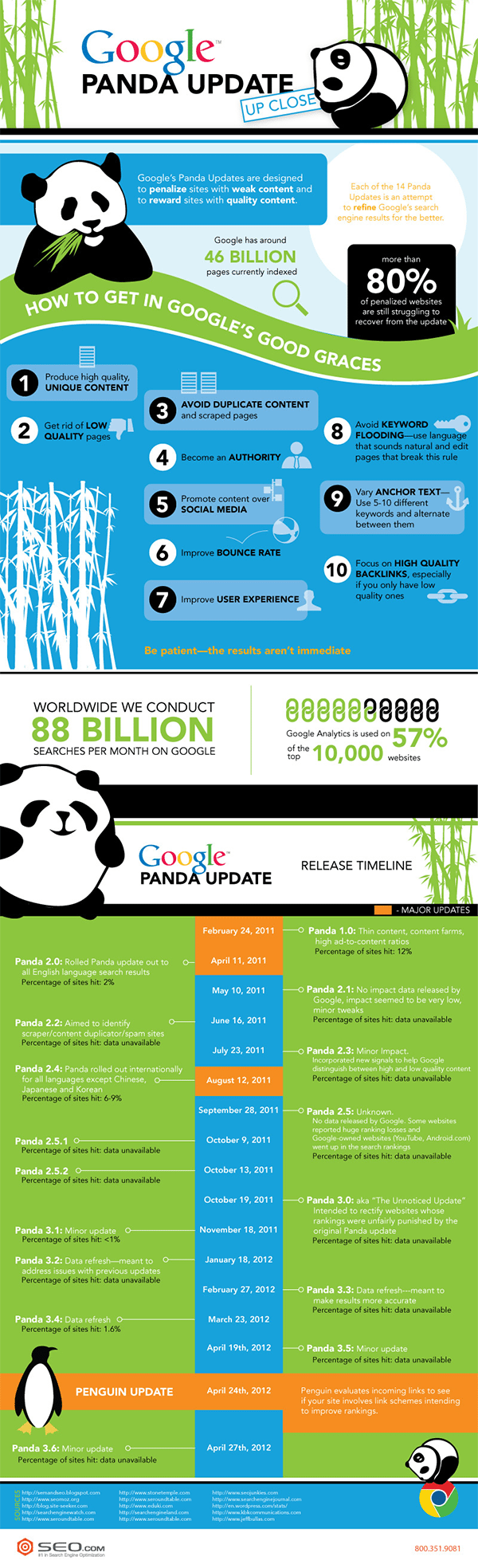
The infographic below from SEO.com gives you a timeline of how the Panda update started along with some tips on how to make sure that you steer clear of being penalised.
Create High-Quality, Relevant Content
Google’s primary goal is to provide its users with the best possible search results. To do this, it prioritizes websites that offer valuable, informative, and relevant content. High-quality content not only attracts visitors but also encourages them to spend more time on your site, reducing your bounce rate – an important factor for Google’s ranking algorithm.
To create high-quality content:
- a. Conduct thorough keyword research to identify topics that align with your niche.
- b. Write in-depth articles that provide valuable insights and answer user queries.
- c. Use proper formatting, including headings, bullet points, and images, to enhance readability.
- d. Regularly update and refresh your content to keep it current and accurate.
Mobile Optimization Is Non-Negotiable
Google’s mobile-first indexing means that it primarily uses the mobile version of your website for ranking and indexing. Therefore, your website must be mobile-friendly to avoid penalties and maintain or improve your rankings.
To ensure mobile optimization:
- a. Use a responsive design that adapts to different screen sizes and devices.
- b. Optimize images and other media for faster loading times on mobile.
- c. Test your website’s mobile performance using Google’s Mobile-Friendly Test tool.
Prioritize Page Speed
Page speed has become an increasingly critical factor for both user experience and SEO. Google rewards websites that load quickly and penalizes those that are slow to load. A slow website can lead to higher bounce rates and lower rankings.
To improve your website’s page speed:
- a. Compress images and use optimized file formats.
- b. Minimize HTTP requests by reducing the number of elements on your pages.
- c. Use browser caching to store frequently accessed resources locally.
- d. Invest in a reliable hosting provider and consider content delivery networks (CDNs) to distribute content efficiently.
Secure Your Website with HTTPS
Google places a high priority on website security. In 2014, it announced that HTTPS is a ranking signal, meaning that secure websites receive a slight ranking boost compared to their non-secure counterparts. Additionally, web browsers now display warning messages for non-secure websites, which can deter users.
To secure your website with HTTPS:
- a. Obtain an SSL certificate from a trusted certificate authority.
- b. Configure your website server to use HTTPS.
- c. Update internal links to use the HTTPS protocol.
Avoid Duplicate Content
Duplicate content can confuse search engines and dilute your website’s authority. It can occur within your site or when other websites copy your content without attribution. To avoid issues related to duplicate content:
- a. Use canonical tags to specify the preferred version of a page when multiple versions exist.
- b. Regularly monitor your site for scraped or stolen content and take appropriate action, such as filing DMCA takedown requests.
- c. Keep your content unique and avoid excessive repetition.
Optimize On-Page SEO Elements
On-page SEO refers to the elements within your web pages that you can control directly. Optimizing these elements helps Google understand your content better and can positively impact your rankings. Key on-page SEO elements to focus on include:
- a. Title tags: Craft unique, descriptive titles for each page, incorporating relevant keywords.
- b. Meta descriptions: Write compelling meta descriptions that entice users to click on your links in search results.
- c. Header tags: Use H1, H2, and H3 tags to structure your content and make it more readable.
- d. Image alt text: Include descriptive alt text for images to improve accessibility and provide context to search engines.
- e. Internal linking: Create a logical internal linking structure to help users navigate your site and improve crawlability.
Build High-Quality Backlinks
Backlinks, also known as inbound links, are links from other websites to yours. They are a strong signal of trust and authority to search engines. However, not all backlinks are created equal. It’s crucial to focus on building high-quality backlinks from reputable sources in your industry or niche.
To build high-quality backlinks:
- a. Create outstanding content that naturally attracts links from other websites.
- b. Reach out to industry influencers and request guest post opportunities or interviews.
- c. Participate in online communities and forums, where you can share your expertise and earn backlinks.
- d. Monitor your backlink profile and disavow low-quality or spammy links.
Monitor and Analyze Your Website Regularly
Staying proactive is key to avoiding potential issues from Google updates. Regularly monitor and analyze your website’s performance using tools like Google Analytics and Google Search Console. These tools provide valuable insights into your site’s traffic, user behavior, and potential issues that need addressing.
Key areas to monitor include:
- a. Organic search traffic trends.
- b. Bounce rates and page load times.
- c. Keyword rankings.
- d. Crawl errors and indexing issues.
Stay Informed About Google Updates
Google continually updates its search algorithms, and some updates can have a significant impact on website rankings. To avoid being caught off guard, stay informed about Google updates by following official announcements and reputable SEO news sources. When a major update is announced, take the time to understand its implications and adjust your SEO strategy accordingly.
Diversify Your Traffic Sources
Relying solely on Google for traffic can be risky, especially when algorithm changes can lead to significant fluctuations. Diversifying your traffic sources can provide a safety net in case of ranking drops. Some strategies to diversify traffic include:
- a. Invest in social media marketing to attract visitors from platforms like Facebook, Twitter, and Instagram.
- b. Create engaging email marketing campaigns to retain and re-engage your audience.
- c. Explore paid advertising options, such as Google Ads or Facebook Ads.
- d. Develop partnerships and collaborations within your industry to drive referral traffic.
Conclusion
While Google updates can be a source of concern for website owners and SEO professionals, they are also an opportunity to improve your site’s performance and user experience. By following these ten strategies, you can minimize the risk of a website-crippling Google update and maintain a strong online presence.
Remember that SEO is an ongoing process, and staying proactive and adaptable is key to long-term success in the ever-changing digital landscape.

Author:
Mark Ford