
Are you trying to expand your business into international markets but struggling to get noticed online? Want to learn the most effective SEO tactics to boost your global visibility and reach more customers worldwide?
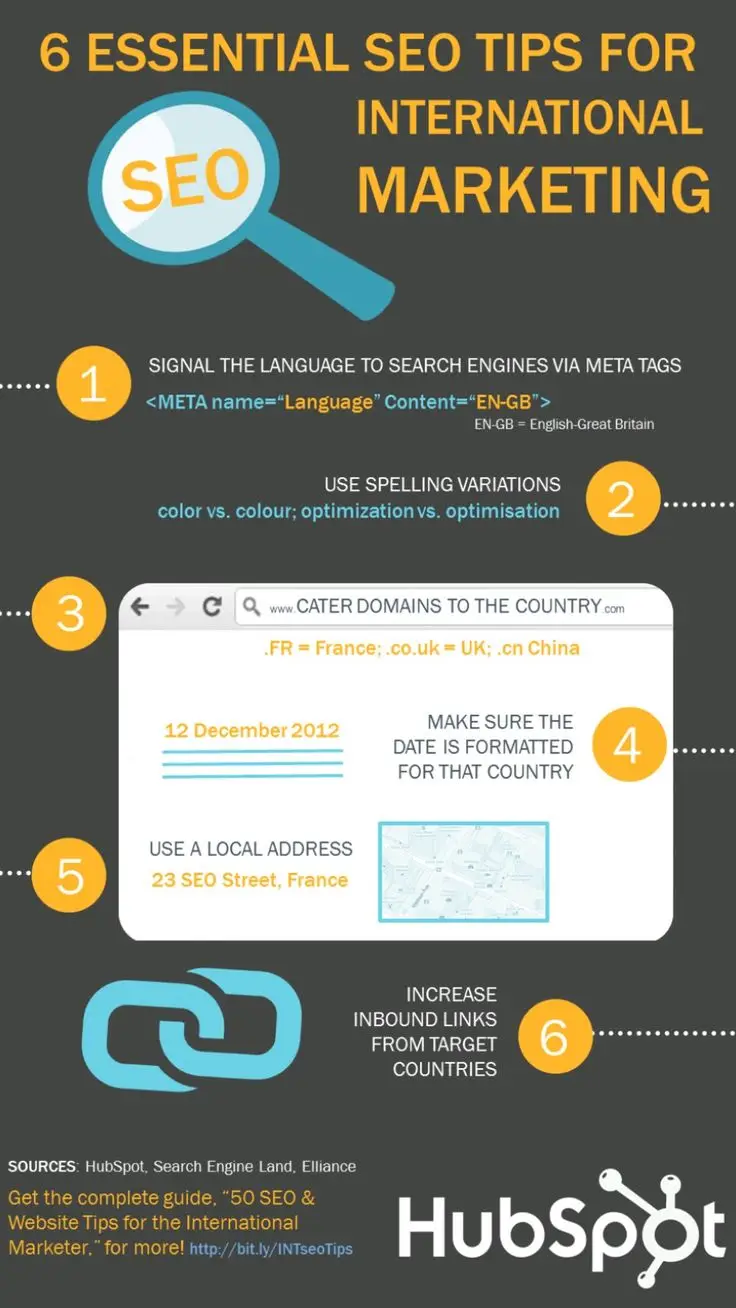
You’ll find some SEO basics in this infographic.
Here’s a summary of what’s covered:
- Signal the Language to Search Engines via Meta Tags
- Use Spelling Variations
- Cater Domains to the Country
- Make Sure the Date Is Formatted for That Country
- Use a Local Address
- Increase Inbound Links from Target Countries
Check out the post below for more.
Expanding your business across borders is both exciting and challenging. While digital platforms make it easier than ever to reach a global audience, visibility depends heavily on search engine optimisation. Without the right SEO strategy, even the best products and services may remain hidden from international customers. This is where international SEO becomes essential for ensuring your website performs strongly across multiple regions.
By carefully aligning your website with the expectations of different countries and cultures, you can create a digital presence that feels local while operating on a global scale. From language targeting to inbound links, each element plays a role in building trust and improving rankings in international markets. In this guide, we’ll walk through six proven tactics to help your business break borders and thrive worldwide.
Signal the Language to Search Engines via Meta Tags
Search engines need clear signals to understand which audience your content is intended for. Meta tags are a simple but powerful way to specify the language and region your website is targeting. Using language codes like EN-GB for British English or EN-US for American English allows search engines to deliver your site to the right audience. This ensures your content is presented to users in their familiar context, improving relevance and engagement.
- Add a “language” meta tag to every page of your site to specify the content’s primary language.
- Use correct regional codes (e.g., EN-GB for the UK, EN-US for the US) to distinguish language variations.
- Ensure consistency across your site so that signals don’t conflict with one another.
- Regularly check your tags when launching new content to avoid errors or duplication.
Use Spelling Variations
Language is not just about words—it’s about cultural familiarity. Spelling differences between regions, such as “colour” in the UK and “color” in the US, can influence search behaviour. By recognising and integrating these variations into your content, you improve your chances of ranking in multiple regions. This attention to detail shows audiences that you’re invested in communicating with them directly.
- Research regional spelling preferences in your target markets before writing content.
- Create variations of key terms and phrases to capture wider search intent.
- Avoid keyword stuffing by blending spelling variations naturally into the text.
- Update content over time to reflect the language trends of your target audience.
Cater Domains to the Country
Using country-specific domains is one of the most effective ways to boost local visibility. A French audience will naturally trust a .fr domain more than a generic .com site. Similarly, UK users may prefer .co.uk, while Chinese audiences lean toward .cn. Tailoring your domain to the country not only strengthens SEO but also builds credibility with local customers.
- Choose a country-code top-level domain (ccTLD) for each region you serve.
- Host websites locally when possible to reinforce regional relevance.
- Consider subdomains or subdirectories if managing multiple ccTLDs is too complex.
- Align your domain strategy with both technical SEO and brand consistency goals.
Make Sure the Date Is Formatted for That Country
Details matter when trying to build trust with an international audience. Something as small as how a date is formatted can create confusion or undermine professionalism. For instance, “12/05/2025” means 12 May in the UK but December 5th in the US. Ensuring your site uses region-specific date formats shows cultural awareness and prevents misunderstandings.
- Research the preferred date format in each country you target.
- Apply consistent formatting across product pages, blogs, and contact details.
- Test localisation settings on your CMS or e-commerce platform for accuracy.
- Avoid using ambiguous shorthand formats that may confuse international users.
Use a Local Address
Search engines reward businesses that demonstrate strong local relevance. Including a physical address within the target country helps establish credibility and improve local search rankings. Even if your business is global, presenting a local presence makes it easier for customers to trust and connect with you. It also increases the likelihood of appearing in map and directory searches.
- Add a local office or representative address to your website’s contact page.
- Register your business on local directories and mapping platforms.
- Ensure your address is consistent across all digital channels for stronger SEO signals.
- Consider using local phone numbers alongside addresses for added credibility.
Increase Inbound Links from Target Countries
Inbound links remain a cornerstone of SEO, but their value is even greater when they come from target countries. Links from reputable local sites show search engines that your content is trusted within that market. This boosts rankings and makes your site appear more authentic to local audiences. Building a strong network of regional backlinks is a long-term investment in international visibility.
- Reach out to local influencers, bloggers, and media outlets for link opportunities.
- Publish guest posts on authoritative sites within your target countries.
- Sponsor local events or charities to generate relevant backlinks.
- Monitor your backlink profile and aim for a balance of global and local sources.
Conclusion
Breaking into international markets requires more than simply translating your website. True international SEO is about showing cultural awareness, aligning with local search habits, and building trust in every region you target. From language signals and spelling variations to local domains, addresses, and inbound links, each tactic works together to strengthen your online presence across borders.
By investing time and effort into these strategies, you can expand your reach, improve your search visibility, and win the trust of global audiences. Businesses that treat SEO as a cultural bridge rather than a technical checklist will be best placed to thrive in today’s interconnected digital marketplace.

Author:
Mark Ford