Are you looking for ways to improve your website landing page design? Want the traffic you generate from your marketing to result in more revenue for your business?
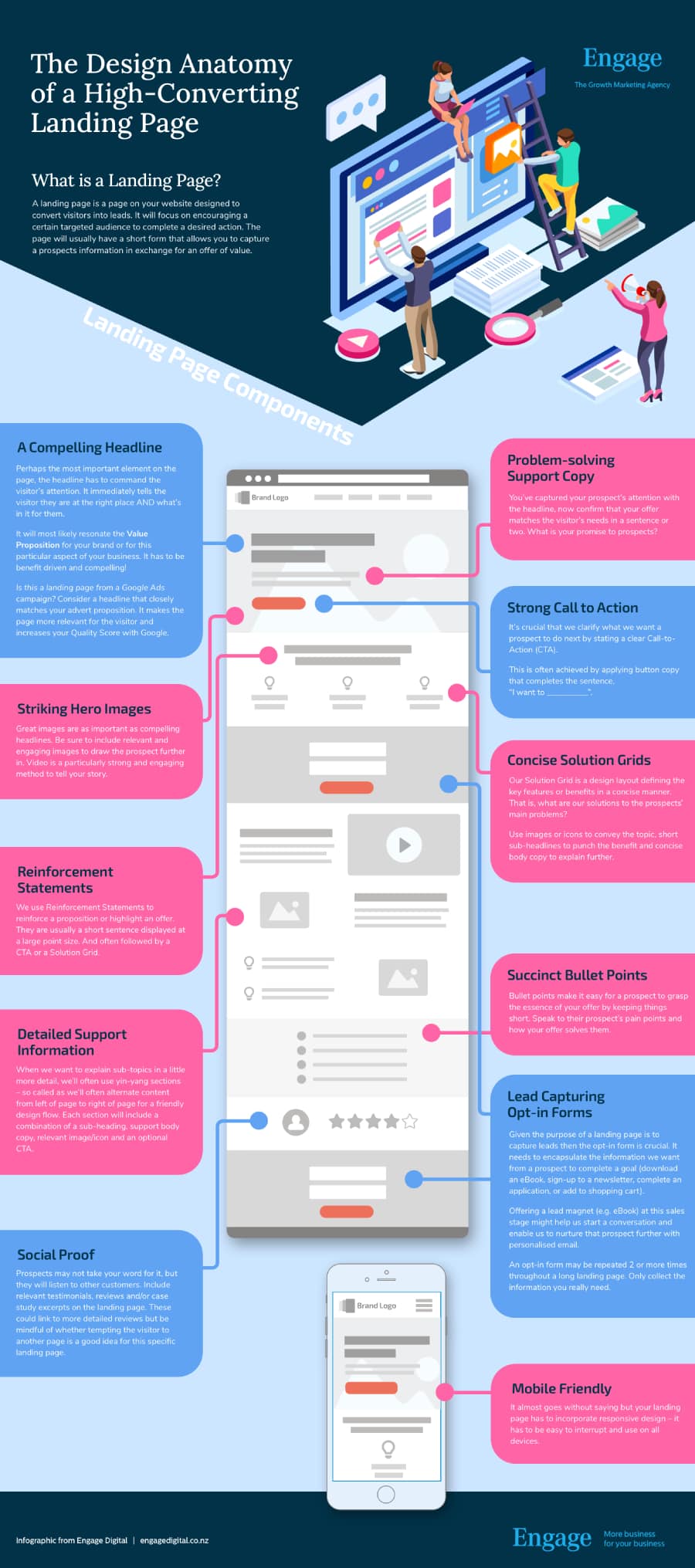
Engage Digital share their design tips in this infographic.
Here are a few things they cover:
- A compelling headline
- Problem solving support copy
- Striking hero images
- Strong call to action
- Concise solution grids
- Lead capture forms
Check out the infographic for more detail.
In today’s digital age, having a high-converting landing page is essential for businesses looking to generate leads, drive sales, and achieve online success. A landing page is a standalone web page designed with a specific purpose in mind, such as promoting a product, service, or event.
When done right, a well-designed landing page can significantly boost conversion rates and increase your return on investment (ROI). In this guide, we’ll walk you through the key elements of creating a high-converting landing page that engages visitors and converts them into customers.
A Compelling Headline
The headline is the first thing visitors see when they land on your page. It should be attention-grabbing, relevant, and speak directly to your target audience’s pain points or desires. Keep it concise and clear, ideally using action-oriented language that encourages visitors to keep reading.
A strong headline sets the tone for the rest of the page and entices users to learn more about your offering.
Problem-Solving Support Copy
Once you’ve captured your visitors’ attention with a compelling headline, it’s time to address the problem your product or service solves. Use persuasive support copy to highlight the pain points your audience is experiencing and demonstrate how your offering provides the solution they need.
Be empathetic and relatable, and focus on the benefits rather than just the features of your product or service.
Striking Hero Images
Visuals are powerful tools to engage and captivate your audience. Incorporate high-quality, striking hero images that resonate with your message and complement your headline and support copy.
Use images that showcase your product or service in action, or evoke the emotions you want your audience to associate with your brand. Remember, a picture is worth a thousand words, so choose your hero image wisely.
Strong Call to Action
A high-converting landing page must have a clear and prominent call to action (CTA). The CTA is what directs your visitors to take the desired action, whether it’s making a purchase, signing up for a newsletter, or requesting more information.
Use action-oriented language that creates a sense of urgency, such as “Buy Now,” “Get Started,” or “Limited Time Offer.” Make sure the CTA stands out visually, using contrasting colors or buttons to draw attention to it.
Concise Solution Grids
If your landing page offers multiple product or service options, organize them into concise solution grids. This layout allows visitors to compare different packages or plans quickly and easily, helping them make an informed decision.
Include key features and pricing information in a clear and visually appealing format. Remember, simplicity is key, so avoid overwhelming your audience with too many options or excessive details.
Detailed Support Information
While brevity is essential for a landing page, some visitors may still seek more in-depth information before making a decision. Incorporate a section with detailed support information, such as FAQs or a product/service breakdown.
This demonstrates transparency and builds trust with potential customers. However, keep this section collapsible or separate from the main content to avoid overwhelming those who prefer a quick overview.
Succinct Bullet Points
Bullet points are an excellent way to present essential information in a scannable and digestible format. Use them to highlight the key benefits of your offering, presenting them in a concise and easy-to-read manner.
This approach caters to users who skim through content quickly, ensuring they grasp the most important points and increasing the likelihood of conversion.
Lead Capture Forms
To convert visitors into leads, integrate lead capture forms strategically on your landing page. Keep the form simple, asking for only the most crucial information. The fewer fields users need to fill out, the more likely they are to complete the form.
Consider offering an incentive, such as a discount or a valuable resource, in exchange for their contact details. This will help build your email list and give you the opportunity to nurture leads over time.
Social Proof
Social proof is a powerful psychological trigger that can significantly boost the credibility of your offering. Incorporate testimonials, reviews, case studies, or logos of well-known clients to showcase the positive experiences of past customers.
This builds trust and confidence in your product or service, assuring potential customers that they are making the right decision.
Mobile Friendly
In today’s mobile-first world, it’s crucial that your landing page is optimized for mobile devices. Ensure that your page layout, images, and forms adapt seamlessly to different screen sizes and resolutions. A responsive design enhances the user experience and prevents potential customers from bouncing off your page due to poor mobile optimization.
Conclusion
In conclusion, designing a high-converting landing page requires careful consideration of various elements that work together to engage visitors and drive them towards taking action. From a compelling headline and problem-solving support copy to striking visuals, strong CTAs, and social proof, each component plays a crucial role in persuading visitors to convert.
By creating a landing page that addresses your audience’s needs and pain points while providing a seamless user experience, you can boost conversions and achieve your business goals effectively.

Author:
Mark Ford