Is your digital marketing strategy failing to hit the spot with your customers? Wondering where you could be going wrong?
HubSpot share 9 mistakes you should stop making in this infographic.
I’ve summarised the key points below:
- Creating Ugly Content
- Being Boring
- Not Monitoring Social Media
- Bad Automation
- Bad Targeting
- Misleading Messaging
- Copyright Infringement
- Email Spamming
- Interruptive Marketing
Hope the infographic helps!
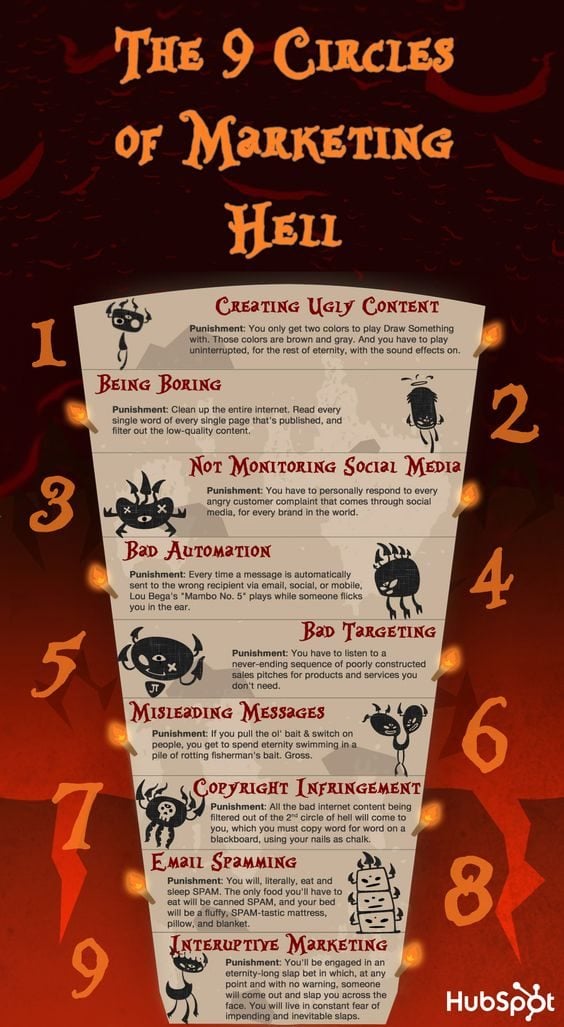
In the digital age, marketing is more critical than ever. However, navigating the digital marketing landscape can be tricky, and one wrong move can send your brand spiraling into a marketing hellscape. Here are nine digital marketing mistakes that could doom your brand to the fiery depths.
Creating Ugly Content
Creating visually appealing and engaging content is essential for capturing and retaining your audience’s attention. For small businesses, the impact of first impressions cannot be overstated. Ugly content can repel potential customers and undermine the credibility of your brand. Here are in-depth tips and guidance to help you avoid creating ugly content and ensure your digital presence is visually compelling.
- Understand the Basics of Good Design
Before diving into content creation, it’s crucial to understand the basics of good design. This includes principles like balance, contrast, alignment, proximity, repetition, and simplicity. Familiarize yourself with these concepts to create visually appealing and coherent content.
- Balance: Ensure elements are evenly distributed to create a sense of stability. Symmetrical balance involves mirroring elements on either side of a central axis, while asymmetrical balance uses different elements to create an equilibrium.
- Contrast: Use contrasting colors, shapes, and sizes to highlight important elements and create visual interest.
- Alignment: Align text and images to create a clean, orderly appearance. Consistent alignment helps guide the viewer’s eye and makes your content easier to read.
- Proximity: Group related items together to show their connection and improve readability.
- Repetition: Repeat design elements like colors, fonts, and shapes to create a cohesive look.
- Simplicity: Avoid clutter. Use whitespace effectively to allow elements to breathe and prevent your content from looking overwhelming.
- Invest in High-Quality Visuals
High-quality visuals are a cornerstone of attractive content. This includes images, videos, and graphics. Invest in professional photography and design services if possible. If budget constraints are an issue, consider these alternatives:
- Stock Photos and Graphics: Use high-quality stock photos from reputable sites like Unsplash, Pexels, or Shutterstock. Ensure they align with your brand’s aesthetic and message.
- DIY Photography: If you need to create your own visuals, invest in a good camera or smartphone with a high-resolution camera. Learn basic photography techniques, such as proper lighting and composition.
- Graphic Design Tools: Utilize graphic design tools like Canva, Adobe Spark, or Crello to create professional-looking graphics without the need for advanced design skills. These tools offer templates and easy-to-use interfaces that can help you maintain a consistent visual style.
- Prioritize Consistency
Consistency is key to creating a cohesive brand identity. This involves using a consistent color palette, typography, and style across all your content. Develop brand guidelines to help maintain this consistency.
- Color Palette: Choose a color palette that reflects your brand’s personality. Use these colors consistently in your content to create a recognizable and unified look. Tools like Adobe Color or Coolors can help you create a harmonious color scheme.
- Typography: Select two to three fonts that complement each other and use them consistently. Typically, you’ll need a primary font for headings and a secondary font for body text. Ensure your fonts are legible across different devices and sizes.
- Style Guide: Develop a style guide that outlines your brand’s visual elements, tone of voice, and design rules. This document will help anyone creating content for your brand stay on track and maintain visual consistency.
- Focus on User Experience (UX)
Good design is not just about aesthetics; it’s also about functionality and user experience. Your content should be easy to navigate and consume. Consider these UX principles:
- Mobile-Friendly Design: Ensure your website and content are optimized for mobile devices. Many users access content on their smartphones, and a poor mobile experience can drive them away. Use responsive design techniques to adapt your layout to different screen sizes.
- Readability: Use legible fonts and appropriate font sizes. Break up long paragraphs with headings, subheadings, bullet points, and images to make your content easier to read.
- Navigation: Ensure your website has a clear and intuitive navigation structure. Users should be able to find what they’re looking for quickly and easily.
- Use Visual Hierarchy
Visual hierarchy helps guide the viewer’s eye to the most important elements first. This can be achieved through the strategic use of size, color, contrast, and placement.
- Size: Make important elements larger to draw attention. For example, your headlines should be larger than your body text.
- Color and Contrast: Use contrasting colors to highlight key information. Bright or bold colors can draw attention to calls to action or important announcements.
- Placement: Position critical elements, such as your logo or main call to action, in prominent areas where the eye naturally falls, such as the top-left corner or the center of the screen.
- Leverage White Space
White space, or negative space, refers to the empty areas around and between elements of your design. Effective use of white space can enhance readability and create a more balanced and aesthetically pleasing layout.
- Enhances Focus: White space directs attention to your content by reducing visual clutter and allowing important elements to stand out.
- Improves Legibility: Ample spacing around text blocks makes your content easier to read and prevents it from feeling overwhelming.
- Creates Elegance: A generous use of white space can give your design a clean, sophisticated look.
- Incorporate Engaging Elements
To keep your audience engaged, incorporate various types of media and interactive elements into your content. This can include:
- Videos: Use videos to explain complex topics, showcase products, or share customer testimonials. Videos are highly engaging and can significantly increase the time users spend on your site.
- Infographics: Visualize data and information with infographics. They are an excellent way to present statistics and processes in an easily digestible format.
- Interactive Content: Polls, quizzes, and interactive infographics can engage your audience and encourage them to spend more time on your site.
- Animations and GIFs: Subtle animations and GIFs can add interest and draw attention to specific elements without being overly distracting.
- Optimize for Speed
Slow-loading content can frustrate users and lead to higher bounce rates. Optimize your images, videos, and other media to ensure they load quickly.
- Image Compression: Use tools like TinyPNG or JPEGmini to compress images without losing quality. This reduces file size and improves loading times.
- Lazy Loading: Implement lazy loading for images and videos. This technique delays the loading of media until it is needed, speeding up initial page load times.
- Content Delivery Network (CDN): Use a CDN to distribute your content across multiple servers, reducing load times and improving performance for users worldwide.
- Test and Iterate
Finally, always test your content before publishing it. This involves checking for visual appeal, functionality, and performance.
- Preview on Different Devices: Ensure your content looks good on various devices, including desktops, tablets, and smartphones. This helps identify and fix any responsive design issues.
- Gather Feedback: Seek feedback from colleagues, friends, or a small group of your audience. They can provide valuable insights and identify areas for improvement.
- A/B Testing: Conduct A/B tests to compare different versions of your content and determine what resonates best with your audience. Use the results to refine and optimize your content.
In conclusion, creating visually appealing and engaging content is vital for small businesses looking to make a strong impression online. By understanding the basics of good design, investing in high-quality visuals, maintaining consistency, prioritizing user experience, leveraging visual hierarchy and white space, incorporating engaging elements, optimizing for speed, and continuously testing and iterating, you can avoid the pitfalls of creating ugly content. These strategies will help you capture and retain your audience’s attention, build credibility, and ultimately drive the success of your digital marketing efforts.
Being Boring
In today’s fast-paced digital world, capturing and retaining your audience’s attention is more challenging than ever. If your content is boring, you risk losing potential customers and failing to make an impact. Here are in-depth tips and guidance to help small businesses avoid being boring and create engaging, exciting content that resonates with their audience.
- Know Your Audience
Understanding your audience is the foundation of creating engaging content. You need to know who they are, what they care about, and what type of content resonates with them.
- Create Detailed Buyer Personas: Develop detailed buyer personas that include demographics, interests, pain points, and preferences. This will help you tailor your content to meet their needs and interests.
- Conduct Audience Research: Use surveys, social media insights, and analytics tools to gather data on your audience’s behavior and preferences. Pay attention to what types of content they engage with the most.
- Engage Directly: Interact with your audience through comments, direct messages, and social media polls. Ask them what topics they’re interested in and what kind of content they would like to see.
- Tell Compelling Stories
Storytelling is a powerful way to make your content more engaging and relatable. People love stories because they evoke emotions and create a connection.
- Use a Narrative Structure: Craft your content with a clear beginning, middle, and end. Introduce a problem, present a journey or process, and conclude with a resolution.
- Incorporate Personal Anecdotes: Share personal stories or experiences related to your business or industry. This adds a human touch and makes your content more authentic.
- Highlight Customer Stories: Feature testimonials or case studies from satisfied customers. This not only provides social proof but also shows real-life applications of your products or services.
- Inject Personality and Humor
Adding personality and humor to your content can make it more enjoyable and memorable. However, it’s important to strike the right balance and stay true to your brand’s voice.
- Define Your Brand Voice: Determine the tone and style that best represent your brand. Whether it’s casual, professional, witty, or heartfelt, consistency is key.
- Use Humor Wisely: Incorporate humor that is appropriate for your audience and industry. Avoid controversial or offensive jokes. Light-hearted humor can make your content more approachable and fun.
- Be Authentic: Show the human side of your business. Share behind-the-scenes content, introduce your team, and let your audience see the people behind the brand.
- Create Interactive Content
Interactive content engages your audience by encouraging participation and interaction. This type of content can significantly increase engagement and retention.
- Polls and Quizzes: Create polls and quizzes that are relevant to your audience’s interests. These can be fun and informative, providing value while keeping your audience engaged.
- Live Streams and Webinars: Host live streams and webinars to interact with your audience in real-time. This allows for direct engagement and immediate feedback.
- Interactive Infographics: Use interactive infographics to present information in a visually appealing and engaging way. Include clickable elements, animations, and other interactive features.
- Use Visual and Multimedia Elements
Visual and multimedia elements can make your content more dynamic and engaging. Incorporating images, videos, and graphics can help break up text and maintain your audience’s interest.
- High-Quality Images and Graphics: Use high-quality images and graphics that are relevant to your content. Avoid generic stock photos and aim for visuals that add value.
- Videos: Incorporate videos to explain concepts, demonstrate products, or share stories. Videos are highly engaging and can convey information more effectively than text alone.
- GIFs and Animations: Use GIFs and animations to add a touch of fun and movement to your content. These can be particularly effective on social media platforms.
- Provide Value and Solve Problems
Your content should provide value to your audience by addressing their needs, answering their questions, and solving their problems.
- Educational Content: Create educational content that teaches your audience something new or helps them solve a problem. This could include how-to guides, tutorials, and tips.
- Expert Insights: Share expert insights and industry knowledge. This positions your brand as a thought leader and provides valuable information to your audience.
- Actionable Advice: Provide actionable advice that your audience can implement immediately. Practical tips and steps make your content more useful and engaging.
- Stay Current and Relevant
Keeping your content current and relevant helps maintain your audience’s interest and shows that your brand is in tune with the latest trends and topics.
- Trend Analysis: Monitor industry trends and news to stay updated on what’s happening. Create content that addresses these trends and demonstrates your expertise.
- Seasonal Content: Create content around seasonal events, holidays, and themes. This can make your content timely and relatable.
- Timely Responses: Respond to current events and trending topics in your content. This shows that your brand is active and engaged with the world around it.
- Encourage User-Generated Content
User-generated content (UGC) is a powerful way to engage your audience and build community. It also provides social proof and authentic content from real customers.
- Customer Testimonials and Reviews: Encourage your customers to share their experiences and reviews. Feature these on your website and social media channels.
- Social Media Campaigns: Run social media campaigns that encourage your audience to share their own content related to your brand. Use hashtags to collect and feature this content.
- Contests and Challenges: Host contests and challenges that require user participation. This not only generates content but also increases engagement and excitement around your brand.
- Utilize Data and Analytics
Data and analytics can provide valuable insights into what types of content resonate with your audience and drive engagement.
- Track Performance: Use analytics tools to track the performance of your content. Look at metrics like views, shares, comments, and conversion rates.
- Analyze Trends: Identify trends in your data to see what types of content perform best. Use this information to refine your content strategy.
- Continuous Improvement: Regularly review your content and make adjustments based on your findings. Continuously improve your content to keep it fresh and engaging.
- Be Bold and Experiment
Don’t be afraid to take risks and experiment with new ideas. Bold and innovative content can set your brand apart and capture your audience’s attention.
- Try New Formats: Experiment with different content formats, such as podcasts, interactive videos, or virtual reality experiences. Diversifying your content can keep your audience engaged.
- Collaborate with Influencers: Partner with influencers or other brands to create unique and engaging content. Collaborations can introduce your brand to new audiences and add credibility.
- Pilot New Ideas: Test new content ideas on a small scale before rolling them out more broadly. This allows you to gauge audience reaction and refine your approach.
In conclusion, avoiding boring content is essential for small businesses looking to stand out in a competitive digital landscape. By understanding your audience, telling compelling stories, injecting personality and humor, creating interactive content, using visual and multimedia elements, providing value, staying current, encouraging user-generated content, utilizing data, and being bold in your experimentation, you can create engaging and exciting content that resonates with your audience. These strategies will help you build stronger connections, foster loyalty, and ultimately drive the success of your digital marketing efforts.
Not Monitoring Social Media
Social media has become a cornerstone of digital marketing for businesses of all sizes. However, many small businesses fall into the trap of not effectively monitoring their social media channels. This oversight can lead to missed opportunities, unmanaged customer complaints, and a tarnished brand reputation. Here are in-depth tips and guidance to help small businesses avoid the pitfalls of not monitoring social media.
- Establish Clear Goals and Objectives
Before diving into social media monitoring, it’s essential to establish clear goals and objectives. Understand what you want to achieve with your social media presence.
- Define Success Metrics: Identify key performance indicators (KPIs) such as engagement rates, reach, sentiment, and conversion rates. These metrics will help you measure the success of your social media efforts.
- Set Specific Goals: Goals could include increasing brand awareness, driving website traffic, generating leads, or improving customer service. Having clear goals will guide your monitoring efforts and help you focus on what matters most.
- Use Social Media Monitoring Tools
Invest in social media monitoring tools to streamline the process and ensure you don’t miss any important mentions or interactions.
- Popular Tools: Consider using tools like Hootsuite, Sprout Social, Buffer, or Mention. These platforms offer comprehensive monitoring features, including keyword tracking, sentiment analysis, and real-time notifications.
- Custom Alerts: Set up custom alerts for your brand name, product names, key industry terms, and competitors. This will help you stay informed about relevant conversations and trends.
- Automated Reports: Schedule regular reports to review your social media performance. These reports can provide valuable insights and help you make informed decisions.
- Monitor Brand Mentions and Keywords
Tracking mentions of your brand and relevant keywords is crucial for staying on top of what people are saying about your business.
- Brand Mentions: Monitor mentions of your brand name, including variations and common misspellings. This ensures you don’t miss any important feedback or discussions.
- Relevant Keywords: Track keywords related to your industry, products, and services. This can help you identify trends, discover new opportunities, and engage in relevant conversations.
- Hashtags: Follow industry-specific hashtags as well as hashtags related to your brand or campaigns. This can provide additional insights into what your audience is talking about.
- Engage with Your Audience
Active engagement is a key component of effective social media monitoring. Responding to comments, messages, and mentions shows that you value your audience and are attentive to their needs.
- Timely Responses: Aim to respond to comments and messages within a reasonable timeframe, ideally within 24 hours. Prompt responses demonstrate your commitment to customer service.
- Personalized Replies: Avoid generic responses. Personalize your replies to show that you genuinely care about your audience’s feedback and inquiries.
- Encourage Interaction: Ask questions, create polls, and encourage your audience to share their thoughts and experiences. This fosters a sense of community and boosts engagement.
- Address Negative Feedback and Complaints
Negative feedback and complaints are inevitable, but how you handle them can make a significant difference in public perception.
- Stay Calm and Professional: Always respond to negative feedback calmly and professionally. Acknowledge the issue and apologize if necessary.
- Take It Offline: If a complaint requires detailed discussion, ask the customer to direct message you or provide contact information for further assistance. This shows you are taking the issue seriously and prevents the conversation from escalating publicly.
- Follow Up: After resolving the issue, follow up with the customer to ensure their satisfaction. This can turn a negative experience into a positive one and demonstrate your commitment to customer care.
- Analyze Sentiment and Trends
Understanding the sentiment behind mentions and tracking trends can provide valuable insights into how your brand is perceived and what topics are gaining traction.
- Sentiment Analysis: Use monitoring tools to analyze the sentiment of mentions (positive, negative, neutral). This helps you gauge overall public perception and identify areas for improvement.
- Trend Identification: Keep an eye on trending topics within your industry and among your audience. Participating in relevant trends can boost your visibility and engagement.
- Monitor Competitors
Keeping an eye on your competitors’ social media activities can provide valuable insights and help you stay competitive.
- Competitor Analysis: Track your competitors’ mentions, content, and engagement strategies. Identify what works well for them and consider how you can apply similar tactics to your own strategy.
- Benchmarking: Compare your performance metrics against your competitors. This can help you identify strengths and weaknesses and set realistic goals.
- Track Influencers and Brand Advocates
Influencers and brand advocates can significantly impact your brand’s reach and reputation. Monitoring their activity can help you leverage their influence effectively.
- Identify Key Influencers: Use monitoring tools to identify influencers who are talking about your industry or brand. Build relationships with them to amplify your reach.
- Engage with Advocates: Recognize and engage with brand advocates who consistently support your brand. Show appreciation for their loyalty, and consider featuring them in your content.
- Monitor for Opportunities
Social media monitoring is not just about managing your reputation; it’s also about identifying opportunities to grow your business.
- Content Ideas: Pay attention to what your audience is talking about and what questions they have. Use this information to create content that addresses their interests and needs.
- Partnerships: Identify potential collaboration opportunities with other businesses, influencers, or organizations. Collaborative efforts can expand your reach and introduce your brand to new audiences.
- Product Feedback: Monitor feedback related to your products and services. This can provide valuable insights for product development and improvements.
- Create a Social Media Monitoring Plan
To ensure consistent and effective monitoring, develop a comprehensive plan that outlines your processes and responsibilities.
- Assign Responsibilities: Designate team members to monitor specific channels and handle different aspects of engagement. Clearly define their roles and responsibilities.
- Establish Guidelines: Create guidelines for responding to various types of interactions, including positive feedback, negative feedback, and questions. This ensures a consistent and professional approach.
- Regular Review: Schedule regular reviews of your monitoring efforts to assess performance and make necessary adjustments. This helps keep your strategy aligned with your goals.
- Leverage Customer Insights
Social media monitoring can provide valuable customer insights that can inform your broader marketing strategy and business decisions.
- Customer Preferences: Analyze the types of content your audience engages with most to understand their preferences and interests. Use this information to tailor your marketing efforts.
- Feedback Loop: Use social media as a feedback loop to gather insights on customer satisfaction, product performance, and potential areas for improvement.
- Market Research: Utilize social media monitoring to conduct informal market research. Identify gaps in the market, emerging trends, and customer pain points that your business can address.
- Continuous Improvement
Social media monitoring is an ongoing process that requires continuous improvement to stay effective.
- Stay Updated: Keep up with the latest trends, tools, and best practices in social media monitoring. This ensures you are using the most effective strategies and technologies.
- Adapt and Evolve: Be willing to adapt your monitoring strategy based on new insights and changing circumstances. Flexibility is key to staying relevant and effective.
- Feedback from Team: Regularly seek feedback from your team on the monitoring process and make improvements as needed. Collaborative efforts can enhance the effectiveness of your strategy.
In conclusion, not monitoring social media can lead to missed opportunities, unmanaged customer complaints, and a damaged brand reputation. By establishing clear goals, using monitoring tools, tracking mentions and keywords, engaging with your audience, addressing negative feedback, analyzing sentiment, monitoring competitors, tracking influencers, identifying opportunities, creating a monitoring plan, leveraging customer insights, and continuously improving your efforts, small businesses can effectively navigate the social media landscape. These strategies will help you build a positive online presence, foster customer loyalty, and drive the success of your digital marketing efforts.
Bad Automation
Automation can significantly enhance the efficiency of your marketing efforts, but bad automation can lead to impersonal interactions, repetitive messages, and ultimately a negative customer experience. Here are in-depth tips and guidance to help small businesses avoid the pitfalls of bad automation and leverage it effectively to drive success.
- Understand When to Automate
Not all tasks are suitable for automation. It’s crucial to understand which tasks can benefit from automation without compromising the quality of customer interactions.
- Routine Tasks: Automate routine and repetitive tasks such as social media posting, email scheduling, and data entry. These tasks do not require a personal touch and can free up time for more strategic activities.
- Customer Support: Use automation for initial customer support inquiries, such as chatbots to handle common questions. Ensure there’s a seamless transition to a human representative for more complex issues.
- Data Collection and Analysis: Automate data collection and analysis to gain insights into customer behavior, campaign performance, and market trends. Tools like Google Analytics, HubSpot, or SEMrush can be instrumental in this process.
- Choose the Right Tools
Selecting the right automation tools is critical to implementing effective automation strategies. The right tools can streamline your processes and enhance your overall efficiency.
- Email Marketing: Use tools like Mailchimp, Constant Contact, or SendinBlue for automated email campaigns. These platforms offer features such as segmentation, A/B testing, and detailed analytics.
- Social Media Management: Tools like Hootsuite, Buffer, and Sprout Social can automate social media scheduling and monitoring. They provide comprehensive dashboards to manage multiple accounts and track engagement.
- Customer Relationship Management (CRM): Implement CRM systems like Salesforce, Zoho CRM, or HubSpot CRM to automate sales processes, track customer interactions, and manage leads.
- Personalize Automated Interactions
One of the biggest pitfalls of bad automation is the lack of personalization. Automated messages should feel tailored to the individual recipient to maintain a personal connection.
- Dynamic Content: Use dynamic content in your emails and messages to address recipients by name and tailor content based on their preferences and behavior.
- Behavioral Triggers: Set up automation based on user behavior. For example, send personalized follow-up emails after a customer abandons a shopping cart or engages with specific content on your website.
- Segmentation: Segment your audience based on demographics, past interactions, and purchase history. This allows you to send targeted messages that are more likely to resonate with each segment.
- Maintain Human Oversight
While automation can handle many tasks, maintaining human oversight is essential to ensure the quality and appropriateness of automated interactions.
- Monitor Automated Campaigns: Regularly review and monitor your automated campaigns to ensure they are functioning correctly and achieving the desired results. Look out for any issues or areas for improvement.
- Quality Control: Periodically check the quality of automated messages and interactions. Ensure they align with your brand’s tone and provide value to your audience.
- Human Intervention: Make it easy for customers to reach a human representative if they need assistance. Automated systems should not create barriers to human interaction but rather enhance the overall experience.
- Test and Optimize
Continuous testing and optimization are crucial for successful automation. Regularly test different aspects of your automation to identify what works best and make necessary adjustments.
- A/B Testing: Conduct A/B tests on different elements of your automated campaigns, such as subject lines, call-to-actions, and message content. Use the results to optimize your strategies.
- Performance Metrics: Track key performance metrics such as open rates, click-through rates, conversion rates, and customer satisfaction. Use these insights to refine your automation processes.
- Feedback Loop: Collect feedback from your audience on their experience with your automated interactions. Use this feedback to make improvements and enhance the overall user experience.
- Avoid Over-Automation
Over-automation can lead to a lack of personalization and a disconnect between your brand and your audience. It’s important to strike the right balance.
- Limit Frequency: Avoid bombarding your audience with too many automated messages. Determine the optimal frequency for communication to keep your audience engaged without overwhelming them.
- Balance Automation and Human Touch: Ensure that automation complements human interactions rather than replacing them entirely. Personalize automated messages and provide opportunities for genuine human engagement.
- Compliance and Privacy
Adhere to privacy regulations and ensure your automation practices comply with relevant laws to build trust and protect your customers’ data.
- Data Privacy Laws: Familiarize yourself with data privacy laws such as GDPR (General Data Protection Regulation) and CCPA (California Consumer Privacy Act). Ensure your automation practices comply with these regulations.
- Permission-Based Marketing: Use opt-in methods to collect customer data and send automated messages. Ensure customers have given explicit consent to receive communications from your brand.
- Data Security: Implement robust data security measures to protect customer information. Regularly update your systems and follow best practices for data protection.
- Leverage Advanced Automation Features
Advanced automation features can enhance your marketing efforts and provide a more personalized experience for your audience.
- Artificial Intelligence (AI): Use AI-powered tools to analyze data, predict customer behavior, and personalize interactions. AI can help you create more relevant and timely automated messages.
- Customer Journey Mapping: Automate customer journey mapping to create personalized experiences based on where customers are in their buying journey. This ensures that each interaction is relevant and adds value.
- Predictive Analytics: Use predictive analytics to anticipate customer needs and behavior. This allows you to proactively engage with customers and offer solutions before they even realize they need them.
- Keep Automation Up-to-Date
Automation is not a set-it-and-forget-it strategy. Regularly update and refine your automated processes to ensure they remain effective and relevant.
- Content Updates: Regularly update the content of your automated messages to reflect new products, services, and promotions. Stale content can lead to disengagement.
- Technology Upgrades: Stay updated with the latest advancements in automation technology. Implement new features and tools that can enhance your automation efforts.
- Process Reviews: Periodically review your automation processes to identify any areas for improvement. Make adjustments based on performance data and customer feedback.
- Train Your Team
Ensure your team is well-versed in using automation tools and understands the importance of maintaining a personal touch in automated interactions.
- Training Programs: Conduct regular training sessions on how to use automation tools effectively. Ensure your team understands the features and capabilities of the tools they are using.
- Best Practices: Share best practices for creating personalized and engaging automated messages. Encourage your team to experiment and share their insights.
- Ongoing Support: Provide ongoing support and resources to help your team stay updated with the latest automation trends and techniques.
In conclusion, while automation can greatly enhance the efficiency of your marketing efforts, it’s essential to avoid the pitfalls of bad automation. By understanding when to automate, choosing the right tools, personalizing interactions, maintaining human oversight, testing and optimizing, avoiding over-automation, ensuring compliance and privacy, leveraging advanced features, keeping automation up-to-date, and training your team, small businesses can effectively leverage automation to improve customer experience, increase engagement, and drive success. These strategies will help you create a balanced and effective automation strategy that enhances your overall marketing efforts while maintaining a personal touch.
Bad Targeting
Effective targeting is crucial for the success of any marketing campaign. Bad targeting can result in wasted resources, low engagement, and missed opportunities. For small businesses with limited budgets and resources, precise targeting is even more essential to maximize ROI. Here are in-depth tips and guidance to help small businesses avoid the pitfalls of bad targeting and enhance their marketing efforts.
- Develop Detailed Buyer Personas
Creating detailed buyer personas is the foundation of effective targeting. A buyer persona is a semi-fictional representation of your ideal customer based on market research and real data about your existing customers.
- Demographics: Include age, gender, income level, education, occupation, and marital status. These basic demographic details help segment your audience.
- Psychographics: Understand your audience’s interests, hobbies, values, attitudes, and lifestyle. Psychographics provide deeper insights into what motivates your audience.
- Behavioral Data: Analyze purchasing behavior, website interactions, and engagement patterns. This data helps you understand how your audience interacts with your brand.
- Pain Points and Challenges: Identify the problems and challenges your audience faces that your product or service can solve. This helps tailor your messaging to address their needs.
- Use Data and Analytics
Leverage data and analytics to gain insights into your audience and refine your targeting strategies. Data-driven decisions are more likely to result in effective targeting.
- Website Analytics: Use tools like Google Analytics to understand who visits your website, where they come from, and how they interact with your content. Analyze metrics such as bounce rates, session duration, and conversion rates.
- Social Media Insights: Platforms like Facebook, Instagram, and LinkedIn provide detailed insights into your audience demographics and engagement. Use this data to adjust your social media targeting.
- Customer Relationship Management (CRM) Data: Analyze data from your CRM to identify patterns and trends in customer behavior. This can inform your targeting strategies and help personalize your marketing efforts.
- Segment Your Audience
Audience segmentation involves dividing your broader audience into smaller, more specific groups based on shared characteristics. This allows for more personalized and relevant marketing.
- Demographic Segmentation: Group your audience based on demographic factors like age, gender, income, and education. This helps tailor your messaging to each segment’s specific needs.
- Geographic Segmentation: Target your audience based on location. This is especially useful for local businesses or campaigns with region-specific offers.
- Behavioral Segmentation: Segment your audience based on their behavior, such as purchasing habits, product usage, and brand interactions. This allows for targeted messaging based on past behavior.
- Psychographic Segmentation: Group your audience based on their interests, values, and lifestyle. This helps create more emotionally resonant campaigns.
- Leverage Advanced Targeting Techniques
Utilize advanced targeting techniques to refine your approach and reach your ideal audience more effectively.
- Lookalike Audiences: Use lookalike audience features on platforms like Facebook and Google Ads to find new customers who resemble your existing ones. This expands your reach to people with similar characteristics and behaviors.
- Retargeting: Implement retargeting campaigns to reach people who have previously interacted with your brand. Retargeting ads can remind potential customers of your products and encourage them to convert.
- Contextual Targeting: Use contextual targeting to place your ads in relevant contexts, such as websites or content related to your industry. This ensures your ads reach an interested audience.
- Predictive Analytics: Utilize predictive analytics to anticipate customer behavior and preferences. This allows for proactive targeting based on likely future actions.
- Create Tailored Content and Messaging
Tailor your content and messaging to resonate with each audience segment. Personalized content is more likely to engage and convert your target audience.
- Personalized Emails: Use personalization tokens in your email marketing campaigns to address recipients by name and include relevant content based on their preferences and behavior.
- Dynamic Website Content: Implement dynamic content on your website that changes based on the visitor’s profile or behavior. This creates a personalized browsing experience.
- Targeted Social Media Posts: Craft social media posts that cater to the interests and preferences of different segments. Use targeted ads to reach specific groups with relevant content.
- Relevant Offers: Offer promotions and discounts tailored to each segment’s needs and interests. Personalized offers are more likely to drive conversions.
- Conduct Market Research
Market research helps you understand your target audience and market landscape, informing your targeting strategies.
- Surveys and Questionnaires: Conduct surveys to gather insights directly from your audience. Ask about their preferences, challenges, and expectations.
- Focus Groups: Organize focus groups to gain in-depth insights into your audience’s perceptions and attitudes. This qualitative data can complement your quantitative research.
- Competitor Analysis: Analyze your competitors’ targeting strategies to identify gaps and opportunities. Understand what works for them and how you can differentiate your approach.
- Industry Reports: Use industry reports and studies to gain insights into market trends, customer behavior, and emerging opportunities.
- Test and Optimize
Continuous testing and optimization are crucial for refining your targeting strategies and improving performance.
- A/B Testing: Conduct A/B tests on different elements of your campaigns, such as headlines, images, and calls-to-action. Use the results to identify what resonates best with each segment.
- Performance Tracking: Monitor the performance of your targeting efforts using key metrics such as click-through rates, conversion rates, and customer acquisition costs. Analyze the data to identify areas for improvement.
- Feedback Loop: Collect feedback from your audience to understand their experience with your campaigns. Use this feedback to make adjustments and improve your targeting strategies.
- Iterative Improvement: Continuously refine your targeting based on data and insights. Marketing is an ongoing process, and regular optimization is key to maintaining effectiveness.
- Avoid Common Targeting Mistakes
Be aware of common targeting mistakes and take steps to avoid them.
- Overgeneralizing: Avoid targeting too broadly. General messages are less likely to resonate with specific audience segments. Aim for precision in your targeting.
- Ignoring Negative Feedback: Pay attention to negative feedback and use it as an opportunity to refine your targeting. Ignoring criticism can lead to missed opportunities for improvement.
- Relying Solely on Assumptions: Base your targeting decisions on data and research rather than assumptions. Assumptions can lead to misguided strategies and ineffective campaigns.
- Neglecting Small Segments: Don’t overlook smaller audience segments. These groups may have high potential and can contribute significantly to your overall success.
- Use Technology to Enhance Targeting
Leverage technology to improve your targeting efforts and achieve better results.
- Marketing Automation: Implement marketing automation tools to streamline your targeting efforts. Automation can help you manage campaigns, segment audiences, and deliver personalized content at scale.
- Customer Data Platforms (CDP): Use CDPs to collect and unify customer data from various sources. This provides a comprehensive view of your audience and enables more precise targeting.
- Artificial Intelligence (AI): Utilize AI-powered tools for predictive analytics, customer segmentation, and personalized content recommendations. AI can enhance the accuracy and effectiveness of your targeting.
- Stay Compliant with Privacy Regulations
Ensure your targeting practices comply with relevant privacy regulations to build trust and avoid legal issues.
- Data Privacy Laws: Familiarize yourself with data privacy laws such as GDPR (General Data Protection Regulation) and CCPA (California Consumer Privacy Act). Ensure your targeting practices adhere to these regulations.
- Consent Management: Obtain explicit consent from your audience before collecting and using their data for targeting purposes. Use clear and transparent communication to inform them about data usage.
- Data Security: Implement robust data security measures to protect customer information. Regularly review and update your security protocols to prevent data breaches.
In conclusion, effective targeting is essential for maximizing the impact of your marketing efforts and achieving better results. By developing detailed buyer personas, leveraging data and analytics, segmenting your audience, using advanced targeting techniques, creating tailored content, conducting market research, testing and optimizing, avoiding common mistakes, using technology, and staying compliant with privacy regulations, small businesses can enhance their targeting strategies and drive success. These strategies will help you reach the right audience with the right message, ultimately leading to increased engagement, conversions, and growth.
Misleading Messaging
Misleading messaging can severely damage a small business’s reputation and erode customer trust. Honesty and transparency are critical in all marketing efforts. Here are in-depth tips and guidance to help small businesses avoid misleading messaging and build a trustworthy, reliable brand.
- Be Honest and Transparent
Honesty and transparency should be the foundation of all your marketing messages. Misleading information can quickly backfire and lead to a loss of credibility.
- Accurate Claims: Ensure that all claims about your products or services are accurate and can be substantiated. Avoid exaggerations or making promises that your business cannot fulfill.
- Clear Communication: Use clear and straightforward language in your marketing materials. Avoid jargon and ambiguous statements that can confuse customers.
- Full Disclosure: Disclose all relevant information, including terms and conditions, pricing details, and any limitations. Transparency helps build trust and avoids misunderstandings.
- Set Realistic Expectations
Setting realistic expectations is essential to maintaining customer satisfaction and trust. Overpromising and underdelivering can lead to disappointment and negative reviews.
- Manage Expectations: Clearly communicate what customers can expect from your product or service. Be honest about any limitations or potential drawbacks.
- Underpromise and Overdeliver: Aim to exceed customer expectations by delivering more than what was promised. This can lead to positive word-of-mouth and repeat business.
- Consistent Messaging: Ensure that your marketing messages are consistent across all channels. Inconsistencies can lead to confusion and mistrust.
- Provide Proof and Social Proof
Backing up your claims with evidence and social proof can enhance credibility and build trust with your audience.
- Customer Testimonials: Use genuine customer testimonials and reviews to showcase the positive experiences of your customers. Ensure these testimonials are authentic and not fabricated.
- Case Studies: Share detailed case studies that demonstrate how your product or service has helped customers achieve their goals. Include specific data and results to provide concrete evidence.
- Third-Party Endorsements: Highlight endorsements or certifications from reputable third parties. This can include industry awards, certifications, or partnerships with well-known organizations.
- Avoid Deceptive Practices
Deceptive practices can lead to legal issues and damage your brand’s reputation. Always prioritize honesty and integrity in your marketing efforts.
- False Advertising: Avoid making false or misleading claims about your products or services. This includes using deceptive images, pricing, or offers.
- Bait and Switch: Do not advertise products or services at a low price to attract customers, only to switch them to a higher-priced item upon inquiry. This practice is unethical and illegal.
- Hidden Fees: Clearly disclose all costs associated with your products or services. Hidden fees can lead to customer dissatisfaction and harm your reputation.
- Be Cautious with Comparative Advertising
While comparing your products to competitors can highlight your advantages, it must be done carefully and honestly.
- Accurate Comparisons: Ensure that any comparisons you make are accurate, fair, and based on verifiable facts. Misleading comparisons can lead to legal issues and damage your credibility.
- Respect Competitors: Avoid making disparaging or false statements about your competitors. Focus on highlighting your strengths rather than attacking others.
- Use Reliable Data: Base your comparisons on reliable data and research. Provide sources and references to support your claims.
- Transparency in Sponsorships and Partnerships
Transparency about sponsorships and partnerships helps maintain trust with your audience.
- Disclose Relationships: Clearly disclose any sponsored content or partnerships. Your audience should know when you are being paid to promote a product or service.
- Authenticity: Ensure that sponsored content aligns with your brand values and is relevant to your audience. Authenticity is key to maintaining trust.
- Balanced Reviews: When reviewing or promoting sponsored products, provide balanced and honest opinions. Highlight both positives and any potential downsides.
- Regularly Review and Update Content
Regularly reviewing and updating your content ensures that all information remains accurate and relevant.
- Content Audits: Conduct regular audits of your marketing materials, including website content, social media posts, and advertisements. Ensure all information is up-to-date and accurate.
- Fact-Checking: Implement a rigorous fact-checking process before publishing any new content. Verify all claims and data to avoid disseminating misleading information.
- Respond to Changes: Stay informed about changes in your industry and update your content accordingly. This includes changes in regulations, standards, and market conditions.
- Train Your Team
Ensure that your team is well-trained and understands the importance of honest and transparent messaging.
- Ethics Training: Provide training on ethical marketing practices and the importance of honesty in all communications. Make sure your team understands the potential consequences of misleading messaging.
- Clear Guidelines: Develop clear guidelines and standards for creating marketing content. Ensure that all team members follow these guidelines consistently.
- Encourage Accountability: Foster a culture of accountability where team members feel responsible for maintaining the integrity of your brand’s messaging.
- Engage with Customer Feedback
Engaging with customer feedback helps you understand their concerns and perceptions, allowing you to address any issues and improve your messaging.
- Monitor Feedback Channels: Regularly monitor feedback channels, including social media, review sites, and customer service interactions. Pay attention to any recurring issues or complaints.
- Respond Promptly: Respond to customer feedback promptly and professionally. Address any concerns and provide clarifications if necessary.
- Learn and Adapt: Use customer feedback to identify areas for improvement in your messaging. Continuously refine your approach based on customer insights.
- Legal Compliance
Ensure that your marketing practices comply with all relevant laws and regulations to avoid legal repercussions and build trust with your audience.
- Advertising Laws: Familiarize yourself with advertising laws and regulations in your region. Ensure that your marketing practices comply with these laws.
- Consumer Protection: Adhere to consumer protection laws that govern how businesses can market and sell products. This includes regulations on false advertising, privacy, and fair trade practices.
- Consult Legal Experts: When in doubt, consult legal experts to review your marketing materials and practices. This can help you avoid potential legal issues and ensure compliance.
In conclusion, avoiding misleading messaging is crucial for building a trustworthy and reliable brand. By being honest and transparent, setting realistic expectations, providing proof and social proof, avoiding deceptive practices, being cautious with comparative advertising, maintaining transparency in sponsorships and partnerships, regularly reviewing and updating content, training your team, engaging with customer feedback, and ensuring legal compliance, small businesses can enhance their credibility and build long-lasting relationships with their audience. These strategies will help you maintain integrity in your marketing efforts and foster trust with your customers, ultimately leading to sustainable growth and success.
Copyright Infringement
Copyright infringement can lead to serious legal and financial consequences for small businesses. It’s crucial to understand copyright laws and implement best practices to protect your business and respect the rights of others. Here are in-depth tips and guidance to help small businesses avoid copyright infringement and navigate the complexities of intellectual property.
- Understand Copyright Basics
Before you can avoid copyright infringement, you need a basic understanding of what copyright is and how it works.
- Definition of Copyright: Copyright is a legal right that grants the creator of original works exclusive rights to its use and distribution. This applies to various forms of content, including text, images, music, and videos.
- Automatic Protection: Copyright protection is automatic upon the creation of an original work. You do not need to register a work to be protected, although registration can provide additional legal benefits.
- Duration: Copyright protection lasts for the life of the creator plus an additional 70 years. For corporate works, it typically lasts 95 years from publication or 120 years from creation, whichever is shorter.
- Exclusive Rights: Copyright holders have the exclusive right to reproduce, distribute, display, perform, and create derivative works of their original content.
- Use Licensed Content
One of the best ways to avoid copyright infringement is to use licensed content that you have permission to use.
- Stock Images and Music: Use reputable sources for stock images and music, such as Shutterstock, Getty Images, Unsplash, and Pexels. Ensure you understand the licensing terms for each piece of content you use.
- Creative Commons Licenses: Some creators offer their work under Creative Commons licenses, which allow you to use their content under certain conditions. Always check the specific license terms to ensure compliance.
- Royalty-Free Content: Royalty-free content can be used without paying ongoing royalties, but it typically requires an initial fee. Ensure you understand the terms and restrictions of the license.
- Create Original Content
Creating your own content is the safest way to avoid copyright infringement. Invest time and resources into developing original materials.
- Hire Professionals: If you lack the skills to create high-quality content, consider hiring professional photographers, designers, writers, or musicians.
- Use In-House Talent: Leverage the skills of your team to create original content. This can include blog posts, social media graphics, videos, and more.
- Content Creation Tools: Utilize tools like Canva, Adobe Creative Cloud, and video editing software to produce professional-quality content in-house.
- Attribute Properly
When using content that requires attribution, make sure to give proper credit to the original creator.
- Follow License Terms: Different licenses have different requirements for attribution. Ensure you follow these requirements precisely to avoid infringement.
- Clear Attribution: Make your attributions clear and visible. Include the creator’s name, the title of the work, and a link to the original source if applicable.
- Example of Attribution: For a photo licensed under Creative Commons, your attribution might look like this: “Photo by Jane Doe on Unsplash.”
- Implement Copyright Policies
Develop and enforce copyright policies within your organization to ensure compliance and educate your team.
- Create a Policy Document: Develop a comprehensive policy that outlines the do’s and don’ts regarding the use of copyrighted materials. Include guidelines for sourcing, using, and attributing content.
- Educate Your Team: Regularly train your team on copyright laws and your organization’s policies. Ensure everyone understands the importance of respecting intellectual property rights.
- Monitor Compliance: Implement checks and audits to ensure that your team is following the policies. Address any violations promptly to mitigate risks.
- Utilize Fair Use Wisely
Fair use allows limited use of copyrighted material without permission for purposes such as criticism, comment, news reporting, teaching, scholarship, or research. However, fair use is a complex legal doctrine with specific criteria.
- Purpose and Character: Consider whether your use is for commercial or educational purposes. Non-commercial uses are more likely to be considered fair use.
- Nature of the Work: Use of factual works is more likely to be considered fair use than use of creative works.
- Amount and Substantiality: Use only the amount of the work necessary for your purpose. Using small excerpts is more likely to be considered fair use than using large portions.
- Effect on Market Value: Consider whether your use could negatively impact the market value of the original work. If your use could substitute for the original, it’s less likely to be considered fair use.
- Secure Permissions and Licenses
If you need to use copyrighted material that doesn’t fall under fair use or available licenses, seek permission from the copyright holder.
- Contact the Owner: Reach out to the copyright holder to request permission to use their work. Be clear about how you intend to use it and for what duration.
- Negotiate Terms: Discuss and agree on the terms of use, including any fees or royalties that may be required. Ensure these terms are documented in a written agreement.
- Keep Records: Maintain records of all permissions and licenses you obtain. This can protect you in case of any disputes or legal issues.
- Avoid Plagiarism
Plagiarism, or presenting someone else’s work as your own, can also lead to copyright issues. Always ensure you’re giving proper credit for any content that is not originally yours.
- Cite Sources: When using information, quotes, or ideas from other sources, always provide proper citations. This includes academic papers, articles, and online resources.
- Paraphrase and Quote: If you need to use someone else’s work, consider paraphrasing the information in your own words and provide appropriate attribution. Use direct quotes sparingly and always include citations.
- Monitor Your Online Presence
Regularly monitor your online presence to ensure that you’re not inadvertently using copyrighted materials without permission.
- Content Audits: Conduct regular audits of your website, social media channels, and other marketing materials to ensure all content complies with copyright laws.
- Reverse Image Search: Use tools like Google Reverse Image Search to check if images on your site are being used appropriately and are not infringing on copyright.
- Third-Party Content: Be cautious when sharing third-party content. Ensure you have the right to share it and provide proper attribution if required.
- Handle Infringement Claims Properly
If you receive a copyright infringement claim, handle it promptly and professionally to avoid legal consequences.
- Review the Claim: Carefully review the claim to understand the nature of the alleged infringement. Determine whether it’s valid and if you have the necessary permissions or licenses.
- Take Corrective Action: If the claim is valid, take immediate corrective action, such as removing the infringing content or negotiating a license with the copyright holder.
- Consult Legal Counsel: If you’re unsure about how to handle the claim, consult with legal counsel specializing in intellectual property law. They can provide guidance on the best course of action.
- Protect Your Own Intellectual Property
Just as you need to respect others’ copyrights, it’s important to protect your own intellectual property.
- Register Your Copyrights: While copyright protection is automatic, registering your work with the appropriate government agency can provide additional legal benefits, such as the ability to seek statutory damages in court.
- Use Copyright Notices: Clearly mark your original content with copyright notices to indicate that it’s protected. This can deter potential infringers.
- Monitor for Infringement: Regularly search for unauthorized use of your content online. If you find someone using your work without permission, take appropriate action to enforce your rights.
- Consult Legal Experts
When in doubt, seek advice from legal experts who specialize in intellectual property law. They can help you navigate complex copyright issues and ensure your business remains compliant.
- Legal Consultation: Schedule regular consultations with a legal expert to review your content and marketing practices. This can help identify potential risks and provide solutions.
- Stay Informed: Keep yourself and your team informed about changes in copyright laws and regulations. Continuous education is essential to maintaining compliance.
In conclusion, avoiding copyright infringement is crucial for protecting your small business from legal and financial risks. By understanding copyright basics, using licensed content, creating original content, attributing properly, implementing copyright policies, utilizing fair use wisely, securing permissions, avoiding plagiarism, monitoring your online presence, handling infringement claims properly, protecting your own intellectual property, and consulting legal experts, you can navigate the complexities of copyright law and build a trustworthy, respected brand. These strategies will help you maintain compliance, foster creativity, and safeguard your business’s reputation.
Email Spamming
Email marketing is a powerful tool for small businesses, but it must be used responsibly to avoid being labeled as spam. Spamming can damage your reputation, lead to penalties, and alienate your audience. Here are in-depth tips and guidance to help small businesses avoid email spamming and create effective, respectful email marketing campaigns.
- Build a Quality Email List
The foundation of successful email marketing is a high-quality email list. Avoid purchasing email lists, which often contain uninterested or incorrect contacts, leading to high bounce rates and spam complaints.
- Opt-In Forms: Use clear and compelling opt-in forms on your website and social media channels. Ensure that subscribing is easy and transparent.
- Double Opt-In: Implement a double opt-in process where subscribers confirm their email address by clicking a link sent to them. This ensures the accuracy of email addresses and confirms genuine interest.
- Lead Magnets: Offer valuable incentives such as e-books, discounts, or exclusive content in exchange for email addresses. This attracts genuinely interested subscribers.
- Segment Your Audience
Segmenting your email list allows you to send targeted, relevant messages to different groups of subscribers, reducing the likelihood of being marked as spam.
- Demographic Segmentation: Group subscribers based on demographic information such as age, gender, location, and occupation.
- Behavioral Segmentation: Segment based on past interactions with your emails, website behavior, and purchase history. For example, send different emails to frequent buyers versus one-time customers.
- Interest-Based Segmentation: Use data from opt-in forms or past engagement to segment subscribers based on their interests and preferences.
- Personalize Your Emails
Personalized emails are more likely to engage recipients and less likely to be marked as spam. Use the data you have to tailor your messages.
- Personalized Greetings: Address subscribers by their first name in the email subject line and body. Most email marketing platforms offer personalization tokens for this purpose.
- Tailored Content: Customize the content of your emails based on the recipient’s preferences and behavior. For example, recommend products related to their previous purchases.
- Dynamic Content: Use dynamic content blocks to display different content to different segments within the same email campaign.
- Craft Compelling Subject Lines
Subject lines are crucial for capturing attention and avoiding the spam folder. They should be relevant, concise, and free of spammy triggers.
- Avoid Spam Triggers: Refrain from using excessive punctuation, all caps, and trigger words like “Free,” “Buy Now,” and “Limited Time Offer.”
- Be Clear and Honest: Ensure your subject line accurately reflects the content of the email. Misleading subject lines can frustrate recipients and lead to spam complaints.
- A/B Testing: Test different subject lines to see which ones perform best. Use the data to refine your approach.
- Provide Valuable Content
Content is king in email marketing. Ensure every email you send offers value to your subscribers, whether through information, entertainment, or exclusive offers.
- Educational Content: Share tips, how-tos, and industry insights that are relevant to your audience. Position yourself as a valuable resource.
- Exclusive Offers: Provide exclusive discounts, early access to sales, or special offers to your email subscribers. Make them feel valued.
- Engaging Stories: Tell engaging stories about your brand, products, or customers. Stories can humanize your brand and foster a deeper connection with your audience.
- Maintain a Consistent Sending Schedule
Consistency helps build trust and anticipation, but it’s important not to overwhelm your subscribers with too many emails.
- Regular Schedule: Establish a regular sending schedule, whether it’s weekly, bi-weekly, or monthly. Consistency helps set expectations for your subscribers.
- Frequency Control: Allow subscribers to choose how often they want to hear from you. This can reduce the risk of them feeling overwhelmed and marking your emails as spam.
- Monitor Engagement: Pay attention to engagement metrics like open rates and click-through rates. If you notice a decline, consider adjusting your sending frequency.
- Optimize for Deliverability
Improving email deliverability ensures that your emails reach the inbox rather than the spam folder.
- Authenticate Your Emails: Use email authentication methods like SPF, DKIM, and DMARC to verify your sender identity and reduce the likelihood of your emails being flagged as spam.
- Clean Your List Regularly: Remove inactive subscribers and incorrect email addresses from your list. High bounce rates and low engagement can harm your sender reputation.
- Avoid Spammy Content: Ensure your email content is free of spammy language and excessive links. A balanced text-to-image ratio can also help improve deliverability.
- Comply with Legal Requirements
Compliance with email marketing laws is not only ethical but also essential to avoid penalties and maintain trust with your audience.
- CAN-SPAM Act (US): Include a clear and easy-to-find unsubscribe link in every email, provide your physical mailing address, and honor opt-out requests promptly.
- GDPR (EU): Obtain explicit consent from subscribers before sending emails, provide clear information on how their data will be used, and ensure they can easily unsubscribe.
- CASL (Canada): Obtain explicit or implied consent, include your contact information, and provide an unsubscribe mechanism.
- Provide an Easy Unsubscribe Option
An easy and visible unsubscribe option is crucial for maintaining trust and compliance.
- Clear Unsubscribe Link: Include a prominent unsubscribe link in every email, typically in the footer.
- One-Click Unsubscribe: Ensure the unsubscribe process is simple and straightforward. Avoid requiring multiple steps or additional information.
- Preference Center: Offer a preference center where subscribers can manage their email preferences, such as adjusting frequency or selecting specific types of content they want to receive.
- Monitor and Analyze Performance
Regularly monitoring and analyzing your email campaigns helps you understand what works and what doesn’t, allowing you to make data-driven improvements.
- Key Metrics: Track key metrics such as open rates, click-through rates, conversion rates, bounce rates, and unsubscribe rates.
- A/B Testing: Continuously run A/B tests on various elements of your emails, including subject lines, content, send times, and call-to-action buttons.
- Feedback Loop: Encourage subscribers to provide feedback on your emails. Use surveys or direct responses to understand their preferences and improve your campaigns.
- Engage with Your Audience
Building a relationship with your subscribers goes beyond just sending emails. Engage with your audience to build trust and loyalty.
- Interactive Content: Include interactive elements in your emails, such as polls, quizzes, and surveys. This can increase engagement and provide valuable insights.
- Respond to Replies: Encourage subscribers to reply to your emails and ensure you respond promptly. This can foster a sense of connection and community.
- Social Media Integration: Integrate your email marketing with your social media efforts. Encourage subscribers to follow you on social media and vice versa.
- Stay Updated with Best Practices
Email marketing best practices are constantly evolving. Stay updated with the latest trends, tools, and regulations to keep your campaigns effective and compliant.
- Industry Blogs and Webinars: Follow industry blogs, attend webinars, and participate in forums to stay informed about the latest email marketing strategies and tools.
- Professional Development: Invest in ongoing education and training for your team. Certifications and courses can help improve their skills and knowledge.
- Networking: Join email marketing communities and networks to share experiences, learn from others, and stay connected with industry developments.
In conclusion, avoiding email spamming is crucial for maintaining a positive reputation, building trust with your audience, and ensuring the success of your email marketing efforts. By building a quality email list, segmenting your audience, personalizing emails, crafting compelling subject lines, providing valuable content, maintaining a consistent sending schedule, optimizing for deliverability, complying with legal requirements, providing an easy unsubscribe option, monitoring and analyzing performance, engaging with your audience, and staying updated with best practices, small businesses can create effective and respectful email marketing campaigns. These strategies will help you nurture relationships with your subscribers, increase engagement, and achieve your marketing goals.
Interruptive Marketing
Interruptive marketing tactics, such as intrusive pop-ups, auto-play videos, and excessive ads, can frustrate and drive away your audience. Instead, focusing on creating a seamless and enjoyable user experience is essential. Here are in-depth tips and guidance to help small businesses avoid interruptive marketing and develop strategies that engage and delight customers.
- Understand the Impact of Interruptive Marketing
Before addressing interruptive marketing, it’s crucial to understand why it’s detrimental to your brand.
- User Frustration: Interruptive marketing tactics disrupt the user experience, causing frustration and annoyance. This can lead to negative associations with your brand.
- Decreased Engagement: When users are annoyed by intrusive marketing, they are less likely to engage with your content or take desired actions.
- Higher Bounce Rates: Interruptive elements can increase bounce rates as users leave your site quickly to avoid the disruption.
- Damage to Reputation: Consistently using interruptive marketing can damage your brand’s reputation, leading to a loss of trust and loyalty.
- Focus on Permission-Based Marketing
Permission-based marketing ensures that your audience has opted in to receive your communications, making them more receptive to your messages.
- Opt-In Forms: Use clear and compelling opt-in forms to collect user consent for email marketing, notifications, and other communications.
- Respect Preferences: Allow users to choose the type and frequency of communications they wish to receive. Respecting their preferences fosters trust and loyalty.
- Provide Value: Ensure that every communication offers value to the recipient, whether through information, entertainment, or exclusive offers.
- Use Pop-Ups Wisely
Pop-ups can be effective when used sparingly and designed well. Ensure they are relevant, offer value, and are easy to close.
- Timing and Frequency: Avoid displaying pop-ups immediately when a user arrives on your site. Instead, set them to appear after a user has spent some time on your site or is about to leave. Limit the frequency to avoid overwhelming users.
- Clear Value Proposition: Ensure your pop-ups offer clear value, such as a discount, valuable content, or an exclusive offer. This makes them more appealing and less intrusive.
- Easy Exit: Make it easy for users to close the pop-up if they are not interested. A visible and easy-to-click exit button reduces frustration.
- Avoid Auto-Play Videos
Auto-play videos can be highly disruptive, especially if they start with sound. Allow users to choose when and how they consume video content.
- Click-to-Play: Use click-to-play functionality for videos. This gives users control over when they watch a video and prevents unexpected disruptions.
- Mute by Default: If auto-play is necessary, ensure videos are muted by default and include clear controls for users to enable sound if they wish.
- Relevant Content: Ensure that any auto-play video content is highly relevant and adds value to the user experience. Irrelevant videos can be particularly frustrating.
- Minimize Ad Intrusiveness
Ads are a common source of revenue, but they must be implemented in a way that does not disrupt the user experience.
- Native Advertising: Use native advertising that blends seamlessly with your content. These ads are less intrusive and more likely to be perceived as valuable.
- Limit Ad Quantity: Avoid cluttering your website with too many ads. A clean layout with minimal ads enhances user experience and engagement.
- Ad Placement: Place ads in non-disruptive areas, such as sidebars or at the bottom of content. Avoid placing ads in the middle of content where they interrupt reading flow.
- Provide Clear Navigation and User Control
Empower users with clear navigation and control over their experience on your site.
- Intuitive Design: Design your website with intuitive navigation that allows users to find what they’re looking for quickly and easily.
- User Controls: Provide users with control over elements like notifications and auto-play media. This enhances their experience and reduces frustration.
- Responsive Design: Ensure your website is responsive and works well on all devices, including desktops, tablets, and smartphones.
- Prioritize Content Quality and Relevance
High-quality, relevant content naturally engages users and reduces the need for interruptive marketing tactics.
- Targeted Content: Create content tailored to your audience’s interests and needs. Use data and insights to understand what your audience cares about.
- Value-Driven Content: Focus on delivering value through your content. Educational, informative, and entertaining content keeps users engaged without the need for intrusive tactics.
- Content Variety: Use a mix of content types, including articles, videos, infographics, and interactive elements, to keep your audience engaged.
- Use Customer Feedback to Improve Experience
Regularly seek and use customer feedback to improve the user experience on your site.
- Surveys and Polls: Conduct surveys and polls to gather feedback on your site’s usability and content. Use this feedback to make necessary improvements.
- User Testing: Perform user testing to identify pain points in the user experience. Testing helps uncover issues that may not be apparent through analytics alone.
- Monitor Metrics: Track metrics such as bounce rates, session duration, and user flow to identify areas where users may be encountering interruptions or frustrations.
- Implement a Customer-Centric Approach
A customer-centric approach ensures that all marketing efforts prioritize the needs and preferences of your audience.
- Personalization: Personalize user experiences based on their behavior, preferences, and past interactions. Personalized experiences are more engaging and less likely to be perceived as interruptions.
- Customer Journey Mapping: Map out the customer journey to understand how users interact with your brand at different stages. Use this understanding to create seamless and relevant experiences.
- Continuous Improvement: Continuously seek ways to improve the customer experience. Regularly update your strategies based on feedback and performance data.
- Leverage Inbound Marketing Strategies
Inbound marketing strategies attract customers by providing valuable content and experiences tailored to their needs, rather than interrupting them with unwanted messages.
- Content Marketing: Focus on creating high-quality content that draws users to your site organically. Blog posts, eBooks, webinars, and case studies can attract and engage your audience.
- SEO Optimization: Optimize your content for search engines to ensure it ranks well and attracts organic traffic. SEO-friendly content is more likely to be discovered by users actively seeking information.
- Social Media Engagement: Use social media to engage with your audience and share valuable content. Social media can drive traffic to your site without the need for interruptive tactics.
- Educate Your Team
Ensure your team understands the importance of avoiding interruptive marketing and is equipped to implement best practices.
- Training: Provide training on user experience best practices and the negative impact of interruptive marketing tactics.
- Guidelines: Develop clear guidelines for creating and implementing marketing campaigns that prioritize user experience.
- Empowerment: Empower your team to make decisions that enhance user experience, even if it means foregoing potentially lucrative but intrusive tactics.
- Stay Updated with Industry Trends
Stay informed about the latest trends and best practices in digital marketing and user experience.
- Industry Publications: Follow industry publications, blogs, and thought leaders to stay updated on the latest developments.
- Professional Development: Attend webinars, conferences, and workshops to learn from experts and network with peers.
- Continuous Learning: Encourage a culture of continuous learning within your organization to keep your team informed and innovative.
In conclusion, avoiding interruptive marketing is essential for creating a positive user experience, building trust, and fostering long-term relationships with your audience. By understanding the impact of interruptive marketing, focusing on permission-based strategies, using pop-ups wisely, avoiding auto-play videos, minimizing ad intrusiveness, providing clear navigation and user control, prioritizing content quality, leveraging customer feedback, implementing a customer-centric approach, leveraging inbound marketing strategies, educating your team, and staying updated with industry trends, small businesses can create effective and respectful marketing campaigns. These strategies will help you engage your audience, enhance user satisfaction, and achieve your marketing goals in a way that respects and values your customers.
Conclusion
In conclusion, avoiding these nine digital marketing mistakes can help your brand thrive in the digital landscape. Creating attractive, engaging content, monitoring your social media, using automation wisely, targeting accurately, being honest, respecting copyright laws, sending relevant emails, and avoiding interruptive tactics will set you on the path to digital marketing heaven, rather than hell. Focus on providing value, building relationships, and maintaining integrity in all your marketing efforts. Your audience will appreciate it, and your brand will flourish.

Author:
Mark Ford