Do you struggle writing content for your website or blog? Would you like a step by step guide to walk you through creating your next piece of content?
Writing copy is a difficult task for most small business owners. You know what you want to say, but you just don’t know how to get it down into words. If your website copy isn’t striking the right cord with your readers you could be putting your whole online marketing strategy to waste.
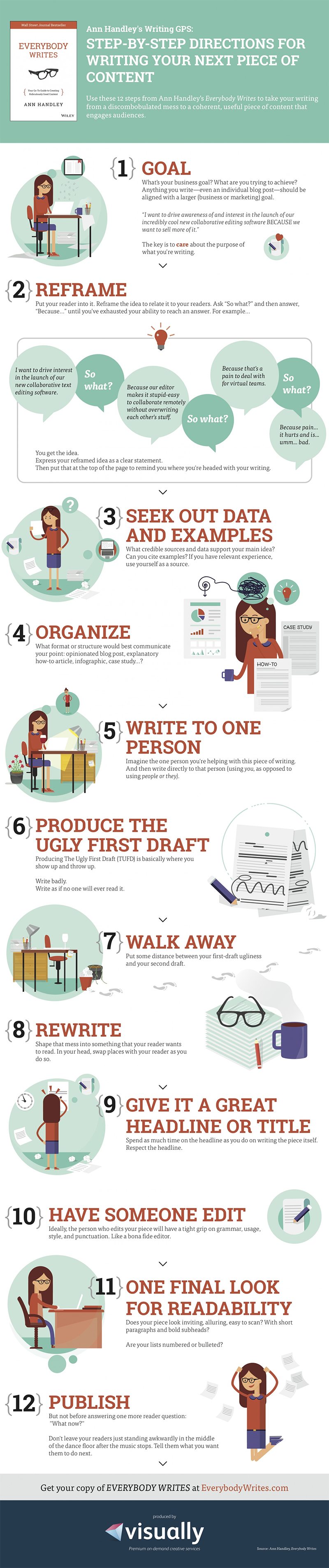
For some guidance creating your next piece of copy take a look at this infographic from Visual.ly.
In the digital age, your website is often the first point of contact between your business and potential customers. Whether you run a small blog, an e-commerce site, or a corporate website, the content you present can make or break the user experience. Effective website content not only engages visitors but also communicates your brand’s message, products, and services clearly.
However, many people find themselves staring at a blank screen when it comes to writing website content. If you’re one of them, don’t worry. In this step-by-step guide, we’ll walk you through the process of creating compelling website content that resonates with your target audience, drives traffic, and converts visitors into customers.
Step 1: Define Your Audience and Purpose
Before you start writing, it’s crucial to identify your target audience and the purpose of your website. Ask yourself these questions:
- Who is your ideal reader or customer?
- What are their needs, interests, and pain points?
- What do you want to achieve with your website (e.g., inform, entertain, sell products/services)?
- How will your content fulfill your audience’s needs and your website’s goals?
Defining your audience and purpose will provide a clear direction for your content and help you tailor it to meet the expectations and preferences of your target audience.
Step 2: Research Your Industry and Competitors
To stand out in the crowded digital landscape, you need to understand your industry and your competitors. Conduct thorough research to:
- Explore your industry’s trends, challenges, and opportunities.
- Identify your competitors and analyze their websites.
- Learn from successful websites in your niche.
By understanding your industry and competitors, you can identify gaps in content, unique selling points, and areas where you can outshine the competition.
Step 3: Plan Your Website Structure
Before diving into writing, plan the structure of your website. This includes:
- Creating a sitemap that outlines the main pages and their hierarchy.
- Organizing your content into logical categories and subcategories.
- Determining how users will navigate through your site.
A well-organized website structure enhances user experience and helps search engines index your content effectively.
Step 4: Craft Captivating Headlines
Your headlines are the first thing visitors see, and they play a critical role in grabbing their attention. Craft headlines that are:
- Clear and concise, conveying the main idea.
- Engaging and intriguing, sparking curiosity.
- Relevant to the content they introduce.
Use action words, numbers, and power words to make your headlines more compelling.
Step 5: Write Engaging and Informative Content
Now, let’s get to the heart of website content creation: writing. When crafting your content:
- Start with a hook: Begin your articles with an engaging hook that captures readers’ interest.
- Be concise: Write in a clear, concise, and straightforward manner.
- Use subheadings: Break up long content with subheadings to make it more scannable.
- Provide value: Offer valuable information, insights, or solutions to your readers’ problems.
- Use visuals: Incorporate images, videos, and infographics to enhance understanding and engagement.
Remember, quality matters more than quantity. It’s better to have fewer well-written pages than many poorly written ones.
Step 6: Optimize for SEO
Search Engine Optimization (SEO) is essential for driving organic traffic to your website. To optimize your content:
- Use relevant keywords: Research and incorporate relevant keywords into your content.
- Write meta descriptions: Craft compelling meta descriptions for each page to improve click-through rates.
- Optimize images: Use descriptive alt text for images and compress them for faster loading times.
- Build internal and external links: Link to other pages on your website and reputable external sources.
- Ensure mobile-friendliness: Make sure your website is responsive and user-friendly on mobile devices.
SEO is an ongoing process, so regularly review and update your content to maintain or improve your search engine rankings.
Step 7: Proofread and Edit
Before publishing your content, proofread and edit it to eliminate errors and improve readability. Consider the following:
- Grammar and spelling: Check for grammatical mistakes and spelling errors.
- Clarity and coherence: Ensure your content flows logically and is easy to understand.
- Consistency: Maintain a consistent tone, style, and formatting throughout your website.
- Formatting: Pay attention to font, spacing, and text alignment for a polished look.
If possible, get a second pair of eyes to review your content for a fresh perspective.
Step 8: Add Calls to Action (CTAs)
Every page on your website should have a clear and compelling Call to Action (CTA). Whether it’s subscribing to a newsletter, making a purchase, or contacting your business, CTAs guide visitors toward the desired action. Make your CTAs:
- Clear and specific: Use action-oriented language that tells users exactly what to do.
- Visually stand out: Use contrasting colors and buttons to make CTAs noticeable.
- Relevant to the content: Ensure that the CTA relates to the content on the page.
- Scarcity and urgency: Create a sense of urgency by using phrases like “limited time offer” or “act now.”
Step 9: Test and Iterate
After launching your website, the work doesn’t stop. Monitor your website’s performance using analytics tools and gather user feedback. Use this data to:
- Identify areas for improvement.
- Test different elements, such as headlines, CTAs, and layouts, to optimize conversions.
- Continuously update and refresh your content to keep it relevant and valuable.
Website content is an evolving process, so be open to making changes and improvements over time.
Step 10: Promote Your Content
Creating great content is just the first step. To reach your target audience, you need to promote your content through various channels:
- Social media: Share your content on social platforms where your audience is active.
- Email marketing: Send newsletters and updates to your subscribers.
- Guest posting: Contribute articles to reputable websites in your niche.
- Influencer marketing: Collaborate with influencers to reach a wider audience.
- Paid advertising: Invest in paid campaigns to drive traffic and conversions.
Promoting your content increases its visibility and helps you reach a larger audience.
Conclusion
Creating effective website content may seem daunting, but by following this step-by-step guide, you can develop a strategy that resonates with your audience and achieves your website’s goals. Remember to define your audience, conduct research, plan your structure, write engaging content, optimize for SEO, proofread, add CTAs, test and iterate, and promote your content. With dedication and continuous improvement, your website can become a valuable resource that attracts, engages, and converts visitors into loyal customers. So, get started on your website content journey and watch your online presence flourish.

Author:
Mark Ford