
Are you struggling to generate sales on your Ecommerce website? Want to identify and eliminate the mistakes you make through your design and marketing process?
Referral Candy share their Ecommerce mistakes to avoid in these infographics.
They cover the following parts of the process:
- Marketing
- Customer experience
- Closing sale
- Post-purchase
Check out the infographics below.



Running a successful ecommerce business requires careful planning and execution, particularly when it comes to website design and marketing strategies. However, many online retailers unknowingly make critical mistakes that hinder their sales potential.
In this blog post, we will highlight 29 common mistakes across four key categories: marketing, customer experience, closing the sale, and post-purchase. By identifying and rectifying these mistakes, you can optimize your ecommerce website and increase your online sales.
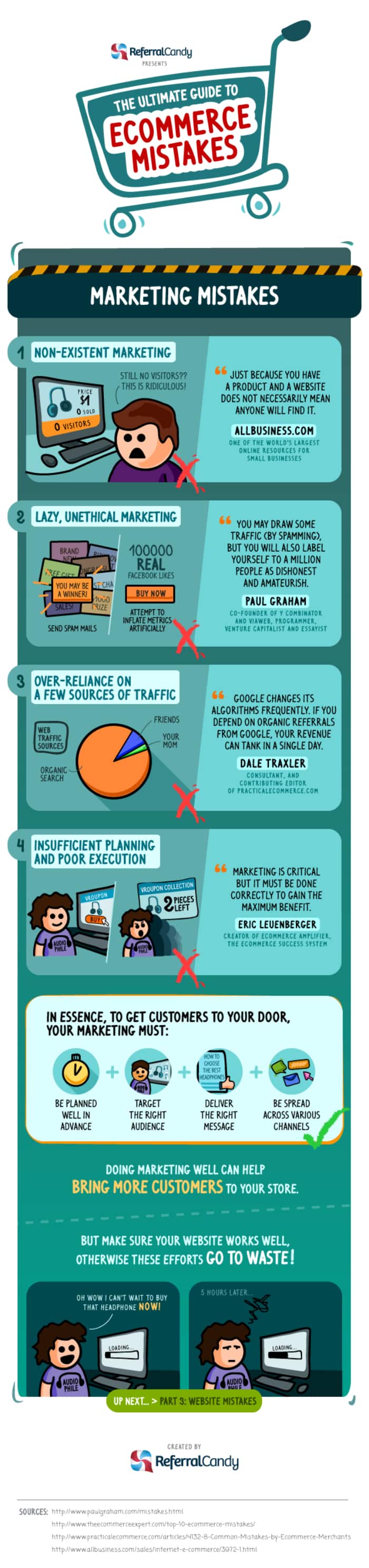
Non-existent marketing
One of the biggest mistakes is neglecting marketing efforts altogether. Without proactive marketing strategies such as social media advertising, email marketing, and search engine optimization (SEO), your ecommerce website may struggle to attract visitors and generate sales.
Lazy, unethical marketing
Engaging in unethical marketing practices can damage your brand’s reputation. Avoid spamming, misleading advertising, or any form of aggressive marketing tactics that violate customer trust. Instead, focus on building meaningful connections with your audience through authentic and transparent marketing campaigns.
Over-reliance on a few sources of traffic
Relying solely on a single traffic source, such as paid ads or search engine rankings, can be risky. Changes in algorithms or fluctuations in advertising costs can severely impact your website’s visibility. Diversify your marketing efforts by exploring various channels and strategies to maintain a steady flow of traffic.
Insufficient planning and poor execution
Effective marketing requires careful planning and execution. Failing to define clear marketing objectives, target audiences, and key performance indicators (KPIs) can lead to ineffective campaigns. Invest time and effort in strategic planning to maximize the impact of your marketing initiatives.
Not earning trust
Building trust with your potential customers is crucial for ecommerce success. Lack of trust can lead to high bounce rates and abandoned shopping carts. Incorporate trust elements such as customer reviews, security badges, and clear return policies to instill confidence in your visitors.
Website looks amateurish
A poorly designed website can instantly turn away potential customers. Invest in professional web design that aligns with your brand’s identity and provides a seamless user experience. A visually appealing and user-friendly interface will enhance credibility and encourage visitors to explore further.
Cluttered design
An overcrowded and cluttered website overwhelms visitors and makes it difficult for them to find what they’re looking for. Streamline your design by removing unnecessary elements, simplifying navigation, and organizing content in a logical manner. Emphasize clarity and ease of use to improve the overall customer experience.
Confusing navigation
Complex navigation can frustrate users and discourage them from making purchases. Ensure your website has intuitive navigation with clear categories, a search function, and prominent call-to-action buttons. Make it easy for visitors to find products and complete their desired actions.
Not putting focus on products
Your products should take center stage on your ecommerce website. Avoid distracting elements that overshadow the product listings, such as excessive banners or irrelevant content. Use high-quality images and compelling product descriptions to entice customers and highlight the unique selling points of each item.
Misguided product descriptions
Misleading or inaccurate product descriptions can lead to customer dissatisfaction and returns. Provide honest and detailed descriptions that accurately depict the product’s features, dimensions, materials, and any other relevant information. Clear and informative descriptions help customers make informed purchasing decisions.
Lack of detailed product descriptions and images
Insufficient information and low-quality product images can leave customers unsure about their potential purchase. Include multiple high-resolution images from different angles and provide detailed specifications. The more information you provide, the more confident customers will be in their buying decision.
No stock availability update
Failing to update stock availability in real-time can lead to frustrated customers who place orders for out-of-stock items. Implement an inventory management system that updates stock levels automatically, preventing customers from ordering unavailable products.
No related product recommendations
Cross-selling and upselling are effective strategies to increase average order value. By displaying related product recommendations based on customer browsing and purchasing history, you can encourage additional purchases and enhance the shopping experience.
No product development
Neglecting product development and innovation can hinder your ecommerce business’s growth. Regularly evaluate market trends, gather customer feedback, and introduce new products or improved versions to meet evolving customer needs and preferences.
Too many steps involved
Complicated checkout processes with excessive form fields or multiple steps can lead to cart abandonment. Streamline the purchase process by minimizing the number of steps required to complete a transaction. Implement guest checkout options and offer seamless payment integration to reduce friction and improve conversions.
Uncompetitive pricing
Pricing plays a crucial role in customers’ purchase decisions. If your prices are significantly higher than competitors offering similar products, it will be challenging to win sales. Research your market, analyze competitor pricing, and ensure your pricing strategy is competitive while maintaining profitability.
Over-reliance on promotions
While promotions and discounts can drive sales, excessive reliance on them can devalue your products and erode profit margins. Create a balanced approach by offering occasional promotions that provide value without diminishing your brand’s perceived quality and value proposition.
Limited payment options
Restricting payment options can lead to lost sales, as customers may prefer specific payment methods. Offer a variety of secure payment options, including credit cards, digital wallets, and alternative payment methods, to cater to diverse customer preferences.
Not showing shipping rates
Surprising customers with high shipping costs during checkout can result in cart abandonment. Clearly display shipping rates upfront or provide a shipping cost calculator early in the purchasing process. Transparent shipping information helps customers make informed decisions and reduces cart abandonment.
Slow shipping
In today’s fast-paced world, customers expect prompt delivery. Slow shipping times can lead to negative reviews and diminished customer satisfaction. Optimize your logistics and work with reliable shipping partners to ensure timely and efficient order fulfillment.
Missing policy statements
Transparent policies regarding returns, exchanges, and warranties are essential for building trust and managing customer expectations. Clearly communicate these policies on your website to alleviate concerns and provide reassurance to potential buyers.
Poor customer service
Inadequate customer service can harm your brand reputation and deter repeat purchases. Provide responsive customer support through multiple channels, such as email, live chat, and phone, to address inquiries, resolve issues, and ensure customer satisfaction.
Hidden contact information
Hiding or making it difficult for customers to find your contact information can erode trust and frustrate customers seeking assistance. Display your contact information prominently on your website, including a dedicated contact page and easily accessible customer support channels.
Not monitoring performance
Neglecting to track and analyze key performance indicators (KPIs) related to sales, customer satisfaction, and website performance can hinder your business growth. Regularly monitor metrics such as conversion rates, average order value, bounce rates, and customer feedback to identify areas for improvement.
Failing to build a community
Building a loyal customer base is crucial for long-term success. Foster a sense of community around your brand through social media engagement, email newsletters, and personalized communication. Encourage customer reviews and testimonials to build social proof and attract new customers.
Cart abandonment: Not collecting email before visitor leaves
Implement strategies to capture visitors’ email addresses before they abandon their shopping carts. By collecting email addresses, you can retarget those potential customers with personalized offers and reminders to complete their purchase.
No retargeting plan
Retargeting campaigns can help you re-engage potential customers who have shown interest in your products but didn’t make a purchase. Develop a retargeting strategy by utilizing advertising platforms that allow you to display personalized ads to these users across various websites and social media channels.
Not segmenting failures
When analyzing cart abandonment or failed transactions, segment the reasons behind these failures. Understanding the specific pain points, such as high shipping costs or technical issues, allows you to tailor solutions and improve the overall customer experience.
Conclusion
Avoiding these 29 ecommerce website design and marketing mistakes can significantly improve your online sales.
By focusing on marketing strategies, enhancing customer experience, optimizing the closing sale process, and implementing effective post-purchase strategies, you can position your ecommerce business for success.
Continually analyze and adapt your approach, staying attuned to customer needs and industry trends to maintain a competitive edge in the dynamic world of ecommerce.

Author:
Mark Ford