
Are you looking to understand how emotional intelligence can make you a more effective and resilient entrepreneur? Want to learn how mastering your emotions and relationships can drive long-term business success?
You’ll find some business basics in this infographic.
Here’s a summary of what’s covered:
- Self-Awareness
- Self-Regulation
- Motivation
- Empathy
- Social Skills
Check out the post below for more.
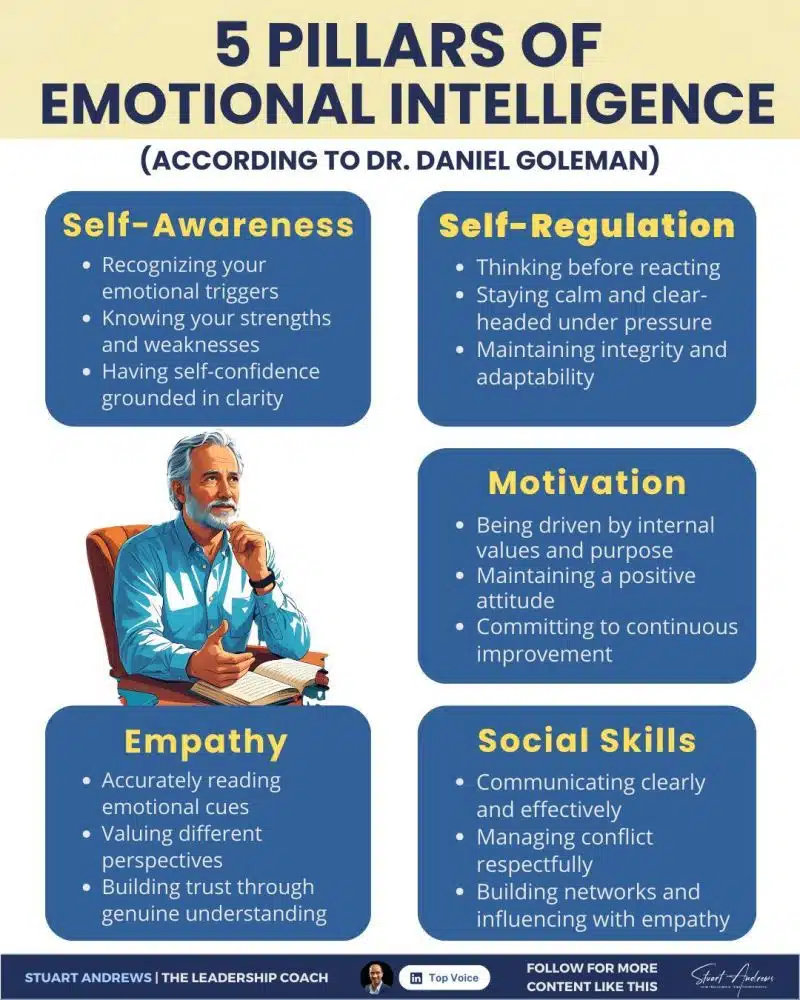
Emotional intelligence (EI) is one of the most valuable yet underrated traits an entrepreneur can develop. While strategy, innovation, and funding are vital, the ability to understand, manage, and connect with emotions—both your own and others’—is what truly sustains success. Emotional intelligence builds stronger teams, fosters loyalty, enhances decision-making, and helps leaders stay grounded through the highs and lows of business ownership.
At its core, emotional intelligence is about awareness, regulation, motivation, empathy, and social skill—five pillars that work together to create resilient, effective, and inspiring entrepreneurs. Below, we explore how each pillar contributes to long-term success in entrepreneurship and how you can strengthen these traits in your own leadership journey.
Self-Awareness
Self-awareness is the foundation of emotional intelligence. It allows entrepreneurs to recognise how their emotions, behaviours, and decisions influence their business outcomes. By understanding personal triggers, strengths, and limitations, you can make more informed choices and lead with authenticity. Self-aware leaders inspire trust because they operate with clarity and humility rather than ego or impulse.
- Reflect regularly on your emotions and how they affect your actions in business situations.
- Conduct honest self-assessments to understand both your strengths and areas that need improvement.
- Seek feedback from trusted colleagues or mentors to gain external perspectives on your leadership style.
- Use journaling or mindfulness practices to stay connected to your inner motivations and decision-making patterns.
Self-Regulation
Self-regulation is what keeps emotions from controlling decisions. In the fast-paced world of entrepreneurship, setbacks and stress are inevitable. Leaders who can stay calm, think clearly, and adapt under pressure are better equipped to handle uncertainty and make rational choices. Maintaining emotional control not only protects your mental wellbeing but also sets the tone for your team.
- Pause before reacting to challenges or criticism to prevent impulsive responses.
- Develop healthy stress management techniques such as deep breathing or exercise to maintain composure.
- Model integrity by staying consistent in your actions, even when circumstances are unpredictable.
- Stay flexible and open-minded, using change as an opportunity for growth rather than a source of frustration.
Motivation
True motivation in entrepreneurship goes beyond profits or recognition—it’s about purpose. Emotionally intelligent entrepreneurs are driven by internal values and a sense of mission. This inner drive fuels perseverance when challenges arise and inspires others to share the same vision. Maintaining motivation through both success and struggle keeps your business moving forward with energy and focus.
- Set goals that align with your personal values and long-term vision, not just short-term gains.
- Cultivate a positive mindset by celebrating progress, no matter how small.
- View obstacles as opportunities for learning rather than reasons to give up.
- Commit to continuous development by investing in education, mentorship, and reflection.
Empathy
Empathy is what transforms a business from functional to human. Entrepreneurs who can understand and relate to the emotions of others build deeper connections with employees, partners, and customers. Empathy enables better communication, trust, and collaboration—qualities that are essential for sustainable growth and brand loyalty.
- Actively listen to others without interrupting or judging their perspective.
- Try to see challenges from your team’s or customer’s point of view before making decisions.
- Show appreciation and support for the people who contribute to your business success.
- Encourage open dialogue and emotional honesty within your workplace culture.
Social Skills
Strong social skills turn emotional understanding into effective action. Entrepreneurs rely on networking, collaboration, and communication to build influence and achieve results. Leaders with refined social intelligence can motivate teams, manage conflict constructively, and create a positive working environment that drives productivity and loyalty.
- Communicate with clarity and purpose, avoiding mixed messages or emotional ambiguity.
- Handle disagreements by focusing on solutions rather than blame or defensiveness.
- Build and maintain professional relationships that are grounded in respect and mutual value.
- Use empathy when influencing or negotiating, ensuring all parties feel heard and understood.
Why Emotional Intelligence Matters More Than Ever in Business
In today’s interconnected and fast-changing world, the ability to manage emotions is a competitive advantage. Markets shift, technologies evolve, and teams operate across borders—but emotional intelligence remains constant as the glue that holds leadership together. Entrepreneurs who lead with emotional awareness adapt faster, recover from failure more effectively, and foster environments where creativity and trust can thrive.
- Emotional intelligence enhances decision-making by balancing logic with intuition.
- It improves team morale and retention by creating psychologically safe workplaces.
- Emotionally intelligent leaders navigate crises with resilience and composure.
- It strengthens relationships with clients and investors through trust and transparency.
How to Develop Emotional Intelligence as an Entrepreneur
Emotional intelligence can be learned and strengthened with intention and practice. Like any leadership skill, it grows through self-reflection, feedback, and consistent effort. Entrepreneurs who invest in developing EI find themselves making clearer decisions, managing people better, and enjoying greater emotional balance amid business pressures.
- Incorporate mindfulness practices into your daily routine to increase self-awareness.
- Enrol in leadership coaching or courses focused on emotional intelligence and communication.
- Reflect on past experiences to identify patterns in your emotional responses.
- Encourage emotional literacy in your team by modelling openness and understanding.
The Impact of Emotional Intelligence on Leadership and Team Culture
A leader’s emotional intelligence shapes the entire organisational culture. When entrepreneurs demonstrate empathy, self-control, and authenticity, they create workplaces where people feel valued and motivated. High-EI leaders attract top talent, foster loyalty, and reduce burnout—all of which contribute to long-term business stability and success.
- Lead by example, showing calmness and empathy even in challenging times.
- Recognise and celebrate team achievements to strengthen morale and trust.
- Offer constructive feedback that builds confidence instead of fear.
- Promote a culture where emotions are acknowledged and used productively.
Emotional Intelligence and Decision-Making
Business success depends on making tough decisions under uncertainty. Emotional intelligence ensures those decisions are guided by self-awareness, empathy, and balanced reasoning rather than stress or impulse. Entrepreneurs who integrate emotional insight into their choices are more likely to build trust, minimise conflict, and achieve outcomes that serve both business and people.
- Assess how emotions might be influencing your judgement before making key decisions.
- Consult with diverse team members to gather emotional and practical perspectives.
- Stay objective by separating emotional reactions from factual analysis.
- Reflect on decision outcomes to improve emotional balance and future choices.
Emotional Intelligence as a Tool for Resilience
Resilience is essential for entrepreneurial longevity, and emotional intelligence is its foundation. The ability to recover from setbacks, adapt to new realities, and maintain perspective stems from emotional control and self-belief. Entrepreneurs who cultivate EI not only survive adversity but use it as a catalyst for innovation and growth.
- Reframe challenges as learning opportunities rather than failures.
- Maintain a support network of mentors, peers, and friends who understand your journey.
- Practice gratitude to stay grounded in what’s working well despite difficulties.
- Keep sight of your larger vision to sustain motivation through hard times.
Conclusion
Emotional intelligence is not a soft skill—it’s a strategic advantage. For entrepreneurs, it defines how you lead, communicate, and sustain your business through every phase of growth. By mastering self-awareness, self-regulation, motivation, empathy, and social skills, you build the foundation for authentic leadership and long-term success.
The most effective entrepreneurs are not just visionaries—they are emotionally intelligent individuals who connect deeply with their teams, customers, and themselves. In the end, emotional intelligence doesn’t just make you a better leader; it makes you a more grounded, resilient, and fulfilled one.

Author:
Mark Ford

Taking Control of Your Career: The Power and Potential of Freelancing
Are you ready to take control of your career and create a work life that fits around you, not the other way around? Want to discover how freelancing can give you the freedom, flexibility, and financial control to design your own success? […]