Are you struggling to turn website visitors into paying customers? Want to know which pages have the biggest impact on conversions and how to optimise them?
You’ll find some website basics in this infographic.
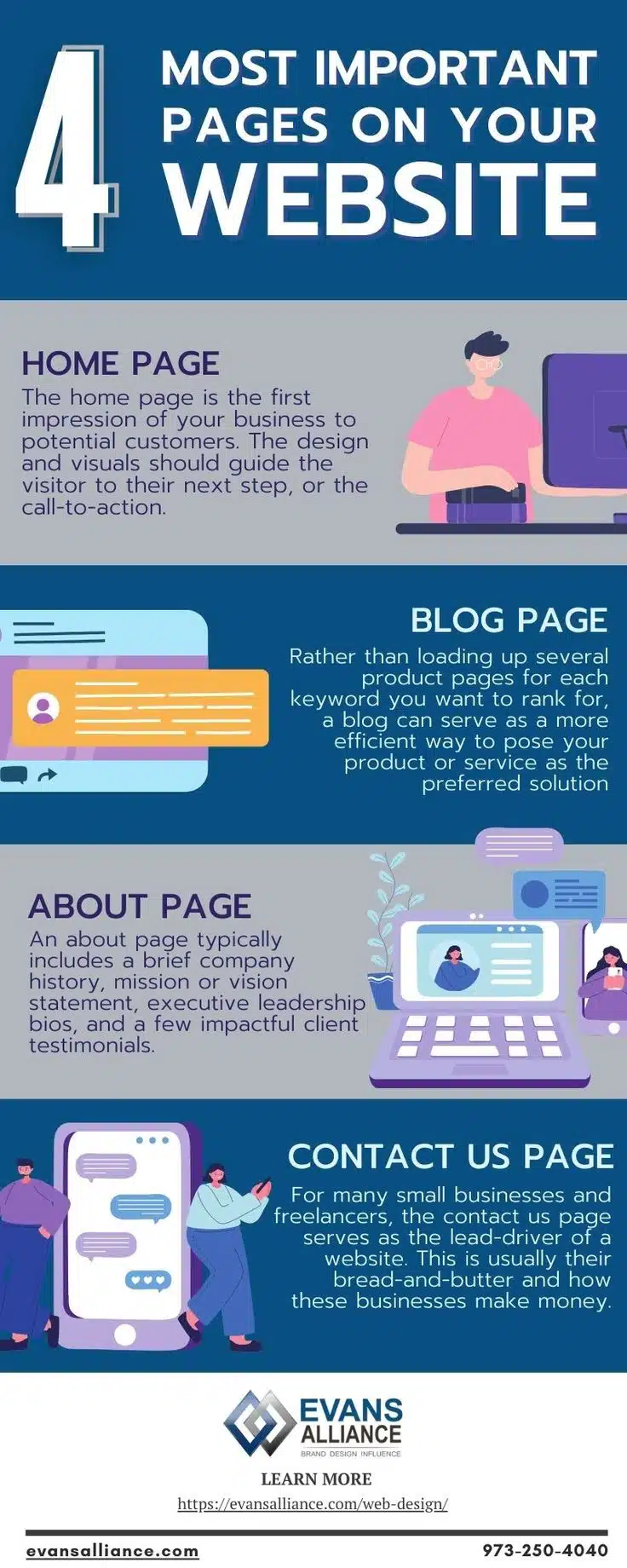
Here’s a summary of what’s covered:
- Home Page
- Blog Page
- About Page
- Contact Us Page
Check out the post below for more.
Your website is often the first point of contact between your business and a potential customer. Whether they’ve clicked through from a search result, a social media post, or an ad, what they see and how easily they can find what they need makes a huge difference.
That’s why it’s crucial to get your most important pages right. A streamlined, purposeful layout can turn casual visitors into loyal clients—and these four pages do the heavy lifting.
Let’s explore the four website pages that play the biggest role in guiding users from that initial click all the way to final action.
Home Page
The home page is your digital front door—and it needs to make a strong first impression. In just a few seconds, visitors will decide whether to stay and explore or click away. Your homepage should clearly communicate what you do, who you serve, and why someone should care. Think of it as both a welcome mat and a directional sign pointing users to the next step.
- Make your value proposition clear within the first few seconds of landing on the page.
- Use strong visual hierarchy to guide users toward your primary call-to-action.
- Keep content concise, relevant, and easy to scan across all devices.
- Ensure your navigation menu is simple and directs users to key internal pages.
Blog Page
Your blog isn’t just for sharing news or opinions—it’s a strategic tool for visibility and conversions. Instead of cluttering your site with dozens of product or service pages for every keyword, your blog can house valuable, keyword-rich content that attracts and informs. When executed well, it positions your offering as the natural solution to your audience’s problem.
- Focus each blog post on a specific search intent or customer query.
- Include internal links to your service or product pages to guide conversions.
- Use compelling headings and meta descriptions to improve click-through rates.
- Maintain a consistent publishing schedule to boost authority and trust.
About Page
While often overlooked, the about page is a prime opportunity to humanise your brand. It’s where you tell your story, share your values, and build credibility through leadership bios and testimonials. Visitors use this page to assess whether they can trust your business—especially when considering a purchase or partnership.
- Share a clear mission or purpose that aligns with your target audience’s values.
- Introduce your team to show the people behind the business.
- Highlight customer testimonials or achievements that build social proof.
- Avoid jargon—write in a tone that feels authentic and relatable.
Contact Us Page
The contact page is where all your efforts lead: it’s the bridge between browsing and buying. For many small businesses and freelancers, this is the lead-conversion hotspot. It should be effortless for someone to reach you, whether by form, phone, or email. A poor contact page can undo all the good work done by your homepage and blog.
- Keep your contact form short—only ask for the essentials to reduce friction.
- Offer multiple ways to get in touch (email, phone, form, map if relevant).
- Set clear expectations on response time to build trust immediately.
- Use the page to reaffirm the benefits of contacting you or booking a service.
Conclusion
A well-built website doesn’t need to be complex—but it does need to be purposeful. These four pages—home, blog, about, and contact—form the core of your online presence. They work together to welcome visitors, build authority, create connection, and drive action. Neglecting even one of them can lead to missed opportunities, while optimising each can elevate your site from average to high-performing.
If you want to turn that first click into consistent conversions, start with these four pages. Get them right, and the rest of your site will follow.

Author:
Mark Ford