Are you struggling to grow your email list despite putting time and effort into your marketing? Want to attract thousands of genuinely interested subscribers who open your emails, engage with your content, and eventually become paying customers?
You’ll discover practical strategies for building and growing an engaged email list in this blog post.
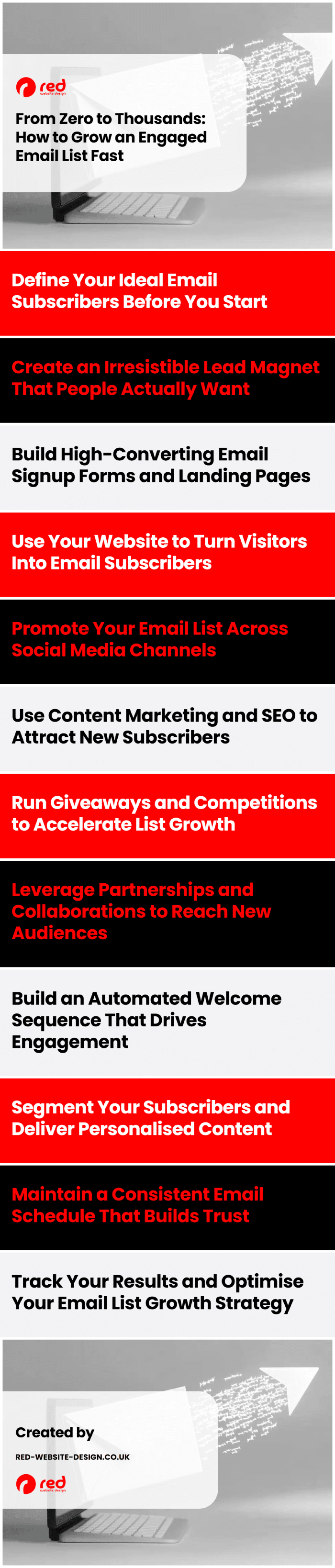
Here’s a summary of what’s covered:
- Define Your Ideal Email Subscribers Before You Start
- Create an Irresistible Lead Magnet That People Actually Want
- Build High-Converting Email Signup Forms and Landing Pages
- Use Your Website to Turn Visitors Into Email Subscribers
- Promote Your Email List Across Social Media Channels
- Use Content Marketing and SEO to Attract New Subscribers
- Run Giveaways and Competitions to Accelerate List Growth
- Leverage Partnerships and Collaborations to Reach New Audiences
- Build an Automated Welcome Sequence That Drives Engagement
- Segment Your Subscribers and Deliver Personalised Content
- Maintain a Consistent Email Schedule That Builds Trust
- Track Your Results and Optimise Your Email List Growth Strategy
Check out the post below for more.
Introduction
Building an email list from scratch can feel like an impossible challenge, particularly when you have no existing audience or established marketing channels. However, email marketing remains one of the most valuable ways to communicate directly with potential customers, build relationships, and generate repeat business. Unlike social media platforms, where algorithms determine how many people see your content, an email list gives you a direct communication channel with people who have chosen to hear from you.
The challenge is not simply collecting thousands of email addresses. A large list filled with uninterested subscribers will rarely deliver meaningful business results. What matters is attracting people who genuinely want your content, trust your expertise, and are likely to engage with your business. With the right combination of valuable incentives, effective signup opportunities, consistent promotion, and relevant communication, you can grow your email list quickly without sacrificing subscriber quality.
This guide explores the strategies that can help you move from zero subscribers to a thriving email audience. Whether you are launching a new business or looking to improve an existing email marketing strategy, these techniques will help you attract subscribers, maintain engagement, and turn your list into a valuable long-term marketing asset.
Define Your Ideal Email Subscribers Before You Start
Before attempting to grow your email list, you need to understand exactly who you want subscribing. Attracting thousands of random email addresses might look impressive, but it will achieve very little if those people have no interest in your products or services. The most successful email marketing strategies begin with a clearly defined target audience. Understanding your ideal subscribers helps you create relevant incentives, compelling messages, and content that encourages people to remain engaged.
Consider the challenges your potential customers face, the information they are searching for, and the reasons they might want to hear from your business. Your email marketing should offer something that directly addresses these interests rather than simply promoting your services. When people immediately recognise the value of subscribing, they are more likely to provide their contact details. This targeted approach also improves your chances of converting subscribers into customers later.
- Identify the demographics, interests, and challenges of your ideal email subscribers
- Research the questions and problems your target audience regularly searches for online
- Determine what valuable information or resources would motivate people to subscribe
- Develop a clear subscriber profile to guide your content and promotional strategies
Create an Irresistible Lead Magnet That People Actually Want
One of the fastest ways to grow an email list is to offer something valuable in exchange for an email address. This incentive, commonly known as a lead magnet, gives potential subscribers an immediate reason to join your list. Rather than asking visitors to subscribe for occasional updates, you provide a useful resource that solves a specific problem. The stronger the perceived value of your offer, the more likely people are to complete your signup form.
Effective lead magnets come in many forms, including downloadable guides, checklists, templates, exclusive tutorials, and free tools. The most important factor is relevance rather than complexity. A simple checklist that helps someone solve an urgent problem can outperform a lengthy ebook that offers little practical value. Your lead magnet should also connect naturally with your products or services, ensuring the subscribers you attract are genuinely interested in what your business offers.
- Create downloadable guides or ebooks that address a specific audience challenge
- Offer practical checklists, templates, or worksheets that deliver immediate value
- Provide exclusive access to useful resources, tutorials, or educational content
- Test different lead magnet offers to identify which generates the most relevant subscribers
Build High-Converting Email Signup Forms and Landing Pages
Even the most valuable lead magnet will struggle to generate subscribers if your signup process is confusing or difficult to complete. Your landing pages and email forms need to communicate the benefits of subscribing immediately. Visitors should understand what they will receive, why it matters, and how quickly they can access it. Removing unnecessary distractions and presenting a clear call to action can significantly improve the number of people who join your list.
A dedicated landing page allows you to focus entirely on converting visitors into subscribers. Rather than competing with navigation menus, unrelated promotions, and other website content, your offer becomes the main attraction. Keep your messaging concise, highlight the practical benefits, and avoid requesting more information than necessary. You should also ensure your forms work properly on mobile devices, where complicated layouts and lengthy fields can discourage potential subscribers.
- Write compelling headlines that clearly communicate the benefits of subscribing
- Keep signup forms simple by requesting only essential contact information
- Use prominent calls to action that encourage visitors to claim your free resource
- Test landing page layouts, form placements, and button wording to improve conversions
Use Your Website to Turn Visitors Into Email Subscribers
Your website should be one of your most effective tools for growing an email list. Every visitor represents an opportunity to establish an ongoing relationship, even if they are not ready to purchase immediately. Unfortunately, many businesses hide their signup forms in website footers or expect visitors to actively search for them. Making subscription opportunities more visible can help you capture interested prospects before they leave your website.
Strategically placed forms can appear throughout your website without disrupting the visitor experience. Blog posts, service pages, resource sections, and carefully timed popups can all encourage subscriptions when the offer is relevant. The key is matching each signup opportunity with the visitor’s interests and behaviour. Someone reading an article about improving website traffic, for example, may be particularly interested in downloading a free SEO checklist.
- Add relevant email signup opportunities to popular blog posts and resource pages
- Use carefully timed popups or exit-intent offers to capture interested visitors
- Include subscription forms within appropriate website sections and landing pages
- Match lead magnet offers to the topics and services visitors are already exploring
Promote Your Email List Across Social Media Channels
Social media platforms can provide a valuable source of new email subscribers, particularly when your business already has an active following. However, simply sharing a link to your newsletter signup page is unlikely to generate significant interest. People need a compelling reason to move away from the social platform and provide their contact details. Promoting the benefits of your email content is far more effective than repeatedly asking people to subscribe.
Use your social media content to demonstrate the value subscribers can expect. Share useful tips, highlight exclusive resources, and explain what people will gain by joining your email community. You can also promote lead magnets through short videos, educational posts, and targeted advertising campaigns. The objective is to transform casual social media followers into subscribers who remain connected with your business beyond the platform.
- Promote valuable lead magnets through relevant social media posts and videos
- Add email signup links to your social media profiles and business descriptions
- Share previews of exclusive newsletter content to demonstrate subscriber benefits
- Test targeted social media advertising campaigns to reach potential subscribers
Use Content Marketing and SEO to Attract New Subscribers
Content marketing and search engine optimisation can create a sustainable source of email subscribers long after your initial promotional campaigns have finished. When your website ranks for relevant search terms, it attracts people who are actively looking for information related to your business. These visitors often have a clear problem they want to solve, making them excellent candidates for targeted email subscriptions. The challenge is connecting your content with a relevant and compelling signup offer.
Start by creating useful articles that answer common questions within your industry. Optimise these pages for appropriate search terms and include lead magnets that expand upon the information provided. For example, an article explaining how to improve email open rates could offer a downloadable subject line checklist. This creates a natural progression from discovering your content to joining your email list, helping you generate subscribers consistently.
- Publish search-optimised blog posts targeting questions your ideal customers ask
- Create downloadable resources that complement your most popular articles
- Include contextual subscription calls to action within relevant educational content
- Update successful blog posts regularly to maintain their relevance and conversion potential
Run Giveaways and Competitions to Accelerate List Growth
Giveaways and competitions can generate substantial attention in a relatively short period, making them useful for businesses looking to accelerate email list growth. The opportunity to win something valuable encourages participation and can motivate people to share your campaign with others. However, the prize you choose will determine the quality of subscribers you attract. A generic prize might generate thousands of entries without producing many genuinely interested prospects.
For better results, choose a prize closely connected to your business and target audience. A marketing agency could offer a free website consultation or marketing strategy package rather than an unrelated shopping voucher. This helps attract participants who are more likely to value your services. Make participation requirements clear, explain how email addresses will be used, and obtain appropriate marketing consent rather than automatically treating every competition entrant as a newsletter subscriber.
- Choose competition prizes that appeal specifically to your ideal customers
- Promote giveaways through your website, social media, and relevant partnerships
- Use clear, separate marketing consent options when collecting competition entries
- Evaluate subscriber engagement after each campaign rather than focusing only on entry numbers
Leverage Partnerships and Collaborations to Reach New Audiences
Building an email list does not mean you need to attract every subscriber through your own marketing channels. Collaborating with complementary businesses, industry experts, and content creators can introduce your brand to audiences that already trust someone else. These partnerships can be particularly valuable when you are starting with very little website traffic or social media visibility. A relevant recommendation from an established business can generate interest more quickly than unfamiliar advertising.
The strongest collaborations provide genuine value to both audiences. You might create a joint educational webinar, contribute to another business’s newsletter, or develop a shared downloadable resource. Each partner can promote the opportunity to their existing followers, expanding the reach of the campaign. Rather than exchanging subscriber databases, direct interested people to your own signup page where they can choose whether to receive your emails.
- Identify complementary businesses that serve a similar audience without directly competing
- Collaborate on webinars, educational resources, or downloadable guides
- Arrange guest newsletter features that introduce your expertise to new readers
- Direct partnership audiences to dedicated signup pages with clear subscription benefits
Build an Automated Welcome Sequence That Drives Engagement
Attracting subscribers is only the beginning of successful email marketing. What happens immediately after someone joins your list can determine whether they become an engaged reader or gradually lose interest. A welcome email sequence introduces your business, delivers the promised resource, and establishes expectations for future communication. Without this initial engagement, subscribers may forget why they joined and become less responsive to your emails.
Automation allows you to deliver a consistent experience to every new subscriber without manually sending messages. Your first email should provide the promised incentive and reinforce the value of joining. Subsequent emails can introduce your expertise, share helpful content, and gradually explain how your products or services solve relevant problems. By focusing on building familiarity before pushing for a sale, you create a stronger foundation for long-term engagement.
- Send an immediate welcome email containing the resource subscribers requested
- Introduce your business and explain what subscribers can expect from future emails
- Share useful educational content that demonstrates your knowledge and credibility
- Include relevant calls to action that encourage subscribers to explore your services
Segment Your Subscribers and Deliver Personalised Content
As your email list grows, treating every subscriber exactly the same becomes increasingly ineffective. Different people join your list for different reasons, and their interests may vary considerably. Someone downloading a beginner’s guide may require different information from an existing customer interested in advanced services. Segmenting your audience allows you to deliver more relevant messages, helping maintain engagement as your subscriber numbers increase.
Email segmentation involves organising subscribers into groups based on meaningful characteristics or behaviour. These might include their interests, previous purchases, signup source, or engagement with particular topics. You can then tailor your emails to address the needs of each group. Personalisation does not need to involve complicated technology. Even simple distinctions between subscriber interests can make your communication feel more useful and less like generic mass marketing.
- Group subscribers according to their interests, preferences, or original signup offers
- Create different email content for potential customers and existing clients
- Use subscriber behaviour to identify topics that generate the strongest engagement
- Allow subscribers to update their preferences so they receive more relevant information
Maintain a Consistent Email Schedule That Builds Trust
Growing an engaged email list requires more than attracting new subscribers and sending an occasional promotional message. People need regular reasons to open your emails and remain interested in your business. If you disappear for several months and suddenly return with a sales campaign, subscribers may no longer remember who you are. Consistent communication helps maintain familiarity and reinforces the value of remaining subscribed.
The ideal sending frequency depends on your audience and the type of content you provide. Some businesses benefit from weekly educational newsletters, while others achieve better results with fortnightly or monthly updates. What matters most is delivering useful information at a predictable pace without overwhelming subscribers. Each email should provide a clear benefit, whether that involves practical advice, industry insights, exclusive resources, or relevant business updates.
- Establish a realistic email schedule that you can maintain consistently
- Prioritise useful educational content rather than sending constant sales promotions
- Use clear subject lines that accurately reflect the information inside each email
- Monitor engagement and subscriber feedback to refine your sending frequency
Track Your Results and Optimise Your Email List Growth Strategy
The difference between an email list that grows slowly and one that attracts thousands of engaged subscribers often comes down to measurement and improvement. Without tracking performance, you cannot reliably identify which marketing channels, lead magnets, or signup forms generate the strongest results. You might spend considerable time promoting an offer that attracts very few subscribers while overlooking another that consistently performs well.
Start by monitoring subscriber growth, signup conversion rates, engagement, and unsubscribe trends. Look beyond the total number of email addresses and consider whether your subscribers are opening, clicking, and taking meaningful actions. You should also evaluate the quality of subscribers generated by different acquisition channels. Regular testing allows you to improve your strategy, invest more resources in successful campaigns, and eliminate activities that deliver little value.
- Track subscriber growth and signup conversion rates across different marketing channels
- Monitor email clicks, conversions, unsubscribes, and other engagement indicators
- Test different lead magnets, landing page headlines, and signup form placements
- Focus future marketing efforts on strategies that attract engaged, relevant subscribers
Conclusion
Growing an email list from zero to thousands of subscribers is achievable with the right strategy, but lasting success requires more than collecting contact details. The most valuable email lists are built around genuine audience interests, useful incentives, and consistent communication. By combining effective lead magnets, optimised signup opportunities, content marketing, social media promotion, and strategic partnerships, you can create multiple channels that attract new subscribers to your business.
The real opportunity comes from turning those initial subscriptions into ongoing relationships. Automated welcome sequences, personalised content, regular communication, and continuous performance monitoring all help keep subscribers engaged long after they join. A smaller audience that consistently reads your emails and takes action can deliver far greater value than thousands of uninterested contacts.
Start by understanding your audience and creating one compelling reason for people to subscribe. Build a simple signup process, promote your offer consistently, and measure what works. As you identify successful approaches, expand your efforts and refine your content to keep subscribers interested. With patience, consistency, and a focus on genuine value, your email list can become one of your business’s most dependable sources of engagement, enquiries, and long-term growth.

Author:
Mark Ford

The Step-by-Step Email Marketing System Used by Smart Businesses
Are you sending marketing emails but struggling to generate consistent engagement, enquiries, or sales? Want to discover how successful businesses turn email marketing into a reliable system for attracting customers and generating repeat business? […]