Have you heard of Google’s Panda algorithm? Did you know they’ve just released an update that could affect your websites’ ranking?
The Google Panda algorithm is designed to reduce the amount of low quality content being shown in their search results. After all, people will stop using Google if they’re only being given rubbish and that would be catastrophic for their ad revenue.
But how do you make sure your site makes the cut? The guys at Clixlogix have detailed 9 things Google Panda wants from your site.
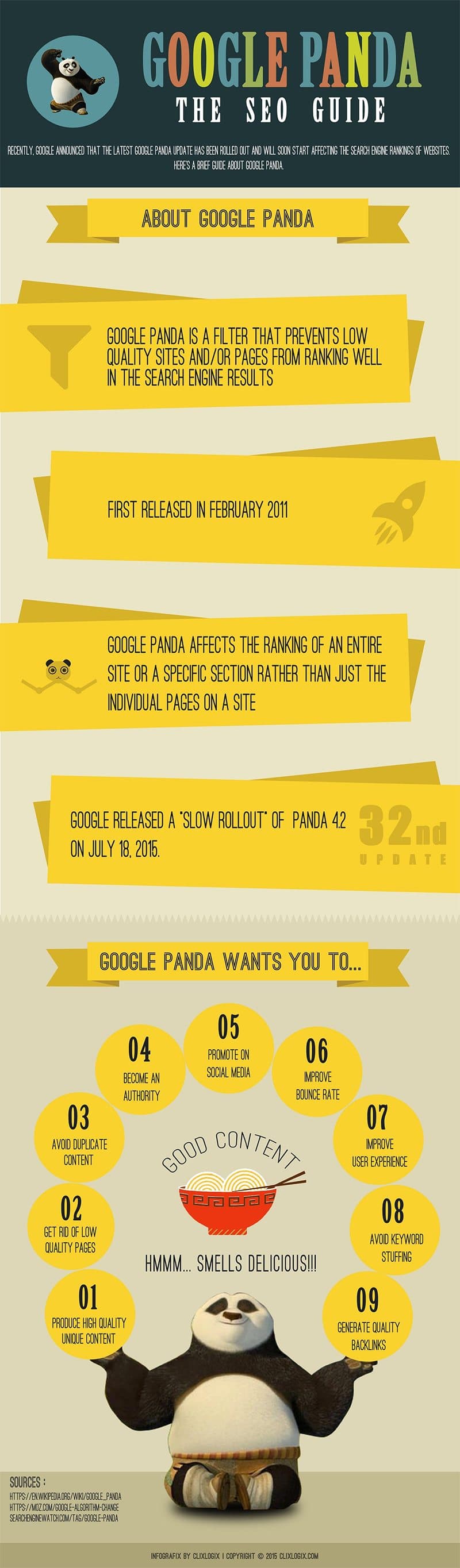
In the ever-evolving world of digital marketing and search engine optimization (SEO), staying on top of the latest algorithms and updates is crucial to maintain and improve your website’s ranking on search engine results pages (SERPs). Google, being the dominant search engine, regularly rolls out algorithm updates to provide users with the most relevant and high-quality content. One such update that has caused waves in the SEO community is Google Panda.
Google Panda, initially introduced in 2011, focuses on evaluating the quality of a website’s content and penalizes low-quality, thin, or duplicate content. Sites that fall short of Google’s quality standards can see a significant drop in their search rankings. To prevent your site from being demoted by Google Panda, it’s essential to understand what it looks for and how to make your website compliant. In this blog post, we will discuss nine effective ways to safeguard your site from being demoted by Google Panda.
- Produce High-Quality Content
Google Panda is all about ensuring users get the best possible search results. To avoid being demoted by Panda, your site should offer high-quality, valuable content. This means creating content that is well-researched, informative, and genuinely helpful to your target audience. Avoid thin, shallow, or duplicate content, as these are surefire ways to attract Panda’s attention in a negative way.
- Audit Your Existing Content
If your website has been around for a while, it’s a good idea to perform a content audit. Identify and assess low-quality or thin content, and either improve it or remove it altogether. This can be a time-consuming process, but it’s essential for Panda recovery and long-term SEO success. Tools like Screaming Frog and SEMrush can help you identify content issues on your site.
- Optimize On-Page SEO
Optimizing your on-page SEO elements is another crucial step in avoiding Panda’s demotion. Make sure your title tags, meta descriptions, and headers are well-optimized and relevant to your content. Use descriptive, keyword-rich alt tags for images, and maintain a clean and organized site structure. Properly structured content is more likely to be deemed high-quality by Google.
- Avoid Keyword Stuffing
Keyword stuffing, the practice of excessively using keywords in an attempt to manipulate search engine rankings, is a big no-no in the eyes of Google Panda. Instead of stuffing your content with keywords, focus on using them naturally and in context. Write for your audience, not for search engines. High-quality content will naturally include relevant keywords without overdoing it.
- Improve Page Load Speed
User experience plays a significant role in Google’s ranking algorithm. Slow-loading pages can lead to a poor user experience, which Panda takes into account. Optimize your website’s performance by compressing images, minimizing HTTP requests, and using browser caching. Google’s PageSpeed Insights tool can help you identify and address page speed issues.
- Mobile Optimization Is a Must
In the age of mobile devices, having a mobile-friendly website is crucial not only for user experience but also for SEO. Google Panda considers mobile-friendliness when assessing a site’s quality. Ensure that your website is responsive and displays correctly on various mobile devices. Google’s Mobile-Friendly Test can help you determine if your site meets mobile optimization standards.
- Fix Broken Links and Errors
Broken links, 404 errors, and other technical issues can negatively impact your site’s quality in the eyes of Google Panda. Regularly audit your website for broken links and fix them promptly. Ensure that your site is error-free and that users can navigate it seamlessly. Tools like Google Search Console can help you identify and address technical issues.
- Encourage User Engagement
User engagement metrics, such as bounce rate, time on site, and click-through rate, can indirectly affect your site’s standing with Google Panda. If users quickly leave your site or don’t engage with your content, it may signal low-quality content. To improve user engagement, create compelling headlines, use multimedia elements, and encourage readers to explore other pages on your site through internal linking.
- Build High-Quality Backlinks
While Google Panda primarily focuses on on-site content quality, having high-quality backlinks from reputable sources can indirectly signal your site’s credibility and authority. Focus on earning backlinks naturally through valuable content and outreach efforts rather than resorting to spammy link-building tactics.
Conclusion
Google Panda is a powerful algorithm that aims to ensure the best possible user experience by promoting high-quality content and penalizing low-quality, spammy websites. To avoid your site being demoted by Panda, focus on producing high-quality, informative content, optimizing your on-page SEO elements, and prioritizing user experience.
Regularly audit your content, fix technical issues, and make sure your site is mobile-friendly and fast-loading. Avoid keyword stuffing and spammy backlink practices. By following these nine strategies, you can not only safeguard your site from Google Panda’s demotion but also improve its overall performance in search engine rankings. Keep in mind that SEO is an ongoing process, and staying vigilant and adaptable is key to long-term success in the ever-changing digital landscape.

Author:
Mark Ford