
In today’s digital age, social media has become an integral part of our daily lives. Whether it’s for personal use or business promotion, platforms like Instagram, Twitter, Facebook, and TikTok provide a space for us to share our thoughts, stories, and creativity.
And at the heart of social media lies a small yet powerful symbol: the hashtag. Hashtags have transformed the way we discover and share content on social media. They serve as a bridge connecting users with similar interests and content.
However, with great power comes great responsibility, and using hashtags incorrectly can lead to unintended consequences.
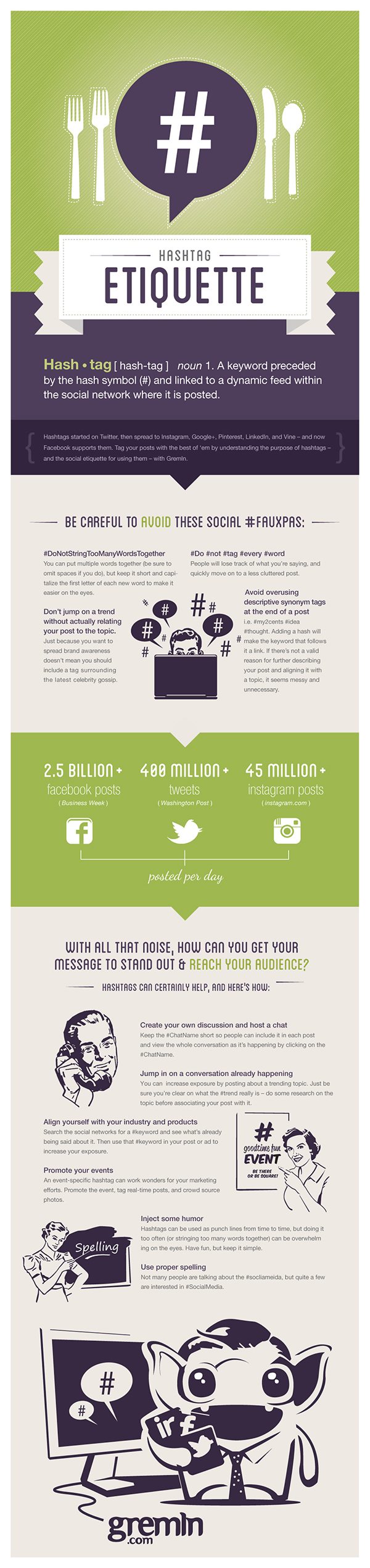
In this blog post, we’ll delve into the world of hashtag etiquette, discussing four common mistakes to avoid and sharing six tips for social media success.
Infographic by Gremln.
Mistake #1: Overloading Your Posts with Hashtags
The first and most common mistake people make when using hashtags is overloading their posts with them. While hashtags are a valuable tool for increasing the discoverability of your content, using too many can be counterproductive.
Imagine scrolling through your social media feed and stumbling upon a post that looks like this:
“Enjoying a beautiful #sunset on the #beach with my #family. #Summer #vacation #relaxation #ocean #waves #sunshine #sand #picoftheday #instagood #instalove #goodtimes #makingmemories.”
Doesn’t it look overwhelming and cluttered? This kind of hashtag bombardment can make your posts appear spammy and annoy your followers. To avoid this mistake, it’s essential to strike a balance between using hashtags effectively and not going overboard.
Mistake #2: Using Irrelevant Hashtags
Another common mistake in hashtag etiquette is using irrelevant hashtags. Some users may be tempted to jump on the trending hashtag bandwagon, even if it has nothing to do with their content. For example, using a trending hashtag like #WorldCup when you’re posting about your breakfast might attract attention, but it’s unlikely to lead to genuine engagement or interest from your target audience.
Using irrelevant hashtags not only misrepresents your content but also irritates your followers. People follow hashtags because they want to see specific types of content. When your post doesn’t align with the hashtag’s theme, it can lead to a negative user experience.
Mistake #3: Neglecting to Research Hashtags
In the world of social media, trends come and go quickly. What’s popular today may be forgotten tomorrow. Neglecting to research and stay updated on trending hashtags is a significant mistake. Using outdated or irrelevant hashtags can harm your content’s visibility and engagement.
To avoid this mistake, take the time to research and identify hashtags relevant to your content and industry. You can use social media analytics tools or built-in search features on platforms to discover trending and related hashtags. Staying current with popular hashtags within your niche can help your posts reach a wider and more engaged audience.
Mistake #4: Failing to Create Unique Hashtags
While using popular and trending hashtags can increase the reach of your content, don’t forget the power of creating unique hashtags. Unique hashtags can help you establish your brand identity and create a sense of community among your followers.
For example, if you’re a fitness enthusiast promoting your journey, creating a custom hashtag like #FitLifeWithSarah allows your followers to join in, share their experiences, and connect with others who share the same fitness goals. It becomes a powerful tool for building engagement and a loyal following.
Now that we’ve discussed the common hashtag mistakes to avoid, let’s dive into six tips for social media success when it comes to using hashtags.
Tip #1: Keep It Relevant
The golden rule of hashtag usage is relevance. Ensure that the hashtags you include in your post are directly related to the content you’re sharing. Ask yourself, “Does this hashtag accurately describe what my post is about?” If the answer is yes, it’s a good fit.
Using relevant hashtags helps your content appear in search results for users interested in that topic. It also increases the likelihood of your post being featured in the “Explore” section on Instagram or Twitter, where users discover new content based on their interests.
Tip #2: Use a Mix of Popular and Niche Hashtags
A well-rounded hashtag strategy should include a mix of popular and niche hashtags. Popular hashtags have a broader reach and can expose your content to a larger audience. However, competition is fierce, and it can be challenging to stand out.
Niche hashtags, on the other hand, have a smaller but more targeted audience. They can help you connect with people who are genuinely interested in your content. Strike a balance by using both types of hashtags to maximize your reach and engagement.
Tip #3: Create Branded Hashtags
Branded hashtags are an excellent way to build brand recognition and encourage user-generated content. When users come across your branded hashtag, they know it’s associated with your brand or campaign.
For example, Coca-Cola’s #ShareACoke campaign encouraged customers to share photos of their Coke bottles with their names on them. The hashtag #ShareACoke became a symbol of the campaign and generated a massive amount of user-generated content.
Tip #4: Be Mindful of Hashtag Trends
Social media trends change rapidly. What’s popular today may not be relevant tomorrow. Stay attuned to current events, holidays, and pop culture references that could be turned into trending hashtags. Joining relevant trends can increase your content’s visibility and engagement.
However, be cautious when using trending hashtags to ensure your content aligns with the trend’s context. Avoid using sensitive or controversial hashtags, as this can backfire and harm your brand’s reputation.
Tip #5: Create Hashtag Lists
Managing hashtags can become overwhelming, especially if you’re active on multiple social media platforms. Consider creating lists of hashtags for different types of content or campaigns. Having predefined hashtag lists makes it easier to maintain consistency and stay organized.
You can also use tools like Later, Hootsuite, or Sprout Social to schedule posts and manage your hashtags more effectively. These tools often come with hashtag analytics that can help you track the performance of your chosen tags.
Tip #6: Monitor and Adapt
Lastly, don’t set and forget your hashtag strategy. Monitor the performance of your posts regularly. Pay attention to which hashtags are driving the most engagement and which ones may need adjustment.
Social media platforms are constantly evolving, and what works today may not work tomorrow. Be willing to adapt your hashtag strategy based on the changing landscape and your audience’s preferences.
Conclusion
Hashtags are a powerful tool in the world of social media, helping users discover and engage with content that matters to them. However, using hashtags effectively requires an understanding of etiquette and strategy. Avoid common mistakes like overloading posts with hashtags, using irrelevant tags, neglecting research, and failing to create unique hashtags.
Instead, focus on keeping your hashtags relevant, using a mix of popular and niche tags, creating branded hashtags, staying mindful of trends, creating hashtag lists, and monitoring and adapting your strategy as needed. By following these tips and best practices, you can harness the power of hashtags to boost your social media success and connect with a wider, more engaged audience. Remember, when used wisely, hashtags can be a game-changer in your social media journey.

Author:
Mark Ford