
Are you using hashtags in your social media posts? Could the way you’re using them be doing more harm than good?
Hashtags are a great way of getting more eyeballs on your posts and increasing engagement with your followers. Using too many can have a negative effect and make you seem spammy though? But how many is too many? It depends on the platform you are using.
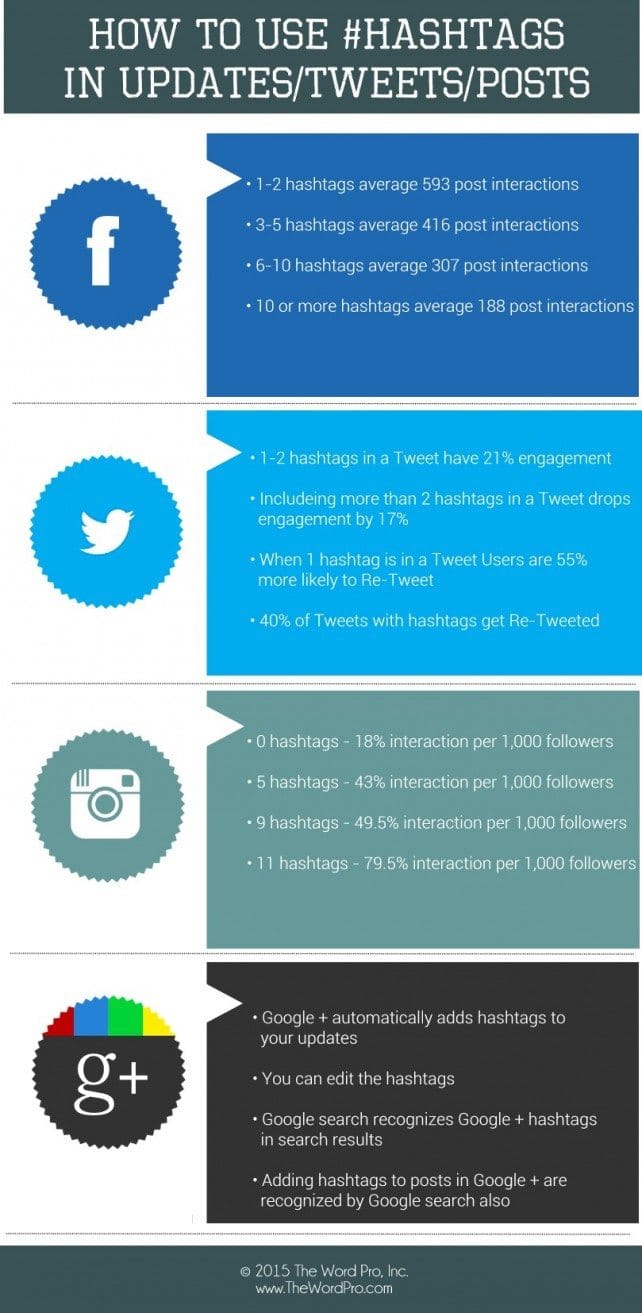
Take a look at this infographic from The Word Pro for some guidance on hashtags and engagement.
Social media has revolutionized the way we connect, communicate, and market our businesses. It’s a powerful tool that allows us to reach a global audience, build brand awareness, and engage with our target audience. However, there’s a catch – the effective use of hashtags. While hashtags can be a valuable asset in your social media strategy, they can also be a double-edged sword if not used correctly. In this blog post, we will explore how hashtags could be ruining your social media strategy and provide insights into how to use them effectively.
The Power and Pitfalls of Hashtags
Hashtags, those seemingly innocent combinations of words or phrases preceded by the “#” symbol, have become a ubiquitous part of social media culture. They were initially popularized on Twitter but have since spread to platforms like Instagram, Facebook, and even LinkedIn. The concept is simple: by adding relevant hashtags to your posts, you increase their discoverability and reach. Users can search for or click on hashtags to find content related to a specific topic or trend, making it a powerful tool for reaching a broader audience.
However, the very simplicity and ubiquity of hashtags can lead to their misuse, ultimately undermining your social media strategy. Here’s how:
1. Overloading with Irrelevant Hashtags
One of the most common mistakes social media marketers make is overloading their posts with irrelevant hashtags. While it’s true that using popular hashtags can increase your post’s visibility, it doesn’t mean you should include every trending tag you can find. In fact, doing so can backfire and make your content appear spammy or disingenuous.
For example, if you’re promoting a new vegan cookbook, using hashtags like #veganrecipes or #plantbasedcooking makes sense. However, including unrelated tags like #travel or #technology just to gain more exposure can confuse your audience and dilute your message. Users searching for content related to travel or technology are unlikely to engage with your cookbook post, and your intended audience may be put off by the irrelevant hashtags.
To avoid this pitfall, focus on using hashtags that are directly relevant to your content and target audience. Conduct research to identify trending and niche hashtags that align with your brand and message. Quality always trumps quantity when it comes to hashtags.
2. Using Hashtags with Low Engagement
Not all hashtags are created equal. Some are more popular and have higher engagement rates than others. Using hashtags with low engagement can limit your post’s visibility and hinder your social media strategy.
When choosing hashtags, it’s essential to strike a balance between using popular, high-traffic tags and more niche, targeted ones. Popular hashtags can expose your content to a broader audience, but they also come with intense competition. Your post might quickly get buried in a sea of similar content, making it challenging to stand out.
On the other hand, niche hashtags with lower engagement may have a smaller audience but can be more effective in reaching your specific target demographic. Research your industry and audience to find a mix of both popular and niche hashtags that will maximize your post’s reach while keeping it relevant.
3. Neglecting Hashtag Research
Successful social media strategies require careful planning and research. Unfortunately, many marketers neglect hashtag research, undermining their efforts. Just as you wouldn’t create content without understanding your target audience, you shouldn’t use hashtags without researching their effectiveness.
To avoid this mistake, invest time in hashtag research. Use tools like Hashtagify, RiteTag, or even the native search functions on social media platforms to discover relevant and trending hashtags in your niche. Pay attention to the number of posts using a particular hashtag, recent activity, and the engagement levels of top posts. This information can help you identify which hashtags are worth including in your strategy.
4. Using Branded Hashtags Ineffectively
Branded hashtags are a powerful tool for building brand identity and engaging with your audience. However, using them ineffectively can dilute their impact and harm your social media strategy.
For instance, if you create a unique branded hashtag for a product or campaign, but fail to promote it effectively, it may go unnoticed. Without user-generated content and engagement, your branded hashtag won’t achieve its intended purpose of boosting brand recognition and community building.
To make the most of branded hashtags, encourage your audience to use them by incorporating clear calls to action in your posts. Run contests or campaigns that involve your branded hashtag, and highlight user-generated content featuring it. This not only amplifies your brand message but also fosters a sense of community among your followers.
5. Ignoring Platform-Specific Hashtag Guidelines
Each social media platform has its own guidelines and best practices for using hashtags. Ignoring these guidelines can lead to missed opportunities or even negative consequences for your social media strategy.
For example, on Twitter, it’s generally recommended to use one or two relevant hashtags per tweet. Any more, and your tweet might come across as spammy or cluttered. On Instagram, you can use more hashtags, but it’s essential to place them strategically in the caption or comments section to maintain a clean aesthetic.
Familiarize yourself with the platform-specific hashtag guidelines to ensure that your posts align with user expectations and etiquette. Failure to do so can result in reduced engagement or even account penalties.
6. Neglecting Analytics and Adjustments
One of the biggest mistakes you can make in your social media strategy is neglecting the analysis of hashtag performance. If you’re not tracking which hashtags are driving engagement and conversions, you’re missing out on valuable insights.
Most social media platforms offer analytics tools that allow you to assess the performance of your posts and hashtags. Use these tools to identify which hashtags are generating the most engagement and conversions. Adjust your strategy accordingly by emphasizing the use of effective hashtags and phasing out underperforming ones.
Additionally, stay up-to-date with trends and changes in your industry and the social media landscape. Hashtags that were once effective may become outdated or less relevant over time. Be willing to adapt your strategy to reflect these shifts.
7. Failing to Monitor and Engage
Using hashtags is not a one-way street. It’s not enough to simply add them to your posts and hope for the best. Social media is about building relationships and engaging with your audience, and hashtags are a key part of that interaction.
Failing to monitor and engage with the conversations happening around your hashtags can be detrimental to your social media strategy. When users engage with your posts or use your branded hashtags, acknowledge them, respond to comments, and show appreciation for their participation. This not only strengthens your brand’s relationship with its audience but also encourages more users to join the conversation.
Conclusion
Hashtags can be a powerful tool in your social media strategy when used correctly. However, they can also hinder your efforts if misused or neglected. To ensure that hashtags work for you and not against you, avoid overloading your posts with irrelevant tags, use hashtags with high engagement, conduct thorough research, promote branded hashtags effectively, follow platform-specific guidelines, analyze performance, and engage with your audience.
Remember, it’s not just about using hashtags; it’s about using them strategically to enhance your brand’s visibility, connect with your target audience, and achieve your social media goals. By avoiding the common pitfalls and adopting best practices, you can harness the power of hashtags to boost your social media strategy and achieve greater success in the digital landscape.

Author:
Mark Ford