In the ever-evolving landscape of digital marketing, staying ahead of the curve is essential for businesses looking to maintain or improve their online visibility.
Search Engine Optimization (SEO) has long been a crucial component of online success, helping websites rank higher on search engine results pages (SERPs) and drive organic traffic.
However, in recent years, the role of social media in SEO has become increasingly significant. In this blog post, we will explore how social media impacts SEO and your website’s ranking on Google.
Infographic by Submit Edge.
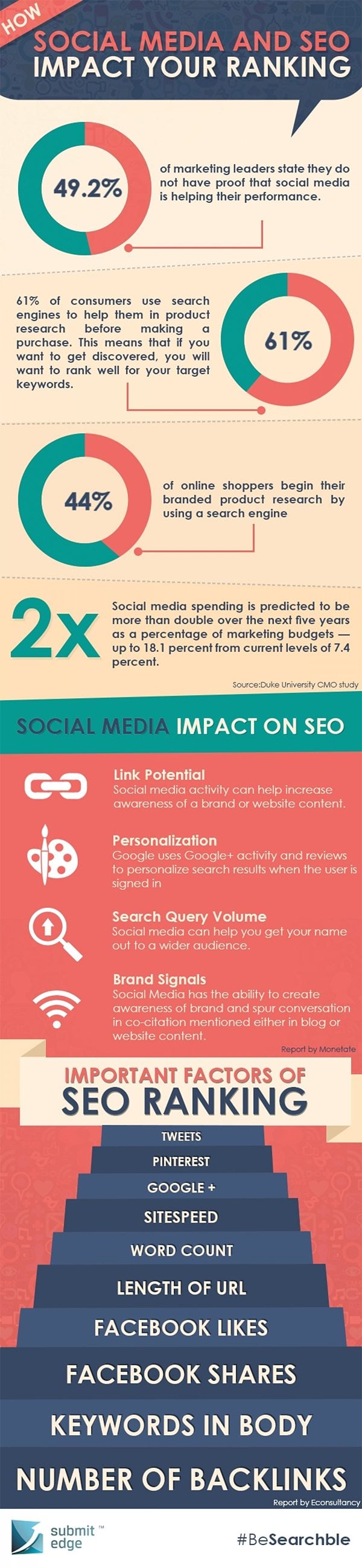
The Interplay Between Social Media and SEO
To understand the relationship between social media and SEO, it’s essential to recognize that they are interconnected elements of your online presence. While social media platforms and search engines serve different purposes, their influence on each other has become more pronounced.
1. Social Signals and SEO
Social signals refer to the activity and engagement your content receives on social media platforms. This includes likes, shares, comments, and overall brand mentions. Search engines like Google consider these signals when determining the relevance and authority of your website.
How it works:
When your content gets shared on social media, it exposes your website to a broader audience. If users find your content valuable and engaging, they are more likely to visit your site. This increased traffic signals to search engines that your content is relevant and valuable to users, potentially leading to improved rankings.
2. Brand Visibility and Recognition
Having a strong presence on social media helps increase brand visibility and recognition. When people encounter your brand on social media and interact with your content, they become more familiar with your company. This brand recognition can have a positive impact on your website’s SEO.
How it works:
Search engines aim to provide users with the most relevant and trustworthy results. If users recognize your brand from social media and associate it with quality content or products, they are more likely to click on your website when it appears in search results. This can result in higher click-through rates (CTR), which is a ranking factor in Google’s algorithm.
3. Building Backlinks Through Social Media
Backlinks, or inbound links from other websites to yours, are a fundamental aspect of SEO. They demonstrate the authority and credibility of your site. Social media can be a powerful tool for building backlinks.
How it works:
When you share high-quality content on social media, there is a chance that other websites and bloggers may link to your content as a reference. For example, if you create a comprehensive guide or an informative infographic and share it on social media, bloggers in your industry may link to it when writing related articles. These backlinks contribute to your website’s authority and can positively impact your SEO efforts.
Social Media Platforms and Their Impact on SEO
Different social media platforms have varying degrees of influence on SEO. Let’s delve into how some of the most popular social networks can impact your website’s rankings on Google.
1. Facebook
Facebook remains one of the most prominent social media platforms globally, making it a valuable tool for businesses seeking to improve their SEO.
How it impacts SEO:
- Content Sharing: When users share your website’s content on Facebook, it can lead to increased traffic and social signals that positively impact your SEO.
- Reviews and Recommendations: Facebook reviews and recommendations can influence local SEO. Positive reviews can improve your website’s visibility in local search results.
2. Twitter
Twitter is known for its fast-paced, real-time nature, and it can play a unique role in SEO.
How it impacts SEO:
- Real-Time Updates: Google often indexes tweets in real-time, especially during significant events or trending topics. This means that if your content is shared on Twitter and gains traction, it can quickly appear in search results.
- Brand Authority: Active and engaging Twitter profiles can enhance your brand’s authority and recognition, indirectly benefiting your SEO efforts.
3. Instagram
Instagram is a visual platform that can boost your brand’s visibility and engagement.
How it impacts SEO:
- Visual Storytelling: If your business relies on visual content, such as fashion or travel, Instagram can help you showcase your products or services to a broad audience.
- User-Generated Content: Encouraging user-generated content with your products can create a sense of community around your brand. This can lead to more mentions and engagement on Instagram, potentially impacting your SEO.
4. LinkedIn
LinkedIn is the go-to platform for professional networking and B2B marketing.
How it impacts SEO:
- Professional Authority: Sharing industry-specific content on LinkedIn can position your brand as an authority in your field. This can indirectly impact your website’s SEO, particularly if it attracts backlinks.
- LinkedIn Articles: Publishing long-form articles on LinkedIn can help you reach a professional audience and establish thought leadership, potentially leading to more traffic and backlinks to your website.
5. YouTube
As the second-largest search engine after Google, YouTube has a direct impact on your website’s SEO.
How it impacts SEO:
- Video SEO: Optimizing your YouTube videos with relevant keywords, descriptions, and tags can lead to increased visibility on both YouTube and Google’s search results.
- Backlinks: Embedding your YouTube videos on your website can improve user engagement and the time spent on your site, both of which can positively influence SEO.
Social Media Best Practices for SEO
Now that we’ve established the significance of social media in SEO, let’s discuss some best practices to harness the full potential of these platforms.
1. Optimize Your Social Profiles
Ensure your social media profiles are complete and consistent with your brand. Use relevant keywords in your profiles, bios, and descriptions to make it easier for users to find you.
2. Create High-Quality, Shareable Content
Produce content that resonates with your target audience. This includes informative blog posts, engaging videos, eye-catching images, and shareable infographics. Quality content is more likely to be shared on social media and linked to by other websites.
3. Encourage Engagement
Engagement is key on social media. Respond to comments, messages, and mentions promptly. Encourage discussions, run contests, and ask questions to foster interaction with your audience.
4. Schedule Posts Strategically
Timing matters in social media. Use analytics tools to determine when your audience is most active and schedule your posts accordingly. Consistency in posting can help maintain audience engagement.
5. Use Hashtags Wisely
Hashtags can expand the reach of your content on platforms like Instagram and Twitter. Research relevant hashtags in your niche and incorporate them into your posts, but avoid overloading your content with hashtags.
6. Monitor Your Social Metrics
Regularly track your social media metrics to understand what types of content perform best and which platforms are driving the most engagement. Adjust your strategy based on these insights.
7. Foster Relationships with Influencers
Collaborating with social media influencers can help amplify your brand’s reach and improve your SEO. Influencers can share your content with their followers, leading to more social signals and potential backlinks.
The Future of Social Media and SEO
As technology continues to evolve, the relationship between social media and SEO will likely become even more intricate. Here are some trends and predictions for the future:
1. Video Dominance
Video content, particularly on platforms like YouTube and TikTok, is expected to play a more significant role in SEO. Search engines may prioritize video content, and optimizing video SEO will become even more crucial.
2. Ephemeral Content
The popularity of ephemeral content on platforms like Instagram Stories and Snapchat suggests that real-time, temporary content will continue to thrive. Incorporating these formats into your social media strategy can boost engagement and SEO.
3. AI and Personalization
Artificial intelligence (AI) will play a more substantial role in social media and SEO. AI algorithms can personalize content recommendations, improving user engagement and potentially influencing SEO rankings.
4. Social Commerce
The integration of e-commerce with social media platforms is expected to grow. This could lead to new opportunities for businesses to drive both revenue and SEO benefits through social channels.
5. Privacy Concerns
With increasing privacy concerns, the way data is collected and used on social media may change. It’s essential for businesses to adapt their strategies while respecting user privacy.
Conclusion
In today’s digital landscape, social media and SEO are two sides of the same coin. The impact of social media on your website’s ranking on Google and other search engines is undeniable. By understanding how to leverage social signals, build brand recognition, and create engaging content, you can harness the power of social media to boost your SEO efforts.
As technology and user behavior continue to evolve, it’s essential to stay informed about the latest trends and best practices in both social media and SEO. By staying ahead of the curve, you can ensure that your online presence remains competitive and your website continues to climb the search engine rankings. So, embrace the interplay between social media and SEO, and watch your online visibility soar.

Author:
Mark Ford