In the digital age, an effective online presence is crucial for businesses looking to succeed.
Two key components of this online strategy are Search Engine Optimization (SEO) and Pay-Per-Click (PPC) advertising. These methods help drive traffic to your website, but that’s only half the battle.
The real challenge lies in converting those visitors into paying customers. That’s where well-designed landing pages come into play.
Landing pages serve as the entry point for your website, often tied to specific SEO and PPC campaigns. They are the virtual storefront of your online business, and if done right, they can significantly impact your conversion rates.
In this comprehensive guide, we’ll delve into the art and science of designing landing pages that not only attract visitors but also convert them into loyal customers.
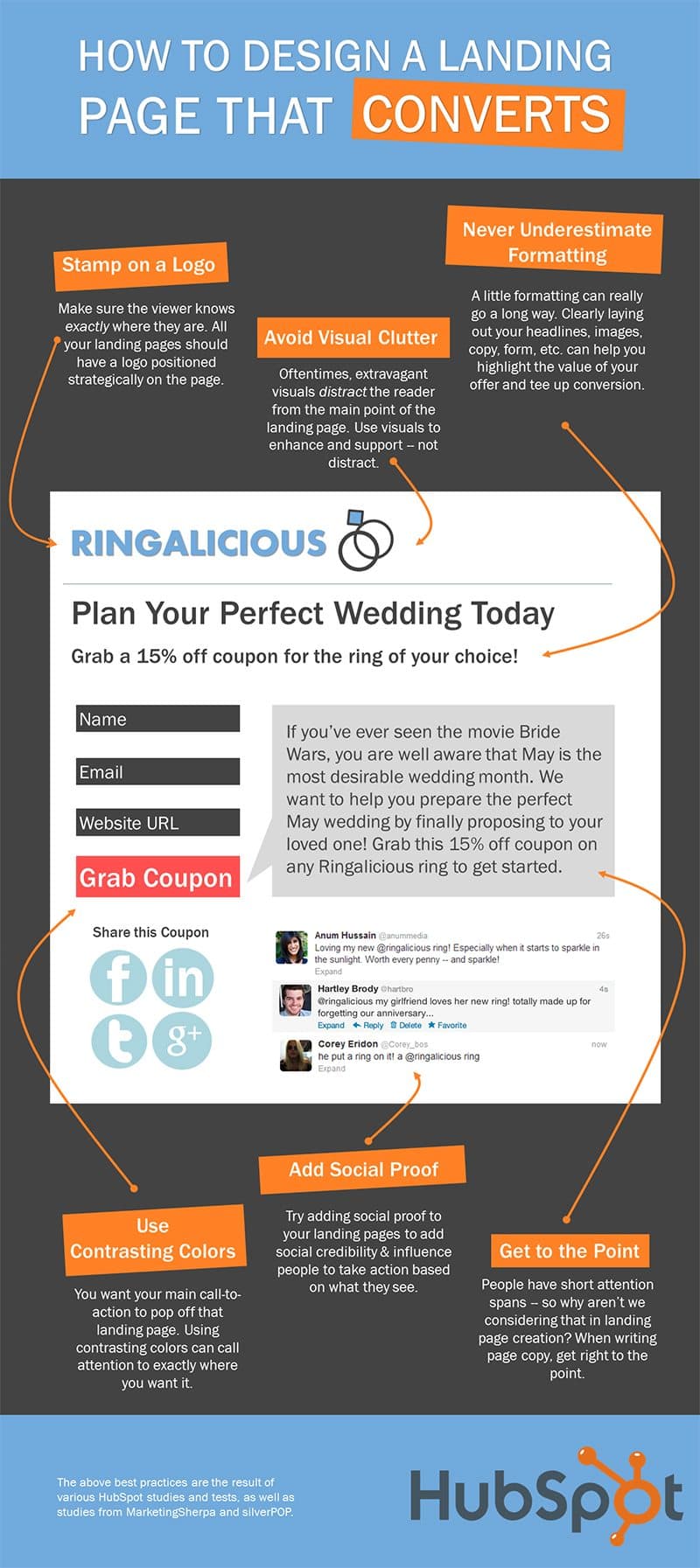
Infographic from HubSpot.
Chapter 1: Understanding the Role of Landing Pages
Before diving into the nitty-gritty of designing effective landing pages, it’s essential to understand their role in your online marketing strategy.
1.1 What Are Landing Pages?
A landing page is a single web page created with a specific purpose in mind. Unlike your website’s homepage, which serves as a general introduction to your brand, landing pages are highly focused. They are designed to capture the attention of visitors coming from a specific source, such as a PPC ad or an organic search result.
1.2 The Importance of Landing Pages
Landing pages serve several critical functions:
- Lead Generation: Landing pages are often used to collect visitor information, such as email addresses, which can be used for future marketing efforts.
- Conversion: The primary goal of a landing page is to convert visitors into customers or subscribers. This conversion might involve making a purchase, signing up for a newsletter, or downloading an e-book.
- Relevance: By matching the content of your landing page to the visitor’s search query or the ad they clicked on, you increase the chances of keeping them engaged and moving them down the sales funnel.
- Tracking and Analytics: Landing pages allow you to track the success of your SEO and PPC campaigns more accurately. You can measure conversion rates, bounce rates, and other critical metrics.
Chapter 2: SEO and Landing Pages
Now that we understand the importance of landing pages, let’s explore how to design them with SEO in mind.
2.1 Keyword Research
2.1.1 Identifying Relevant Keywords
Before you create a landing page, you need to determine which keywords are relevant to your product or service. Use keyword research tools like Google Keyword Planner, SEMrush, or Ahrefs to identify high-value keywords that are related to your business.
2.1.2 Long-Tail Keywords
Incorporating long-tail keywords into your landing page can be highly effective. These are longer and more specific keyword phrases that often have less competition. They can attract highly targeted traffic to your page, increasing the chances of conversion.
2.2 On-Page SEO
2.2.1 Title Tags and Meta Descriptions
Optimize your landing page’s title tags and meta descriptions with your target keywords. These elements appear in search engine results, and compelling, keyword-rich titles and descriptions can increase click-through rates.
2.2.2 Header Tags
Use header tags (H1, H2, H3, etc.) to structure your content and highlight important information. Make sure to include your target keywords in your headers when it makes sense naturally.
2.2.3 High-Quality Content
Content is king in the world of SEO. Ensure that your landing page provides valuable, informative, and relevant content to your visitors. Use your keywords naturally throughout the content without overstuffing.
2.2.4 Image Optimization
Optimize images on your landing page by compressing them and using descriptive file names and alt text. This can improve page load times and accessibility while benefiting your SEO efforts.
2.3 Page Load Speed
Page load speed is a crucial factor in both SEO and user experience. A slow-loading landing page can result in high bounce rates and negatively impact your search engine rankings. Compress images, minimize scripts, and utilize browser caching to enhance page load speed.
Chapter 3: PPC and Landing Pages
Pay-Per-Click advertising is another powerful tool for driving traffic to your landing pages. Here’s how to design landing pages that complement your PPC campaigns.
3.1 Message Match
3.1.1 Consistency Is Key
When a user clicks on your PPC ad, they have certain expectations. Ensure that your landing page delivers on the promises made in the ad. The messaging, keywords, and design should all align seamlessly.
3.1.2 Ad Copy
The ad copy should be reflected in your landing page’s content. Consistency in language and messaging helps build trust and reinforces the visitor’s decision to click through.
3.2 Clear Call to Action (CTA)
A well-designed CTA is essential for PPC landing pages. It should be prominent, concise, and compelling. Use action-oriented words like “Buy Now,” “Sign Up,” or “Request a Demo” to encourage visitors to take the desired action.
3.3 Landing Page Forms
If your goal is lead generation, you’ll likely have a form on your landing page. Keep the form simple and request only essential information. The more fields you add, the less likely visitors are to complete it.
3.4 Mobile Optimization
Many users access websites through mobile devices. Ensure your landing page is mobile-friendly, responsive, and loads quickly on smartphones and tablets. Google also considers mobile-friendliness as a ranking factor.
Chapter 4: Design Principles for High-Converting Landing Pages
Regardless of whether your traffic is from SEO or PPC, certain design principles can boost conversion rates.
4.1 Minimalistic Design
Simplify your landing page design to reduce distractions and keep the focus on the main message and CTA. Use whitespace effectively to make your content more readable.
4.2 Visual Hierarchy
Guide visitors through your page with a clear visual hierarchy. Important elements, such as the headline and CTA, should stand out visually. Use contrasting colors and typography to draw attention.
4.3 Trust Signals
Incorporate trust signals, such as customer reviews, testimonials, security badges, and logos of reputable partners or clients. These elements build credibility and reassure visitors.
4.4 A/B Testing
Don’t rely solely on intuition; conduct A/B tests to optimize your landing pages continually. Test different headlines, CTAs, images, and layouts to find what resonates best with your audience.
Chapter 5: Landing Page Optimization and Testing
To ensure your landing pages continuously improve their conversion rates, adopt a systematic approach to optimization and testing.
5.1 Split Testing
Split testing, or A/B testing, involves creating two versions of a landing page and comparing their performance. Test different elements, such as headlines, CTAs, and images, to identify what works best.
5.2 Conversion Tracking
Use tools like Google Analytics and heatmaps to monitor user behavior on your landing pages. This data can help you identify areas that need improvement and optimize your pages accordingly.
5.3 Feedback and User Testing
Gather feedback from users through surveys or usability testing. This firsthand input can provide valuable insights into user preferences and pain points.
Conclusion
In the competitive world of online marketing, converting visitors into customers is a top priority. Landing pages, when designed with SEO and PPC in mind, can be powerful tools for achieving this goal. By following the principles and best practices outlined in this guide, you can create landing pages that not only attract visitors but also turn them into loyal customers. Remember, the key is to continually optimize and test your landing pages to ensure they deliver the best possible results for your business.

Author:
Mark Ford